A scale-up plan for bulk dry ice pack for candy shipping
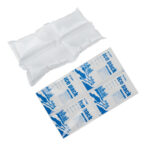
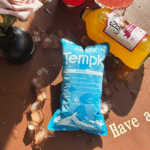
Um volume pacote de gelo seco for candy shipping should enter your operation through a series of evidence gates, not through a price-only purchase order. In Tempk terminology, the product is a water-activated sheet that is soaked and frozen. Não é dióxido de carbono sólido, does not sublimate into CO2 gas, and is not UN1845 dry ice. The sheet can add cooling capacity inside an insulated parcel, but it cannot define the correct temperature for candy or guarantee a delivery time. Scale-up starts by approving the confection, rota, pacote completo, processo de ativação, and supplier controls as one operating system.
Portão 1: decide whether cooling solves the product problem
Begin with the defect you are trying to prevent. If the complaint is melted chocolate, heat control is relevant. If hard candy arrives chipped, a coolant sheet will not fix poor cushioning. If gummies clump because the inner bag has inadequate moisture protection, cooling may help with heat but leave the primary cause untouched.
Create separate product families:
solid and enrobed chocolate;
filled chocolate, trufas, and bonbons;
gomas, jellies, and chewy confectionery;
caramelo, marshmallow, and other heat-sensitive sweets;
shelf-stable hard candy, frágil, and pressed mints.
Para cada família, document supported storage and transport limits, known quality defects, primary-packaging barrier, and arrival inspection. Chocolate guidance from established manufacturers consistently emphasizes cool, seco, odor-free storage, while published recommended ranges vary. That variation is exactly why a confectioner should approve product-specific limits.
Filled confectionery requires extra care. A ganache center, fruit layer, crisp wafer, or nut filling can change water activity, textura, migração, e prazo de validade. Cooling is not a food-safety validation and does not extend an approved shelf life by assumption.
No final do Portão 1, every in-scope product should have a clear statement: coolant trial justified, coolant not needed, or more product data required.
Portão 2: convert a carrier route into a thermal challenge
A parcel's advertised service time is not its exposure profile. Heat can enter during pickup, classificação, transporte de linha, entrega na milha final, e morada na porta. Cold weather can also matter because a frozen pack may overcool a sensitive product.
Map the lane with operations and the carrier. Identify cutoff time, likely hubs, non-operating periods, regional climate, vehicle type where known, and receiving arrangements. Add a delay condition that reflects the business risk. A premium gift shipment with a fixed event date may justify a different service than replenishment stock.
Do not rely only on the high temperature at the destination. The hottest point may be a hub or vehicle elsewhere. Da mesma maneira, a recipient's porch can turn a successful carrier movement into a failed delivery.
Define a shipping decision tree. It might route heat-sensitive products to an approved insulated packout, upgrade service above a weather threshold established by testing, hold orders that would cross a weekend, or split stable candy from sensitive items. The thresholds must come from product and packout evidence, not an arbitrary internet rule.
Portão 3: make the complete packout testable
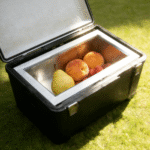
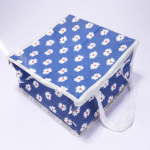
The approved configuration should be specific enough that another shift can reproduce it. Record the shipper, liner or insulation, arranjo de produto, preenchimento vazio, divisores, hydration sheet identity, método de ativação, condição de congelamento, colocação, encerramento, and customer instructions.
Use instrumented trials to explore warm and cold zones. Sensors can be placed in representative product and at justified risk locations, but their placement should be documented. Air temperature alone may respond faster than the candy. Product inspection remains essential.
ASTM D3103 provides an established approach for testing thermal insulation performance of distribution packages under variable ambient conditions. ISTA 7E supplies parcel thermal profiles, enquanto o padrão ISTA 20 defines a broader insulated-shipper qualification process. These references help create disciplined evidence. They do not eliminate the need to set your own candy limits and route assumptions.
Test both minimum and maximum payloads if both will ship. A full carton can have greater thermal mass; a low-count order can have more air and altered coolant-to-product ratio. If one configuration cannot safely cover the range, create separate packouts or consolidate the carton family.
Inspect quality after equilibration
When a cold chocolate package enters warm, ar úmido, opening it immediately can promote condensation. Keep test samples packaged while they equilibrate according to the handling plan, then inspect:
forma, lustro, florescer, and snap;
filling leakage or migration;
gummy tack, aglomeração, and deformation;
wrapper adhesion and print condition;
odor transfer and moisture marks;
breakage and presentation.
Passing a temperature criterion but failing appearance is still a failed candy packout.
Portão 4: prove the activation process at peak volume
A flat dry sheet is compact in storage. Depois da hidratação, it becomes heavier and occupies freezer space. Scale calculations must use the activated product and the approved production process.
Run a capacity exercise on the actual shift:
Receive and identify dry sheets by lot.
Hydrate them with the approved water, recipiente, e ponto final.
Drain or prepare the surface as specified.
Arrange sheets in the production freezer without blocking required airflow.
Ferramentas úteis de decisão
Verifique os detalhes antes de escolher a embalagem
Essas ferramentas rápidas podem ajudá-lo a comparar o risco da rota, necessidades de dimensionamento, escolhas de refrigerante, e detalhes da embalagem antes de solicitar um orçamento.
Seletor de embalagens
Compare opções de embalagens isoladas por produto, rota, e necessidade de temperatura.
Encontre embalagensRefrigerante & Referência PCM
Compare as opções de refrigerante e PCM quando uma rota precisar de suporte adicional de temperatura.
Comparar opçõesCalculadora de gelo seco
Estime as necessidades de gelo seco para remessas congeladas ou ultrafrias antes de embalar.
Estimar gelo secoConfirm acceptable conditioning using the validated method.
Move frozen stock to a controlled staging location.
Pack within the approved staging window.
segregate damaged or questionable units.
Avoid publishing an unverified freeze time. Freezer design, temperatura inicial, sheet spacing, tamanho do lote, and door opening can all change it. Establish a method using representative peak loading.
Labor is another capacity limit. If activation and draining create a queue shortly before pickup, workers may shorten the process. A slower, standardized preparation cycle scheduled ahead of packout can be more reliable than last-minute soaking.
Portão 5: write a purchase specification that survives change
A bulk purchase should lock the characteristics that matter and define what happens if they change.
| Ponto de controle | Purchase specification should state | Scale-up reason |
|---|---|---|
| Identidade do produto | Hydration coolant sheet, explicitly not solid CO2 | Prevents terminology, segurança, and freight confusion |
| Formatar | Sheet and cell dimensions, approved cut pattern, unhydrated condition | Protects fit and placement |
| Ativação | Current supplier instructions and buyer-approved method | Controls hydrated mass and handling |
| Construção | Declared film, absorvente, and seal characteristics at an appropriate level | Supports material and risk review |
| Qualidade | Lot identification, critérios visuais, controles de vazamento, documentação | Enables incoming inspection and investigations |
| Controle de mudanças | Advance notice for material, dimensão, célula, selo, site, ou mudanças de processo | Triggers assessment before production use |
| Desempenho | No standalone duration promise; reference only the buyer-approved system | Keeps claims tied to the tested packout |
The table turns a sample into a controlled supply item. It also helps procurement compare quotations that may use the same market name for different constructions. Price breaks matter only after the configuration and evidence are comparable.
Ask how production samples are selected, which defects are checked, como os lotes são rastreados, and what documentation accompanies shipment. If customization is requested, treat printed film, sheet pattern, or construction changes as a new item until their effect is assessed.
Portão 6: pilot the operating system
A chamber test controls ambient exposure, but a pilot shipment tests people and handoffs. Select representative lanes and order sizes. Empacotadores de trem, photograph or checklist the packout, include monitoring where justified, and arrange structured receiving inspection.
Exemplo prático: chocolate and gummies on warm parcel lanes
Suppose a fictional brand plans to ship chocolate bars and gummy pouches from Chicago to several warm destinations. Screening shows the bars need insulated protection, while the tested gummy formulation performs acceptably in its barrier pouch under most routes. The company creates a chocolate packout and a mixed-order variant instead of adding frozen sheets to every parcel.
During pilots, one route shows acceptable transit temperatures but frequent warm doorstep dwell. The corrective action is an attended-delivery notice and a service change, not more coolant. Another route shows a consistent warm corner; the divider and sheet placement are revised and retested. These hypothetical results illustrate why monitoring should lead to decisions.
The pilot also includes a minimum chocolate order because its low thermal mass may behave differently from a full gift box. Receivers keep the sealed product packaged while it moves toward room conditions, then score gloss, forma, condição do invólucro, and bloom using the same checklist. The team records the exact coolant lot and packout revision. That detail allows a later complaint to be separated into route exposure, packing deviation, component issue, or recipient delay instead of being labeled simply "summer damage."
Before bulk release, close training gaps, set incoming inspection, confirm freezer contingency, and approve customer-service language. Define who can authorize a substitution during a shortage. An unreviewed pack, forro, or carton change can invalidate the configuration.
Portão 7: review performance without chasing anecdotes
Track complaints by product, defeito, faixa, data de envio, versão do pacote, and coolant lot. "Derretido" can mean a genuinely softened bar, filling leakage, bloom noticed later, or a package left in direct sun. Better classification improves corrective action.
Review temperature data in context. A single logger trace can identify an event, but it does not establish a broad failure rate. Compare shipment condition, colocação do sensor, clima, varreduras de operadora, and receiving delay before changing the system.
Seasonal review should ask:
Are approved weather and dispatch rules being followed?
Did payload mix shift beyond the tested range?
Were any components or suppliers changed?
Is activation capacity sufficient at the busiest cutoff?
Are recipients following opening and equilibration instructions?
Do stable candy classes still avoid unnecessary cooling?
This review also supports cautious sustainability. The flat unhydrated format may reduce inbound storage volume compared with a prefilled alternative, but a credible assessment includes activation water, energia congelante, peso de saída, isolamento, desperdício, reutilizar logística, e evitou a perda do produto. Do not make a lifecycle claim without a defined comparison.
Treat peak-season readiness as a formal release, not a calendar reminder. Before the first hot-weather order, verify that the approved sheet and insulation are in stock, current work instructions are posted, freezers have been checked under representative loading, and backup carrier rules are active. Run a short line audit in which an operator builds each approved payload class without coaching. If the build differs from the qualification drawing, correct the process before volume rises.
Customer-service and purchasing teams should join that release. Customer service needs defect categories and a receiving script; purchasing needs the current manufacturer lot and change status. The packaging owner should confirm that no primary wrapper, divisor, Carton, or product formulation changed during the cooler season. This cross-functional review is inexpensive compared with discovering in July that the physical packout no longer matches the tested version.
Perguntas frequentes
What is the first document needed for scale-up?
Start with an approved product-and-route requirement, not a coolant specification. It should identify the candy family, modos de falha, limites de aceitação, faixa de carga útil, transit assumptions, e condições de recebimento. That document tells engineering what the packout must protect and gives procurement a meaningful basis for supplier review.
Can a hydration sheet replace expedited delivery?
Não automaticamente. Coolant can absorb heat, but a longer or more variable route may exceed the tested system. Compare a better service level, insulation change, revisão do pacote, weather hold, or split shipment. The most economical control depends on failure cost and route evidence.
Is the product regulated as UN1845 dry ice?
Não, not when it is the water-activated frozen sheet described here. UN1845 identifies solid carbon dioxide. Actual dry ice requires gas-venting packaging and applicable marking, rotulagem, manuseio, and air-carrier procedures. Use precise names in specifications and shipping systems.
When should a packout be retested?
Assess retesting when product formulation, faixa de carga útil, isolamento, Carton, refrigerante, colocação, condicionamento, rota, serviço, or acceptance limits change. The scope may be a focused verification or a fuller qualification depending on risk. Document the decision rather than assuming equivalence.
What is a reasonable incoming inspection for bulk sheets?
It may include lot and count verification, condição da embalagem, dimensões, seal and cell appearance, dano, and periodic activation checks. Tailor sampling and acceptance criteria to supplier history and risk. The inspection should detect changes that could affect fit, vazamento, or the approved activation process.
Conclusão: approve the system before the volume
The safest path to bulk purchasing is a gated release. Confirm that cooling addresses a real confectionery failure mode, define the route challenge, qualify the full packout, prove activation at peak volume, control the supplier item, and pilot the operation. Keep chocolate, gomas, confeitaria recheada, and hard candy in separate decision classes.
Mais importante ainda, preserve the terminology boundary. A water-activated coolant sheet is not solid CO2, and neither product is automatically suitable for every candy. Evidence should follow the actual product, carga útil, pacote, e pista.
Sobre Tempk
Tempk offers hydration coolant sheets that absorb water and are frozen before packout, mais embalagem isolada options for food transport. We can work with buyers on sample format, activation considerations, placement concepts, and the documentation needed for supplier review. We do not treat the sheet as a standalone guarantee: candy condition depends on the approved product limits, complete shipper, carga útil, rota, e disciplina operacional. A controlled trial is the appropriate bridge between a sample and a bulk order.
Share your product families, parcel sizes, pistas sazonais, and current failure modes with Tempk. Request samples and plan a packout evaluation before setting production volume.