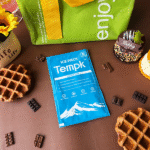
Pacote de gelo seco do fornecedor para entrega de vacinas: Six Approval Gates
Um fornecedor gelo seco pack for vaccine delivery should pass six linked approval gates before routine use: requisitos do produto, identidade material, projeto do sistema, qualificação térmica, controle operacional, and supplier lifecycle management. No gate can be replaced by a low unit price or a generic duration claim. The first question is also linguistic as well as technical. Gelo seco sólido é dióxido de carbono, whereas a hydrate “dry ice pack” is a water-activated sheet that is frozen. Their risks and controls differ. Because many refrigerated vaccines are freeze-sensitive, the approval process must demonstrate protection from excessive cold as well as warming, using current product instructions and applicable immunization-program rules.
Portão 1: Confirm the Vaccine and Program Requirements
The first gate is owned by the vaccine program or authorized quality function, not the coolant supplier. It confirms the exact vaccine presentation, current manufacturer instructions, supported transport condition, sensibilidade de congelamento, manipulação de diluentes, faixa de carga útil, rota, and excursion pathway.
The gate record should answer:
Which vaccine, apresentação, lot configuration, and secondary carton are covered?
What current storage and transport instructions control the design?
Is freezing prohibited, and how is suspected freezing evaluated?
Does a diluent or ancillary item travel in the same package?
What immunization-program, contrato, or organizational rules also apply?
Which payload extremes and route groups are in scope?
Who can approve qualification and make excursion decisions?
A vague request for “refrigerated vaccines” does not pass. If several products are grouped, document why their requirements, geometria, massa, and risk are represented by the qualification payloads. If evidence cannot support the group, split it.
Define the route clock from preparation and packout through return to supported storage at receipt. Incluir preparação, pickup cutoffs, centros, janelas de entrega, e atraso credível. Define seasonal challenges and alternate destinations. A service-level promise is one input, not proof of actual exposure.
Portão 1 also identifies prohibited assumptions. Examples include “colder is safer,” “the coolant label determines the vaccine condition,” “a remaining frozen pack proves acceptance,” or “all diluents can be packed like the vaccine.” Recording these boundaries makes later supplier conversations clearer.
The output is an approved requirements brief and acceptance framework. If current product instructions are unavailable or internally conflicting, stop and resolve them before choosing material. Engineering cannot qualify an undefined target.
Portão 2: Establish Material Identity and System Architecture
The second gate determines what the proposed coolant actually is. Obtain item-specific instructions, descrição técnica, composition or safety information as appropriate, dimensões, massa, tolerâncias, identificação do lote, armazenar, preparação, integrity criteria, disposição, e revisão.
Solid carbon dioxide requires a system capable of releasing gas and an operating environment that addresses ventilation, contato frio, quantity control, and applicable mode requirements. Its very low temperature can be incompatible with refrigerated, freeze-sensitive vaccine unless the supported product condition and qualified design justify its use.
UM hidratar gelo seco is generally a dry water-absorbing sheet that is hydrated and frozen. It should be modeled as a water-based coolant. Preparation changes its mass and geometry, while folding can change contact and heat flow. Pacotes de gel and engineered phase-change packs remain separate materials with their own specifications and conditioning.
Architecture Evidence Table
| Architecture decision | Evidência de aprovação | Failure prevented |
|---|---|---|
| Exact coolant item and revision | Current specification, instruções, amostras, and lot code | Mistaking hydrate sheets for solid dry ice or substituting formulations |
| Conditioned state | Hydration or conditioning process, tolerâncias, e liberação de verificação | Variable thermal mass and pack fit |
| Recipiente isolado | Material, dimensões, encerramento, and controlled revision | Using test data from a different thermal envelope |
| Separation and placement | Desenho de embalagem, barreiras, orientação, e fotos | Direct cold contact, dobrável, lacunas, or warm zones |
| Payload and dunnage | Minimum and maximum brackets, representative product, and controlled filler | Untested low-mass or overloaded configurations |
| Monitoring location | Mapping rationale and reproducible placement | Measuring coolant or empty air instead of vaccine environment |
| Venting and handling | Package design and safety procedure when solid dry ice is used | Pressão, exposição, and carrier rejection |
| Receiving configuration | Abertura, transferir, monitor, and escalation instruction | Delayed storage or unsupported product release |
The system bill of materials should prevent substitutions. Um espaçador, forro, fita, Carton, or void-fill change can alter heat transfer or gas release. If a component is essential to performance, treat it as controlled even if it appears inexpensive.
Portão 2 passes when procurement, engenharia, operações, and quality use the same component identity and packout architecture. A supplier’s marketing name may remain on the purchase order, but internal records should state the material in unambiguous technical terms.
Portão 3: Qualify Thermal and Physical Performance
The third gate turns the architecture into evidence. Use production-equivalent components and controlled assembly. The protocol should identify test objectives, configurações, cargas úteis, perfis ambientais, duração, dispositivos, mapa de sensores, Critérios de aceitação, réplicas, physical inspections, manipulação de dados, desvios, e aprovações.
Map credible warm and cold locations. Place sensors near walls, tampa, fundo, centro, riscos de contato, and representative product positions as justified by the geometry. The coldest risk may appear early or under a cold profile; the warmest may appear late, near a seam, or with the maximum load. Review each required sensor trace rather than relying on an average.
Desafie cargas úteis mínimas e máximas. A minimum order can expose a carton to more coolant surface and less thermal buffering. A maximum order can crowd the packout and restrict intended placement. If a dummy load is needed to stay within an approved bracket, its type and arrangement must be controlled.
Conditioning must be representative. Hydrate sheets should be prepared using the proposed production method, not carefully hand-selected laboratory specimens. Solid dry ice should be loaded in the approved form and quantity, with realistic staging and sublimation. Gel or phase-change packs should reach the defined conditioning state through a freezer or process that operations can reproduce.
Include physical distribution risk where relevant. Compressão, vibração, orientação, coolant-cell damage, movimento da tampa, and wetness can change performance or usability. A chamber result in a stationary perfect box may not cover a rough parcel network.
Retain raw data and failed development runs. Explain exclusions, missing points, protocol deviations, and calculations. Qualification passes only against preapproved criteria. If the system fails, redesign and repeat the necessary work; do not relabel an out-of-condition location as irrelevant after the fact.
The gate output should specify exactly what is qualified: revisões de componentes, recipiente, pacote, payload bracket, rota ou perfil, temporada, duração, posição do monitor, e premissas operacionais. It is a bounded approval, not a declaration that the coolant works for every vaccine.
Portão 4: Connect Monitoring to Excursion Decisions
The fourth gate ensures that a routine shipment generates useful evidence. Choose a suitable digital data logger and, where justified, a freeze indicator. Define device identity, accuracy or calibration status, configuração, ativação, colocação, começar e parar, download, file retention, alarm handling, e revisar.
Routine logger placement should come from qualification mapping. Make it reproducible with a pocket, grampo, marked position, or diagram. A logger beside solid dry ice may show refrigerant conditions; one loose in a large void may show air unrelated to the payload. Position must represent the decision the program intends to make.
A freeze indicator provides a focused warning but not a complete temperature history. Its threshold, resposta, ativação, armazenar, expiration, and location must be understood. When both an indicator and logger are used, establish which data are retained and how disagreement is escalated.
Receiving instructions should require prompt transfer of vaccine to supported storage, inspeção de pacotes, monitor stop or reading, and preservation of data. Define the response to damage, umidade, falta de refrigerante, an unstarted device, an alarm, an unreadable display, or a delivery outside the expected window.
For any suspected excursion, protect and segregate the vaccine as procedure requires. Document the product, muito, quantidade, datas, vezes, temperaturas, rota, pacote, e ações. Obtain guidance from the immunization program, fabricante, or designated quality authority. Staff should not discard or use affected vaccine until the documented decision is made.
Ferramentas úteis de decisão
Verifique os detalhes antes de escolher a embalagem
Essas ferramentas rápidas podem ajudá-lo a comparar o risco da rota, necessidades de dimensionamento, escolhas de refrigerante, e detalhes da embalagem antes de solicitar um orçamento.
Forro de caixa & Dimensionamento da cobertura de paletes
Verifique a lógica de dimensionamento do forro da caixa e da tampa do palete para projetos de embalagens isoladas.
Dimensionamento estimadoRefrigerante & Referência PCM
Compare as opções de refrigerante e PCM quando uma rota precisar de suporte adicional de temperatura.
Comparar opçõesResistência à queda de material de isolamento
Revise a resistência à queda e os fatores de manuseio antes de escolher materiais de isolamento.
Verifique a resistênciaThe gate fails if the organization collects data but has no reviewer, tempo de resposta, or disposition authority. It also fails if real-time alerts go to an unmonitored inbox. Monitoring is a decision system, not an accessory placed in the box.
Portão 5: Prove the Operation and Emergency Plan
The fifth gate tests whether people and facilities can execute the qualified design. Observe routine staff hydrating or conditioning coolant, selecting components, assembling minimum and maximum loads, activating monitors, closing containers, completing records, and staging shipments. Time the work and note where instructions invite interpretation.
Hydrate-pack operations need appropriate water access, drenagem, inspection space, capacidade do congelador, and status segregation. Freezer loading should allow packs to reach the approved state. Solid-dry-ice operations need supply timing, protected tools, ventilation assessment, quantity control, e manuseio treinado. Both need contingency inventory without mixing revisions.
Use scanners, conjuntos, or independent checks where packout confusion presents meaningful risk. Controlled photographs can support verification. Training should include why a spacer, orientação, or monitor location matters so staff recognize abnormal conditions rather than following steps blindly.
Emergency procedures should identify:
current program, fabricante, instalação, operadora, and backup-site contacts;
criteria for keeping vaccine in place versus relocating it;
qualified transport containers, materiais de embalagem, e monitores;
vehicle and alternate-facility readiness;
inventory and access outside normal hours;
embalagem, transporte, recibo, and data records;
authority for deviations and product disposition.
Run a tabletop or practical drill. A written plan may reveal that the backup refrigerator has no confirmed space, the logger kit is locked away, or the only trained packer is unavailable. Correct these gaps before an outage.
Emergency transport should not rely on loose frozen packs touching vaccine or an improvised quantity of solid dry ice. If a prequalified container is unavailable, follow the applicable emergency guidance and escalation procedure rather than inventing an unsupported configuration.
Portão 5 passes when trained roles can reproduce the system under ordinary pace and can access a credible emergency pathway. Qualification without operational readiness is laboratory evidence, not delivery capability.
Portão 6: Control the Supplier and the Lifecycle
The sixth gate covers the period after launch. Approve the supplier and exact item through a defined specification, controles de entrada, rastreabilidade, processo de reclamação, aviso de alteração, investigation support, continuity plan, e retenção de registros. Identify what changes require prior assessment.
Material formulation, estrutura absorvente, filme, selo, dimensões, instruções impressas, local de fabricação, subcontratado, or tolerances can affect performance. Packaging suppliers sometimes view these as equivalent commercial changes; the vaccine program may view them as changes to a qualified baseline. The agreement should bridge that gap.
Track operational trends by supplier lot and packout: hydration variation, vazamentos, dano, conditioning rejects, assembly deviations, alarmes, entregas atrasadas, e reclamações. A passing incoming visual inspection does not detect every thermal-relevant change, so trend data and advance notice matter.
Continuity planning should identify alternate capacity without authorizing automatic substitution. A second-source component needs the same identity review, system assessment, and evidence appropriate to its impact. Durante uma escassez, quality should decide how to use remaining approved material and whether a controlled alternative can be introduced.
Hypothetical Approval Decision
Imagine a vaccine distributor evaluating a hydrate sheet from a new supplier. Portão 1 confirms the vaccines are refrigerated and freeze-sensitive, with separate diluent instructions. Portão 2 confirms the sheet contains no solid carbon dioxide, but conditioned-mass samples show wider variation than expected.
The supplier tightens its preparation instruction, while the distributor adds a mass acceptance check. Portão 3 mapping then finds a cold corner at minimum payload. A spacer and defined dummy load correct the geometry, and repeated challenges pass. Portão 4 places the routine logger near that previously cold region and adds a clear receiver escalation card.
During Gate 5, operators find that sheets stored tightly stacked do not condition consistently. Freezer racks and loading limits are added, then the process is verified. Portão 6 establishes lot traceability and advance notification for film, absorvente, selo, dimensão, instrução, and site changes.
The component is approved only for the named container, two payload brackets, defined routes, and controlled process. It is not approved as a universal substitute for gel packs or as solid dry ice. This hypothetical result demonstrates a useful approval boundary: broad enough for routine execution, narrow enough to protect the evidence.
Lifecycle review should also include sustainability. Count inbound volume, água de hidratação, energia do congelador, perda de componente, massa de embalagem, retorna, limpeza, reenvio, and vaccine waste. Reuse or recycling claims should be verified against actual operations. Environmental improvement is valuable when it preserves or improves successful vaccine delivery.
Perguntas frequentes
Who should own final coolant approval?
Ownership depends on the organization, but final approval should combine vaccine-program or quality authority with packaging engineering and operations evidence. Procurement can manage commercial selection, while the supplier provides item data. The person authorized to release vaccine or evaluate excursions should be explicitly defined and independent of sales claims.
Can one packout cover several vaccine products?
Possivelmente, when a documented grouping rationale and qualification cover the relevant product instructions, sensibilidade de congelamento, geometria do pacote, massa, extremos de carga útil, rota, e monitoramento. Sharing a nominal storage category is not enough. If one product presents a different worst case or diluent constraint, test it separately or narrow the approved group.
When is requalification necessary?
Use a documented impact assessment. Changes to coolant, recipiente, espaçador, carga útil, rota, operadora, risco ambiental, condicionamento, conjunto, or vaccine requirements may require anything from document review to full requalification. Adverse trends, repeated alarms, unexplained leaks, or process drift can also trigger verification. Avoid an invented universal calendar rule.
Is supplier certification enough to approve the system?
Não. Supplier certifications or declarations may support quality and compliance review within their stated scope, but they do not demonstrate that a particular vaccine, recipiente, pacote, rota, and operating process will perform. System approval needs applicable product instructions, dados de qualificação, reproducible operations, monitoramento, and controlled receiving and excursion procedures.
What happens if a hydrate sheet leaks?
Protect personnel and vaccine, document the package condition, and follow the receiving or excursion procedure. Assess primary and secondary package integrity, monitorar dados, coolant lot, manuseio, e rota. Quarantine affected material as required. Report a substantiated component defect through the supplier complaint process and trend similar events for broader action.
Make the Approval Boundary Visible
The final approval record should fit into operations without losing technical meaning. State the exact coolant, revisão, preparação, recipiente, pacote, carga útil, rota, seasonal scope, monitor, processo receptor, and authorized exceptions. Link the record to the current work instruction and training. Barcode or order-system controls can prevent selection outside that boundary.
Create a one-page change triage that asks whether the vaccine instructions, carga útil, rota, material, geometria, condicionamento, modo de transporte, site do fornecedor, monitoramento, or receiver has changed. A “yes” sends the proposal to documented impact assessment before shipment.
Sobre Tempk
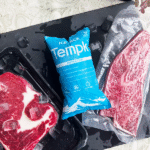
Tempk’s official materials describe hidratar bolsas de gelo seco as water-activated sheets that are frozen after hydration, not as solid carbon dioxide. Its portfolio also includes gel packs and embalagem isolada categorias. These products can be considered as components in a gated vaccine-delivery development process. The buyer should confirm the current item, revisão, instruções, controles de lote, e documentos comprovativos, then qualify the complete system for the exact vaccine, carga útil, rota, método de monitoramento, e processo operacional. Excursion decisions remain with the applicable program, fabricante, or authorized quality function.
Bring Tempk an approved requirements brief and proposed system architecture. Request production-equivalent samples and current technical evidence, then move the candidate through all six gates before routine vaccine use.