Tampas de paletes de controle de temperatura para remessa de produtos químicos a granel: Um sistema de decisão que se sustenta
Tampas de paletes de controle de temperatura para transporte de produtos químicos a granel deve ser aprovado através de um sistema de decisão, não adquirido como uma promessa independente. O sistema conecta um requisito químico documentado com uma exposição mapeada, uma tampa passiva instalada, evidência representativa, etapas operacionais seguras, e uma saída clara para um controlo mais forte. Esta abordagem evita dois erros comuns: esperando que o isolamento reflexivo regule um ponto de ajuste, e permitir que uma cobertura interfira na embalagem de mercadorias perigosas ou na comunicação de perigos. O resultado é um uso definido que a aquisição pode especificar, os operadores podem repetir, e as equipes de qualidade e segurança podem revisar.
Prepare dois arquivos antes de solicitar amostras
O primeiro arquivo é o resumo do produto e pacote. Identifica o produto químico ou família aprovada, ficha de dados de segurança atual, critérios de condição do produto, mecanismos conhecidos de resposta à temperatura, determinação de mercadorias perigosas, contêineres autorizados, construção de paletes, restrição, e acesso necessário. Deve distinguir os requisitos de qualidade das condições seguras de armazenamento e dos controlos regulamentares de transporte..
A estrutura da ficha de dados de segurança da OSHA inclui precauções para manuseio seguro e condições para armazenamento seguro, incluindo incompatibilidades. Essas informações devem permanecer centrais para o processo no local de trabalho. Um especialista em transporte ainda precisa determinar os requisitos para a remessa real. As regras da PHMSA regem os EUA relevantes. movimentos de materiais perigosos; ADR, Processos de mercadorias perigosas da IATA, e o Código IMDG da IMO se aplicam em suas respectivas estradas, ar, e contextos marítimos.
O brief também deve resolver a palavra "volume." Se isso significar um pedido comercial em massa de contêineres menores, afirmar que. Se a remessa utilizar um contêiner intermediário para granel ou outra forma considerada embalagem a granel pelas regras aplicáveis, registre a categoria real. A capa não altera o status da embalagem, limites de quantidade, ou funções de comunicação.
O segundo arquivo é o resumo de rota e operações. Mapeia a remessa desde o condicionamento até o recebimento, incluindo todos os pontos de permanência, meios de transporte, condições sazonais, sol direto ou fluxo de ar frio, contato com o chão, aberturas, mudanças de custódia, e atrasos. Ele nomeia o que pode ser controlado em cada ponto e as opções protegidas disponíveis quando o cronograma falha.
Junto, os arquivos fornecem aos fornecedores um problema solucionável. Sem eles, os fornecedores são empurrados para descrições genéricas porque ninguém definiu a carga ou a exposição. Eles também fornecem aos revisores internos uma base estável: quando o produto, pacote, ou mudanças de rota, a empresa pode ver quais premissas de aprovação precisam ser revisadas.
Desenhe o limite em torno do que a capa possui
A capa deve possuir uma exposição específica, não toda a cadeia de frio ou temperatura. Uma declaração de limite pode atribuí-lo à preparação de saída e a um trailer regional ambiental, enquanto a holding protegida possui atraso estendido e o armazém possui condicionamento do produto. Todo risco deve ter um controle com autoridade suficiente.
| Questão de limite | Resposta que suporta uso passivo | Responda que sinaliza escalada | Proprietário a envolver |
|---|---|---|---|
| O produto começa na condição aprovada? | Processo de partida medido ou controlado | Condição central desconhecida ou liberação no limite | Equipes de produto e qualidade |
| A exposição é limitada e representada por evidências? | Estágios definidos com atraso e backup confiáveis | Retenção não controlada ou variabilidade de rota não observada | Logística e transportadora |
| A configuração do palete é estável?? | Pacotes aprovados, padrão de carga, restrição, e ajuste | Compilações mistas ou alteradas sem revisão | Embalagem e operações |
| A tampa pode permanecer corretamente fechada? | As vagas são limitadas, simulado, e verificado novamente | Inspeção frequente ou verificação de falhas no fechamento | Operações e manipuladores |
| A comunicação e inspeção de perigos são preservadas?? | O arranjo exato tem aprovação competente | Marcas, rótulos, fechamentos, ou danos estão ocultos | Mercadorias perigosas e equipes de segurança |
| O buffer passivo é suficiente para a consequência? | Margem verificada e contingência viável | Alta consequência, margem estreita, ou controle ativo necessário | Proprietários técnicos e de conformidade |
Esta tabela é uma tela de governança. Evita que uma característica material favorável anule uma rota inadequada. Uma única resposta de escalonamento nem sempre encerra o projeto, mas deve ser resolvido através do controle de rota, mudança de projeto, embalagem mais forte, ou equipamento ativo.
O limite deve incluir a parte inferior. Uma cobertura que envolva apenas as laterais e a parte superior pode deixar caminhos condutivos e convectivos na base do palete. Se um painel inferior, saia, ou interface de piso é usada, deve permanecer compatível com empilhadeiras, porta-paletes, restrição, drenagem, e manuseio seguro. Os arranjos testados e enviados devem corresponder.
O limite também deve incluir o tempo fora do movimento normal. Fechamentos de fim de semana, transferências perdidas, inspeção de segurança, porões alfandegários, avarias de veículos, recusa de entrega, e falhas de energia ou de equipamentos em locais protegidos podem transferir a responsabilidade. Dê a cada evento confiável um proprietário e uma resposta.
Selecione uma arquitetura, Não apenas uma camada isolante
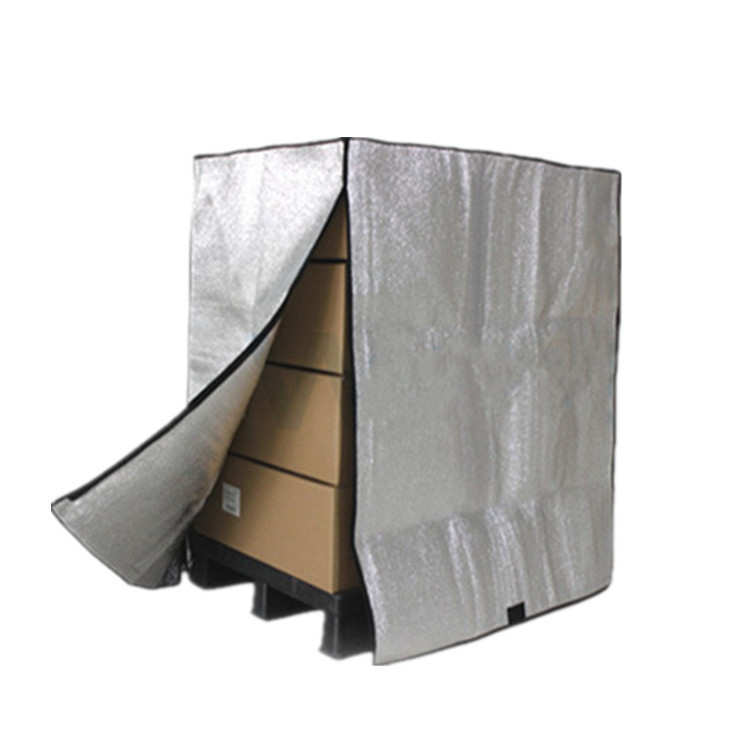
A arquitetura da cobertura inclui a face externa, núcleo isolante, face interna, costuras, cantos, encerramento, principal, base, acesso, identificação, e integração com o palete. Cada parte pode alterar o fluxo de calor ou a execução. Os fornecedores devem explicar a função pretendida sem converter as propriedades dos componentes em garantias de sistema acabado.
Um exterior reflexivo é útil contra o ganho radiante sob condições relevantes. Não impede o calor movido pelo ar ou por contato. O isolamento retarda a condução, mas pode ser contornado por lacunas e áreas comprimidas. Um ajuste justo pode reduzir a troca de ar, mas pode obstruir as etiquetas ou a inspeção. Uma aba de acesso apoia as operações, mas cria um fechamento que deve ser restaurado de forma consistente.
Para uso químico, arquitetura também inclui comportamento de contaminação. Superfícies lisas podem ser mais fáceis de inspecionar, ainda assim, costuras e bordas podem reter resíduos. Alguns materiais podem ser atacados pelo produto químico ou agente de limpeza aprovado. Solicite informações exatas sobre o material e evidências de compatibilidade do escopo. Se o comportamento do fogo, controle estático, ou resistência a líquidos é importante, especifique o cenário e o método de teste. Não confie em adjetivos não qualificados.
Escolha o tamanho do envelope do palete carregado e o método de trabalho. Incluir tolerâncias de pacote, protuberância, placas de canto, tampa superior, alças, e projeções. Verifique o alcance do operador e o manuseio mecânico. Um ajuste personalizado pode melhorar a consistência, mas aumenta a complexidade do item; um ajuste ajustável pode suportar várias construções, mas cria variação. O equilíbrio correto depende do portfólio de paletes e das consequências do uso indevido.
Determine se a capa é descartável, reutilização limitada, ou parte de um circuito fechado gerenciado. A arquitetura de reutilização pode precisar de superfícies duráveis, unidades identificáveis, recursos reparáveis, e resistência à limpeza definida. Mas a durabilidade por si só não cria um circuito seguro. O destinatário, logística reversa, segregação, e o processo de quarentena tem que existir.
Exija evidências em camadas
Comece com a documentação dos componentes para entender a construção, em seguida, vá em direção à cobertura finalizada e às evidências de rota. Um cupom de material pode apoiar uma comparação entre camadas. Um teste de cobertura acabada revela costuras e geometria. Uma comparação carregada mostra como a carga altera a resposta. Um protocolo representativo de rota conecta a configuração à decisão. O monitoramento operacional verifica se o uso real permanece dentro das premissas.
Em cada camada, pergunte o que foi testado e qual inferência é justificada. Registrar lote de material ou identidade de capa, status de produção, dimensões, carregar, estado inicial, perfil externo, radiação e fluxo de ar quando relevante, piso e base, localizações dos sensores, calibração do dispositivo, intervalo de dados, número de corridas, desvios, e regra de aceitação. Se o resultado for confidencial, organizar uma revisão técnica controlada em vez de aceitar apenas um título.
Teste contra um comparador apropriado. Uma palete descoberta, mas equivalente, pode quantificar o efeito incremental da cobertura. Outra cobertura ou um controle operacional pode apoiar uma decisão alternativa. Garanta condições iniciais e exposição comparáveis. Uma palete de controle mais quente pode fazer com que a cobertura proposta tenha uma aparência melhor sem que a cobertura seja responsável.
Meça quantidades que atendam à decisão do produto. Ar oculto, superfície do recipiente, produto, e temperaturas substitutas não são intercambiáveis. Use um mapa de sensores documentado e dispositivos calibrados apropriados para a finalidade. Preservar dados brutos e horários de eventos. Declare como a incerteza e a variação espacial afetam a aceitação.
Não transforme um resultado em uma duração incondicional. Uma reivindicação se aplica apenas à configuração e às condições de contorno que ela representa. Se o teste suportar exposição de rotina, mas não um longo atraso, registrar ambas as descobertas. O atraso pertence ao plano de exceção, não para palavras criativas.
Use padrões oficiais ou reconhecidos apenas dentro do escopo. ISTA publica recursos de teste de transporte térmico para sistemas de distribuição definidos, mas um perfil orientado para encomendas pode não descrever o frete químico paletizado. Um método padrão melhora a repetibilidade quando apropriado; não substitui o critério químico, geometria da palete, ou modelo de rota.
Coloque o controle do fornecedor na aprovação técnica
A qualificação do fornecedor para uma cobertura passiva deve focar nos atributos que sustentam a evidência. Crie uma especificação de compra para materiais ou construção definida, dimensões e tolerâncias, métodos de costura e fechamento, locais de acesso, base, identificação, mão de obra, reparos permitidos, armazenar, e cuidado. Inclua o item de produção exato vinculado ao teste.
Peça ao fornecedor para descrever o controle de material recebido, verificações em processo, inspeção concluída, tratamento de não conformidade, rastreabilidade adequada ao produto, e notificação de alteração. Não invente certificações que o fornecedor deva possuir, a menos que a empresa tenha um requisito verificado. Uma questão de auditoria útil é como o fornecedor evitaria que um filme substituto aparentemente semelhante, espuma, encerramento, ou adesivo entre em produção sem revisão.
Solicite amostras de produção antes do lançamento do volume ou estabeleça outra verificação de primeiro artigo apropriada ao risco. Compare-os com a configuração aprovada para ajuste, materiais, mão de obra, fechamentos, acesso, e identidade. Um belo protótipo de uma bancada de desenvolvimento não demonstra produção repetível.
Definir controles de recebimento que os operadores podem realizar. Confirme o item e o tamanho, inspecionar se há lágrimas, delaminação, costuras incompletas, fechamentos danificados, contaminação, umidade, e identificação incorreta. A amostragem dimensional pode ser apropriada. A verificação térmica pode ocorrer periodicamente ou após alterações de acordo com o risco, e não em cada recebimento.
Tornar o dimensionamento comercial condicional. Preço, quantidades mínimas de pedido, tempo de espera, personalização, salvo, embalagem, e o cronograma de entrega são questões específicas do fornecedor. Adicione os custos internos de treinamento, aplicativo, armazenar, inspeção, limpeza, retorna, perdas, monitoramento, e tratamento de exceções. O preço de cobertura mais baixo pode criar o custo de processo mais alto se o ajuste for inconsistente.
Ferramentas úteis de decisão
Verifique os detalhes antes de escolher a embalagem
Essas ferramentas rápidas podem ajudá-lo a comparar o risco da rota, necessidades de dimensionamento, escolhas de refrigerante, e detalhes da embalagem antes de solicitar um orçamento.
Referência de material de isolamento
Compare as opções de materiais de isolamento para diferentes necessidades de embalagens da cadeia de frio.
Compare materiaisCalculadora de bolsa de gelo
Estime a quantidade de bolsas de gelo em gel para remessas refrigeradas e planejamento prático de rotas.
Estimar bolsas de geloResistência à queda de material de isolamento
Revise a resistência à queda e os fatores de manuseio antes de escolher materiais de isolamento.
Verifique a resistênciaPilote o processo operacional, Em seguida, libere o produto
Um piloto deve começar no ponto de condicionamento ou escala e terminar após o recebimento, não na porta do laboratório. Operadores representativos constroem e inspecionam o palete, aplique a capa, escaneie e mova-o, realizar transferências esperadas, abra-o se necessário, reequipar, e remova-o. Observadores de qualidade e segurança registram soluções alternativas, problemas de visibilidade, dano, e pressão do tempo.
Use o monitoramento de lançamento quando justificado para comparar a exposição em campo com o modelo de teste. O plano define a localização dos dispositivos, status de calibração, amostragem, download, critérios de alarme ou revisão, tratamento de dados perdidos, e autoridade de decisão. O monitoramento não substitui a proteção e não deve criar problemas elétricos ou de acesso descontrolados em torno do produto químico..
Treine as pessoas sobre o motivo de cada etapa crítica. "Feche a aba totalmente" é mais fácil de seguir quando os manipuladores entendem que um caminho aberto altera o limite testado. "Não cubra um tambor manchado" conecta o processo térmico à segurança da embalagem. Evite pedir aos operadores que decidam a estabilidade do produto; forneça-lhes condições de parada observáveis e contatos de escalonamento.
A documentação de lançamento deve incluir o produto e pacote aprovados, desenho de paletes, item de capa, instrução de aplicação, acesso necessário, processo de condição inicial, pistas ou etapas aprovadas, monitoramento, e fluxo de exceção. Deve também indicar exclusões, como alturas de paletes não aprovadas, produtos mistos, mercadorias perigosas especificadas, rotas de exportação não controladas, ou tampas contaminadas, conforme aplicável.
O feedback de campo deve ser revisado antecipadamente. Um problema aparentemente menor, como um fecho que abre durante uma varredura, pode invalidar suposições térmicas. Corrija o design ou fluxo de trabalho antes de expandir o programa. Um rastreamento de temperatura bem-sucedido não justifica uma etiqueta bloqueada ou uma inspeção insegura.
Uma ruptura revela se o sistema é real
Considere uma remessa hipotética de lançamento de tambores paletizados em uma pista rodoviária aprovada. A capa cabe, os rótulos permanecem acessíveis, e as evidências da rota apoiam o movimento rotineiro. Em um cross-dock, um transportador troca de equipamento e o palete perde a conexão. A provável permanência excederá o limite de uso passivo.
A instrução de envio nomeia este evento. O terminal coloca a palete numa área protegida revista sem retirar a tampa, registra o tempo e a condição da cobertura, e alerta o proprietário da rota. A equipe técnica analisa as informações de exposição e monitoramento. Se a opção protegida não estiver disponível, o plano identifica uma decisão de recuperação ou retorno controlada pela temperatura. O motorista ou estivador não é solicitado a adivinhar a adequação do produto.
Durante a inspeção, um manipulador percebe umidade perto de um tambor. A resposta muda imediatamente do atraso térmico para o procedimento de incidente químico. O pessoal isola o palete e segue a FDS, processo de emergência no local, e medidas de proteção necessárias. A capa é tratada como potencialmente contaminada. O desempenho térmico não é mais a prioridade.
Depois do evento, a equipe confirma se a mudança de operadora era previsível, se as instruções do terminal estavam acessíveis, e se o arquivo de uso aprovado precisa de revisão. Ele analisa os dados sem afirmar que um sensor comprova a condição de cada tambor. A disposição do produto permanece com a função autorizada.
Este cenário expõe o valor de um sistema em camadas. A capa compra margem passiva, o local protegido controla um atraso, monitoramento informa revisão, e procedimentos de segurança assumem em caso de suspeita de vazamento. Nenhum componente é solicitado a realizar o trabalho de outro.
Rejeitar reivindicações que anulam distinções importantes
"Temperatura controlada" está incompleto se o produto for passivo. Pergunte se isso apenas retarda a troca de calor ou usa regulação ativa. "Mantém a temperatura" está incompleto sem um intervalo, carregar, estado inicial, perfil, duração, ponto de medição, e regra de aceitação. "Testado" está incompleto sem o protocolo e o link de produção.
"Adequado para produtos químicos" é muito amplo. Pergunte quais superfícies foram avaliadas em relação a quais substâncias, concentrações, modos de contato, durações, e temperaturas. "Impermeável" não prova compatibilidade química, e "reutilizável" não estabelece capacidade de limpeza após um derramamento. "Antiestático" ou "resistente ao fogo" precisa de um método relevante e construção completa.
"Compatível" é especialmente arriscado. A capa não classifica o produto químico, autorizar o receptáculo, criar treinamento, preparar documentos de envio, ou satisfazer todas as marcas, rótulo, cartaz, estiva, segregação, ou regra de controle de temperatura. A conformidade pertence ao embarque e operação sob os requisitos aplicáveis, não para um acessório de palete genérico.
"Envio em massa" também deve ser descompactado. Uma frase de marketing sobre volume não resolve se os recipientes reais são embalagens regulatórias a granel. Peça ao profissional de mercadorias perigosas do expedidor para documentar a determinação.
Finalmente, rejeitar reivindicações ambientais sem limites. O material reciclável pode não ser aceito localmente. Material reutilizável pode não retornar. Um peso menor do produto pode não compensar perdas ou limpeza. Exigir uma comparação definida antes de publicar porcentagens ou declarações absolutas.
Conclua com um memorando de aprovação que as operações podem usar
A decisão final deve caber em uma página de aprovação concisa apoiada por evidências. Ele nomeia o produto, pacote, palete, cobrir, etapas da rota, processo inicial, aberturas permitidas, referência de evidência, monitoramento, limite operacional, contingência, rota de reutilização ou descarte, proprietários, e alterar gatilhos. Este é o controle que acompanha o item físico.
Aprove apenas o que as evidências apoiam. Expanda posteriormente por meio de revisão deliberada. Se uma nova faixa tiver mais tempo de espera, uma carga diferente, ou outro modo de transporte, trate isso como uma mudança, não é uma extensão administrativa. Se os eventos se aproximarem repetidamente do limite, melhorar a rota ou mudar para um sistema com maior autoridade de controle.
Perguntas frequentes sobre aprovação
Qual é a pergunta mais importante para uma primeira reunião com fornecedores?
Peça ao fornecedor para explicar qual configuração de cobertura acabada e condições de teste suportam o uso proposto em seu palete e rota reais. Isso abre a discussão sobre materiais, ajustar, carga útil, perfil, localizações dos sensores, e limitações. Um fornecedor que começa com essas condições fornece informações mais úteis do que aquele que começa com uma duração universal.
As coberturas de paletes podem substituir o pré-condicionamento?
Não. Uma cobertura passiva preserva um estado inicial apenas retardando a mudança. Não se pode confiar nele para trazer o produto químico à condição correta. Definir como o produto e a embalagem são acondicionados, como o tempo adequado é estabelecido, e qual medição ou verificação de liberação confirma o estado inicial.
Quando a tampa deve ser testada novamente?
Novos testes ou outras revisões técnicas podem ser necessários após alterações nos materiais, costuras, dimensões, fechamentos, geometria da palete, pacote, carga útil, processo inicial, limpeza, rota, operadora, modo, ou perfil ambiente. O nível de trabalho depende do risco e da relação com evidências anteriores. Defina gatilhos no controle de mudanças antes do lançamento.
Quem possui uma decisão de excursão?
O produto autorizado ou função de qualidade deve possuir disposição usando o procedimento aprovado e conhecimento relevante do produto. Logística fornece eventos de rota, monitoramento de condições medidas de suprimentos, e o pessoal de segurança ou de mercadorias perigosas aborda os perigos e a conformidade. Um fornecedor ou motorista de cobertura não deve declarar de forma independente o produto químico afetado como aceitável.
Sobre Tempk
Para compradores que estão construindo este sistema de decisão, Tempk está associado a embalagem com temperatura controlada e soluções para cadeia de frio e pode ajudar a explorar configurações passivas de cobertura de paletes. Podemos trabalhar a partir de uma palete e rota definidas de forma adequada, acesso, construção de cobertura, e as questões de verificação permanecem concretas. Não posicionamos uma capa como um sistema de envio automático qualificado, um dispositivo de conformidade com mercadorias perigosas, ou um substituto para requisitos de SDS e aprovação interna de produto.
Compartilhe seu resumo de produto e pacote e resumo de rota e operações com Tempk para iniciar uma discussão de capa focada antes das amostras, testando, ou compras em volume.