Recipiente de painel de vácuo para transporte de vinho em 2025?
O vinho pode sobreviver “não frio,"mas luta com oscilações. UM vacuum panel container for wine shipping helps you hold a steadier internal temperature when docks run hot, vans idle, and customers are not home. For most bottles, the practical goal tracks cellar-like stability around 50–60°F (10–16°C), while avoiding long warm exposure above ~75–80°F and winter freeze risk near -7° C a -10 ° C.. This guide shows lane-based pack-outs you can repeat, not theories.
Última atualização: 2025-12-22
Este artigo irá ajudá-lo a responder:
Como um vacuum panel container for wine shipping reduces heat spikes and last-mile losses
Como definir o ideal wine shipping temperature range 50–60°F (10–16°C) sem hipotermia
Como prevenir wine heat damage above 75°F and 80°F risk during handoff minutes
Como gerenciar wine freezing risk -7°C to -10°C cork push in winter lanes
How to validate with ISTA STD-7E thermal testing for wine shippers e pare de adivinhar
Como planejar reusable vacuum panel container for wine shipping ROI with simple return KPIs
Vacuum panel container for wine shipping: why do bottles fail in transit?
Most failures come from “messy minutes,” not the drive. Your box sits on a warm dock. It waits in a parked van. It bakes on a porch. UM vacuum panel container for wine shipping ganha tempo, but you still need a process that controls the worst moments.
The three hotspots you should design for:
Hora de ancoragem: staged pallets and small parcels in warm air
Vehicle time: para, tráfego, and sun exposure through windows
Hora de transferência: Portas, concierge desks, e entregas perdidas
The stability rule: “steady beats colder”
Para vinho, stability usually matters more than “deep cold.” A vacuum panel container for wine shipping is a stability tool first. If your system avoids sharp swings, you reduce cork stress, flavor drift, e risco de reclamação.
| Where risk happens | O que aumenta | What lowers it | O que isso significa para você |
|---|---|---|---|
| Encenação quente | sol + docas quentes | shaded staging + coleta rápida | fewer “cooked” complaints |
| Longo tempo de permanência | entrega perdida + wide windows | janelas estreitas + opções de coleta | Menos reembolsos |
| Complexidade da rota | muitas paradas + tráfego | clustered routes + early dispatch | less insulation needed |
What is a vacuum panel container for wine shipping?
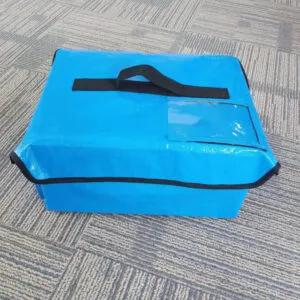
UM vacuum panel container for wine shipping uses VIP walls (painéis isolados a vácuo) to slow heat flow in a thin profile. Think “thermos wall.” You get strong insulation without the bulky outer box that drives dimensional weight.
Why this matters operationally:
Thin walls can mean caixas menores and less filler
Smaller cartons can mean lower dimensional charges
Longer hold time means menos reenvios when handoff goes wrong
VIP vs espuma: what you gain (sem o jargão)
VIP is powerful, but not magical. Panels need protection from puncture and crushing. UM vacuum panel container for wine shipping should include a protective structure, inserções estáveis, and “no force close” rules.
| Tipo de isolamento | Typical thickness feel | Thermal performance feel | Seu significado prático |
|---|---|---|---|
| Espuma EPS | espesso | “okay” | fine for mild, pistas curtas |
| Espuma PU | medium-thick | melhorar | still bulky for long lanes |
| VIP (painéis de vácuo) | afinar | high hold time | caixa menor, steadier temperature |
Vacuum panel container for wine shipping: what temperature target should you use?
UM vacuum panel container for wine shipping works best when you aim for a band, nem um único número. The practical target aligns with cellar-like conditions: 50–60°F (10–16°C) quando viável. Your real mission is to avoid the long warm hours and the deep cold events.
Use this simple target logic:
Keep wine cool and steady quando você puder
Evitar prolonged warm exposure (especially above ~75–80°F)
Evitar freeze-range exposure (winter events can push corks and crack glass)
Aquecer + cold risk in one table (for your SOP)
| Tipo de risco | Trigger pattern | What you might see | O que você muda |
|---|---|---|---|
| Heat damage | sustained warm exposure | plano, “cooked” profile | upgrade lane kit + reduzir o tempo de permanência |
| Cork movement / seepage | repeated warm/cool swings | vazamento, stained labels | stabilize with VIP + buffer |
| Congelando | very low temps (-7°C to -10°C range) | cork push, cracked bottles | winter kit + “hold” rules |
How do you pick PCM setpoints without freezing wine?
If you add thermal buffers, don’t use “frozen food logic.” For most lanes, a controlled-ambient approach is safer. Muitas equipes usam PCM setpoints around 15–20°C as a stability buffer, not a deep-cold source.
Regra prática: your PCM should buffer spikes, não drive the bottle cold.
| Temporada | Recommended approach in a vacuum panel container for wine shipping | Erro comum | O que isso significa para você |
|---|---|---|---|
| Verão | VIP + heat-buffering PCM + transferência rápida | underestimating porch time | more heat complaints |
| Inverno | VIP + “anti-freeze” buffering + strict routing | using frozen gel packs | cork push / break risk |
| Ombro | VIP only or mild buffering | overbuilding every order | unnecessary cost |
Vacuum panel container for wine shipping: what pack-out prevents breakage and label damage?
Your insulation is only as good as your pack-out. UM vacuum panel container for wine shipping retarda a transferência de calor, but it cannot stop glass-to-glass contact. You need one repeatable build that new packers can learn fast.
A reliable pack-out has four layers:
Bottle protection: rigid inserts, divisores, apoio de pescoço
Controle térmico: VIP walls + consistent liners
Controle de vazio: nenhum movimento, no rattling
Disciplina de selo: clean closure to avoid “heat leaks”
The No-Clink Rule (fast training that works)
Depois de embalar, gently rock the box.
If you hear glass clinking, you have a breakage risk.
If you feel movement, you have a shock risk.
| Pack-out checkpoint | Teste rápido | Falha comum | O que isso significa para você |
|---|---|---|---|
| No-Clink Rule | gentle rock | cracked bottles | menos reclamações |
| No-rattle | light shake | insert collapse | menos substituições |
| Verificação do selo | pressão da tampa | “heat leak” gaps | melhor estabilidade |
Temperature logger placement for bottle shippers
If you measure, you improve. Place a logger where the bottle “feels” the hottest or coldest zone. In many parcel boxes, that is near the lid seam or outer edge, not next to a pacote de refrigerante.
Quick placement rules:
Keep sensors near the bottle, not touching PCM
Use o mesmo posicionamento every test for comparison
Registro hora da embalagem e hora de transferência no rótulo
Ferramenta de decisão: which vacuum panel container for wine shipping setup fits your lane?
Use this to stop overbuying premium packaging for low-risk orders. UM vacuum panel container for wine shipping pays back fastest where failure is expensive.
Ferramentas úteis de decisão
Verifique os detalhes antes de escolher a embalagem
Essas ferramentas rápidas podem ajudá-lo a comparar o risco da rota, necessidades de dimensionamento, escolhas de refrigerante, e detalhes da embalagem antes de solicitar um orçamento.
Resistência à queda de material de isolamento
Revise a resistência à queda e os fatores de manuseio antes de escolher materiais de isolamento.
Verifique a resistênciaSeletor de embalagens
Compare opções de embalagens isoladas por produto, rota, e necessidade de temperatura.
Encontre embalagensRefrigerante & Referência PCM
Compare as opções de refrigerante e PCM quando uma rota precisar de suporte adicional de temperatura.
Comparar opçõesEtapa 1: score your lane (1–5 cada)
Duração do trânsito: no mesmo dia (1) / 1–2 dias (3) / 3+ dias (5)
Risco de permanência: baixo (1) / médio (3) / alto (5)
Risco ambiental: leve (1) / quente ou frio (3) / extreme (5)
Incerteza de entrega: baixo (1) / médio (3) / alto (5)
Orientação de pontuação total:
4–8: standard insulation may be enough
9–14: use a mixed fleet (VIP on worst lanes)
15–20: vacuum panel container for wine shipping + buffer + monitoramento
| Faixa de pontuação | Configuração recomendada | Por que funciona | Seu significado prático |
|---|---|---|---|
| 4–8 | expedidor padrão + strong inserts | lane is forgiving | menor custo |
| 9–14 | VIP on hot/cold lanes | targeted protection | best ROI |
| 15–20 | VIP + PCM + registrador + regras | alta estabilidade | menos reclamações |
Etapa 2: pick your “lane recipe” (verão versus inverno)
UM vacuum panel container for wine shipping should have two photo-recipes you can print. One for heat spikes. One for freeze risk. One box, one “guess,” equals inconsistent outcomes.
How do you validate a vacuum panel container for wine shipping in 2025?
Testing turns “premium packaging” into a program. If you ship via parcel networks, ISTA STD-7E is built around parcel-style thermal exposures. You can use that mindset (or formal testing) to compare pack-outs and stop guessing.
Um plano de validação simples que você pode executar (rápido e repetível)
Definir aprovação/reprovação: temperatura máxima, time out of band, and “no leak / no break”
Choose worst lanes: hottest week lane + coldest week lane
Faça as malas normalmente: pessoal normal, normal speed, normal materials
Place sensors consistently: same bottle position every time
Run thermal profiles: parcel-realistic exposures (Estilo STD-7E)
Alterar uma variável: Massa PCM, colocação, or insert fit
Retest and lock: publish one-page lane recipes
| Test metric | Por que isso importa | Sinal de passagem | O que isso significa para você |
|---|---|---|---|
| Temperatura máxima | predicts heat complaints | no high spikes | fewer “cooked” disputes |
| Time out of band | predicts cumulative drift | low duration | melhor consistência |
| Temperatura mínima | predicts freeze events | stays above freeze-risk | fewer cork push events |
| Break/leak rate | predicts real failures | perto de zero | Menos reembolsos |
Vacuum panel container for wine shipping: how do you reduce “Doorstep Minutes”?
Handoff minutes are where wine loses the battle. UM vacuum panel container for wine shipping ajuda, but the best savings often come from reducing porch time.
Three tactics that cut heat exposure fast:
Narrow delivery windows: give a 2-hour window, not “all day”
Hold-at-location: route to pickup points when customers are often away
Proactive alerts: “arriving today” + “delivered now” notifications
A single KPI that predicts complaints: Doorstep Minutes
Track minutes from delivery to retrieval. Use doorbell camera feedback, pesquisas com clientes, or support notes.
| KPI | Bom | Arriscado | O que isso significa para você |
|---|---|---|---|
| Doorstep minutes | sob 30 | sobre 90 | higher heat complaints |
| Missed delivery rate | baixo | alto | more depot exposure |
| Taxa de substituição | baixo | alto | higher total cost |
Reusable vacuum panel container for wine shipping ROI: when does reuse win?
Reuse is great when assets return. Your real KPI is taxa de retorno, não preço de compra. Um reutilizável vacuum panel container for wine shipping program works when your reverse logistics are reliable and simple.
Calculadora rápida de ROI (use real numbers, não espero)
| Entrada | O que estimar | Por que isso importa | Seu significado prático |
|---|---|---|---|
| Taxa de retorno | % that come back | drives lifecycle cost | low return kills ROI |
| Cycles per container | usos esperados | spreads fixed cost | higher cycles win |
| Reverse cost | escolher + manuseio | adds OPEX | must be controlled |
| Taxa de dano | panels/lids harmed | affects uptime | reduces availability |
Regra simples: If return rate is below ~80% on a lane, piloto primeiro. Add deposits or scheduled pickups before you scale.
2025–Tendências para 2026: what’s changing for wine packaging programs?
Em 2025, the shift is from “ship it and hope” to “engineer the lane.” That means lane recipes, proof-driven testing, and less wasted space. Packaging pressure is also rising, including the EU Packaging and Packaging Waste Regulation (PP) entering into force on 11 Fevereiro 2025 with broad application after an 18-mês janela, and compliance timelines that many teams plan around in 2026.
What you should prepare for now:
Dimensionamento correto becomes a default expectation (less empty space shipped)
Reuse and circular planning accelerates where returns are possible
Documentation and labeling discipline increases in e-commerce flows
UM vacuum panel container for wine shipping can support these goals if you design for fewer failures, caixas menores, and recoverable components.
Perguntas comuns (Perguntas frequentes)
Q1: What is a vacuum panel container for wine shipping?
It is a wine shipper that uses VIP insulation to slow heat transfer. It helps stabilize temperature during docks, vans, e transferência.
Q2: What is the ideal wine shipping temperature range 50–60°F (10–16°C)?
It’s a practical cellar-like target band. You aim for stable conditions, not “ice cold,” and you avoid long warm exposure.
Q3: When does wine heat damage above 75°F and 80°F risk become serious?
Risk rises with time and repeated spikes. Focus on preventing porch time and warm staging during the hottest hours.
Q4: Can wine freeze in transit and cause cork push?
Sim. In very cold exposure, wine can approach freeze-range conditions and push corks or damage bottles. Winter pack-outs matter.
Q5: Should I add bolsas de gelo inside a vacuum panel container for wine shipping?
Não por padrão. Deep-pacotes frios can create overcooling and condensation. Controlled-ambient buffering is usually safer for wine lanes.
Q6: How do I validate a vacuum panel container for wine shipping?
Set pass/fail limits, coloque sensores de forma consistente, and test worst hot and cold lanes. ISTA STD-7E style profiles help mimic parcel realities.
Q7: Are reusable VIP shippers worth it?
Eles podem ser, if your return rate stays high and damage stays low. Start with a pilot lane and track returns weekly.
Resumo e recomendações
UM vacuum panel container for wine shipping helps you protect wine by slowing temperature rise during the exact moments that cause complaints: encenação quente, longa permanência, e atrasos na porta. Aim for cellar-like stability around the 50–60°F (10–16°C) band when feasible, and plan for both heat spikes and winter freeze risk. Pair VIP insulation with rigid inserts, vedação consistente, and lane-based pack-outs that your team can repeat.
Plano de ação (CTA)
Split shipments into no mesmo dia, dia seguinte, and 2-day pistas.
Publish two lane recipes por pista (verão + inverno) com fotos.
Add loggers to 10 shipments per high-risk lane to get real curves.
Validate using parcel-realistic thermal thinking (Estilo ISTA STD-7E).
Acompanhar Doorstep Minutes, substituições, and breakage every week.
Sobre Tempk
E Tempk, we design temperature-protective packaging that works on real shipping days. Para vacuum panel container for wine shipping programas, we focus on VIP-based insulation structures, bottle-protection inserts that reduce breakage, and lane recipes your team can pack consistently. We also support validation planning and reusable workflows where returns make sense, so you reduce heat complaints, cork issues, and reship waste.
Próximo passo: Compartilhe seu tipo de pista (local, dia seguinte, 2-dia), contagem de garrafas, and your hottest/coldest shipping months. We’ll map a lane-based pack-out you can implement immediately.