Bloco de gelo para injeção de água a granel: 2026 Análise
Water injection ice pack bulk is the procurement style behind ‘empty coolant packs’ that you fill and freeze locally. Última atualização: 2026-02-11 (América/Los_Angeles). Em 2026, the model matters because inbound freight, capacidade do congelador, and regulatory expectations all tighten at once. This report explains key specifications, qualification tests, and landed-cost tradeoffs. It also includes decision tools and tables you can reuse in RFQs and SOPs.
Water injection ice pack bulk in 2026: definition and use cases
Water injection ice pack bulk describes empty coolant packs shipped in cartons or pallets. Teams fill them with tap water at the site. They then freeze, legal, or warm them for packout. This “delivered empty” model is explicit in World Health Organization PQS water-pack requirements.
In the WHO PQS framework, a coolant-pack is a purpose-designed, leak-proof container filled with coolant. PQS guidance allows three standard sizes: 0.3 L, 0.4 L, e 0.6 L. It also warns buyers not to purchase pre-filled coolant-packs because the fill substance may not be WHO-prequalified.
O momento é importante. Market research estimates global cold chain market size around USD 371B in 2025 and about USD 437B in 2026, but other estimates for 2026 are higher. That spread signals rapid expansion and fragmented methods, not a single “correct” number.
Pharma volatility is even clearer. IQVIA Institute projects that about half of novel medicine launches in 2023–2027 will require cold storage, acima de 37% in 2013–2017. More cold storage launches mean more parcels, more hubs, and more packouts.
Operacionalmente, water injection ice pack bulk supports four common passive-cooling modes. WHO defines a cool-pack as a water-pack pre-cooled to +2°C to +8°C. WHO defines an icepack as a water-pack frozen to -5°C to -20°C before use. WHO also defines a warm-pack concept up to a recommended maximum of +24°C.
Typical cold chain use cases include vaccines and biological specimens inside insulated boxes and carriers. WHO describes water-packs as providing thermal inertia to maintain safe storage conditions in these containers. That framing helps buyers translate “water injection ice pack bulk” into a controlled packaging component.
Where water injection ice pack bulk fits best in 2026
High-volume lanes where inbound freight weight is painful.
Networks with consistent freezer space and packout labor.
Regulated lanes that require documentation and validated procedures.
Water injection ice pack bulk specifications that affect performance
Water injection ice pack bulk standard sizes and geometry
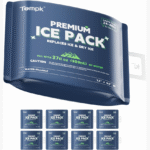
For water injection ice pack bulk, most buyers standardize around 0.3 L, 0.4 L, e 0.6 L packs. UNICEF Supply Division procurement specifications list these empty packs with explicit water-content ranges and external dimensions. They also specify design features like reinforced walls, a removable screw cap, an internal water seal, and a visible fill line.
For water injection ice pack bulk, WHO PQS verification goes one level deeper. Its independent type-testing protocol lists nominal sizes, faixas de conteúdo de água, dimensões principais, and maximum empty and filled weights. It also sets a practical fill-control requirement: the volume filled to the line must be within ±2% of the rated water content.
Mesa: Water injection ice pack bulk spec comparison (0.3–0.6 L)
| Tamanho do pacote | Typical procurement label | Water content range | Dimensões externas (L×W×T) | Closure and leak control | Navios vazios? | Notable QA tolerances |
|---|---|---|---|---|---|---|
| 0.3 L | Icepack 0.3 L (Tipo 2 comum) | 0.25–0.30 L | 163×90×34 mm (±2mm) | Screw cap + internal water seal + fill line | Sim | Fill to line within ±2%; dimensions ±2 mm |
| 0.4 L | Icepack 0.4 L | 0.35–0.40 L | 163×94×34 mm (±2mm) | Screw cap + internal water seal + fill line | Sim | Fill to line within ±2%; dimensions ±2 mm |
| 0.6 L | Icepack 0.6 L | 0.55–0.60 L | 190×120×34 mm (±2mm) | Screw cap + internal water seal + fill line | Sim | Fill to line within ±2%; dimensions ±2 mm |
Fontes: UNICEF product specifications; WHO PQS protocol tolerances and dimensional/weight schema.
Water injection ice pack bulk mechanical robustness signals
For water injection ice pack bulk operations, mechanical performance is a buying criterion. WHO requires reinforcement to restrain swelling, and it limits thickness increase after freezing. It also requires robustness against a 2-metre drop at frozen conditions and at about +5°C, followed by leakage testing.
WHO also calls out “human factors” that matter in real freezers. When water-packs are stacked and frozen in bulk, they must not bond together. The verification protocol includes a frozen thickness and adhesion test at -20°C (± 5 ° C.).
Em 2026, water injection ice pack bulk buyers also evaluate materials and end-of-life constraints. WHO requires materials that resist UV degradation and are easy to clean. It also prohibits chlorinated plastics and epoxy-resin composites in these water-packs, and asks for disposal and recycling guidance.
Water injection ice pack bulk inbound freight delta
The “ships empty” rule is the hidden economics of water injection ice pack bulk. UNICEF 0.6 L icepack is supplied empty, with 0.55–0.60 L of water content when filled. That implies you avoid shipping roughly 0.55–0.60 kg of water per unit into your network.
WHO product data show the same pattern with measured weights. One prequalified 0.6 L waterpack lists 79 g empty and 655 g filled. Outro 0.4 L water-pack lists 72 g empty and 435 g filled. The gap is mostly water, and it scales with every pallet you buy.
Visual: inbound weight per 1,000 unidades (example based on WHO data)
0.6 L water-pack (exemplo)
Empty weight : ███▎ 79 kg
Filled weight : ████████████████████████████ 655 kg
0.4 L water-pack (exemplo)
Empty weight : ███ 72 kg
Filled weight : ██████████████████▏ 435 kg
Data sources: WHO PQS product data sheets for prequalified coolant packs supporting water injection ice pack bulk modeling.
Water injection ice pack bulk compliance and validation approach
Water injection ice pack bulk risk framing: congelar, vazar, e rastreabilidade
Regulators focus on outcomes: product quality and safety. The European Union GDP guideline requires that temperature conditions are maintained within acceptable limits during transport. It also requires a risk-based approach when planning transportation. Those statements turn “coolant choice” into a documented risk decision.
Freeze risk deserves special emphasis for 2–8°C payloads. Centers for Disease Control and Prevention notes that once vaccine potency is lost, it cannot be restored. CDC also notes that a single exposure to freezing temperatures can destroy potency for some refrigerated vaccines. That is why coolant placement and conditioning procedures matter.
Leak risk is not just mess and cleanup. WHO defines a coolant-pack as a leak-proof container, and its water-pack specification demands leakage testing after defined drop tests. If your bulk supplier cannot show leak performance at cold conditions, your lane risk rises immediately.
Traceability risk is often underestimated in “pre-filled” offers. WHO explicitly warns buyers not to purchase pre-filled coolant-packs because the fill substance may not be WHO-prequalified. Em 2026, that aligns with broader supplier governance and documented material control.
Water injection ice pack bulk packaging rules buyers can cite
EU GDP provides unusually practical packaging language. It states that selection of a container and packaging should be based on storage and transportation requirements, anticipated external temperature extremes, and the estimated maximum time for transport. It also asks buyers to consider qualification status of packaging and validation status of shipping containers.
EU GDP also calls out “cool-pack” handling. If cool-packs are used in insulated boxes, the product should not be in direct contact with the cool-pack. EU GDP further requires a system to control re-use so incompletely cooled packs are not used in error. It also requires segregation between frozen and chilled ice packs.
Temperature monitoring is not optional in mature systems. EU GDP requires temperature mapping of storage areas under representative conditions, and it describes placement of monitoring devices in areas of temperature extremes. It also expects temperature monitoring equipment used in transport to be maintained and calibrated at regular intervals, at least once a year.
Food cold chain has parallel expectations. Os EUA. Food and Drug Administration sanitary transportation rule sets requirements for vehicles, operações de transporte, registros, e treinamento. It also states that vehicles and transportation equipment used for food requiring temperature control must be designed and equipped to provide adequate temperature control.
Water injection ice pack bulk test stack: standard methods and practical evidence
A credible qualification package uses both standards and lane data. ASTM International D3103 describes a test method for determining thermal insulation quality based on temperature differentials. It is suitable for packages with or without internal refrigerants. That makes it useful for comparing insulators while holding the coolant constant.
International Safe Transit Association’s thermal standards support a comparable idea in transport packaging. ISTA describes a Thermal Transport Package Certification program for qualifying shippers to its requirements. Third-party labs and shippers often pair ISTA thermal profiles with internal lane studies.
Air shipments introduce a different compliance layer when dry ice is used. IATA packing instruction language requires that packaging permit the release of carbon dioxide gas to prevent pressure build-up. NÓS. hazardous materials regulations mirror the same venting requirement for dry ice shipments by aircraft or water.
Practical validation evidence for water injection ice pack bulk
A written packout SOP with coolant conditioning and placement rules.
At least one mapped temperature study for storage and for transport.
A leak and drop performance statement tied to a recognized protocol.
Water injection ice pack bulk cost models and landed-cost scenarios
Water injection ice pack bulk unit economics: what “bulk” really changes
A bulk price only matters after you add freight and handling. WHO PQS product data sheets publish shipping weights, pieces per package, minimum order quantities, and base prices for some prequalified coolant-packs. Um 0.4 L water-pack lists 100 units per package, 11.5 kg shipping weight, and an EXW base price of USD 59 por 100 unidades (base year 2025).
Para 0.6 L water-packs, WHO PQS product data can show different pack sizes and currencies. Um 0.6 L water-pack example lists 24 units per package, 3.0 kg shipping weight, and an EXW price shown as €48 for >100 unidades (base year 2025). These figures are not universal prices, but they are credible anchors for modeling.
The freight delta is the major lever in water injection ice pack bulk. WHO product weights show that a 0.6 L water-pack can move from 79 g empty to 655 g filled. When you buy it empty, you stop paying to ship most of the water.
Water injection ice pack bulk cost-per-unit scenario table
The table below is designed for procurement teams. Replace the assumed freight rates and labor rates with your actual inputs. Keep the structure because it forces cross-functional alignment.
Mesa: Cost-per-unit scenarios for water injection ice pack bulk (modelo)
| Cenário | Estratégia de refrigeração | Landed-cost drivers | Custos ocultos | Typical “win” conditions |
|---|---|---|---|---|
| UM | water injection ice pack bulk (vazio + fill on site) | Empty unit price + frete de entrada (vazio) + fill labor + freezer energy | Fill variance; cap torque; freezer congestion; retrabalhar | Alto volume, stable SOPs, expensive inbound freight |
| B | Pacotes de gel pré-cheios | Preço unitário (preenchido) + frete de entrada (preenchido) | Chemistry traceability; disposição; tratamento de condensação | Low labor sites, urgent deployment, low inbound freight sensitivity |
| C | Pacotes PCM (não-0°C melt) | Preço unitário mais alto + qualification effort | More complex conditioning; supplier lock-in | Freeze-sensitive SKUs with tight temperature bands |
| D | Gelo seco + isolamento | Dry ice sourcing + hazardous compliance + isolamento | Projeto de ventilação, rotulagem, treinamento | Deep-frozen lanes where water-based packs cannot meet profile |
Dry ice compliance note: International Air Transport Association requires packaging that permits CO₂ release to prevent pressure build-up. NÓS. hazmat rules include the same venting requirement for dry ice offered for aircraft or vessel transport.
Water injection ice pack bulk break-even calculator idea
This is a simple decision tool you can embed on-page. It gives readers a fast “yes/no” before procurement invests time.
Etapa 1: Use a known weight delta.
An example 0.6 L water-pack shows 655 g filled and 79 g empty. The weight delta is 576 g per pack.
Etapa 2: Convert weight delta to freight savings.
Freight savings per pack ≈ (0.576 kg) × (your inbound rate $/kg).
Etapa 3: Compare freight savings to fill cost.
Se a poupança > (fill labor + Controle de qualidade + utilities + sucata), water injection ice pack bulk is economically favored.
Example visual: freight savings per pack (0.6 L example)
| Inbound freight rate ($/kg) | Savings per pack from shipping empty |
|---|---|
| 0.25 | 0.14 |
| 0.50 | 0.29 |
| 1.00 | 0.58 |
| 3.00 | 1.73 |
| 6.00 | 3.46 |
Inputs: weight delta derived from WHO PQS product data sheet example.
Chamado à ação: Use this calculator to pre-qualify lanes, then request samples and run one water injection ice pack bulk packout study.
Water injection ice pack bulk supply-chain impact and 2026 tendências
Water injection ice pack bulk impacts across the network
The biggest operational shift is where water weight enters your supply chain. WHO requires water-packs to be delivered empty and filled by the purchaser or end user. That means inbound shipments carry plastic and packaging, não água.
The second shift is freezer capacity. Bulk operations often stack and freeze packs, which is why WHO explicitly requires that stacked water-packs must not bond together in bulk freezing. WHO’s verification protocol even includes a frozen thickness and adhesion test at -20°C (± 5 ° C.).
The third shift is procedural control. EU GDP requires written procedures for handling temperature-sensitive products, including cool-pack reuse controls and segregation between frozen and chilled ice packs. Na prática, “water injection ice pack bulk” becomes a controlled process, not just a purchased SKU.
Water injection ice pack bulk and 2026 pressão de sustentabilidade
Sustainability in 2026 is tied to compliance timelines. The European Commission notes that the Packaging and Packaging Waste Regulation entered into force in February 2025 and has a general application date of 12 Agosto 2026. That timeline influences packaging choices well beyond Europe, because suppliers standardize globally.
WHO PQS water-pack requirements already include material and end-of-life expectations. WHO prohibits chlorinated plastics and epoxy composites for these products. WHO also asks manufacturers to provide disposal and recycling guidance to buyers. Both points support sustainability narratives without over-claiming recyclability.
Water injection ice pack bulk and the 2026 move toward “documented performance”
The PQS coolant-pack section itself was updated with a 2026 version date. In that document, WHO repeats the “do not purchase pre-filled coolant-packs” warning and explains why water-based products filled in-country are still prioritized for routine immunization. These statements reinforce why buyer documentation should include fill media, POPS, and acceptance tests.
EU GDP similarly embeds documentation and evidence. It expects temperature mapping in storage areas and sets expectations for validation and reliable data from computerized systems. It also calls for maintenance and annual calibration intervals for transport temperature monitoring equipment.
Mesa: Supply-chain impact comparison (2026 lente)
| Área de impacto | water injection ice pack bulk | Pacotes de gel pré-cheios | Pacotes PCM | Dry ice shipments |
|---|---|---|---|---|
| Inbound freight weight | Mais baixo, because packs ship empty | Mais alto, because coolant ships with product | Mais alto, because coolant ships with product | Not comparable; coolant sourced locally |
| Site capability required | Water supply, capping discipline, capacidade do congelador | Minimal fill work; mainly staging | Conditioning discipline; often tighter SOP | Ventilação, rotulagem, treinamento, hazardous controls |
| Freeze-risk management | Strong if conditioning and placement are controlled | Varies by gel behavior and placement | Strong when phase point matches target band | High if used near chilled payloads |
| Documentation strength | High when tied to PQS specs, POPS, and packout tests | Depends on supplier spec transparency | Alto, but adds material traceability | Highest due to air and hazmat rules |
| 2026 sustainability narrative | Lower inbound weight; material constraints per PQS | Disposal complexity for gels | Often higher embodied complexity | Higher compliance burden; CO₂ venting need |
Why this table is defensible: “ships empty” and fill-by-user are formal PQS requirements; weight deltas are published in PQS product sheets; dry ice venting is a codified requirement.
Chamado à ação: Use the table to align procurement, QA, and operations before you issue an RFQ for water injection ice pack bulk.
Water injection ice pack bulk FAQ
Water injection ice pack bulk FAQ
What is “water injection ice pack bulk” in procurement terms?
It means buying empty water-packs or coolant-packs in quantity, then filling them locally. WHO requires water-packs to be delivered empty and filled by the purchaser or end user. UNICEF product specifications also state “supplied empty” with a fill line and internal seal.
How do I write an incoming QC spec for water injection ice pack bulk?
Start with tolerances that are already defined in PQS documents. WHO’s protocol specifies dimensional tolerances (±2mm) and requires fill-to-line volume within ±2% of rated water content. It also includes frozen thickness and adhesion testing after freezing at -20°C (± 5 ° C.).
How can water injection ice pack bulk reduce freeze damage risk?
Two rules help most. Avoid direct contact between cool-packs and product, as EU GDP states. Also treat freezing as an irreversible quality event for some refrigerated vaccines, as CDC warns. Condicionamento, colocação, and segregation between frozen and chilled packs should be in your SOP.
Can water injection ice pack bulk support a +2°C to +8°C profile?
Sim, when you operate it as a cool-pack workflow, not as a hard-frozen icepack workflow. WHO defines a cool-pack as a water-pack pre-cooled to +2°C to +8°C before use. That definition can be cited directly in qualification documents.
What validation evidence is most persuasive for water injection ice pack bulk in 2026?
Use recognized references and clear records. EU GDP expects packaging selection based on requirements, external temperature extremes, and transport time, plus qualification and validation status. ASTM D3103 provides a method to evaluate thermal insulation quality based on temperature differentials. ISTA provides structured thermal transport certification programs used by many labs.
O que 2026 regulatory trend should cold chain teams watch?
Packaging compliance timelines are a macro driver. O Regulamento de Embalagens e Resíduos de Embalagens da UE aplica-se a partir de 12 Agosto 2026, according to EU sources. Mesmo fora da UE, suppliers may harmonize packaging documentation and claims to meet these timelines.