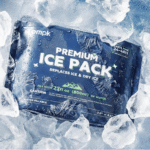
Water Injection Ice Pack Non-Toxic Supplier is a practical 2026 solution when you want cold-chain protection, denser storage, and more control over how refrigerant mass enters the operation. You receive the pack in a flat state, add water when you need it, freeze it under a defined routine, and use it inside a validated shipper system that matches your lane, produto, and service promise.
Isso parece simples, but the best buying results come only when buyers who need safer formulations for food, assistência médica, and general cold chain packaging look beyond piece price. The right decision connects material design, geometria do pacote, operating workflow, compliance evidence, and business risk. If your goal is to source packs with credible safety documentation instead of relying on vague marketing claims, this optimized guide brings the strongest ideas together into one decision framework.
This optimized guide will help you answer:
• Why water injection ice pack non-toxic supplier can outperform bulkier refrigerant formats in storage, frete de entrada, and pack-out flexibility.
• Which specifications actually decide thermal performance, velocidade de manuseio, and shipment reliability.
• How to verify safety, documentação, and supplier discipline before scaling the program.
• O que 2026 regulatory, mercado, and sustainability pressures should change the way you buy.
• How to build an approval matrix that helps procurement, operações, qualidade, and sales use the same facts.
Why is this the right solution for some operations and not others?
The first reason buyers choose water injection ice pack non-toxic supplier is control. You are no longer forced to store large volumes of pre-filled mass just to be ready for future orders. Em vez de, you keep compact inventory on hand and convert it into a finished refrigerant only when needed, which helps align purchasing with actual shipping demand.
This model is particularly useful when the business has changing weekly order patterns, multiple shipper sizes, or limited warehouse cube. It can also support better internal discipline because hydration, congelando, and pack-out become visible operating steps instead of hidden assumptions. For buyers who need safer formulations for food, assistência médica, and general cold chain packaging, that often means stronger replenishment planning, easier inventory counting, and a better match between packaging stock and the routes that truly need it. Treat the non-toxic claim as a documentation question, not a marketing shortcut. Ask for the formulation summary, Sds, outer-film information, and restricted-substance screening before you lock the order.
When is water injection ice pack non-toxic supplier the right solution?
It is the right solution when the lane needs chilled support, the site can manage a simple conditioning routine, and the business benefits from compact inbound storage. It is less suitable when the operation cannot control hydration and freezing, or when the shipment requires a narrower temperature profile that calls for a different refrigerant strategy. Em outras palavras, the right choice depends on route reality, not on catalog popularity.
| Decision Question | Yes Means | No Means | Ação |
|---|---|---|---|
| Do you need denser inbound storage? | Flat format may add value | Storage is not a major issue | Weight storage benefit correctly |
| Can sites control hydration and freezing? | Program can scale well | Execution risk is high | Simplify or choose another format |
| Are lanes mostly chilled rather than highly specialized? | Water-based pack may fit | A targeted solution may be needed | Validate temperature requirement |
| Do multiple departments review packaging? | Clear documentation matters more | Decision is simpler | Build a common scorecard |
Dicas práticas
• Define where hydration happens, how fill is checked, and how finished packs are labeled before launch.
• Segment standard lanes from stressed lanes so you do not overbuild every shipment.
• Keep the first rollout narrow enough that warehouse teams can master the routine quickly.
Cenário de exemplo: A commercial shipper used one compact water-fill pack for routine lanes and a heavier qualified solution only for delay-prone routes. That kept daily operations simple while preserving protection where it mattered most.
Which specifications decide real-world performance?
The second layer is specification quality. The best suppliers can explain dry size, finished size, target fill volume, tempo de condicionamento, film construction, seal strategy, contagem de caixas, and intended use in plain operational language. Those details matter because thermal success depends on system fit, not just on whether the pack feels cold.
A pack that is too small may freeze fast but run out of reserve early. A pack that is too large may hold longer but take up too much cube, increase freight, or create uneven contact around the payload. The winning specification is the one that fits the lane, remetente, and product geometry while staying practical for your freezer and labor model. That is why finished-pack dimensions and conditioning windows should be treated as core commercial data, not technical footnotes.
Which performance specifications should you prioritize for non-toxic cold pack manufacturer?
Prioritize finished mass, finished dimensions, janela de condicionamento, integridade do selo, and repeatability after normal handling. Then review how those values interact with the shipper system: espessura do revestimento, payload arrangement, lacunas de ar, and expected delay exposure. This stops the common mistake of buying a strong pack that is poorly matched to the rest of the packaging system.
| Especificação | Por que isso importa | O que perguntar | Buying Impact |
|---|---|---|---|
| Finished dimensions | Controls fit and contact | What does the pack measure after fill? | Avoids dead space and closure issues |
| Target fill volume | Sets thermal mass | What is the practical fill tolerance? | Melhora a repetibilidade |
| Conditioning window | Controls readiness | How long in my freezer conditions? | Improves workflow planning |
| Seal and film design | Afeta a resistência ao vazamento | What abuse conditions were considered? | Reduces damage risk |
| Carton configuration | Affects receiving and storage | How many usable units per carton? | Improves warehouse economics |
Dicas práticas
• Request dry and finished specifications in one file so no team approves incomplete data.
• Validate the pack inside the full shipper, not as a standalone frozen sample.
• Record seasonal settings separately if summer and mild-weather pack-outs are different.
Cenário de exemplo: A buyer improved consistency not by changing suppliers, but by tightening fill instructions and selecting a pack with a more useful finished thickness for the existing shipper. That small specification change made the whole system easier to execute.
How do you validate safety, qualidade, and supplier reliability?
The third layer is compliance and supplier credibility. A high-performing pack is not enough if the supplier cannot support change control, rastreabilidade, claim discipline, and the documents needed by procurement, qualidade, or customers. Strong cold-chain sourcing is part product decision and part governance decision.
For food-adjacent applications, buyers should understand hygienic transport expectations and temperature-control responsibilities in the broader shipping system. For healthcare or trial-sensitive lanes, documentação, monitoring logic, and deviation readiness rise in importance very quickly. Even in general commercial programs, especificações claras, claim support, and lot traceability reduce future friction when the business scales or changes channels.
ISTA states that its 7E profiles are the current standard for thermal transport testing, and the profile set was built from real-world parcel data collected across 82 different lanes. Qualification still works best when the supplier can connect test evidence to a realistic operating method.
How do you verify supplier quality for water fill gel pack safety?
Ask for a controlled specification file, carton details, orientação de condicionamento, document ownership, and the process for handling nonconforming lots or future design changes. For marketed claims such as non-toxic, reutilizável, or recyclable, make sure the wording in the sales material matches the technical and compliance packet. That alignment is one of the clearest signals that the supplier can support a serious program.
| Verification Area | Question to Ask | Sinal de alerta | Preferred Answer |
|---|---|---|---|
| Specification control | Who owns revisions? | No version discipline | Controlled document with date and revision |
| Claim support | What evidence backs the claim? | Sales language only | Claim file that matches the spec |
| Deviation handling | How are complaints investigated? | No clear process | Named quality path and response steps |
| Supply continuity | How are repeat lots managed? | Inconsistent communication | Visible lot and lead-time discipline |
Dicas práticas
• Create one approval folder that procurement, operações, and quality can all access.
• Review the supplier's change-notification process before the first volume order, not after a surprise revision.
• Treat documentation quality as part of the product value because it affects every future reorder.
Cenário de exemplo: A distributor rejected an attractive quote after the supplier could not explain how future material changes would be communicated. That decision protected the buyer from a silent specification drift later in the year.
How do you optimize cost, sustentabilidade, e 2026 prontidão?
The fourth layer is total business performance in 2026. FAO and UNEP have highlighted that the food cold chain is responsible for around 4 percent of global greenhouse gas emissions when both cooling-related emissions and food loss caused by missing refrigeration are counted together. This wider context is pushing companies to ask whether a pack lowers inbound weight, improves storage density, supports realistic waste handling, and fits a more cross-functional approval process.
A modern sourcing decision should therefore score the pack in four categories: ajuste de rota, site fit, documentation fit, and sustainability fit. Route fit asks whether the pack protects the lane. Site fit asks whether your people can condition and use it reliably. Documentation fit asks whether the claim and quality packet are ready for scrutiny. Sustainability fit asks whether the product reduces waste or movement in a way you can honestly explain. Once you score all four, the buying decision becomes much clearer.
What does a complete 2026 decision tool for food-safe outer film cold pack look like?
Use a weighted matrix with simple scores from one to five for thermal fit, warehouse impact, labor practicality, claim confidence, qualidade da documentação, e resiliência da oferta. Weight the categories according to business risk. A trial shipment may weight documentation highest. A mass food program may weight route fit and workflow highest. A corporate ESG review may weight waste and claim accuracy more heavily. The tool works because it turns opinions into visible trade-offs.
| Scorecard Category | Como é bom | Low Score Sign | Por que isso importa |
|---|---|---|---|
| Thermal fit | Validated for the real lane | Only generic cooling claims | Protects delivered quality |
| Impacto do armazém | Dense storage and clear staging | Bulky or confusing workflow | Improves operations |
| Documentation fit | Controlled spec and claim file | Mismatched sales and QA wording | Reduz o risco de aprovação |
| Sustainability fit | Measured benefit and honest positioning | Broad unsupported claim | Improves trust and reporting |
| Supply resilience | Stable lead time and backup path | Single fragile supply line | Protects continuity |
Dicas práticas
• Revisit the scorecard every quarter if volumes, rotas, or customer expectations are changing quickly.
• Keep one alternate supplier or one alternate pack family validated for critical lanes.
• Use plain, auditable claim language; it is easier to defend and easier for sales teams to use correctly.
Cenário de exemplo: An enterprise buyer selected a pack that scored slightly lower on unit price but much higher on documentation, warehouse fit, and seasonal flexibility. The broader scorecard led to a more stable program and fewer internal approvals delays.
How do you keep the program effective after launch?
The final layer is long-term program design. A water injection ice pack program should not end at product approval. It should include site instructions, seasonal pack-out logic, document refresh rules, and a trigger for when a shipment tier needs a different solution. That is how you protect value after the initial purchase order.
Na prática, this means writing one operating rule for standard lanes, one escalation rule for stressed lanes, and one review routine for claim or specification changes. It also means training receiving teams on what to inspect and giving customer-facing teams language that matches the approved file. When those controls are in place, the program remains stable even as shipment volume or channel mix grows.
How do you keep documented cold pack sourcing effective after launch?
Monitor three things: pack execution, lane outcome, e consistência do fornecedor. Pack execution covers fill and freeze discipline. Lane outcome covers delivery condition and exception trends. Supplier consistency covers lot quality, tempo de espera, and document changes. This creates a feedback loop that improves the program instead of letting drift build quietly.
| Post-Launch Control | What to Monitor | If You Ignore It | Result of Good Discipline |
|---|---|---|---|
| Execution check | Fill, congelar, and staging | Site variation grows | More repeatable packing |
| Lane review | Delivered condition and exceptions | Hidden failures remain | Faster corrective action |
| Supplier review | Lot quality and revisions | Specification drift appears | Melhor continuidade |
| Claim review | Sales and ESG language | Unsupported messaging spreads | Cleaner compliance posture |
Dicas práticas
• Keep training documents short and visual so sites actually use them.
• Review complaints by route and pack-out type, not only by customer name, so the packaging pattern becomes visible.
• Schedule a formal packaging review before peak season, not after problems appear.
Cenário de exemplo: A business reduced warm-delivery claims by adding a simple pre-peak review of fill practice, freezer loading, and lane escalation rules. The product did not change. The program discipline did.
2026 instantâneo de tendência
Em 2026, the best cold-chain content and the best cold-chain purchasing decisions share one principle: usefulness beats noise. Current Google Search guidance still emphasizes helpful, confiável, people-first content with clear titles, strong headings, and useful internal navigation rather than thin search-engine-first copy. The same rule applies here. The best pack is the one that solves a real shipping problem with evidence, clareza, e ajuste operacional.
O que está mudando agora?
• More buying teams are connecting packaging selection to warehouse, Esg, and customer-service outcomes.
• Lane realism and document discipline are overtaking generic feature lists.
• Programs with clear claim boundaries are easier to approve and easier to scale.
That direction favors suppliers and buyers who can explain the pack in clear business terms: what it does, what it does not do, where it fits, and how it should be used. For most organizations, that clarity is now part of performance.
Perguntas frequentes
Why do companies choose water injection ice pack non-toxic supplier instead of pre-filled packs?
They often choose it for denser inbound storage, lower freight burden before use, and greater flexibility in how finished packs are staged for shipment. The operational method is slightly more involved, but the overall system can be more efficient.
What are the most important technical checks?
Start with finished dimensions, volume de preenchimento, janela de condicionamento, integridade do selo, and full-system validation in the actual shipper. Those factors drive performance more reliably than surface appearance.
How should I evaluate a non-toxic, reutilizável, or recyclable claim?
Evaluate the claim against the technical file and the real operating pathway. If the claim cannot be explained clearly by quality, vendas, and operations using the same language, it needs more work.
When is a water-based pack not enough?
It may not be enough when the shipment needs a narrower temperature band, unusually long exposure, or a highly specialized healthcare profile. Those lanes may require a different refrigerant strategy.
What should procurement and operations decide together?
They should decide pack family, fill method, conditioning routine, lane tiers, and the rules for escalation during stressful weather or delays. That shared decision prevents many avoidable failures.
How can I start improving water injection ice pack non-toxic supplier today?
Map your top shipment lanes, review current pack-out consistency, and score your existing supplier on specification clarity, qualidade do documento, e ajuste de rota. That quickly shows where the biggest improvement is available.
Resumo e recomendação
Water Injection Ice Pack Non-Toxic Supplier delivers the most value when it is selected as a complete program: the right format, the right lane fit, the right document packet, and the right operating discipline. That combination improves storage efficiency, sourcing confidence, and delivered consistency far more than chasing a low piece price alone.
The smartest next move is to build a one-page approval matrix and test it on your current suppliers or sample candidates. When everyone uses the same framework, buying becomes faster, mais claro, e mais defensável.
Sobre Tempk
Sobre Tempk: We work on temperature-controlled packaging with a practical, system-level approach. That includes water injection ice packs, thermal insulation formats, and support for matching the right refrigerant program to the lane, produto, and operating environment.
To move forward, bring the lane profile, formato do remetente, storage constraints, and claim requirements into one conversation. That is the fastest path to a water injection ice pack program that performs well and stays manageable over time.