If you are planning industrial plastic crate wholesaler for medical packaging, the best result comes from combining product fit, منطق الامتثال, and lifecycle economics into one decision. That sounds ambitious, but it is actually practical. You want a container system that protects the payload, fits the workflow, stays clean or controlled in service, and gives you a strong return on each trip. في 2026, that is the standard serious buyers are aiming for because reusable packaging now touches cost, جودة, الاستدامة, and audit readiness all at once.
The optimized approach is not about adding more complexity. It is about removing weak assumptions early. You define the lane, choose the material around the real stress, confirm the compliance path, then compare suppliers on whole-system value. That means you pay attention to structure, temperature behavior, تعريف, تنظيف, استعادة, and rollout support together. عندما تتم محاذاة تلك القطع, industrial plastic crate for medical packaging becomes a dependable operating tool rather than a packaging gamble.
What This Pro-Optimized Guide Will Help You Decide
- How to define the ideal industrial plastic crate for medical packaging design for secondary packaging, in-plant handling, and distribution support for medical devices and healthcare products.
- أي المواد, أدلة الاختبار, and compliance points should shape the decision in medical packaging and healthcare supply chains.
- كيفية مقارنة التكلفة الإجمالية, الاستدامة, and supplier capability without getting lost in sales language.
- ماذا 2026 trends matter most for reusable, يمكن تتبعها, and scalable packaging systems.
What does the best industrial plastic crate for medical packaging design look like for your lane?
The best design starts with clarity about the lane. You need the payload, unit dimensions, نطاق الوزن, touch points, يسكن الوقت, طريقة التنظيف, return pattern, and lowest and highest temperatures. Only then can you judge whether the right answer is a lightweight everyday container, a reinforced structural crate, an insulated reusable tote, or a more specialized hybrid. In medical packaging and healthcare supply chains, the goal is not to buy the strongest possible box. It is to buy the right amount of performance in the right places so the asset stays efficient as well as durable.
A strong design usually balances four things. It protects the product. It fits people and equipment. It supports identification and control. And it returns efficiently after use. That balance matters because an overbuilt design can waste money and handling effort, while an underbuilt design fails in service. The smartest buyers therefore focus on design intent: why is the wall shaped this way, why does the base look like this, why are the handholds placed there, and how does the asset recover after the trip?
The Four Design Pillars Buyers Should Score
Score the design around four pillars: حماية, سهولة الاستخدام, يتحكم, والانتعاش. Protection means structural, حراري, or contamination performance as needed. Usability covers grip, سلوك المكدس, جهد التنظيف, and fit with existing carts, رفوف, and pallets. Control means labels, molded IDs, or datalogger support. Recovery means nestability, foldability, repairability, والتخطيط لنهاية الحياة. If a candidate design is weak in one pillar, it usually creates hidden cost somewhere else in the system.
| <قوي>Design pillar</قوي> | <قوي>ما للتأكيد</قوي> | <قوي>العلم الأحمر المشترك</قوي> | <قوي>ماذا يعني لك</قوي> |
| حماية | Real fit for payload, درجة حرارة, and abuse | Strength claims with no lane context | You may overpay or still see damage |
| سهولة الاستخدام | Comfortable handling and smooth process fit | Operators hesitate, drag, or restack the unit | Labor cost and error risk rise |
| يتحكم | Clear ID, label protection, وانضباط المراجعة | Labels peel or assets cannot be tracked | Visibility and quality investigations get harder |
| استعادة | Efficient empty return and documented end-of-life route | Assets disappear or are too expensive to recover | The sustainability and ROI story weakens |
أي المواد, thermal controls, and compliance rules matter most?
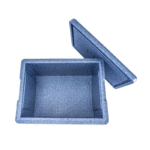
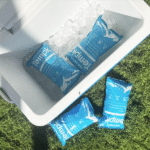
Material choice should match the lane, not the marketing claim. In many projects the discussion begins with medical-grade PP and HDPE with low-particle cleanable surfaces. من هناك, the real decision is about behavior in context. Does the resin stay tough enough at the lowest temperature? Does it tolerate wash chemistry or process splash? Does the geometry keep stress away from weak points? If thermal control matters, the conversation expands to insulated walls, إدراج, gel systems, or phase-change support. The exact answer depends on route duration, فرقة درجة الحرارة, وحساسية الحمولة.
Compliance should guide the design from the beginning. For food-related uses, buyers often work from FDA food-contact expectations in the United States and EU food-contact rules in Europe. للرعاية الصحية, معمل, or medically sensitive lanes, WHO distribution guidance, CDC cold-chain practices, ISO 11607, ISO 13485, ISO 14644, and GS1 traceability principles may all matter depending on the application. For industrial chemical settings, ASTM D543 and hazard-related transport rules become more relevant. The right approach is to map the compliance stack first, then confirm which part of the packaging system each rule actually touches.
A Validation Checklist That Prevents Expensive Mistakes
A disciplined validation plan does not need to be huge. It needs to be relevant. Confirm loaded handling, temperature behavior, cleaning compatibility, identification durability, and any application-specific compliance requirements. If the design includes thermal control, validate it against a real lane profile rather than a generic hold-time claim. If the asset supports regulated products, document how changes are controlled. These steps turn approval from a hopeful guess into a manageable, evidence-based decision.
| <قوي>عنصر التحقق من الصحة</قوي> | <قوي>ماذا تطلب</قوي> | <قوي>لماذا يهم</قوي> | <قوي>Best practical approach</قوي> |
| Finished-part performance | Data from the actual molded design | Raw material sheets do not tell the full story | Review sample plus route-specific trial |
| Temperature fit | Behavior across ambient, controlled storage, and selected cold-chain healthcare lanes | Plastics and insulation change with temperature | Run a lane-based thermal or handling test |
| Cleaning and hygiene | Resistance to real wash routine | Many designs fail over time, not on day one | Cycle the sample through repeated cleaning |
| Identification and change control | Stable labels or molded IDs plus revision history | Traceability weakens when identity is fragile | Protect the ID zone and document updates |
How do you compare lifetime cost, الاستدامة, and supplier capability?
The most useful cost view is cost per successful trip, not price per unit. That single shift in thinking changes the whole buying conversation. Now you care about service life, damage avoidance, wash labor, empty-return density, خسارة الأصول, and recovery value. A slightly more expensive container can easily become the lower-cost option if it protects product better, handles more comfortably, or returns more efficiently over time.
Sustainability belongs inside that same lifetime view. EPA continues to place reuse above recycling in the preferred hierarchy, and European packaging rules are sharpening focus on circular design. في الممارسة العملية, that means the best reusable asset is one that delivers many good trips, comes back reliably, and has a realistic repair or recovery path. It also means the supplier should be able to discuss PCR use, separable components, and end-of-life handling with more substance than a simple marketing label.
A 30-Second Decision Tool for Final Supplier Comparison
Before you approve a supplier, ask four fast questions. أولاً, does the design clearly fit the lane? ثانية, is the evidence relevant to the lane? ثالث, can the supplier support rollout, الوثائق, and future change control? الرابع, can the reusable system be recovered and managed at scale? If you cannot answer yes to all four, your team is probably still buying too early.
| <قوي>منطقة القرار</قوي> | <قوي>Strong answer</قوي> | <قوي>Weak answer</قوي> | <قوي>التأثير التشغيلي</قوي> |
| صالح المسار | Supplier understands payload, درجة حرارة, and process details | Supplier only repeats catalog specs | Weak fit creates daily friction |
| شهادة | Testing or trial data matches actual use | Generic claims with little context | Approval risk shifts back to you |
| Service support | طيار, rollout, تمرين, and revision process are clear | Supplier disappears after delivery | Adoption slows and fixes get delayed |
| Circular value | يعود, بصلح, and recovery path is practical | Reuse story ends at purchase | ROI and sustainability weaken together |
نصائح عملية للشراء
- Calculate cost per successful trip, not only purchase price.
- Put asset loss, عمالة التنظيف, and return density on the same comparison sheet as unit price.
- Treat supplier responsiveness during sampling as a preview of post-launch support.
- Ask what happens if the lane changes in temperature, حمولة, or route duration six months after rollout.
مثال الحالة: a team comparing two solutions for device assembly plant flow chose the slightly more expensive option because it delivered stronger return density, better labeling durability, and faster pilot support. The result was lower total system cost even though the purchase price looked higher on day one.
How should you launch, يقيس, and improve the system?
A strong launch begins with a controlled pilot. Choose one route, one site, or one product family. Define success metrics in advance and record them honestly. Watch how operators handle the asset when they are busy, tired, or cleaning at the end of a shift. Those moments reveal the truth about grip, سلوك المكدس, وضع التسمية, and overall fit. The pilot should also test recovery: do the assets return reliably, and can damaged units be isolated quickly?
بعد الإطلاق, improvement should stay continuous but simple. Review damage causes, loss points, wash effort, أداء المسح, and any temperature or hygiene deviations tied to the asset. If the same problem appears repeatedly, ask whether it is a design issue, a training issue, or a process issue. Many reusable packaging programs fail because nobody owns that question. The best programs treat packaging as part of operations management, not a one-time purchase that procurement forgets about after delivery.
The First 90 Days KPI Set
في الأول 90 أيام, measure trip count, معدل الخسارة, damage reason, وقت التنظيف, scan success, and user feedback. If the application is temperature-sensitive, add excursion data or route conformance. These KPIs are enough to show whether the business case is strengthening or weakening. They also create a factual basis for design changes, supplier coaching, or internal process updates.
KPI Checklist for the First 90 أيام
- Trip count per asset or per pool segment
- Asset loss and damage rate by site or lane
- Cleaning time and cleaning rejection reasons
- Scan success, label durability, or serialized asset visibility
- Temperature or dwell-time exceptions where the lane is sensitive
2026 التطورات والاتجاهات
الأكبر 2026 development is that reusable packaging decisions are becoming more integrated. أنظمة, التتبع, الاستدامة, and service expectations are converging. Buyers want suppliers who can connect them in plain language and support them in practice. That makes educational, application-specific content more valuable than ever because decision makers are screening for proof, not just for product range.
أحدث التطورات في لمحة
- Reusable assets are increasingly selected through a total-system lens that includes cleaning, يعود, والتخطيط لنهاية الحياة.
- Traceability support is moving from a premium feature to a near-baseline expectation in many quality-sensitive sectors.
- Route-qualified, lane-specific packaging programs are gaining ground over generic stock-container buying.
للمشترين, this is good news. It means a well-run sourcing process can create a clear competitive advantage. When you choose industrial plastic crate for medical packaging through lane fit, شهادة, قيمة دورة الحياة, and supplier capability, you lower the chance of expensive surprises and improve the odds of long-term operational stability. That is exactly what the best packaging programs are trying to achieve in 2026.
الأسئلة المتداولة
What is the first thing to define when buying industrial plastic crate for medical packaging?
تحديد المسار. حمولة, درجة حرارة, touch points, روتين التنظيف, and return flow shape every other decision.
How should I judge supplier claims?
Ask whether the evidence comes from the finished design, under conditions similar to your own. Generic claims are useful only as a starting point.
What makes a reusable system sustainable in practice?
High trip life, reliable recovery, manageable cleaning, and a believable end-of-life route. A sustainability claim without those elements is incomplete.
When is a pilot necessary?
Almost always. A short pilot reveals handling issues, سلوك المكدس, label durability, and route realities that desk review alone cannot show.
How do I know I chose the right supplier?
After the pilot, the right supplier is the one whose design fits the lane, whose documentation makes sense, and whose team stays useful when questions become operational instead of theoretical.
ملخص وتوصيات
The pro-optimized way to buy industrial plastic crate wholesaler for medical packaging is to connect design, شهادة, امتثال, and lifecycle value into one decision. ابدأ بالممر. Choose material and structure around real stress. Validate what matters. Compare suppliers on cost per successful trip, recovery logic, and support quality. Then launch with clear KPIs. That process gives you a packaging system that can perform in daily operations and still hold up when strategy, مراجعة, or finance questions arrive later.
- Build a lane brief with payload, درجة حرارة, handling points, and return flow.
- Score the design around protection, سهولة الاستخدام, يتحكم, والانتعاش.
- Confirm the compliance stack before approving materials or thermal claims.
- طيار, يقيس, and refine before committing to large-scale deployment.
حول Tempk
و Tempk, we build reusable healthcare and cold-chain packaging with attention to cleanability, التكرار, والتوثيق. We know that medical packaging teams care as much about traceability, اتساق الأبعاد, and risk control as they do about the crate itself.
If you want to move from container buying to system design, the next step is to review one real lane in detail and test the candidate solution against it. That is where the strongest reusable packaging strategies start, and it is usually where the most avoidable mistakes disappear.