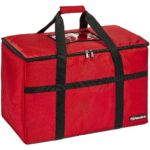
عزل حاويات الأطعمة المجمدة بسلسلة التبريد – ما الذي ينجح؟?
آخر تحديث: ديسمبر 12, 2025
You can have the best frozen product in the world and still lose money if heat sneaks into the box. Cold chain frozen foods container insulation is the simplest lever you control: it slows heat, protects quality, and reduces temperature surprises. That matters because weak cold chains drive major losses globally, and regulators increasingly expect documented temperature control. ()
في هذا الدليل, you’ll learn:
كيف cold chain frozen foods container insulation reduces thaw risk in last-mile delivery
What temperature targets (يحب -18درجة مئوية / 0° f) actually mean for your shipments ()
How to choose between EPS, إي بي بي, بو, and VIP options without guessing
How to validate performance using recognized thermal testing approaches (ASTM/ISTA) ()
How to support compliance documentation (including FSMA sanitary transportation expectations) ()
Why does cold chain frozen foods container insulation matter for profit and safety?
Cold chain frozen foods container insulation matters because it buys you time. Think of heat like water trying to seep into your shipment. Insulation is the “rain jacket” that slows that seepage when trucks sit at docks, parcels wait on porches, or doors open repeatedly.
It also ties directly to waste. عالميًا, a lack of effective refrigeration is linked to massive food losses, and cold-chain improvements are repeatedly highlighted as a practical solution. ()
How insulation reduces heat gain during “normal” chaos
في العمليات الحقيقية, temperature spikes rarely come from one dramatic failure. They come from many small ones: a warm loading bay, a delayed route, or a driver opening the door ten extra times. جيد cold chain frozen foods container insulation makes those moments less dangerous.
| Heat-gain driver | ماذا يحدث | What insulation changes | ماذا يعني لك |
| Dock dwell time | Trailer sits while doors open | Slows warm air impact | Fewer partial thaws |
| Last-mile handling | Parcel faces sun/wind | Reduces peak exposure | More consistent delivery quality |
| Poor pre-cooling | Warm box starts “behind” | Insulation can’t fix it alone | Need a prep checklist |
| High empty space | Air warms fast | Better fit reduces air volume | Lower coolant cost |
نصائح عملية يمكنك تطبيقها هذا الأسبوع
Use right-sizing first: less empty air usually beats “more ice.”
Treat insulation as a system: صندوق + بطانة + سائل التبريد + ختم + قواعد التعامل.
قياس ما يهم: product-core or simulated payload temperature, not just truck setpoint.
Field-style example (common but preventable): A frozen meal shipper improved delivery success by switching to tighter pack geometry (مساحة رأس أقل) and adding a simple “close-the-lid fast” dock rule—without changing the refrigerant.
What temperature target should cold chain frozen foods container insulation hold?
Your baseline target for frozen is simple: keep products at or below 0°F (-18درجة مئوية) whenever practical. نحن. food safety guidance notes that frozen foods held continuously at 0° f (-18درجة مئوية) أو أدناه can be kept indefinitely (quality varies by item). ()
Codex quick-frozen standards also commonly reference storage at -18درجة مئوية أو أكثر برودة, reinforcing the global norm. ()
What this means for cold chain frozen foods container insulation: you’re not “aiming for cold.” You’re aiming for a limit—and designing your packout so predictable delays don’t push you over it.
The simple rule: design around product-core temperature
Truck temperature settings and warehouse thermostats are helpful—but your customer experiences the product temperature. So design your insulation and coolant plan around the payload’s thermal mass (how slowly it warms) and the lane (وقت + ambient swings).
| Common reference | Typical target | لماذا هو موجود | ماذا يعني لك |
| “Frozen” norm | ≥ -18 درجة مئوية / 0° f | جودة + safety expectations | Design packouts to resist spikes () |
| Freezer guidance | 0° f / -18درجة مئوية | Food stays safe when properly frozen | Monitoring helps prove control () |
| Transport rule mindset | Written procedures + evidence | Documented controls reduce risk | بناء SOP + monitoring plan () |
Practical tips for setting your “real” target
Set a buffer: if your limit is -18°C, target colder at packout so you have time.
Use worst-day thinking: summer curbside + long dwell time, not average weather.
Pick one thermometer standard: and calibrate on a schedule.
Reality check you can cite internally: FDA notes frozen food remains safe when properly stored at 0°F (-18درجة مئوية), and a full freezer can hold temperature longer when unopened—proof that thermal mass and door discipline matter. ()
Which insulation materials work best for cold chain frozen foods container insulation?
The “best” cold chain frozen foods container insulation depends on your lane and your reuse model. The material is only one part of performance, but it changes cost, متانة, and how easy it is to standardize.
Here’s a practical, operations-first way to compare common options.
EPS vs EPP vs PU vs VIP for frozen foods shipping
| خيار العزل | Relative insulation power | متانة / إعادة الاستخدام | Moisture handling | Best-fit use case |
| EPS رغوة الشاحن | جيد | منخفض – متوسط | Can absorb/flake | Cost-sensitive single-use lanes |
| إي بي بي (موسع البولي بروبيلين) | جيد | عالي | قوي, مرن | برامج قابلة لإعادة الاستخدام + retail loops |
| PU/PIR foam panels | جيد جدًا | واسطة | Often good if skinned | Longer holds without VIP cost |
| VIP (لوحات معزولة فراغ) | ممتاز | واسطة (needs protection) | Must prevent puncture | ممرات طويلة, tight space, premium SKUs |
When is VIP insulation worth it for frozen foods?
VIP can deliver strong performance per thickness, which helps when dimensional weight is painful or space is tight. But it requires careful handling because punctures reduce performance fast.
إذا كنت تقوم بالشحن:
High-value frozen seafood
Specialty ice cream nationwide
Premium D2C meal kits with long summer exposure
…VIP may pay back through fewer failures and smaller boxes.
Validation matters more than marketing claims. ASTM notes that thermal insulated packaging performance depends on many factors and should be tested with the actual package and payload whenever possible. ()
Practical tips for choosing materials without regret
Start from the lane: مدة + ambient extremes + touchpoints.
Choose reuse only if you can control returns: otherwise reuse becomes loss.
Protect insulation integrity: crushed corners and wet liners behave like “missing insulation.”
Field-style example: A regional retailer switched from single-use foam shippers to reusable totes on store replenishment loops. The win came from predictable reverse logistics—not just better insulation.
How do you size cold chain frozen foods container insulation for 24–72 hours?
Sizing cold chain frozen foods container insulation is lane engineering, لا تخمين. You’re balancing:
heat coming in,
cold energy you carry (سائل التبريد), و
وقت.
Instead of asking “How thick should insulation be?", ask: “How much delay can we survive?"
Use lane mapping: وقت + المحيط + التعامل
Write down your lane like this:
Total time: packout → delivery (include worst-case delays)
ملف تعريف المحيط: summer curbside is different than refrigerated linehaul
Touches: number of door opens, transfers, and repacks
حمولة: dense frozen blocks warm slower than airy items
ISTA’s thermal packaging procedures emphasize defining product temperature limits and acceptable excursion time قبل testing, which is the mindset you want operationally. ()
| الملف الشخصي لين | خطر نموذجي | Packaging approach (مثال) | معنى بالنسبة لك |
| 24 ساعات, controlled linehaul | منخفض – متوسط | EPS/EPP + تناسب ضيق + المبرد الأساسي | Lowest cost per ship |
| 48 ساعات, mixed handling | واسطة | عزل أفضل + stronger sealing + يراقب | Fewer “mystery warms” |
| 72 ساعات, المناخات الساخنة / last-mile | عالي | VIP/PU + robust coolant + validated SOP | تكلفة أعلى, عدد أقل من الإخفاقات |
Practical tips for right-sizing insulation
تقليل المساحة الفارغة: air warms fast; product warms slower.
Seal like you mean it: small gaps can act like open windows.
Standardize packouts: variability is the hidden killer of repeatable performance.
Field-style example: One D2C frozen brand improved summer performance by standardizing a single 48-hour packout and refusing “creative” warehouse substitutions.
How do you validate cold chain frozen foods container insulation (ASTM/ISTA) في 2025?
Validation turns “we think it works” into “we know it works.” ل cold chain frozen foods container insulation, that means testing the actual packout under realistic temperature cycles and documenting results.
Two widely referenced approaches you’ll hear in labs:
أستم D3103 (thermal performance testing of insulated packaging) ()
ISTA thermal procedures (development testing against external temperature exposures) ()
ASTM explicitly highlights that many factors drive heat transfer (العزل, energy source, حمولة), and testing should use the actual package whenever possible. ()
Validation checklist you can copy-paste
| خطوة | ماذا تفعل | Evidence to keep | Practical payoff |
| Define limits | Set -18°C target + excursion rules | Spec sheet + SOP | Aligns teams |
| Build lane profile | Worst-case time + المحيط | Lane map | Better test realism |
| Pack like production | Same box, سائل التبريد, الشريط, يملأ | Packout photos | التكرار |
| Monitor correctly | Place probes in warmest spots | Logger data files | Pinpoints weaknesses |
| Repeat tests | Run multiple replicates | Summary report | Confidence in scale |
Practical tips that prevent “false passes”
Don’t test perfect handling only: include realistic dwell time and rough handling.
Place sensors where failure starts: corners, top headspace, or near the door-facing side.
Record pre-cooling: insulation can’t rescue a warm start.
Field-style example: A shipper “passed” one lab run but failed in real life. The root cause was warehouse packout starting several degrees warmer than the test baseline—an SOP gap, not a material problem.
How can cold chain frozen foods container insulation support FSMA sanitary transportation?
FSMA sanitary transportation expectations push you toward written procedures and proof—not just good intentions. الولايات المتحدة. sanitary transportation framework includes requirements such as written procedures to ensure food requiring temperature control is transported under adequate temperature control. ()
Even if some frozen items are primarily “quality sensitive,” the operational best practice is the same: document controls, train people, and keep records that make audits easier.
Paperwork that actually protects you (not just compliance)
| FSMA-aligned expectation | What it looks like in practice | What to keep | لماذا يساعدك |
| Written temp-control procedures | الحزمة + pre-cooling + loading rules | SOP + training log | Fewer human errors () |
| Pre-cooling discipline | Condition compartments and packaging | قائمة المراجعة | Reduces warm starts () |
| Temperature evidence | Agreed monitoring mechanism | Logger reports | حل أسرع للنزاعات () |
| Receiver assessment | Basic temp checks + تقتيش | Receiving record | Early detection () |
Practical tips for audit-ready operations
Write “one-page SOPs”: long documents don’t get used.
Train with photos: correct packouts, correct sealing, correct sensor placement.
Store data centrally: you want “one click” when a claim appears.
Field-style example: A carrier dispute ended quickly because the shipper could show packout SOP, pre-cooling logs, and temperature records. That’s what “operational insulation” looks like.
How do you cut waste and still improve cold chain frozen foods container insulation in 2025?
في 2025, waste reduction and cold protection are no longer opposites. Europe’s Packaging and Packaging Waste Regulation (ص) دخلت حيز التنفيذ بتاريخ فبراير 11, 2025, and sets direction toward recyclable packaging and lower waste. ()
Even outside the EU, customers and procurement teams increasingly ask about right-sizing, Recyclabality, وإعادة استخدام.
أيضًا, food waste remains huge. الولايات المتحدة. 2024 food waste report (تم تحديثه في 2025) highlights that nearly one third of the U.S. food supply is lost or wasted across the system.
Better temperature control is one practical way to prevent avoidable loss.
Right-size your insulation: less “air” equals less cost
| Waste lever | ما تغيره | Impact on insulation performance | ماذا يعني لك |
| الحجم الصحيح | صندوق أصغر, tighter fit | Usually improves | Lower DIM + less coolant |
| Reuse loops | EPP totes, durable shippers | Stable over time | Lower per-trip footprint |
| اختيار المواد | Recyclable components | Neutral if validated | Easier compliance story |
| Process discipline | Faster close + عدد أقل من الفتحات | Strong improvement | Less “invisible warming” |
Practical tips for “green without failures”
Run a packaging audit by lane: your 24-hour lane shouldn’t wear a 72-hour box.
Track failure cost honestly: يعود, المبالغ المستردة, customer churn, and labor.
Use validated packouts: it’s the fastest path to both performance and less waste.
Field-style example: A frozen exporter reduced packaging mass by switching to a smaller validated shipper and eliminating unnecessary void fill—cutting cost while improving temperature stability.
أداة القرار: Which cold chain frozen foods container insulation setup fits you?
Use this quick self-check to choose a starting configuration. It won’t replace validation, but it will stop you from under-building (or overpaying).
خطوة 1: Score your shipment
Give yourself points:
Total time door-to-door
≤24h (0)
24–48h (2)
48–72h (4)
72ح (6)
التعرض المحيطي
Mostly refrigerated handling (0)
Mixed handling (2)
مناخ حار / sun exposure likely (4)
Touchpoints (opens/transfers)
0-1 (0)
2-3 (2)
4+ (4)
Returns capability (لإعادة الاستخدام)
Strong reverse logistics (0)
Uncertain (2)
لا أحد (4)
Total score → recommended direction
| نتيجة | Recommended starting point | لماذا |
| 0-4 | EPS/EPP + تناسب ضيق + basic SOP | Simple lanes, low chaos |
| 5-10 | عزل أفضل + stronger sealing + يراقب | Mixed lanes need evidence |
| 11+ | PU/VIP options + robust coolant + full validation | High-risk lanes demand engineering |
خطوة 2: Use this decision tree (سريع)
If lane > 48h OR hot exposure is likely:
prioritize higher-performance insulation (بو/كبار الشخصيات) + validated coolant plan
Else:
prioritize right-sizing + solid sealing + SOP القابل للتكرار
If you can recover packaging reliably:
consider reusable EPP systems
Else:
keep designs simple, قابل لإعادة التدوير, وموحدة
دائماً:
define limits → test real packouts → document results
CTA: If you want, Tempk can help you map lanes, design packouts, and build a validation plan that’s practical for daily operations.
2025 trends that are shaping cold chain frozen foods container insulation
More pressure to prove temperature control (not just claim it). Written procedures, يراقب, and recordkeeping expectations are increasingly normal in transport risk management. ()
Sustainability rules are getting sharper. The EU PPWR’s entry into force (Feb 11, 2025) signals continued momentum toward recyclable packaging and reduced waste. ()
Testing and standards keep evolving. ASTM D3103 remains a key reference point for evaluating insulated packaging performance under variable ambient conditions. ()
Cold chain investment is framed as a waste-and-emissions strategy. UNEP/FAO emphasize that lack of effective refrigeration is a major contributor to food loss and that cold chains affect emissions when you include both tech and wasted food impacts. ()
Better cold chain access can reduce large-scale losses. Research summarized by the International Institute of Refrigeration highlights how poor cold chain infrastructure can be tied to very large food-loss totals and associated emissions. ()
الأسئلة الشائعة
س 1: What temperature should frozen foods stay at during transport?
تصميم cold chain frozen foods container insulation to keep product at or below -18درجة مئوية (0° f) كلما أمكن ذلك, then validate the lane with monitoring. ()
Q2: Is insulation alone enough for frozen food shipping?
لا. Insulation slows heat gain, but you still need correct pre-cooling, ختم, استراتيجية المبرد, and handling discipline.
س 3: How do I validate cold chain frozen foods container insulation quickly?
Start with a lane profile, run controlled thermal tests with the real packout, and repeat runs for confidence. Standards and procedures like ASTM D3103 and ISTA thermal methods guide this approach. ()
س 4: What documentation helps most in a temperature dispute?
A clear SOP, packout photos, pre-cooling checks, and temperature records. FSMA-aligned transport expectations emphasize written procedures and evidence of control. ()
س 5: How can I reduce packaging waste without increasing failures?
Right-size your shipper, توحيد الحزم, والتحقق من صحة الأداء. Packaging waste rules are tightening in major markets, so “less but proven” wins. ()
حول Tempk
و Tempk, we help teams turn cold chain frozen foods container insulation from trial-and-error into a repeatable process. We focus on practical packaging design, lane-based validation planning, and operational SOPs that your warehouse can follow under pressure. هدفنا بسيط: fewer temperature excursions, مطالبات أقل, and more confident growth—without adding unnecessary packaging.
CTA: If you want a packaging-and-lane assessment template (ready for your team to fill in), tell me your typical ship times (24/48/72ح) ووضع الشحن (parcel vs pallet), and I’ll format a copy-paste version for your operations playbook.