احباط فقاعة بطانة للتجارة الإلكترونية: A Five-Decision Framework
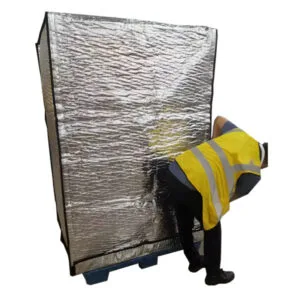
أ بطانة فقاعة احباط for e-commerce should be chosen through five connected decisions: what the product must avoid, what the delivery channel can impose, how the complete packout manages heat, what evidence is needed, and what happens after unboxing. This order matters. Starting with a liner sample or a price per piece encourages teams to treat packaging as an isolated accessory. Starting with the shipment reveals whether a flexible reflective liner is appropriate, which other components it needs, and where a different enclosure would be safer.
The framework below is designed for merchants, مهندسي التعبئة والتغليف, فرق المشتريات, fulfillment leaders, مديري الجودة, and sustainability specialists. It does not assume that every shipment is pharmaceutical or that every parcel requires active cooling. It also does not assume that a reflective appearance proves performance. The aim is to turn a broad packaging category into a controlled e-commerce system that can be piloted, تقاس, وتحسينها.
Decision One: Define the Product Boundary Before Selecting Packaging
Every design begins with a condition that matters to the product. For one item, brief warmth may only affect texture. لآخر, freezing may damage an emulsion. A diagnostic product may have a defined labeled range, while a luxury cosmetic may need protection from visible deformation rather than a regulated temperature band. These are different problems even if the cartons look similar.
Write a short product boundary for each SKU family. It should state the acceptable condition, the planned delivery duration, the credible delay case, initial product condition, intended destination season, ونتيجة الفشل. Avoid language such as "keep cool" unless the business has translated it into a measurable acceptance rule. A vague target cannot produce a defensible packout.
Product mass and geometry are part of the boundary. A dense multipack carries more thermal mass than a small vial. A nearly full carton exchanges heat differently from a large enclosure with one small item. زجاج, الحقائب, الصواني, and jars also impose different physical-protection needs. Order history should therefore be grouped into repeatable profiles rather than averaged into an imaginary typical order.
Ask whether the product can touch a cold component. Direct contact with a frozen pack can create a local cold spot even while the carton average looks acceptable. مقسم, المبرد المكيف, or phase change material may be needed, depending on the product requirement. The answer comes from the product and test plan, not from the liner category.
Then define the decision consequence. If a failure creates only a cosmetic complaint, the business may tolerate more risk than when safety, فعالية, or legal obligations are involved. High-consequence products need quality ownership, أدلة موثقة, release controls, وإجراءات الانحراف. A reflective liner may still form part of the solution, but it cannot replace those controls.
Decision Two: Map the Real E-Commerce Channel
The route begins before carrier pickup. Product may wait in chilled storage, move to a warm packing bench, sit in a staging cage, load into a trailer, pass through hubs, ride in a delivery vehicle, and remain at a doorstep. The hottest or coldest point may occur during any of these stages. Mapping only the published transit promise misses operational dwell.
Build the channel map from timestamps and observations. Record order cut-off, pick time, وقت الحزمة, قفص الاتهام يسكن, يلتقط, hub movement, نافذة التسليم, التعرض لعطلة نهاية الأسبوع, and customer retrieval. Identify whether service is local courier, national parcel, الوفاء بالسوق, retailer fulfillment, subscription delivery, or a mixed network. Each channel may justify a separate profile.
Climate must be paired with season and handling. An outdoor daily average does not describe a closed vehicle in sunlight, and a winter minimum does not describe the temperature inside a heated facility. Use measured lane data when available. When it is not, choose a justified test profile and state what uncertainty remains.
The route also imposes mechanical hazards. Cartons drop, vibrate, ضغط, إمالة, abrade, and encounter sharp neighboring objects. A thermal-only trial cannot show whether a seam opens after vibration or whether a frozen pack damages the liner after repeated impacts. ISTA separates thermal development procedures from physical distribution testing for good reason: the questions are related, but they are not the same.
A checkout promise is not a test condition. "في اليوم التالي" can become two days because of a missed cut-off or weather interruption. Design teams should include a delay case that reflects the business risk. The goal is not to claim protection for every conceivable event. It is to define a useful operating window and decide what happens beyond it.
Use a lane matrix instead of one global assumption
A small lane matrix can reveal where a flexible liner belongs. Classify routes by duration, التعرض الموسمي, تسليم, delivery control, payload class, and consequence. One packout may suit short urban orders with same-day retrieval. Another may combine the liner with conditioned thermal storage media for parcel service. طويل, غير مؤكد, or high-consequence routes may require a more robust مربع معزول.
Keep exceptions visible. Remote postal codes, weekend orders, موجات الحرارة, severe cold, and large mixed baskets can be routed to another packout or temporarily suspended. An exception rule is a sign of control, not a weakness in the product.
Decision Three: Build the Smallest Functional Thermal System
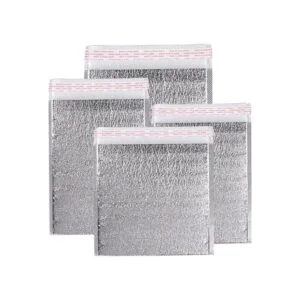
Once the product and channel are known, design the complete assembly. A foil-bubble liner is usually a flexible laminate with a low-emittance reflective face and an enclosed-cell or bubble structure. Exact layer materials, سمك, طبقات, and surface construction vary. Buyers should evaluate the specified build rather than relying on the category name.
Heat reaches the payload by conduction, الحمل الحراري, والإشعاع. The bubble structure and enclosed air can resist some conductive and convective transfer. A low-emittance surface can reduce radiant exchange when it faces an adjacent air space. نحن. Department of Energy guidance explains this principle for reflective insulation and radiant barriers in buildings. It also makes the essential point that an adjacent air space is needed. In a parcel, that principle is relevant, but the building guidance is not a parcel-performance rating.
This distinction affects packing. Crushing the cells, wrapping the reflective face tightly against another solid layer, leaving seams open, or creating large conductive bridges can change the intended behavior. A shiny surface alone does not establish how long a shipment will remain within its target.
سائل التبريد, عند الاقتضاء, is part of the energy balance. حزم هلام, عبوات الثلج المائية, or phase change materials absorb heat as their temperature changes and, for phase-changing components, as they transition. Their quantity, phase-change range, طريقة التكييف, الموضع, and contact with the product influence results. More coolant is not automatically better because excess frozen mass can create cold damage, زيادة الشحن, and reduce usable volume.
Right-sizing is a system exercise. The carton must fit the liner, منتج, سائل التبريد, المقسمات, ماص, and closure without crushing components or leaving unnecessary volume. Liner folds consume space. Coolant needs repeatable placement. The top must close without reopening. A nominal carton dimension is not the same as usable internal space.
Use the following matrix during early design reviews. It does not select a product by itself; it shows what must be decided and verified.
| إشارة القرار | Likely design direction | الأدلة لجمع | Common mistake to avoid |
|---|---|---|---|
| قصير, controlled local route with moderate product consequence | Right-sized carton and liner; add thermal storage only if trials show it is needed | مدة المسار, وقت التدريج, pilot temperature data, damage results | Assuming every local order experiences the same dwell |
| Seasonal parcel route with variable exposure | Liner plus a defined coolant and placement plan | حار- and cold-season profiles, حالة تأخير, physical distribution test | Treating coolant quantity as the only design variable |
| Small payload in a large standard carton | Develop a smaller packout or governed size portfolio | Dimensional order data, حجم قابل للاستخدام, pack-time trial | Filling avoidable volume with loose material |
| Freeze-sensitive product | Use conditioned components and separation as appropriate | حد المنتج, local sensor placement, cold-case test | Placing frozen packs directly against the product |
| High-consequence or long-uncertainty shipment | Consider a stronger insulated enclosure and formal quality controls | Qualified protocol, يكرر, الانحرافات, معايير الافراج | Extending a low-risk pilot claim to a critical shipment |
| Subscription route with reliable recovery | Explore a returnable configuration with inspection and retirement rules | معدل العودة, التناوب, تنظيف, ضرر, reverse-logistics impact | Calling an item reusable without operating a return loop |
| Customer destination lacks a verified laminate-recovery route | Give component-specific, location-aware disposal guidance | Material declaration and local collector acceptance | Using a recycling symbol as proof of collection |
Reduce volume without deleting necessary protection
The smallest package is not automatically the best package. Necessary space may separate a product from عبوات باردة, provide cushioning, allow liner closure, or accommodate permitted product movement. Remove avoidable void, not functional protection.
European Union packaging rules make this distinction important for sellers placing packaging on that market. أنظمة 2025/40 introduces staged packaging-minimisation provisions and a future maximum empty-space ratio for grouped, ينقل, and e-commerce packaging. Filling materials are counted in the empty-space calculation. The law also preserves packaging functionality and product protection, and its detailed method and relevant dates must be followed as they become operative.
That is an EU-specific legal framework, not a global carton formula. Teams should not apply a remembered percentage without confirming applicability, توقيت, methodology, and operator duties. The sound engineering practice is broader: document why each component and space exists, then reduce what is not needed.
Decision Four: Demand Evidence That Matches the Claim
A useful thermal report describes a complete packout. It identifies the carton and liner construction, حمولة, سائل التبريد, تكييف المكونات, درجات حرارة البداية, ملف تعريف المحيط, مواقف الاستشعار, مدة, التكرار, حدود القبول, والانحرافات. If any of these are missing, it becomes hard to determine whether the result applies to a live order.
Sensor placement deserves special attention. A single probe in the carton center may miss a hot wall, a cold spot beside a frozen pack, or variation among products. The measurement plan should reflect product risk and geometry. Instruments should be suitable for the range and used under the organization's calibration controls.
ISTA Standard 7E provides standardized external temperature exposure profiles for parcel delivery system shipments and can support development and comparison. Other ISTA procedures address different e-commerce and physical-distribution contexts. Selecting a named procedure should follow the distribution channel and objective. Passing a thermal exposure does not establish resistance to drops or vibration, and passing a physical test does not prove thermal duration.
أدوات اتخاذ القرار مفيدة
تحقق من التفاصيل قبل اختيار التغليف
يمكن أن تساعدك هذه الأدوات السريعة في مقارنة مخاطر المسار, احتياجات التحجيم, خيارات المبرد, وتفاصيل التعبئة والتغليف قبل أن تطلب عرض أسعار.
حاسبة علبة الثلج
تقدير كمية عبوات الثلج الهلامي للشحنات المبردة والتخطيط العملي للمسار.
تقدير عبوات الثلجمحدد التعبئة والتغليف
قارن بين خيارات التغليف المعزولة حسب المنتج, طريق, ودرجة الحرارة اللازمة.
البحث عن التعبئة والتغليفسائل التبريد & مرجع PCM
قارن خيارات سائل التبريد وPCM عندما يحتاج المسار إلى دعم إضافي لدرجة الحرارة.
قارن الخياراتASTM C1224 is sometimes mentioned around reflective materials. Its official scope concerns reflective insulation used in building applications, with low-emittance surfaces facing enclosed air spaces. It can help a technical reader understand building-product specifications, but it is not an e-commerce parcel certification. A supplier should not use it to imply that a shipping configuration has been validated.
Evidence must also survive production. Record the approved material stack, أبعاد, تصميم التماس, إنهاء, ومعايير الصنعة. Inspect multiple units across a lot rather than one presentation sample. Define which changes require notification and retesting, such as a reflective film, هندسة الفقاعة, لاصق, التماس, مقاس, كرتون, سائل التبريد, or packout revision.
Run a pilot that tests people as well as materials
Laboratory work shows what happens under controlled conditions. A fulfillment pilot shows whether people can reproduce the packout. Give trained packers clear visual instructions, then observe size selection, اتجاه الخطوط الملاحية المنتظمة, تكييف المبرد, الموضع, إنهاء, وضع العلامات, والتدريج. Record time and errors without blaming individuals; recurrent errors usually reveal a design or instruction problem.
Include ordinary variation. Test minimum and maximum payloads, not only the easiest full carton. Use production cartons and labels. Include a realistic pack-bench dwell and handoff. If the top flap repeatedly springs open or coolant slides to one side, solve that before volume launch.
Set launch gates in advance. Possible gates include product temperature acceptance, السلامة الجسدية, closure success, معدل الضرر, دقة الحزمة, وقت الدورة, استخدام المواد, and customer instruction comprehension. The exact thresholds are business-specific. Writing them before results prevents the team from redefining success after a convenient trial.
Decision Five: Plan the Customer and Recovery Experience
The package remains part of the brand after the product arrives. The recipient must be able to open it without damaging the goods, understand which components separate, and know what to do with each one. If those actions are unclear, a technically promising recovery idea will fail at the doorstep.
Start with a material map. List the carton, بطانة, coolant pouch and contents, مقسم, ماص, الشريط, ملصق, and any accessory. لكل, record its material identity, whether it separates cleanly, مخاوف التلوث, intended collection route, and the instruction presented to the customer. A general statement about the whole parcel is rarely accurate when the components follow different paths.
Reflective bubble laminates need careful wording. The reflective layer may be aluminum foil or a metallized film; the core and sealants may be polymers; adhesives may make separation impractical. The recyclability of an individual raw material does not prove that the bonded finished liner is accepted. Ask for a construction declaration, then check the actual collection and processing route.
في الولايات المتحدة, Environmental Protection Agency guidance emphasizes that recycling programs vary locally. أكياس بلاستيكية, يلتف, and films often require separate store or drop-off collection instead of a household curbside bin. Even such programs may accept only specified clean, dry films. لذلك, a seller should not instruct customers to place a reflective laminate in a film bin until the collector confirms that exact structure is eligible.
For packaging placed on the European Union market, أنظمة 2025/40 creates staged recyclability requirements. Design-for-recycling criteria and later recycled-at-scale assessments depend on future dates, الأفعال المفوضة, والأساليب. A present material description can support preparation, but it should not be turned into an unsupported promise about a future recyclability grade. Applicable responsibilities should be reviewed for the seller's exact role and market.
Reuse deserves the same evidence discipline. A durable-looking liner is only functioning as التعبئة والتغليف القابلة لإعادة الاستخدام when an operating system returns it, checks it, prepares it for another cycle, and records retirement. Define who owns the component, how the customer returns it, how it is cleaned and dried if appropriate, ما الضرر الذي يسبب الرفض, and how many successful rotations occur. Compare the benefit with the transport and materials used by reverse logistics.
Returns of products are a separate risk. A customer may omit coolant, leave a parcel at a drop point, or use slower service. Do not imply that the original outbound validation covers this uncontrolled return. Give clear disposition instructions and involve quality personnel where product condition matters.
Govern the Packout as a Living Product
A good e-commerce packout changes with evidence, but it should not drift silently. Assign an owner and revision number. Store the bill of materials, تعليمات التعبئة, سجل التدريب, approved test evidence, supplier declaration, قواعد الممرات, and customer guidance together. When a component or route changes, the owner can evaluate the effect across the system.
Procurement should contract against the approved specification rather than a generic phrase. أبعاد, بناء, صنعة, كمية العبوة, and change notification can be discussed with the supplier, but the final requirements must match what the buyer has tested. Current MOQ, مهلة, التخصيص, and commercial terms should be confirmed in a quotation; they should never be inferred from a category page.
Fulfillment data provides early warnings. Track wrong-size selections, incomplete closures, coolant-conditioning errors, الخلايا المسحوقة, كرتونة تالفة, وقت الحزمة, والتأخير المرحلي. Customer service adds signals about warm arrivals, التكثيف, تسرب, confusing disposal instructions, and excessive packaging. Quality data adds excursions and deviations. Sustainability data adds packaging mass, مقدار, recovery participation, وأسباب التقاعد.
Review these measures by packout profile, not only in aggregate. A high overall success rate can hide one remote lane or small payload that performs poorly. على العكس من ذلك, one difficult exception should not force unnecessary materials into every short route. Segment-level evidence supports targeted correction.
Seasonal review is essential. A summer configuration may overcool a freeze-sensitive product in winter. Carrier networks, fulfillment locations, and order mixes also change. Revisit the lane assumptions before peak seasons and after meaningful operational changes.
The program should include a controlled response to excursions. Define who receives the alert, how shipment records are retrieved, who evaluates product disposition, what customers are told, and when the packout is paused. Packaging is only one control within a broader quality and service process.
الأسئلة المتداولة
Does a reflective liner work without coolant?
It can slow some heat transfer, but whether that is enough depends on the product boundary, حالة البداية, حمولة, طريق, التعرض المحيطي, إنهاء, and allowable duration. قصير, low-risk route may not need thermal storage, while another shipment may need conditioned gel packs, water ice packs, مواد تغيير المرحلة, or a stronger insulated enclosure. Test the complete packout against the intended case.
Is more bubble thickness always better?
No single dimension proves shipment performance. Cell geometry, enclosed air, الأسطح العاكسة, طبقات المواد, طبقات, ملائم, ضغط, إنهاء, سائل التبريد, حمولة, and route all interact. A thicker sample can still perform poorly if it is crushed, badly fitted, or used with an unsuitable packout. Compare specified constructions in a controlled test.
Can a supplier's ASTM C1224 reference qualify an e-commerce shipment?
لا. ASTM C1224 addresses reflective insulation in building applications. It does not qualify a parcel, خطة المبرد, حمولة, or delivery lane. Use packaging-relevant thermal and physical procedures, with conditions that represent the intended distribution system.
What should trigger retesting?
Retesting should be considered when a change could affect the result. Examples include the liner material stack, هيكل الفقاعة, التماس, مقاس, كرتون, coolant type or quantity, تكييف, تحميل المنتج, اتجاه الحزمة, fulfillment site, carrier channel, مدة الطريق, الملف الموسمي, or packing process. A documented change assessment should determine the required scope rather than assuming equivalence.
How can a seller make credible environmental statements?
Describe the actual material and program, state the geographic scope, verify local collection, and measure any return system. Avoid treating technical recyclability as proof of curbside acceptance, or potential reuse as evidence of repeated use. For EU sales, distinguish current duties from staged future requirements and monitor the official methods that complete the regulatory framework.
خاتمة: Make Five Decisions, Then Approve the System
The best liner decision does not begin with reflectivity, سماكة, أو سعر الوحدة. It begins with a defined product boundary and a realistic e-commerce channel. من هناك, the team can build the smallest functional thermal system, demand evidence that matches the claim, and design a customer and recovery experience that can operate in the destination market.
This five-decision sequence keeps attractive material features in perspective. Reflective surfaces can reduce radiant exchange when the assembly preserves an adjacent air space. Bubble structures can contribute thermal resistance. Coolant can add thermal capacity. Yet only the tested combination of payload, الضميمة, عناصر, عملية التعبئة, طريق, and operating controls establishes suitability. Approve that system, monitor it by profile, and revise it when evidence changes.
حول Tempk
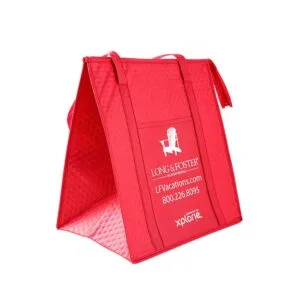
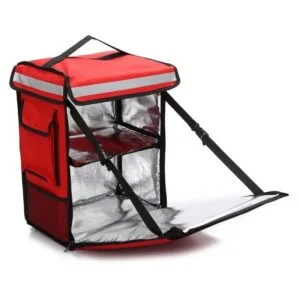
Tempk, العلامة التجارية لشركة Shanghai Tempk Industrial Co., المحدود., presents B2B عبوة تسيطر عليها درجة الحرارة categories for pharmaceutical, طعام, ومشتري سلسلة التبريد. Its categories include بطانات معزولة, bags and boxes, gel or water ice packs, وتغيير الطور المواد. Buyers can compare flexible insulation, more substantial enclosures, and thermal storage components. Any proposed configuration should be assessed against the buyer's product limits, parcel channel, أدلة الحزمة, fulfillment controls, قواعد الوجهة, and customer recovery pathway.
CTA: Send Tempk one defined SKU profile, its delivery lane, temperature boundary, and delay case to begin a focused packout comparison and pilot discussion.