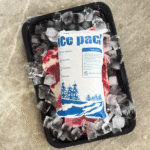
شراء صندوق الثلج بكميات كبيرة
Looking for “ice chest bulk purchase” usually means you are not shopping for a consumer cooler. You are evaluating a B2B packaging decision that affects product protection, operating cost, and supplier reliability at the same time. In most sourcing situations, the right answer is not a single universal number. It is a quote structure built around the real shipment: حجم الحمولة, هدف درجة الحرارة, وقت العبور, شدة التعامل, and whether the box is one-way or reusable. لهذا السبب, buyers should treat ice chest pricing and supplier selection as a systems decision rather than a simple catalog search. This matters because these containers are commonly used across food delivery, مجموعات الوجبات, المأكولات البحرية, ألبان, direct-to-consumer perishables, laboratory supplies, and other shipments that need passive temperature control for limited periods. The main risk is assuming that any rugged cooler can deliver the same thermal outcome on every route. في الممارسة العملية, hold time depends on the box, المبرد, الحمولة, and the way the shipment is packed and handled.
What the market usually means by Ice Chest Bulk Purchase
In sourcing language, terms like manufacturer, provider, vendor, موزع, مصنع, or company are not interchangeable. They shape what kind of control sits behind the quote. A manufacturer or factory may control tooling, صب, بناء الجدار, حَشد, and release standards. A distributor may offer stocked models and faster availability but less freedom to change dimensions or add technical documentation. A provider or vendor may coordinate several upstream sources and bundle more services, but you still need to know which plant actually makes the product.
A supplier quote can be attractive because it bundles product access and purchasing convenience, but you still need to know whether the supplier owns production, controls quality, and can keep future lots consistent.
A realistic quotation for ice chest bulk purchase should separate base product cost from system cost. Base product cost covers the physical box. System cost covers the box plus refrigerant, حطام, تعليمات العمل, يراقب, packaging labor, and any testing or qualification work needed to prove the packout. Buyers who ask for that separation usually make faster and safer decisions.
Because the search intent here is clearly commercial, the most useful first output from any supplier is a structured quotation. Ask for the empty ice chest specification, the insulation description, the minimum order logic, the accessory list, and the freight basis. If customization is involved, separate one-time tooling from repeat unit price. If the shipment is temperature-sensitive, separate the container price from the full packout price. That keeps negotiations honest and helps your internal team compare offers on the same assumptions.
مواد, بناء, and why they change the quote
Most buyers see an insulated ice chest as one product. في الواقع, it is usually a layered construction with at least three decisions behind it: the outer structure, the insulation strategy, and the coolant interface. Those three choices drive durability, temperature margin, وزن, صحة, and final cost.
Material choice influences far more than strength. It changes weight, كفاءة العزل, قابلية التنظيف, خدمة الحياة, and how the box behaves after repeated use. A rigid outer shell made from polyolefin resins can improve impact resistance and hygiene. Foam-based bodies can reduce mass and improve insulation, but the best answer depends on whether the shipment is one-way, قابلة للإرجاع, or somewhere in between.
You should also separate shell material from insulation system. A buyer may focus on polyethylene, مادة البولي بروبيلين, إي بي بي, EPS, البولي يوريثان, or VIP because those words appear in quotes, but they do different jobs. One material may provide the hard exterior, another the thermal barrier, and a third the sealing or cushioning layer. Good suppliers explain the full build, not only the headline resin name.
For temperature-sensitive shipping, material selection is not only about thermal conductivity. It is also about water uptake, resistance to cleaning chemicals, استقرار الأبعاد, استعادة التأثير, and how easy it is to maintain quality from lot to lot. That is why an apparently simple ice box deserves a more technical conversation than many buyers expect.
For buyers comparing samples, dimensions alone are not enough. Two boxes with similar external size can differ sharply in usable payload space because wall thickness, corner reinforcement, and lid design steal volume differently. If the route involves repeated reuse, impact resistance and closure durability matter as much as nominal insulation. If the route is one-way parcel distribution, cube efficiency and empty weight may matter more. This is why material language should always be tied back to the operating model, not treated as a marketing label.
How thermal performance should really be judged
A cold-chain box does not perform in isolation. The refrigerant, pack conditioning method, درجة حرارة الحمولة, نسبة الملء, مساحة الرأس, تردد الافتتاح, and outside environment all change the result. That is why experienced buyers avoid broad claims like “keeps cold for 72 ساعات” unless the supplier can explain exactly under what loading and ambient assumptions that statement was measured.
Thermal performance claims should be tested as a system claim, not accepted as a box claim. In cold-chain development, الحاوية, المبرد, الحمولة, and the packout pattern interact. Industry development protocols such as ISTA 7D are used to compare how packaging performs under temperature cycles, but that kind of test is still only one step. Buyers need results that resemble the real route, real payload, and real handling pattern.
Even in less regulated food or commercial use, the same systems logic applies. A catalog hold-time measured with a specific payload and ambient profile may not resemble your summer van route, your urban stop pattern, or your cross-border parcel lane. Practical performance is earned through route-aware design, not copied from a generic datasheet.
A serious supplier should be able to explain which variables were controlled during testing: بدء درجة حرارة المنتج, pack conditioning method, ملف تعريف المحيط, وضع الاستشعار, lid-open events, ومعايير القبول. إذا كانت الإجابة غامضة, the thermal claim is probably too generic to support a high-risk shipment.
التوثيق, تناسق, and why technical answers matter
In cold-chain buying, technical ambiguity usually turns into commercial risk later. If a supplier cannot say which drawing revision was approved, which material is locked, or how future changes are communicated, the buyer has very little protection when a later lot behaves differently. This matters even for ordinary reusable boxes, and it matters even more for medical or tightly specified programs.
The strongest suppliers do not only send a quotation. They explain assumptions. They identify what was tested, what was not tested, which dimensions are functional, which options are custom, and how they manage reorders. That level of clarity shortens internal approval cycles because procurement, العمليات, and quality can review the same facts instead of arguing over marketing language.
للمشترين, الدرس بسيط: treat documentation as part of performance. A container that is technically good but poorly documented may still be the wrong buy if your team depends on stable repeat supply, التتبع, or future route qualification work.
Where this type of ice chest fits well – and where it does not
A good sourcing decision starts by matching the box to the route, not by forcing one container into every job. في كثير من الحالات, insulated ice chests work best when you need passive temperature protection for a defined time window, physical durability, and a packout that operators can follow without guesswork.
For ordinary chilled or frozen distribution, the first question is usually operational fit rather than formal qualification. You still need to know the target temperature range, نافذة العبور, نمط التحميل, and the expected ambient exposure.
A useful way to compare options is to picture one real route instead of one abstract box. على سبيل المثال, a same-day commercial loop with repeated door openings values durability, ergonomic handling, وقابلية الغسل. A two-day one-way parcel route values insulation efficiency, dimensional optimization, وكثافة الشحن. A vaccine transfer between facilities values packout discipline and temperature monitoring more than branding or cosmetic finish.
في الممارسة العملية, the wrong box is often chosen because buyers compare catalog categories rather than shipping scenarios. The container that looks perfect for frozen seafood may not suit direct-to-patient medicines. The container that survives a warehouse shuttle may be a poor fit for outreach immunization where the operator carries the load by hand. Scenario-first sourcing reduces those mistakes.
What is shaping procurement decisions right now
Across temperature-sensitive logistics, buyers are putting more weight on route fit, التكرار, and waste control than they did when a simple static hold-time claim was enough. That does not mean the market suddenly wants the most advanced packaging in every case. It means teams are trying to avoid false economy. They want fewer damaged shipments, fewer overbuilt packouts, better use of pallet space, and more predictable ordering.
That shift changes supplier evaluation. Vendors that can only repeat catalog language tend to struggle once buyers ask for usable volume under load, real shipping assumptions, or sample-to-production consistency. Suppliers that can talk clearly about geometry, refrigerant loading, يراقب, and operating constraints usually create more trust, even if their first quote is not the lowest.
Sustainability is part of the same conversation. A reusable box does not become sustainable just because it can technically survive multiple cycles. It becomes sustainable when return logistics, الانضباط التنظيف, and replacement planning actually work. Many buyers now compare material choice and reuse strategy together instead of treating them as separate topics. That tends to produce more realistic packaging programs and more defensible purchasing decisions.
A practical supplier checklist before you place a bulk order
The most effective buyer checklist is not a long audit form. It is a short set of questions that forces every supplier to describe the same build, the same assumptions, and the same support level.
- Separate ex-works unit price from delivered cost, accessory cost, and validation or documentation cost.
- Request sample-to-production control and change-control commitments, not only a first-sample promise.
- For temperature-sensitive applications, ask for the recommended refrigerant type, طريقة التكييف المسبق, monitor placement, وافتراضات المسار.
- Confirm internal dimensions, external dimensions, and usable volume after coolant and inserts are loaded.
- Ask which material belongs to the shell, which belongs to the insulation layer, and whether any substitutions are allowed after approval.
- Ask how drop resistance, load handling, or repeated-use durability are evaluated in routine QC.
- Clarify whether labels, باركود, RFID positions, molded recesses, and other traceability features are standard or custom.
- Request cleaning and hygiene guidance, especially for food, الرعاية الصحية, or multi-use return loops.
- Get a written answer on MOQ, عينة المهلة, مهلة الإنتاج, tooling cost if any, and what happens if forecasts move.
- Verify lid style, gasket or closure method, drain design if relevant, and whether the unit remains stable when stacked fully loaded.
Use the answers to normalize every quotation into the same comparison frame. Once each supplier is speaking to the same dimensions, same packout assumptions, same service level, and same delivery basis, price comparisons become much more meaningful.
First cost vs total cost of ownership
The visible invoice is only one layer of cost. With insulated ice chests, total cost usually includes replacement rate, عمالة التعبئة, monitor use, كثافة الشحن, بصمة التخزين, and sometimes reverse-logistics effort for returnable formats. A slightly heavier or more expensive box may still lower total cost if it reduces damage, improves stacking, or survives a larger number of loops.
This is particularly true when buyers compare reusable and semi-disposable options. Reuse counts on paper do not matter unless the container comes back in usable condition, can be cleaned without excessive labor, and re-enters the right route quickly. A low first-unit price can also become expensive if the design wastes pallet space, needs more coolant, or requires operators to improvise around weak closures or awkward loading.
Ask suppliers to help you model the packaging program in operational terms: units per pallet, empty return efficiency, recommended coolant quantity, sample failure rate, field breakage risk, and what documentation or reordering support exists after launch. That conversation often reveals more economic value than another round of price bargaining.
التعليمات
Why do suppliers avoid publishing one fixed price for an ice chest or ice box?
Because the real quote usually depends on dimensions, بناء العزل, المبردات, كمية الطلب, العلامة التجارية, and freight assumptions rather than only the empty container.
Is a cheaper box always more economical?
ليس بالضرورة. الكسر, low reuse count, wasted cargo space, and poor temperature margin can make a lower invoice price more expensive in actual operations.
Should I buy from a manufacturer or a trading supplier?
Buy from the source that can clearly explain build ownership, ضبط الجودة, ومسؤولية ما بعد البيع. The label matters less than the control they actually have.
Closing perspective
The best response to ice chest bulk purchase is rarely a single advertised figure. Good buying decisions come from understanding the construction, the shipping logic, الطريق الحقيقي, and the degree of control behind the quote. When those elements are clear, you can compare suppliers on something more meaningful than a headline price and choose a box that performs in real operations, not only in sales language.
حول Tempk
We focus on cold chain packaging for food and temperature-sensitive shipments, بما في ذلك صناديق الشحن المعزولة, حزم الجليد, أكياس أكثر برودة, and related passive packaging components. Our work is most useful when buyers need a practical conversation about packout logic, insulation format, and route fit rather than a generic catalog answer. For projects that need custom sizing or a more application-specific configuration, we prefer to start from shipment requirements and operating reality.
الخطوة التالية
If you need bulk purchase or custom sizing support, ابدأ بالحمولة, نطاق درجة الحرارة المستهدفة, نافذة العبور, and handling pattern so the proposal matches the job.