التعبئة والتغليف التي تسيطر عليها درجة الحرارة: How to Design, Test and Buy the Right System
التعبئة والتغليف التي تسيطر عليها درجة الحرارة should be treated as a controlled shipment system rather than a box selected by duration. The correct design starts with a product requirement, converts route exposure into thermal risks, uses insulation and thermal energy storage to manage those risks, and then proves the packout under defined test conditions. Procurement has a second job: make sure the configuration tested during development can be reproduced in routine production and packing.
This framework is more useful than comparing “48-hour” or “72-hour” products because those labels hide the variables that actually determine performance. كتلة الحمولة, تكييف المبرد, العزل, ملف تعريف المحيط, sensor location and packing method can all change the outcome.
1. Write the requirement before choosing the package
A packaging project is easier to control when the requirement is specific enough to test. The requirement should describe the product and route, not the preferred packaging material.
ابدأ بحالة المنتج:
- Required storage or transport temperature range, or another defined condition.
- Sensitivity to freezing, thawing or high temperature.
- Loading temperature.
- Product quantity and acceptable payload configurations.
- Dimensions and mass.
- Any orientation, moisture or mechanical constraints.
Then define the logistics condition:
- Planned transit time.
- Reasonable delay allowance.
- الأصل والوجهة.
- قطعة, ساعي, شاحنة, air or multimodal transport.
- حار- and cold-season exposure.
- Uncontrolled handoffs such as docks, جمارك, tarmac or last mile.
- Receiving hours and what happens after failed delivery.
للمستحضرات الصيدلانية, the target condition should be grounded in the product’s approved or controlled requirements and the applicable quality system. FDA current good manufacturing practice requires appropriate storage conditions for drug products. CDC’s current vaccine guidance directs users to product-specific manufacturer information for FDA-approved vaccines. Those sources reinforce a basic engineering rule: packaging requirements come from the product, not from a generic category label.
A supplier can only design intelligently after these inputs are known.
2. Choose an architecture that matches the control problem
Temperature-controlled transport can use passive packaging, المعدات النشطة, controlled vehicles, or combinations of these controls. The package is one layer in the distribution system.
أ النظام السلبي uses insulation plus thermal mass. حزم هلام, frozen water packs, حزم PCM, طوب الجليد and dry ice can provide cooling or buffering depending on the application. Passive systems are common in parcel shipping because they can travel through standard courier networks without continuous external power.
و نظام نشط uses powered cooling and/or heating. It can be suitable for large payloads, طرق طويلة, highly controlled products or lanes that support equipment management. Active equipment adds power, صيانة, qualification and return-logistics requirements.
أ غطاء البليت الحراري can reduce exposure of palletized freight during staging or transfer but does not turn an uncontrolled route into an active temperature-controlled route.
أ مسجل البيانات measures temperature; it is not a temperature-control component.
Keeping those entities separate prevents a common specification error: buying one useful component and assuming the complete shipment is therefore “temperature controlled.”
When passive packaging is a strong fit
Passive systems are often effective when the route duration is bounded, the payload is compatible with a repeatable packout, and preconditioning can be controlled. They can support anything from short local deliveries to qualified multiday pharmaceutical shipments when the design and evidence are appropriate.
The operational burden should still be counted. Freezer or refrigerator capacity, تكييف المبرد, وقت التدريج, عمالة التجميع, freight weight and seasonal configurations can materially affect total cost.
When to escalate beyond a passive packout
A harder route does not always justify adding more coolant. If transit duration is highly uncertain, ambient conditions are extreme, the payload is very large, or the coolant mass begins to dominate freight and usable space, the better control may be an active container, مركبة مبردة, controlled handoff location or different service level.
The goal is to control the route, not to maximize packaging complexity.
3. Translate component specifications into practical meaning
A technical datasheet is useful only when the buyer knows which decision it supports.
| Specification or claim | معنى عملي | What still needs verification |
| Insulation material/property | Helps estimate resistance to heat transfer | سمك الجدار, طبقات, هندسة, condition and full-packout performance |
| PCM phase-change range | Describes thermal behavior of the PCM under stated conditions | Actual payload temperature, كمية PCM, conditioning and placement |
| Gel-pack or ice-brick dimensions | Helps with fit and coolant surface area | ملء الكتلة, تكييف, placement and freeze risk |
| الأبعاد الداخلية | Indicates nominal payload envelope | Usable space after coolant and separators |
| “72-hour” performance | May describe a specific thermal test | ملف تعريف المحيط, حمولة, سائل التبريد, sensors and acceptance criteria |
| بناء قابل لإعادة الاستخدام | Indicates intended multiple use | تقتيش, تنظيف, damage limits and retirement criteria |
| دقة المسجل | Describes measurement capability under stated specification | معايرة, موقع, logging interval and disposition procedure |
The most important distinction is between السلوك المادي و system performance. العزل يبطئ تدفق الحرارة, but it does not create a complete duration claim. PCM stores thermal energy, but its phase-change temperature does not guarantee payload temperature. مسجل يسجل الظروف, لكنه لا يحمي المنتج.
4. Control the starting state of a passive packout
Thermal performance begins with preconditioning. The temperatures of the coolant, payload and packaging at assembly establish the system’s initial energy state.
For water-based frozen packs, the surface can be significantly colder than 0°C immediately after removal from a freezer. That can be problematic for freeze-sensitive payloads. EU Good Distribution Practice guidance for medicinal products states that cool-packs in insulated boxes should be positioned so the product does not come into direct contact with them. The broader engineering lesson is to manage local cold spots, not only average internal temperature.
A repeatable operating instruction should define, حسب الاقتضاء:
1. Coolant storage or conditioning range.
2. Minimum conditioning time or required state.
3. Payload loading condition.
4. Maximum staging time before closure.
5. Exact coolant positions and orientation.
6. Required separators or spacers.
7. Packing sequence.
أدوات اتخاذ القرار مفيدة
تحقق من التفاصيل قبل اختيار التغليف
يمكن أن تساعدك هذه الأدوات السريعة في مقارنة مخاطر المسار, احتياجات التحجيم, خيارات المبرد, وتفاصيل التعبئة والتغليف قبل أن تطلب عرض أسعار.
محدد التعبئة والتغليف
قارن بين خيارات التغليف المعزولة حسب المنتج, طريق, ودرجة الحرارة اللازمة.
البحث عن التعبئة والتغليفمولد قائمة التحقق من الامتثال
قم ببناء قائمة مرجعية عملية لمراجعة التغليف, شحن, والتوثيق.
بناء قائمة مرجعيةسائل التبريد & مرجع PCM
قارن خيارات سائل التبريد وPCM عندما يحتاج المسار إلى دعم إضافي لدرجة الحرارة.
قارن الخيارات8. Closure and sealing method.
If staff can interpret the instruction in multiple ways, qualification evidence will be difficult to transfer to daily operations.
5. Test the configuration, not the marketing category
Thermal testing should answer a defined question. The protocol needs a configuration, an environment and acceptance criteria.
على الأقل, preserve these conditions with every performance claim:
- Shipper model and construction.
- Payload or surrogate, mass and arrangement.
- نوع المبرد, amount and conditioning.
- Ambient test profile.
- Sensor locations and instrumentation status.
- Packing procedure.
- Acceptance range.
- Test duration and result.
معيار ISTA 20 provides a structured process for the design and qualification of حاويات شحن معزولة, and ISTA Standard 7E provides standardized thermal profiles used in parcel-distribution testing. These tools can improve repeatability and comparability. إنهم ليسوا كذلك, by themselves, universal regulatory mandates for all temperature-controlled shipments.
A company can also use route data or lane studies to determine whether a standardized profile adequately represents actual exposure. The key is traceability: the test profile should have a reason.
What a chamber test proves
A chamber test can show that a defined packout met defined acceptance criteria under the applied profile. It does not automatically prove performance on every route, with every payload, in every season.
This is why the “hold time” should never be separated from its conditions. A buyer comparing two suppliers should compare the whole evidence package rather than the largest duration number on a brochure.
6. Build season and route risk into the qualification logic
Routes change over the year. The thermal challenge in winter can be the reverse of the challenge in summer. A package designed primarily to prevent overheating can expose a freeze-sensitive product to cold ambient conditions or excessively cold coolant.
EU GDP guidance specifically identifies seasonal variations as a consideration for temperature-controlled transport of medicinal products. WHO distribution guidance likewise treats storage and distribution of time- و منتجات حساسة لدرجة الحرارة as a controlled quality activity rather than an isolated packaging choice.
For any industry, route mapping should identify the uncontrolled segments:
- Packing and pre-carrier staging.
- Vehicle dwell.
- Courier hubs and cross-docks.
- Air-freight staging and tarmac transfer.
- Customs or border delay.
- Warehouse transfer.
- تسليم الميل الأخير.
- تأخير المتلقي.
Then ask which segments dominate the thermal profile. A long route with controlled facilities may be less severe than a shorter route with uncontrolled outdoor exposure. المدة مهمة, but exposure pattern matters too.
7. Separate qualification evidence from routine monitoring
Qualification asks whether a design is capable under defined conditions. Routine monitoring records what happened on a shipment or route. They are related but not interchangeable.
A data logger plan should define:
- Measurement location.
- Calibration expectations.
- الفاصل الزمني للتسجيل.
- Start and stop procedure.
- Alarm settings if used.
- Download and review responsibility.
- Excursion review and product-disposition process.
The sensor location should match the question. A logger next to coolant may be useful for identifying a cold spot but may not represent payload-core temperature. A logger near an outer wall can be useful for warm-point risk but may respond differently from the product.
للمنتجات الخاضعة للتنظيم, disposition after an excursion belongs to the organization’s quality process and product-specific stability information. A packaging supplier should not make a universal release decision from a generic temperature trace.
8. Make the tested packout reproducible in production
The bridge between development and purchasing is change control.
A supplier may produce a visually similar package after changing foam grade, مصدر لوحة, فيلم, صياغة المبرد, ملء الكتلة, separator thickness or carton. قد تكون بعض التغييرات غير ضارة; others may alter thermal behavior. The buyer needs an agreed process for deciding which changes require notification, review or retesting.
Identify critical-to-performance features in the approved specification. اعتمادا على التصميم, قد تشمل هذه:
- Insulation material and thickness.
- Internal/external dimensions.
- Lid or closure fit.
- VIP panel configuration and protection.
- Coolant formulation and fill mass.
- Coolant pouch construction.
- Separator material and thickness.
- Number and position of coolant units.
- Carton construction.
- تسلسل التجميع.
Production inspection should check the features that can reasonably be controlled without repeating a chamber test on every unit.
للأنظمة القابلة لإعادة الاستخدام, add condition criteria. تنظيف, تقتيش, تلف اللوحة, zipper or lid wear, missing coolant and contamination must be managed before reuse.
9. Compare suppliers through evidence, ليست الصفات
A temperature controlled packaging RFQ should make suppliers answer the same questions. That allows procurement to compare evidence and operational fit rather than different marketing claims.
Ask each supplier to provide:
- Proposed packout drawing or configuration.
- Usable payload dimensions.
- Coolant type and conditioning method.
- Required storage equipment for coolant.
- Assembly instructions and expected labor steps.
- Test basis and the conditions behind any duration claim.
- Production-controlled specifications.
- Change-control approach.
- Packaging/carton configuration for bulk supply.
- Reuse inspection process if applicable.
- Which route or seasonal assumptions still require customer qualification.
Unknown values should remain questions. A supplier should not invent a fixed lead time, universal performance duration or “compliance” statement before the scope is defined.
10. Evaluate total operating cost, not only shipper price
Packaging cost can be a small part of the program. Coolant weight affects freight. Freezer capacity affects facility investment and energy use. Complex conditioning increases labor. Large EPS shippers consume storage volume. Reusable boxes need reverse logistics and cleaning. Active systems require equipment management.
A useful total-cost comparison includes:
- Packaging components.
- Coolant preparation and storage.
- عمالة التجميع.
- Freight weight and dimensional volume.
- Failure and excursion investigation burden.
- Disposal or recycling.
- Return freight and loss rate for reusable assets.
- تنظيف, inspection and maintenance.
- Inventory space.
A more expensive packaging component can be operationally cheaper if it reduces coolant, freight or labor. The opposite can also occur. The calculation is lane-specific.
The best system is one whose assumptions are visible
Good temperature controlled packaging makes its logic auditable. The product requirement is defined. The route risks are documented. The selected architecture has a clear role. Test evidence names its conditions. Production controls preserve the approved design. Operators can repeat the packing process, and receiving teams know what to do with monitoring data.
That standard is more demanding than choosing the thickest box or the longest claimed duration, but it creates a program that can survive supplier changes, seasonal review and operational handover.
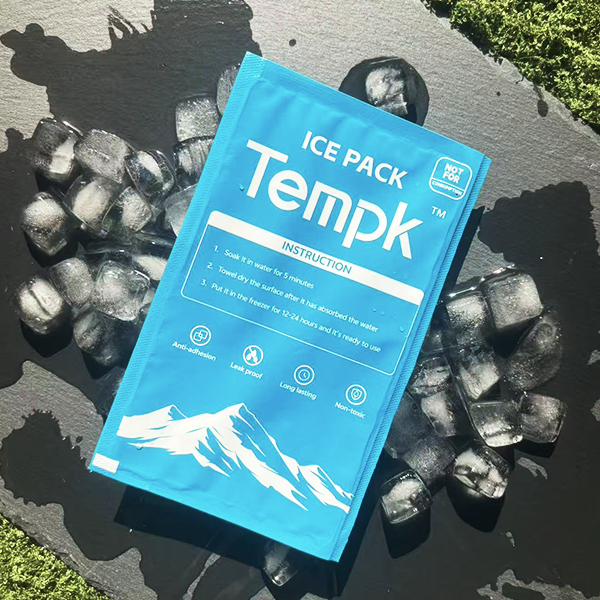
Tempk supplies passive temperature-control components including gel packs, PCM والطوب الجليدي, أكياس وبطانات معزولة, EPP/صناديق VIP و أغطية البليت الحرارية, with packout planning support around payload, route and temperature requirements. To evaluate a configuration, provide the target condition, أبعاد الحمولة والكتلة, نافذة العبور, التعرضات الطريق, seasonal risks and the evidence your quality or operations team needs. The next useful step is a packout that can be sampled, تم اختبارها وتكرارها.