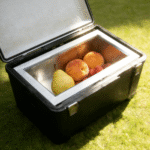
If your goal is to choose the best answer to "insulated box factory fresh produce", the winning approach is to combine buyer logic, thermal science, and current market reality into one packaging strategy. You need a system that protects berries, الخضار الورقية, الأعشاب, cut vegetables, and other fresh produce with short quality windows, fits your actual lanes, satisfies documentation expectations, and still makes sense for cost and sustainability in 2026. This optimized guide pulls those priorities together so you can make a decision that is both technically sound and commercially practical.
هذه المقالة سوف تساعدك:
- what defines a best-in-class insulated box strategy in 2026
- how to connect material choice, refrigerant design, وتأهيل المسار
- which product-specific controls matter most for fresh produce
- how to score suppliers with performance, امتثال, العمليات, and sustainability in one view
- what next step will reduce risk fastest before you scale or reorder
What defines a best-in-class solution today?
The best solution is the one that protects the product and simplifies the operation at the same time. A best-in-class insulated box program starts with a clear product requirement, a credible route assumption, and a packout that ordinary operators can repeat without guesswork. It does not depend on heroics from the warehouse, wishful thinking about the carrier, or a brochure that treats all seasons and destinations as equal. للمنتجات الطازجة, the strongest solution combines reliable thermal control with clean receiving, وثائق واضحة, and a supplier capable of delivering the same performance consistently over time.
That is why great packaging choices often look disciplined rather than dramatic. The box is right-sized, the refrigerant is appropriate instead of excessive, the internal fit prevents shifting, and the instructions are simple enough to train across sites or shifts. When those basics are in place, you gain more than thermal protection. You gain repeatability, تأهيل أسرع, easier troubleshooting, and lower hidden cost from errors and exceptions.
What are the non-negotiables you should expect?
على الأقل, you should expect a packaging architecture that matches the route, a packout method that can be taught visually, and a documented explanation of how the solution was selected. You should also expect clarity about what the design does not cover. If the solution is only qualified for short summer lanes or for one payload weight, that boundary should be explicit. Clear limits make packaging programs safer because teams know when to use the standard and when to escalate.
| Non-negotiable | كيف تبدو جيدة | Failure sign | لماذا يهم |
| صالح الطريق | Built for real lane families | Designed for generic transit claims | Prevents mismatch between promise and reality |
| Packout clarity | Visual and repeatable SOP | Too many judgement calls | Reduces operator error |
| تناسب المنتج | Payload stable with low void | Shifting load and excess air | Improves consistency and efficiency |
| Document trail | Clear logic and change control | Sample-only thinking | Supports scale and review |
نصائح عملية للمشترين
- Write down the hardest credible lane before comparing suppliers.
- Choose packaging designs that new staff can learn quickly.
- Ask what changes would trigger requalification or seasonal adjustment.
Best-in-class packaging is usually calm, قابل للتكرار, and well documented rather than flashy.
How do design, امتثال, and cost fit together in one architecture?
The winning design balances three jobs: حماية, دليل, والتطبيق العملي. Protection means the shipper preserves the required condition for the full journey. Proof means you can explain why the design should work and how it is controlled in use. Practicality means the system can be packed quickly, purchased reliably, and stored without overwhelming your operation. If one of these three jobs is missing, يصبح البرنامج هشا. A technically strong box that is too complex to assemble will fail in daily use, while a cheap and simple box that lacks evidence will create quality risk.
Cost has to be viewed through that same three-part lens. The lowest purchase price can raise freight cube, الطلب على المبردات, training effort, and replacement-shipment cost. A better design may cost more per unit and still win because it fits the lane, cuts error, and protects product value. The real objective is the lowest cost per successful delivery under controlled conditions, not the lowest invoice line for packaging alone.
Which cost inputs belong in the decision, but are often ignored?
Include freight size, refrigerant mass, بصمة التخزين, عمالة التعبئة, معدل الفشل, customer service effort, and the cost of investigating excursions. Also include the cost of carrying too many packaging variants across sites. For large networks, SKU sprawl quietly increases error and inventory waste. That is why standardization and design efficiency often pay back faster than teams expect.
| Decision lens | Main question | Better answer | Business result |
| حماية | Will the product stay in range? | Route-based thermal design | Fewer excursions and less waste |
| دليل | Can quality and customers trust the design? | Documented logic and validation | Stronger audit readiness |
| Practicality | Can the team run it every day? | Simple packout and rationalized SKUs | Lower labor and training friction |
| التكلفة الإجمالية | What is the delivered economics? | Full landed-cost view | Smarter sourcing decisions |
نصائح عملية للمشترين
- Calculate cost per successful delivery rather than cost per empty box.
- Review freight cube and refrigerant weight together when comparing materials.
- Limit the number of packaging variants unless route differences truly demand them.
Cold chain packaging becomes affordable when it reduces failure and complexity, not merely when it appears cheap at purchase.
Which application-specific controls matter most for fresh produce?
Your product category should shape the final design choices. Every cold chain segment shares the same thermal principles, but the control priorities differ. للمنتجات الطازجة, the packaging must respond directly to the operating risk: fresh produce can lose crispness, لون, and shelf life when field heat, التكثيف, or poor airflow are not managed from the first hour. That is why the best solution begins with product behavior, not with a stock box catalog. A packaging program that ignores category-specific risk usually ends up overdesigned in the wrong place and underprotected where it matters most.
You should translate the category requirement into clear design rules. That may mean stronger leak control, تلقي أسرع, تناسب أكثر إحكاما, better frozen reserve, easier disposal, or clearer chain-of-custody handling depending on the application. للمنتجات الطازجة, the box should support the process. التبريد المسبق, تدفق الهواء, رطوبة, and gentle handling often matter as much as insulation itself. Once those rules are visible, supplier comparison becomes much sharper because you can evaluate whether the design actually solves your real problem.
How can you keep category control without creating too many custom boxes?
Use a modular strategy. Standardize a small family of outer sizes and then adapt internal fit, refrigerant recipes, and work instructions for different product groups. This preserves control without turning every lane into a one-off development project. It also makes future growth easier because new products can often fit into an existing thermal family with documented adjustments.
| Category need | Design response | التحكم في العملية | Operational benefit |
| حساسية المنتج | Match insulation and refrigerant to range | Control starting temperature | استقرار حراري أفضل |
| Handling reality | Fit design to receiving and unpack steps | Train both shipper and receiver | Less endpoint damage |
| Volume pattern | Use scalable box families | Forecast and stock by lane family | Lower complexity at scale |
| Waste goals | Choose right-size, قابل لإعادة الاستخدام, or paper-forward options where practical | التحقق من صحة قبل الطرح | Improved sustainability without blind risk |
نصائح عملية للمشترين
- Build design rules around the product’s real risk, not generic cold chain language.
- Let category needs drive the refrigerant and internal layout decisions.
- Standardize what can be standard, then customize only where the risk truly changes.
للمنتجات الطازجة, the best packaging choice is the one that respects both the physics of transport and the reality of your workflow.
How should you score suppliers before you commit?
Use one scorecard that joins engineering and procurement. Supplier selection becomes clearer when everyone uses the same evaluation logic. Create a scorecard with four weighted areas: الأداء الحراري, تناسب التشغيلية, جودة التوثيق, and sustainability or disposal fit. You may add commercial terms, but those four areas should carry the decision because they determine whether the packaging will work after the contract is signed. This scorecard also helps cross-functional teams stop arguing from different assumptions.
Good suppliers welcome that structure. They can explain what their design covers, where it has limits, how they control repeatability, and how they would support a pilot or network rollout. Weak suppliers often rely on generic claims, oversized safety factors, or price-only selling. If the scorecard reveals that a lower-priced offer creates more operating ambiguity, you have a strong reason to move on.
What should a high-quality answer sound like?
It should sound specific. You want to hear route assumptions, packout logic, seasonal options, training support, monitoring recommendations, and how packaging changes are controlled over time. That level of detail shows the supplier understands the cold chain as a process, not just as a sales category. Specificity is often the clearest sign that the design can survive scale.
| منطقة بطاقة الأداء | ما يجب التحقق منه | العلم الأحمر | لماذا يهم |
| الأداء الحراري | Fit to worst lane and payload | Only generic hold-time language | Protection must be route-specific |
| تناسب التشغيلية | Ease of packout and receiving | Complex or fragile assembly | Daily execution drives real results |
| التوثيق | Clear logic, السيطرة على التغيير, والدعم | Brochure replaces evidence | Needed for scale and review |
| Sustainability fit | Practical disposal or recovery path | Claims without operational proof | Prevents trade-offs from becoming hidden risk |
نصائح عملية للمشترين
- لديك عمليات, جودة, and procurement score the same supplier set separately, then compare.
- Require suppliers to describe both best-case and limit-case performance.
- Pilot the top designs under representative stress before final award.
A useful supplier scorecard turns subjective packaging debates into measurable trade-offs.
What should you do next in 2026?
The fastest progress usually comes from tightening the basics. في 2026, the strongest packaging improvements often come from simple but disciplined action: right-size the box, reduce void space, control starting temperature, rationalize SKU families, and validate the hardest route family with enough monitoring to learn from it. بعد ذلك, you can decide whether premium materials, reusable loops, or paper-forward outers create additional value. This sequence matters because it improves the core physics and the day-to-day operation before you layer on more change.
للمنتجات الطازجة, your next step should be to compare your current packaging against a short list of business priorities: حماية المنتج, audit readiness, بساطة العمل, التكلفة لكل تسليم ناجح, والحد من النفايات. That review often reveals whether the real issue is material choice, poor fit, too many variants, or lack of route-specific control. Once the main weakness is clear, the fix becomes more precise and the supplier conversation becomes more useful.
أيّ 2026 developments deserve action rather than observation?
Act on developments that make your program easier to run while preserving protection: simpler pack diagrams, better route families, right-sized custom geometry, sensible reuse where recovery is real, and paper-forward outer structures where moisture and compression allow them. Observe, but do not rush, changes that add complexity without solving a measured problem. في عبوات السلسلة الباردة, disciplined improvement usually beats novelty. That is the practical lesson many buyers are applying this year.
| 2026 أولوية | إجراء فوري | ما يجب قياسه | Expected improvement |
| Route discipline | Map hardest lane families | Excursion and complaint risk | Better design focus |
| Packout simplification | Reduce choices at the station | Training time and assembly errors | Higher execution consistency |
| Portfolio cleanup | Cut near-duplicate SKUs | Inventory and forecasting burden | Lower operational complexity |
| Sustainability with proof | Pilot right-size or circular options | Delivered condition and waste outcome | Balanced performance and ESG progress |
نصائح عملية للمشترين
- Do not wait for peak season to update the riskiest packouts.
- Use pilots to confirm improvements before broad purchasing changes.
- Keep the packaging portfolio understandable to the people who pack it every day.
The optimized strategy in 2026 is to engineer less confusion into the cold chain while protecting more value.
الأسئلة المتداولة
What makes an insulated box strategy “optimized”? It is optimized when it balances route-based protection, simple daily execution, sufficient evidence, and sensible total delivered cost rather than maximizing only one of those goals.
Should you choose custom design immediately? Only when a stock family cannot meet your route, مقاس, or product sensitivity without wasteful overdesign. Many programs improve first by simplifying fit and packout logic.
How many supplier pilots should you run? Usually two or three serious candidates are enough when the route family and evaluation scorecard are clearly defined. More pilots often add noise rather than insight.
What is the best sustainability move to start with? Start with right sizing and portfolio simplification. Those changes often cut material, المبردات, الشحن, and operational waste without demanding a new recovery network.
How often should supplier performance be reviewed? Review on a regular cadence tied to complaint data, تغييرات الطريق, القمم الموسمية, and any packaging or product change that affects the original qualification logic.
Does fresh produce need sealed, non-vented boxes? ليس دائما. Some commodities need airflow and humidity balance. The right answer depends on respiration rate, moisture loss risk, and how fast the product was pre-cooled.
What is the most common produce packaging mistake? Trying to use insulation as a substitute for process control. If produce enters the box warm, even a good insulated box may not rescue shelf life.
ملخص وتوصية
The best answer to insulated box factory for fresh produce is not a single material or a single supplier promise. It is a packaging strategy that aligns product needs, خطر الطريق, packout behavior, الوثائق, and total delivered economics. When those elements work together, the packaging becomes easier to trust and easier to scale.
Begin with the hardest lane, the most sensitive product condition, and the cleanest supplier scorecard you can build. من هناك, standardize what works and improve only where the data shows real benefit. That is how you create a stronger insulated box program in 2026.
حول Tempk
حول Tempk: We design temperature-controlled packaging with a focus on real shipment behavior, practical packout, and repeatable manufacturing quality. Our goal is to help cold chain teams simplify decisions without lowering protection standards.
A practical next move is to review your highest-risk lane family and compare it against your current box fit, refrigerant recipe, and work instruction. That single exercise often shows where the greatest improvement is hiding.