


تجمد الأنبوب أو التعرض للحرارة
Frozen عبوات جل, الجدران الباردة, summer handoff, and long receiving dwell can all create local temperature risk.
Blood عينة shipments should be planned from the test requirement and أنبوب format. The ترتيب التغليف has to protect the temperature range, أنبوب caps, تسميات, مادة ماصة layer, and receiving record at the same time.
قد تصل عينة الدم بمتوسط حرارة جيد ومع ذلك ترفض إذا تجمد أنبوب قرب المبرد أو تسرب داخل الكيس أو فُقد سجل الحيازة.
Frozen عبوات جل, الجدران الباردة, summer handoff, and long receiving dwell can all create local temperature risk.
Loose أنابيب, المبرد الثقيل, or no rack support can press caps, crack glass, or wet the paperwork.
Labs need clear records: عينة list, منحنى درجة الحرارة, وقت التسليم, and container condition.
| حالة المسار | هدف الحرارة | إعداد التغليف | تخطيط المبرد أو الثلج الجاف | فحص الاستلام |
|---|---|---|---|---|
| Same-day local courier, 0-8 ح | اتبع بروتوكول المختبر. For refrigerated tests, خطة حولها 2-8 C without freezing the أنابيب. | Small EPP or insulated carton shipper, upright أنبوب rack, حقيبة ثانوية مختومة, مادة ماصة layer, مقسم المبرد, and one مسجل near the warm edge. | محاكمة 0.6-1.5 kg conditioned عبوات جل or 2-8 C PCM لـ أ 3-8 L الشاحن. Reduce coolant if winter freeze risk is high. | لا تسرب, cap tightness, أنبوب support, no freeze marks, سهولة قراءة التسمية, and pickup-to-receipt time. |
| Regional courier or parcel, 8-24 ح | Hold the required temperature through sorting, مسكن المركبة, وتأخير الاستلام في المختبر. | عزل أعلى, stronger أنبوب dividers, مادة ماصة تغليف ثانوي, top and side coolant separated from أنابيب, and two مسجل positions. | ابدأ 1.5-3 كجم مشروط 2-8 C coolant for small shippers; test warm edge and cold face before live use. | سجل درجة الحرارة, cold-side أنبوب condition, المستندات الجافة, receiving notes, and chain handoff. |
| Frozen blood fraction or protocol-specific frozen test | Use the requested frozen range and avoid thaw-refreeze during handoff. | الشاحن المجمدة, protected عينة rack, ثلج جاف separation layer, العبوة الخارجية ذات فتحات تهوية, مادة ماصة secondary containment, and document sleeve away from frost. | Use ثلج جاف only when protocol and carrier rules allow. Small trial lanes often begin around 2-6 kg ثلج جاف for 0-24 ح, ثم التحقق. | Remaining ثلج جاف, لا يوجد دليل ذوبان الجليد, rack stability, تسميات قابلة للقراءة, والتحويل الفوري للفريزر. |
استخدم هذه القيم كنقاط بداية لأخذ العينات والاقتباس. المبرد النهائي, بي سي إم, ثلج جاف, العزل, تغليف ثانوي, مسجل, ويجب التحقق من صحة اختيارات المناولة باستخدام حاوية التحلية الحقيقية, طريق, عملية الناقل, موسم, تصنيف, وإجراءات الاستلام.
Do not choose coolant until the lab requirement, أنبوب type, الحد الأقصى لوقت النقل, and receiving window are clear.
Use racks or sleeves so أنابيب cannot collide, tip over, or press directly against coolant.
Use a sealed secondary bag and enough مادة ماصة material for the أنبوب volume and route risk.
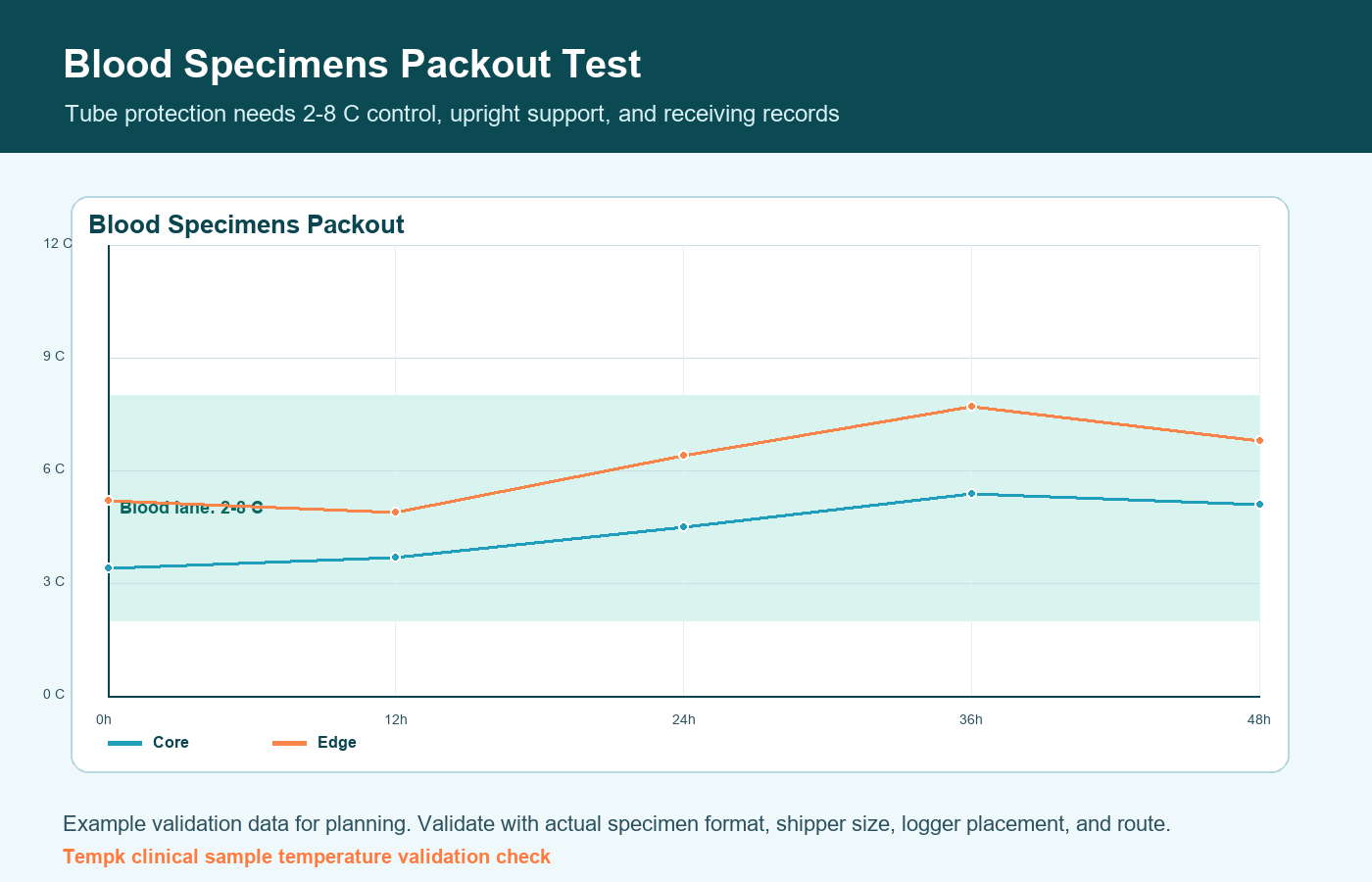
During validation, check the warm edge and the cold-side position close to coolant, ليس فقط المركز.
هذه هي المشاكل المرئية والتشغيلية التي يجب على المرسل إليه الحد منها قبل وصول الشحنة إلى المستلم.
استخدم منحنى الاختبار كمقارنة عملية, ثم قم بالتحقق باستخدام حاوية التحلية الفعلية, الشاحن, coolant or ثلج جاف configuration, مدة الممر, ملف تعريف المحيط, وعملية الاستلام.
استخدم هذه الصفحات لمقارنة الطرق السريرية والطبية القريبة, خيارات المبرد, خيارات العزل, والأسئلة المتعلقة بمخاطر الطريق قبل أخذ العينات.
Blood عينات need temperature control that matches the test while preventing أنبوب breakage and hemolysis. The ترتيب التغليف must also keep paperwork and labels readable.
Common problems are hemolysis from rough handling, أنابيب متسربة, delayed lab receipt, and coolant touching أنابيب that should not freeze.
Use أنبوب racks or sleeves, مادة ماصة تغليف ثانوي, وشاحن خارجي جامد. Keep requisition forms outside the wet or cold zone.
Use chilled عبوات جل only when the assay requires 2 ل 8 ج. For ambient tests, use protective packaging without unnecessary cold packs.
Check أنبوب integrity, سهولة قراءة التسمية, تسرب, درجة حرارة, and lab acceptance after the trial route.
Custom ترتيب التغليف support
لأحجام الكرتون الثابتة, حمولة limits, متطلبات العلامة التجارية, الممرات الموسمية, أو أهداف التحقق من الصحة, Tempk can adapt this solution into a custom cold-chain ترتيب التغليف.
Share the أنبوب type, عينة count, protocol temperature, مدة الطريق, ملف تعريف المحيط, خطوات البريد السريع, تصنيف, and فحص الاستلامs. يمكن أن يساعد Tempk في مقارنة الشاحن, كتلة المبرد, أنبوب support, مادة ماصة layer, مسجل position, وخطة التحقق من الصحة.
Request a ترتيب التغليف review