Dezember aktualisiert 8 2025
Die Gewährleistung einer sicheren und regelkonformen Lieferung lebensrettender Medikamente war noch nie so kompliziert. Als Biologika, Zell- und Gentherapien gewinnen an Bedeutung und Regulierungsbehörden verschärfen die Rückverfolgbarkeit, cold chain express shipping for pharmaceuticals has become essential. In 2025 the global pharmaceutical cold chain market grew to roughly US$10.04 billion, während die pharmaceutical cold chain packaging market alone was valued at US$28.9 billion und wird voraussichtlich erreicht werden US$75 billion by 2032. To protect sensitive medicines and comply with laws like the Gesetz zur Sicherheit der Arzneimittellieferkette (DSCSA), Sie müssen die Temperaturregelung beherrschen, Serialisierung, und Zustellung auf der letzten Meile. In diesem Artikel erfahren Sie Schritt für Schritt, wie Sie den Kühlketten-Expressversand für Arzneimittel steuern 2025.
Dieser Leitfaden wird Ihnen helfen:
Verstehen Sie, warum der Expressversand in der Kühlkette von entscheidender Bedeutung ist 2025 – learn how biologics and mRNA therapies drive precision logistics and why even short temperature excursions can ruin a batchl.
Prepare for DSCSA deadlines – see the 2025 Compliance-Zeitplan für Hersteller, Großhändler und Spender, zusammen mit praktischen Tipps zur Erfüllung der Serialisierungs- und Verifizierungsanforderungen.
Choose the right packaging and monitoring solutions – compare passive and active technologies like vacuum insulated panels, Phasenwechselmaterialien, IoT sensors and blockchain for real time tracking.
Optimize last mile delivery and same day shipping – explore innovations like drones, micro fulfilment centres and predictive analytics, and how retailers deliver insulin in as little as nine minutes.
Bleiben Sie einen Schritt voraus 2025 Trends – discover market forecasts, sustainability shifts, and digital transformations shaping the future of cold chain logistics.
Why Is Cold Chain Express Shipping for Pharmaceuticals Vital in 2025?
The Rise of Biologics and Advanced Therapies
Demand for temperature sensitive medicines has exploded. Biologics and cell and gene therapy products make up roughly 30 % of the pharmaceutical pipeline, and these complex molecules require tight temperature control to retain potency. mRNA-Impfstoffe, Zum Beispiel, muss eingehalten werden –70 °C bis –80 °C, creating unprecedented cryogenic logistics requirements. Even a brief exposure outside the +2 ° C bis +8 °C range can invalidate a vaccine batchl. As advanced therapies expand, express shipments ensure ultra cold and refrigerated products reach patients quickly and safely.
Patient Safety and Economic Stakes
Temperature excursions are costly. IATA estimates that 20 % of temperature sensitive pharmaceutical shipments are compromised each year due to logistics failures, verursachend US$35 billion in losses global. Beyond financial impact, degraded medicines endanger patients and erode trust. Cold chain logistics consume roughly 23 % Budgets für Arzneimitteltransporte, so every degree matters. Express delivery reduces transit time, limiting exposure to ambient conditions and preventing spoilage.
Regulierungsdruck: DSCSA and Good Distribution Practices
Compliance ist nicht verhandelbar. Der DSCSA mandates full serialization and electronic traceability across the U.S. Lieferkette. After a stabilization period in 2024, Hersteller und Umverpacker had to comply by Mai 27 2025, Großhändler von August 27 2025, Und dispensers with 26 or more employees von November 27 2025. Kleine Spender haben bis November 27 2026. Non compliance can stall shipments and result in fines or product seizure. Über DSCSA hinaus, Gute Verteilungspraktiken (BIP) require validated systems, Temperaturüberwachung, Dokumentation und geschultes Personall. Express shipping providers must embed compliance into every handoff.
Market Growth and Competitive Advantage
The cold chain pharmaceutical market’s expansion reflects both necessity and opportunity. It grew from 8,85 Milliarden US-Dollar im Jahr 2024 auf 10,04 Milliarden US-Dollar 2025 und wird voraussichtlich erreicht werden 18,2 Milliarden US-Dollar von 2030. Packaging innovations have turned logistics from a commodity into a competitive differentiator; the cold chain packaging market will climb from US$28.9 billion in 2025 auf 75 Milliarden US-Dollar 2032. Companies that invest in resilient express shipping unlock new markets, reduce recalls and strengthen customer loyalty.
Temperaturanforderungen: Know Your Ranges
Proper storage prevents degradation. Standard reference ranges include:
| Temperaturbereich | Storage Classification | Beispielprodukte | Warum ist es wichtig |
| 20 °C–25 °C (15–30 °C excursions) | Raumtemperatur / Kontrollierte Raumtemperatur | Small molecule tablets and oral liquids | Avoiding heat or moisture maintains stability; excursions outside 30 °C risk potency loss. |
| 8 °C–15 °C | Cool Storage | Some eye drops and probiotics | Many biologics tolerate “cool” conditions, but require monitoring to prevent freezing. |
| 2 °C–8 °C | Gekühlt | Impfungen, Insulin, monoklonale Antikörper | The most common pharmaceutical cold chain; excursions beyond +8 ° C oder unten +2 °C can render products ineffectivel. |
| –20 °C ±5 °C | Freezer Storage | Gefrorene Arzneimittel, some reagents | Standard freezer conditions require insulated packaging and gel packs or dry ice. |
| –70 °C bis –80 °C | Ultrakalt / Kryogen | mRNA-Impfstoffe, Zell- und Gentherapien | Cryogenic logistics with dry ice or liquid nitrogen ensure viability but demand specialized containers. |
How to Maintain Temperature Integrity During Express Shipping
Step By Step Packaging and Shipping Best Practices
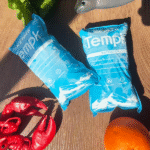
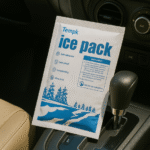
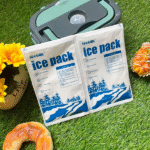
Pre Condition Products and Coolants – Freeze or pre chill your product before packing; shipping a pre cooled item reduces the cooling burden on gel packs or dry ice. Match the phase change material (PCM) to your required temperature band (Z.B., 2–8 ° C, −20 °C or −70 °C) and pre condition it accordingly.
Wrap and Protect – Wrap individual items in plastic or vacuum seal them to prevent cross contamination. Place absorbent material beneath the product to collect meltwater and use separate compartments or cardboard dividers to maintain cold zones.
Siegel, Label and Insulate – Close the insulated cooler securely and place it inside a sturdy outer box. Fill voids with bubble wrap to prevent movement. Use strong packing tape—avoid duct tape, which fails at low temperatures. Label the shipment clearly as “Keep Refrigerated” oder „Eingefroren bleiben“, and include dry ice hazard labels when necessary.
Schedule Smartly – Ship early in the week to avoid weekend delays. Choose overnight or two day express services and communicate tracking information to recipients so they can retrieve packages promptly.
Require Signature and Insurance – For high value shipments, purchase additional insurance and require a signature on delivery to ensure someone is available to receive the package.
Include Documentation – Enclose DSCSA compliance documentation, certificates of analysis or other regulatory paperwork in a moisture proof pouch. Use an IoT enabled temperature logger for real time monitoring and keep digital records for auditsl.
These steps apply whether shipping insulin, vaccines or specialty foods. For different product categories, adjust coolant ratios: one pound of gel per pound of frozen meat, or use breathable padding for cheeses. Für Pharmazeutika, consult the manufacturer for the exact temperature requirement and always include a calibrated logger.
Choosing the Right Packaging Technologies
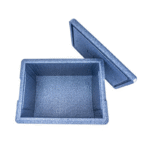
Passive Solutions – Insulated shippers with vacuum insulated panels (VIPs) and phase change materials maintain required temperatures without external power. VIP boxes use evacuated silica panels with thermal conductivity around 5 mW/m·K, delivering hold times of 7–10 Tage, Welches ist 2–3 times longer than conventional expanded polystyrene (EPS) Kühler. Reusable VIP shippers protect high value biologics and are forecast to grow from 4,97 Milliarden US-Dollar im Jahr 2025 auf 9,13 Milliarden US-Dollar 2034. Phase change materials can be tuned to specific temperature bands; they outperform gel packs by maintaining stable temperatures without freezing products.
Aktive Container – Battery powered or compressor driven units provide continuous refrigeration. Der MedStow Micro container offers 72 hour battery powered service across –20 °C bis +25 °C und ist wiederverwendbar. Envirotainer’s RelEye pallet containers use active refrigeration with 18 Sensoren and maintain 4–30 °C for up to 170 Std.. Sonoco ThermoSafe’s Pegasus ULD is a passive ULD (unit load device) bewertet für 300 Stunden bei 2–8 °C. Active solutions cost more but offer precise control and real time data for high value shipments or long durations.
| Technologie | Temperaturbereich | Approximate Hold Time | Schlüsselvorteile | Trade Offs |
| VIP Passive Shipper | 2–8 ° C, −20 °C, −70 °C | 7–10 Tage | Ultra long hold time; leicht; wiederverwendbar; minimal power needs | Höhere Kosten; fragile panels require careful handling. |
| Phasenwechselmaterial (PCM) | Abstimmbar (2–8 ° C, −20 °C, −70 °C) | 24–96 h (varies by PCM) | Stable temperature without freezing; customisable to payload | Requires pre conditioning; may need combinations for longer trips. |
| Active Refrigerated Container (MedStow, RelEye) | −20 °C bis +25 °C | 72–170 h | Präzise Temperaturregelung; Integrierte Sensoren; wiederverwendbar | High purchase or rental cost; requires charging/power logistics. |
| Cryogenic Freezer (Cryoport Express HV3) | −150 °C | Bis zu 300 H | Maintains ultra low temperatures for cell/gene therapies; safe for dry shippers | Sperriger; limited payload; must follow dry ice regulations. |
Überwachung, Traceability and Data Integrity
Kontinuierliche Überwachung – Use automated data loggers and real time systems to track temperatures during storage and transportl. 21 CFR Part 11 compliant loggers produce secure audit trails, electronic signatures and remote alerts via SMS or emaill. For DSCSA compliance, integrate the EPCIS standard to exchange serialized data with trading partners.
Blockchain und IoT – Smart sensors combined with blockchain create tamper proof temperature and location records. In 2025 many logistics providers pair sensors with blockchain to enhance traceability. Some smart labels change colour when a thermal excursion occurs, providing visual confirmation. IoT devices also provide predictive analytics, allowing dynamic rerouting to avoid traffic or weather delays.
Künstliche Intelligenz (Ai) – AI systems analyse data streams to predict excursions and optimise routes, Verderb verringern. They also manage inventory to prevent stockouts or waste. With more shipments tracked by IoT and blockchain, AI will soon monitor over 75 % of pharmaceutical shipments von 2030.
Nachhaltigkeitsüberlegungen – Consumers and regulators demand eco friendly solutions. Trends include recycled cardboard, Schäume auf pflanzlicher Basis, bio plastic gel packs and modular designs that reduce material waste. Reusable shippers and return by mail programs cut carbon footprint and save costs. Energy efficient refrigeration and route optimisation further lower emissions.
Navigating DSCSA and Regulatory Compliance in 2025
DSCSA Deadlines & Anforderungen
| Handelspartner | DSCSA Compliance Deadline | Anforderungen |
| Hersteller & Repackagers | Mai 27 2025 | Must exchange serialized data and verify product identifiers electronically. 2D barcodes and electronic product code information services (EPCIS) are required to transmit transaction data. |
| Großhandelshändler | August 27 2025 | Must receive and exchange serialized EPCIS data with manufacturers; verify suspect products; quarantine and investigate discrepancies. |
| Spender (≥ 26 Mitarbeiter) | November 27 2025 | Must accept serialized data and verify packages; maintain systems for product tracing. |
| Small Dispensers (≤ 25 Mitarbeiter) | November 27 2026 | Exempt until 2026 but encouraged to prepare early to avoid disruptions. |
DSCSA compliance requires more than scanning barcodes. Trading partners must validate data exchange, pflegen secure electronic systems, Und keep transaction records for at least six years. Failure to comply can result in stalled shipments, Bußgelder und Reputationsschäden. Start by auditing your IT systems, upgrading to EPCIS compatible software and training staff to handle serialized data.
Good Distribution Practices and Other Regulatory Frameworks
Apart from DSCSA, several frameworks govern cold chain logistics:
BIP – Emphasises temperature control, validierte Systeme, and traceability across distributionl. Facilities must be audited and staff trained regularly.
USP <1079> / USP <659> – Provide guidance on temperature ranges (room, Cool, gekühlt, gefroren) and recommend medical grade refrigerators, Homogenitätsprüfung, stability assessments and continuous monitoring.
IATA-Vorschriften zur Temperaturkontrolle (TCR) – Set standards for air shipment of pharmaceuticals, requiring training, Beschriftung, packaging and traceability.
21 CFR -Teil 11 & EU-GMP-Anhang 11 – Mandate electronic recordkeeping, audit trails and user access controls in regulated environmentsl.
Local Regulations (MHRA, EMA, CDSCO) – Each jurisdiction may impose additional requirements; always consult country specific rulesl.
Um konform zu bleiben:
Conduct route risk assessments and collaborate only with validated logistics providers.
Verwenden NIST or UKAS calibrated monitoring equipmentl.
Pflegen detailed records of temperature logs, calibrations and trainingl.
Develop Notfallpläne for power outages, equipment failure or delaysl.
Serialisierung & Digitalization Strategies
Implementing DSCSA often requires new workflows:
Integrate EPCIS Standards – Work with your ERP or warehouse management systems to send and receive serialized transaction data. Seek partners offering Schiene & Trace platforms that automate EPCIS data exchange.
Leverage 2D Barcodes and RFID – High density barcodes can hold GTIN, Chargennummer, expiration and serial number. RFID tags enable contactless scanning and improve accuracy.
Adopt Cloud Based Traceability – Cloud solutions provide centralised visibility, real time alerts and simpler audits. Ensure they meet data integrity standards like Part 11.
Prüfen & Bestätigen – Perform end to end tests with trading partners before deadlines; verify data format, message sequencing and error handling.
Optimising Last Mile Delivery and Same Day Shipping
Micro Fulfilment, Predictive Analytics and 4PL/5PL Partnerships
Last mile delivery can account for 41–53 % of total cold chain costs. To control costs and speed up delivery:
Mikro-Fulfillment-Center (MFCs) place inventory closer to consumers, reducing travel time. MFCs use robotics and AI to process orders quickly.
Prädiktive Analytik uses real time weather and traffic data to determine the optimal route, adjusting schedules to maintain temperature.
4PL/5PL Partnerships consolidate carriers, warehousing and IT systems to provide end to end visibility and risk management.
Drone Delivery and Autonomous Vehicles
Drones are transforming medical logistics. In den USA. several health systems expanded drone deliveries in 2025. Cleveland Clinic Ziele 10 minute delivery times for specialty medicines, while Zipline operates in 11 states. Drone deliveries reduced blood transport times in Rwanda by 79–98 minutes and decreased product expiry rates by 67 %. The global medical drone delivery market is projected to grow from US$245.4 million in 2023 to US$1.9 billion by 2032 (CAGR 22.3 %). Modern drones carry refrigerated payloads with real time temperature monitoring and provide an alternative for hard to reach areas.
Same Day Delivery Success Stories
Retailers are capitalising on consumer demand for speedy prescription delivery. Walmart expanded its pharmacy delivery service nationwide in 2025, completing over four million orders in its first year. The company can deliver refrigerated prescriptions such as insulin and GLP 1 medications in as little as nine minutes. Packages use insulated and light blocking materials, and drivers obtain electronic signatures upon delivery to maintain product safety. This demonstrates how express shipping integrated with local fulfilment can deliver high value pharmaceuticals quickly while maintaining regulatory compliance.
Evaluating Last Mile Options
| Last Mile Solution | Delivery Speed | Suitable Products | Schlüsselvorteile | Überlegungen |
| Same Day Courier (Z.B., retailer partnerships) | 1–24 h; some as fast as 9 min | Insulin, Biologika, refrigerated prescriptions | Immediate delivery; personal handoff with signature | Requires dense network; higher labour costs. |
| Micro Fulfilment & Local Vans | 2–8 Std | Impfungen, Mahlzeiten, Diagnosekits | Reduces last mile distance; supports scheduled delivery | Capital investment in local hubs; complex inventory management. |
| Drohnen | 10–30 Min | Emergency medicines, Blutprodukte, Fernlieferungen | Bypasses traffic; serves rural areas; reduces expiry and transit time | Limited payload and regulatory restrictions; wetterabhängig. |
| Traditional Express Carriers (Luft & Straße) | Overnight to 2 Tage | Massensendungen, cross country deliveries | Wide network; established compliance; Echtzeitverfolgung | Higher risk of delays; requires robust packaging. |
2025 Trends und Zukunftsaussichten
Trendübersicht
The cold chain pharmaceutical landscape in 2025 is shaped by technological integration, sustainability and regulatory change. Blockchain-fähige Tracking-Plattformen, IoT based smart packaging Und KI-gesteuerte prädiktive Analysen are creating end to end visibility and mitigating temperature excursions. Unternehmen nehmen an bio based insulating materials Und modulare Verpackung to reduce environmental impact and packaging waste. Global cold chain operators are forging strategic partnerships to diversify sourcing and strengthen resilience.
Neueste Fortschrittshighlights
Marktwachstum – The cold chain pharma market expanded from 8,85 Milliarden US-Dollar im Jahr 2024 auf 10,04 Milliarden US-Dollar 2025 und wird erreichen 18,20 Milliarden US-Dollar von 2030. The packaging market will rise from US$28.9 billion in 2025 auf 75 Milliarden US-Dollar 2032, while some forecasts project cold chain packaging across all sectors to grow to US$102.1 billion by 2034.
Technological Integration – Real time sensor arrays, blockchain traceability and AI route optimisation are now mainstream. Über 75 % of pharmaceutical shipments will be tracked with IoT and blockchain von 2030.
Regulatorische Entwicklung – The stabilization period for DSCSA ended in 2024, Und 2025 sees phased deadlines across the supply chain. Europe is implementing stricter GDP audits and digital EUDAMED data exchange.
Sustainability Shifts – Reusable shippers, plant based foams and renewable energy powered storage (Z.B., solar cold storage units) den CO2-Fußabdruck reduzieren. Tariffs on imported refrigeration equipment are prompting local sourcing and modular container design.
Geographic Expansion – Asia Pacific remains the fastest growing market for cold chain packaging, mit 31 % teilhaben 2024 and strong growth due to manufacturing expansion and infrastructure investment. North America holds ~33 % of the overall cold chain logistics market and continues to invest in digitization and infrastructure.
Markteinsichten
Consumer Behaviour – Patients expect home delivery of prescriptions and diagnostics. Generation Z researches healthcare options online, driving demand for more responsive supply chains. Mail order pharmacies and meal kit companies must provide robust cold chain solutions and transparent tracking.
Investment Drivers – Biopharmaceutical companies dominate end user demand, holding about 54 % Aktie in the cold chain packaging market. Kunststoffe (EPS, EVP) Konto für 74 % of material composition, while small boxes and insulated shippers make up 38 % des Produkttypanteils.
Infrastructure Challenges – Developing economies face inadequate cold chain facilities and high energy costs. Tariffs on imported refrigeration equipment are driving domestic innovation. Collaboration between 3PLs, 4PLs and technology providers is critical for reaching remote communities.
Häufig gestellte Fragen
Q1: What are the key DSCSA deadlines for 2025?
A: Manufacturers and repackagers had to meet serialization and verification requirements by Mai 27 2025, Großhändler von August 27 2025, and dispensers with ≥26 employees by November 27 2025. Kleine Spender haben bis November Zeit 27 2026. Non compliance can halt shipments and trigger penalties.
Q2: How long can a vacuum insulated panel (VIP) shipper keep pharmaceuticals within 2–8 °C?
A: VIP shippers can maintain temperature bands for 7–10 Tage, etwa 2–3 times longer than conventional expanded polystyrene coolers. This extended hold time makes them ideal for international express shipments or remote deliveries.
Q3: Why are IoT sensors important for cold chain express shipping?
A: IoT-Sensoren liefern Echtzeittemperaturen, Luftfeuchtigkeit und Standortdaten. When paired with blockchain, they create tamper proof records and enable predictive analytics to prevent excursions. Von 2030, eine Schätzung 75 % of pharmaceutical shipments will use IoT and blockchain for tracking.
Q4: What temperature range is required for mRNA vaccines?
A: mRNA vaccines typically require ultra cold storage at –70 °C bis –80 °C. Specialized cryogenic shippers like Cryoport Express maintain temperatures around –150 °C für Zell- und Gentherapien.
Q5: How can small pharmacies comply with DSCSA when shipping cold chain products?
A: Kleine Spender haben bis November 27 2026 nachzukommen. They should adopt EPCIS compatible software, use 2D barcodes or RFID on packages, implement cloud based traceability, and work with 3PL partners who offer compliant services. Using express carriers that provide DSCSA data integration reduces administrative burden.
Q6: What are the consequences of a cold chain breach?
A: A temperature excursion can lead to product degradation, Risiken für die öffentliche Gesundheit, finanzielle Verluste, Regulierungsmaßnahmen, Rufschädigung, Versorgungsunterbrechungen und Umweltverschwendungl. Even short deviations outside the +2 ° C bis +8 °C range can invalidate an entire vaccine batchl.
Zusammenfassung & Empfehlungen
Maintaining the integrity of temperature sensitive medicines requires a holistic approach. Biologics and advanced therapies now dominate pipelines, demanding ultra precise temperature control. DSCSA-Durchsetzung In 2025 enforces serialized traceability and electronic data exchange across the supply chain. Verpackungsinnovationen like VIP shippers, PCMs and active containers prolong hold times and protect high value products. Echtzeitüberwachung, Blockchain und KI provide end to end visibility and predictive risk management. Innovationen auf der letzten Meile, from micro fulfilment to drone deliveries, shorten delivery times and enhance patient access.
Umsetzbare Schritte
Assess Your Product Portfolio – Identify temperature requirements and stability data for each product. Determine whether passive or active packaging fits your needs.
Upgrade to Compliant Systems – Implement EPCIS compatible software, 2D barcodes or RFID, and cloud based traceability to meet DSCSA requirements.
Invest in Validated Packaging & Überwachung – Choose VIP or PCM shippers for express shipments; embed IoT loggers and ensure calibration to NIST/UKAS standards.
Partner Strategically – Collaborate with experienced 3PL/4PL providers, carriers and drone networks that understand pharmaceutical regulations and offer real time visibility.
Trainiere dein Team – Educate employees on handling, Dokumentation und Notfallmaßnahmen. Regularly review GDP guidelines and update SOPs accordingly.
Implement Sustainability Initiatives – Opt for reusable or recyclable packaging, optimize routes to reduce carbon footprint, and engage in return programs to minimise waste.
Über TempK
Und TempK, we develop innovative cold chain solutions that protect pharmaceuticals, food and other perishables. Unser vakuumisoliertes Panel (VIP) Boxen Und Versender von Phasenwechselmaterial maintain precise temperature ranges for up to 10 Tage. Our IoT enabled data loggers provide real time temperature, Luftfeuchtigkeit und Standortverfolgung, sicherstellen full compliance with DSCSA and GDP. With research and manufacturing facilities adhering to ISO 9001 and eco friendly practices, we offer reusable, Recycelbare Verpackung that reduces waste and lowers total cost of ownership. Whether you ship clinical trial samples or deliver insulin across town, TempK can help you ship smarter, grüner und sicherer.
Ready to Secure Your Cold Chain?
If you’re looking to optimise cold chain express shipping for pharmaceuticals, TempK’s experts are here to help. Contact us to discuss your product requirements, schedule a consultation or request a sample kit. Machen Sie den nächsten Schritt toward protecting your patients and your business with resilient, konforme Kühlkettenlösungen.