So führen Sie Lösungen für Kühlketten-Fischprozesse durch (2025)
Lösungen für Kühlketten-Fischprozesse help you keep fish safe, frisch, and profitable by controlling Zeit + Temperatur + Feuchtigkeit from dock to door. If your product warms up even 2–3°C, shelf life can drop and texture can soften fast.
In 2025, the simplest “win” is still the same: halten fresh fish near 0–2°C and keep frozen fish at −18°C or colder, then prove it with records.
Dieser Artikel hilft Ihnen bei der Beantwortung
-
How Cold Chain Fish Processes Solutions reduce spoilage and quality loss
-
Was zum ideal temperature for chilled fish transport looks like in daily operations
-
How to protect frozen fish storage temperature −18°C through real-world delays
-
How to prevent histamine risk using better time–temperature discipline
-
Wie man wählt fresh fish packing and last-mile delivery solutions that actually hold temperature
-
How to validate Cold Chain Fish Processes Solutions by lane, Jahreszeit, und Serviceniveau
Why are Cold Chain Fish Processes Solutions non-negotiable for fish?
Cold Chain Fish Processes Solutions matter because fish deteriorates faster than most foods, and damage from warming is irreversible.
Cold Chain Fish Processes Solut…
When temperature rises, bacteria grow faster and enzymes soften muscle structure. You can cool fish again later, but you can’t “undo” the lost freshness.
Think of freshness like a phone battery. Heat drains it quickly. Cold Chain Fish Processes Solutions slow the drain so you arrive with “battery life” left to sell—more days of shelf life, fewer rejections, and fewer refunds.
What happens when fish warms by just a few degrees?
A small temperature drift often causes the biggest business pain: soft texture, odor complaints, and unpredictable shelf life. A deviation of 2–3°C can accelerate spoilage and reduce shelf life by days.
Cold Chain Fish Processes Solut…
| What warms up | What changes first | What you see at delivery | Was es für Sie bedeutet |
|---|---|---|---|
| Fresh fillets | Texture softens | “Mushy” feel | Untere Klasse, more returns |
| Whole fish | Odor increases | “Fishy” smell | More complaints, lost trust |
| Frozen product | Partial thaw | Drip loss after refreeze | Quality claims, rework costs |
Praktische Tipps, die Sie heute verwenden können
-
Set a “stop-the-line” rule: if product hits your red-flag temperature, pause and re-ice or re-chill.
-
Measure time above target: minutes above target predict losses better than “average temperature.”
-
Treat staging as production: a warm dock is still part of your cold chain.
Praxisbeispiel: One operation improved outcomes by tightening temperature control in the first hours after harvest, cutting quality complaints noticeably.
Cold Chain Fish Processes Solut…
Which temperature targets should Cold Chain Fish Processes Solutions hit?
Cold Chain Fish Processes Solutions work best when you hit two targets consistently: ~ 0 ° C. (32° F) for chilled fish and ≤−18°C for frozen fish.
Cold Chain Fish Processes Solut…
This is not about “as cold as possible.” It’s about stabil, repeatable control that matches the product state.
If you only remember one sentence, use this: Chilled fish is a race against time. Frozen fish is a race against thaw.
Ideal temperature for chilled fish transport: what does “near 0°C” mean?
Für gekühlten Fisch, aim for conditions close to melting ice (um 0°C / 32° F) to slow spoilage without freezing the flesh.
Cold Chain Fish Processes Solut…
Use 0–2°C as your quality target, and treat warmer ranges as short exceptions.
| Produktstatus | Simple target | “Red-flag” drift | Was es für Sie bedeutet |
|---|---|---|---|
| Frisch, chilled fish | ~0–2°C | >4°C for long periods | Faster spoilage, softer texture |
| Frisch (short local runs) | ≤4°C (fallback) | Repeated warm spikes | More variability, weitere Ansprüche |
| Gefrorener Fisch | ≤−18°C | Warming cycles | Thaw/refreeze damage, drip loss |
Praktische Tipps, die Sie heute verwenden können
-
Write targets on the SOP, not in someone’s head.
-
Use two thresholds: A Warnung line and a reject-risk Linie.
-
Don’t mix fresh + frozen loosely: they fight each other thermally.
Real-world note: Your process succeeds when temperature is stable and monitored end-to-end, not “checked once at the dock.”
Cold Chain Fish Processes Solut…
How do Cold Chain Fish Processes Solutions win the first hour after harvest?
The first hour is where Cold Chain Fish Processes Solutions either gain shelf life—or lose it permanently. Many operations target fast chilling immediately after catch and during receiving, because early warming creates “invisible” damage that later steps can’t fix.
Im Klartext: if you cool late, you’re paying twice—once for ice and once for waste.
Ice contact vs. “cold air only”: what cools faster in practice?
Cold Chain Fish Processes Solutions usually rely on direct ice contact + drainage control for fast chilling, especially when product arrives warm. Air chilling can be much slower, and slow cooling burns shelf life.
| Verfahren | Cooling behavior | Hidden risk | Was es für Sie bedeutet |
|---|---|---|---|
| Direct ice contact | Schnell, stable near 0°C | Meltwater pooling | Needs drainage + Liner |
| Ice-water mix (Matsch) | Very fast contact cooling | Sanitation control | Great for bulk totes |
| Cold air only | Langsames Abkühlen | Surface drying | Looks worse, kürzere Haltbarkeit |
Praktische Tipps, die Sie heute verwenden können
-
Start the clock at harvest/receiving: track time-to-ice, not just shipping time.
-
Use thin layers: deep stacks warm in the middle first.
-
Keep fish out of meltwater: meltwater warms and harms texture.
Praxisbeispiel: Tight early chilling and disciplined handling can reduce spoilage complaints and stabilize quality.
Cold Chain Fish Processes Solut…
How should Cold Chain Fish Processes Solutions run inside processing plants?
Processing is where Cold Chain Fish Processes Solutions often fail quietly. Fish may enter cold storage correctly, then warm during filleting, grading, or queue time.
Cold Chain Fish Processes Solut…
Ihr Ziel ist einfach: short exposure windows, kleine Chargen, fast returns to cold control.
Think of the cutting line like a busy kitchen. If food sits on the counter too long, it warms. Fish is less forgiving than most foods, so your “counter time” needs to be short and enforced.
Where processing loses temperature most often
| Processing point | Was geht schief | Quick control | Was es für Sie bedeutet |
|---|---|---|---|
| Filleting | Long bench time | Chilled room + kleine Chargen | Firmer texture |
| Waschen | Warm water exposure | Cold rinse + fast drain | Lower bacterial load |
| Sorting/grading | Waiting in queues | “No-wait” lane | Less warming, fewer rejects |
| Verpackung | Slow pack-out | Pre-chilled stations | Stable handoff |
Praktische Tipps, die Sie heute verwenden können
-
Set a “max bench time” (Beispiel: 15 Minuten) before product returns to chill.
-
Batch smaller, rotate faster: fewer long waits beat “big batch efficiency.”
-
Design one-way flow: reduce backtracking and open-door exposure.
Operational insight: Cutting hidden queue time can reduce losses without buying new equipment—just better flow and enforcement.
Which packaging choices make Cold Chain Fish Processes Solutions reliable?
Packaging is the physical shield of Cold Chain Fish Processes Solutions. It slows heat gain, verwaltet Feuchtigkeit, and protects product during handoffs.
Cold Chain Fish Processes Solut…
Packaging is not magic, obwohl. It’s more like a seatbelt: it reduces damage when something goes wrong, but you still need a safe process.
Cold Chain Fish Processes Solut…
Packaging comparison: match pack-out to your product and route
| Pack-out style | Am besten für | Hauptrisiko | Was es für Sie bedeutet |
|---|---|---|---|
| Iced packs (wet style) | Fresh finfish, short cycles | Schmelzwasser + mess | Best quality if managed well
Cold Chain Fish Processes Solut… |
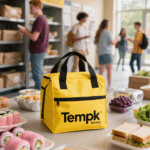
| Gel/PCM + Isolierter Versender | Paket + letzte Meile | Wrong sizing = drift | Reiniger, more repeatable
Cold Chain Fish Processes Solut… |
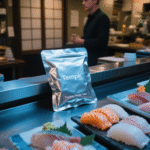
| Gefroren (≤−18°C) + barrier pack | Long distance/export | Fluctuation | Strong frozen stability
Cold Chain Fish Processes Solut… |
Praktische Tipps, die Sie heute verwenden können
-
Write a pack-out recipe: number of packs, Platzierung, target hours.
Cold Chain Fish Processes Solut…
-
Validate on the worst week: hottest weather or busiest season.
Cold Chain Fish Processes Solut…
-
Control meltwater: use drainage, Liner, and separation so fish doesn’t soak.
-
If you ship histamine-risk species: treat warming as “invisible damage” and tighten controls.
Cold Chain Fish Processes Solut…
Praxisbeispiel: Switching from “more ice” to measured PCM + insulation can improve consistency and reduce complaints when routes are variable.
Cold Chain Fish Processes Solut…
How do transport and last mile break Cold Chain Fish Processes Solutions?
Transport is where Cold Chain Fish Processes Solutions face the highest risk because delays, Türöffnungen, and mixed cargo create temperature instability.
Cold Chain Fish Processes Solut…
Many failures are logistical, nicht technisch: long loading times, poor routing, and last-mile exposure undo earlier wins.
Cold Chain Fish Processes Solut…
Transport risk breakdown you can manage
| Transport phase | Hauptrisiko | Kontrollstrategie | Was es für Sie bedeutet |
|---|---|---|---|
| Laden | Heat exposure | Schnell, organized loading | Stable core temp
Cold Chain Fish Processes Solut… |
| Transit | Verzögerungen | Routenplanung + Puffer | Predictable delivery
Cold Chain Fish Processes Solut… |
| Letzte Meile | Umgebungswärme | Insulated handling rules | Better freshness
Cold Chain Fish Processes Solut… |
Last-mile delivery solutions for fresh seafood: your “final 2 hours” plan
| Last-mile reality | Baseline pack-out | Prozesskontrolle | Was es für Sie bedeutet |
|---|---|---|---|
| Appointment delivery | Standard insulation + measured coolant | Tight window | Fewer warm holds |
| Doorstep/lobby risk | Higher insulation + extra hold time | Signature/OTP or hold-at-pickup | Weniger Rückerstattungen |
| Mixed stops | Zonentrennung | Stop-limit rule | Bessere Konsistenz |
Praktische Tipps, die Sie heute verwenden können
-
Pre-cool vehicle + pre-cool load + schnell laden.
-
Getrennte Zonen: chilled and frozen need physical separation.
-
Create exception rules: failed delivery is a known risk—decide in advance what happens next.
Erinnern: transport is a “moving cold room.” If you design it that way, you stop relying on luck.
Cold Chain Fish Processes Solut…
How can monitoring upgrade Cold Chain Fish Processes Solutions?
Cold Chain Fish Processes Solutions depend on monitoring because you can’t improve what you can’t see. Ohne Daten, you find failures only after the customer complains. Monitoring also reduces partner disputes because it replaces opinions with timestamps.
Fangen Sie einfach an. You don’t need “more data.” You need the right data.
Monitoring methods that add real value
| Überwachungsmethode | What it catches | Effort level | Was es für Sie bedeutet |
|---|---|---|---|
| Stichproben | Big failures | Niedrig | Baseline only; misses spikes
Cold Chain Fish Processes Solut… |
| Datenlogger | Spikes + Dauer | Medium | Fix routes and loading habits
Cold Chain Fish Processes Solut… |
| Intelligente Indikatoren (TTIs) | Cumulative exposure | Low at scale | Simple “proof,” still indirect
Cold Chain Fish Processes Solut… |
Praktische Tipps, die Sie heute verwenden können
-
Track two KPIs first: max temperature and time above target.
-
Place sensors where problems happen: near doors and warm corners.
Cold Chain Fish Processes Solut…
-
Review exceptions first: fix the worst lanes before you “optimize everything.”
-
Write a temperature exception SOP: who decides, was zu tun, how to document.
Cold Chain Fish Processes Solut…
Praxisbeispiel: Many teams discover the biggest excursion is “waiting for pickup,” not highway transit—then fix scheduling and staging.
How do you validate Cold Chain Fish Processes Solutions by lane?
Validation means proving your Cold Chain Fish Processes Solutions hold temperature on real routes, in real seasons, with normal staff. This is how you stop debating and start standardizing.
A simple HowTo: lane validation in 7 Schritte
-
Pick your top lanes by volume and complaint rate.
-
Define pass/fail limits (fresh vs frozen).
-
Pack using your standard SOP (no “special effort”).
-
Place a logger in the warmest spot of the shipper.
-
Run enough shipments to see variability (not just one).
-
Review max temperature, Zeit über dem Limit, and delay points.
-
Change one variable at a time, then retest.
Cold Chain Fish Processes Solut…
| Validation element | Was soll aufgezeichnet werden? | Signal übergeben | Was es für Sie bedeutet |
|---|---|---|---|
| Pack-out timing | Minutes from chill to seal | Konsistent | Repeatable quality |
| Coolant usage | Weight/count per box | Stabil | Kostenkontrolle |
| Zeit von Tür zu Tür | Std | Vorhersehbar | Better freshness |
| Temperature curve | Max + Dauer | In spec | Fewer rejects |
Interaktives Entscheidungstool: choose the right control level
Schritt 1: Score your risk (1–4 each)
-
Produkt: live/ultra-fresh (4), gekühlte Filets (3), whole fish (2), gefroren (1)
-
Transitzeit: am selben Tag (1), next day (2), 2+ Tage (4)
-
Ambient: Cool (1), leicht (2), heiße Jahreszeit (4)
-
Letzte Meile: appointment/signature (1), Medium (2), high porch/lobby risk (4)
Schritt 2: Add your score and choose
-
4–7: Grundisolierung + standard ice/frozen control
-
8–11: Upgrade SOP + Stichprobenüberwachung
-
12–16: Lane-specific packaging + tighter windows + exception handling
-
17+: Consider re-ice points, aktive Kühlung, or changing service level
Warum funktioniert es: you match Cold Chain Fish Processes Solutions to real risk instead of guessing.
Are your traceability records part of Cold Chain Fish Processes Solutions?
In 2025, Cold Chain Fish Processes Solutions increasingly include traceability readiness. When something goes wrong, the fastest way to limit damage is being able to answer: Which lot is this? Where did it go? What temperature evidence supports it?
Selbsteinschätzung: traceability readiness score (0–20)
Gib dich selbst +2 für jedes „Ja“:
-
You can identify a lot code for every outbound shipment.
-
You capture supplier lot + receiving date + quantity in one system.
-
You record transformations (repack/relabel/commingle) deutlich.
-
You can produce a sortable shipment/lot report quickly.
-
You have written SOPs for temperature excursions and relabel events.
-
You train staff and test a mock recall at least yearly.
-
You can link temperature evidence (logger/indicator ID) to a lot.
-
Partners exchange data in a consistent format.
-
Records are organized, retrievable, and owned by a role.
-
You keep retention rules clear and consistent.
0–7: Hohes Risiko (fix foundations)
8–14: Improving (close gaps, test often)
15–20: Stark (optimieren + automatisieren)
2025 Cold Chain Fish Processes Solutions trends you should watch
In 2025, Cold Chain Fish Processes Solutions are shifting from basic temperature control to predictive freshness management—preventing risk instead of reacting to spoilage.
Cold Chain Fish Processes Solut…
That shift is pushed by better data review habits, more reusable packaging systems, and rising buyer expectations for consistency.
Cold Chain Fish Processes Solut…
Aktueller Fortschritts-Snapshot (praktisch)
-
Predictive temperature modeling: flag risk points before shipment.
Cold Chain Fish Processes Solut…
-
Reusable cold chain systems: improve stability and reduce long-term cost.
Cold Chain Fish Processes Solut…
-
Process integration: Ernte, Verarbeitung, and transport run as one system.
Cold Chain Fish Processes Solut…
Vorschläge für interne Links (on your site)
-
Cold Chain Fish Processes Solut…
Häufig gestellte Fragen
Q1: What is the ideal temperature for chilled fish transport?
Zielen nach near melting ice (~ 0 ° C. / 32° F) and keep drift small. Cold Chain Fish Processes Solutions work best when you minimize time above target, not when you “check once” and hope.
Q2: What frozen fish storage temperature should I target?
Design Cold Chain Fish Processes Solutions to hold ≤−18°C with minimal fluctuation. Avoid partial thaw events, because refreeze often leads to drip loss and texture complaints.
Q3: Is ice alone enough for fish transport?
Ice helps a lot, but Cold Chain Fish Processes Solutions usually also need Isolierung + drainage control + Überwachung. Ansonsten, door openings and warm staging can still cause damaging spikes.
Q4: How fast should fish enter the cold chain after harvest?
As fast as possible. Many teams push for chilling within the first hour, because early warming burns shelf life you can’t recover.
Cold Chain Fish Processes Solut…
Q5: Was ist das #1 last-mile mistake for fresh seafood delivery?
Uncontrolled waiting time (porch/lobby/van stops). Fix it with delivery windows, signature/OTP rules, and pack-outs sized for worst-case hold time.
Q6: What’s the fastest low-cost upgrade?
Remove “hidden delays”: shorten staging, reduce processing queues, and standardize pack-out steps. Cold Chain Fish Processes Solutions improve fastest when workflow becomes predictable.
Zusammenfassung und Empfehlungen
Cold Chain Fish Processes Solutions protect freshness, Sicherheit, and value when you treat the chain as one system, not separate steps. Stabil, monitored control reduces losses and makes quality repeatable.
Cold Chain Fish Processes Solut…
Focus on two temperature targets, remove hidden delays, standardize pack-outs by lane, and track time above target as your main KPI.
Ihre nächsten Schritte (einfacher Plan)
-
Ordnen Sie Ihr Oberteil zu 5 temperature exposure points.
Cold Chain Fish Processes Solut…
-
Tighten processing discipline and bench-time limits.
Cold Chain Fish Processes Solut…
-
Upgrade packaging for lane-specific thermal stability.
Cold Chain Fish Processes Solut…
-
Add basic monitoring on critical routes and review exceptions weekly.
Cold Chain Fish Processes Solut…
Über Tempk
Tempk supports Cold Chain Fish Processes Solutions with practical insulation options, temperature visibility workflows, and lane-based SOP design—focused on repeatability in real seafood logistics, not theory.
Cold Chain Fish Processes Solut…
We help you stabilize quality, reduce losses, and build trust with customers by making cold control easier to run every day.
Aktion: If you’re upgrading routes or pack-outs, request a lane validation checklist and pack-out review so your next change is proven, nicht erraten.