Cold Chain Vegetables Quality Assurance: Cut Shrink
If you want predictable freshness, cold chain vegetables quality assurance must protect shelf life Und prove control end-to-end. Für Blattgemüse, storage near 0°C can mean about 21 Tage of life, while around 5°C can drop it closer to 14 Tage in typical conditions. A single cooling delay can also hurt fast—one example shows a 4-hour delay increasing asparagus toughness by about 40%.
Dieser Artikel wird für Sie antworten:
- Wie cold chain vegetables quality assurance works in daily operations (not just audits)
- A lane system for produce temperature monitoring and humidity control (so you stop guessing)
- Ein praktischer cold chain vegetables quality assurance checklist for receiving that reduces disputes
- A KPI plan to track “warm minutes,” shrink, and claims by route and vegetable group
- 2025 Aktualisierungen: traceability timing, proof-on-demand expectations, and scalable SOP design
What Does Cold Chain Vegetables Quality Assurance Cover?
Direkte Antwort: Cold chain vegetables quality assurance is the system of standards, Überprüfungen, and corrective actions that keeps vegetables within quality targets from harvest to delivery. It typically covers temperature stability, Feuchtigkeitskontrolle, Umgang mit Disziplin, Verpackungsleistung, Inspektionen, and documented exceptions.
Erweiterte Erklärung: Stellen Sie es sich wie ein vor seatbelt plus a dashboard. The seatbelt is your SOPs that prevent damage. The dashboard is monitoring that warns you early—before losses turn into claims. Ihr Ziel ist einfach: keep vegetables crisp and saleable, and make outcomes repeatable.
The “quality clock” you can’t rewind
Vegetables start a quality countdown at harvest. Warmth makes the clock spin faster. Cooling slows it down, but you can’t rewind it. Deshalb cold chain vegetables quality assurance focuses on prevention, not blame.
| QA focus | Was Sie messen | Was zuerst scheitert | Was es für Sie bedeutet |
|---|---|---|---|
| Temperaturregelung | Pulp temp checks | Fast deterioration | Less shrink |
| Feuchtigkeitskontrolle | RH + packaging moisture signs | Wilting / water loss | Bessere Textur |
| Gentle handling | Damage score | Bruising | Besseres Aussehen |
| Hygiene control | Sanitation logs | Spread risk | Weniger Vorfälle |
| Nachweisen | Shipment records | Disputes / erinnert sich | Schnellere Entscheidungen |
Praktische Tipps, die Sie heute verwenden können
- Define “fresh” with photos: pass/fail examples reduce arguments across sites.
- Measure the product, not the air: pulp temperature reveals hidden drift.
- Turn complaints into a metric: track “soft/wilted/decay” by SKU and route.
Praxisbeispiel: Teams cut disputes when “keep cold” becomes measurable targets plus a staging time limit.
How Do You Set Temperature and Humidity Lanes?
Direkte Antwort: Cold chain vegetables quality assurance works best when you run Gassen, keine Durchschnittswerte. Different vegetables need different temperature and humidity conditions, so a lane system prevents chilling injury, wilting, and avoidable rejects.
Erweiterte Erklärung: Most facilities don’t have “a room per SKU.” Lanes are a practical compromise that still protects outcomes. Your lane labels should be obvious enough that a new hire can follow them.
A lane map you can use immediately
| Fahrbahn | Typical targets | Beispiele | Biggest risk if mis-laned | Was Sie tun |
|---|---|---|---|---|
| Nahe-0°C high RH | ~0–2°C, very high RH | Blattgrün, many veg | Wilt/decay if too warm | Schnelle Abkühlung + high RH |
| Chill-sensitive | ≥10°C (oft) | Tomaten, Gurken | Chilling injury if too cold | Keep out of 0°C loads |
| Dry cool | Cool + lower RH | Onions/garlic types | Decay if too humid | Separate storage zone |
| Gefroren | ≤-18°C product | Frozen veg | Thaw–refreeze damage | Strong monitoring |
Make lanes stick with simple visuals
- Color code lanes: Grün (nahe-0°C), orange (chill-sensitive), gray (trocken), blue (gefroren).
- Stop mixing tomatoes with leafy greens in the same load when possible.
- Use “compromise loads” last: they often fail both products.
Beispiel für reale Welt: Moving tomatoes to a warmer lane reduced “mealy tomato” complaints while greens stayed near 0°C.
Cold Chain Vegetables Quality Assurance Targets by Vegetable Group
Direkte Antwort: Cold chain vegetables quality assurance gets easier when you group vegetables by how they fail. A “one temperature fits all” plan creates avoidable losses because sensitivity to cold, Trockenheit, and bruising varies.
Erweiterte Erklärung: Grouping reduces training complexity and makes SOPs scalable. It also helps you standardize packaging and inspection rules.
Vegetable group QA map (operativ)
| Gemüsegruppe | Most common failure | QA priority | Was es für Sie bedeutet |
|---|---|---|---|
| Blattgrün | Wilt + slime | Sehr hoch | Biggest shrink driver |
| Kräuter | Dehydrierung | Hoch | Premium loss quickly |
| Kreuzblütler | Yellowing + Geruch | Mittel–Hoch | Faster shelf decline |
| Wurzeln | Trocknen + Blutergüsse | Medium | Hidden losses add up |
| Fruiting veg | Cold damage/softening | Medium | Damage appears later |
Temperature and humidity targets that prevent “silent shrink”
Most vegetables prefer hohe Luftfeuchtigkeit (oft 90–95 % relative Luftfeuchtigkeit) because water loss drives wilting and shrink. Some items like dry onions and garlic do better around 65–75% RH to avoid moisture damage.
If you sell leafy greens, the “close enough” gap is real. One reference notes romaine and leafy lettuce can have around 21 Tage near 0°C versus about 14 Tage at 5°C in typical conditions. Cold chain vegetables quality assurance is about protecting those days.
Praktische Tipps, die Sie heute bewerben können
- Label pallets and totes by vegetable group to avoid mixing mistakes.
- Keep high-humidity items away from “sweaty” items that trap moisture.
- Create 2–3 packaging standards per group, not dozens.
Praktischer Fall: Group-based acceptance criteria reduced receiving disputes versus SKU-by-SKU arguments.
Cold Chain Vegetables Quality Assurance for Temperature Stability
Direkte Antwort: Temperature rules support cold chain vegetables quality assurance by keeping product stable and minimizing time outside controlled conditions. Stability is often more important than “extra cold.”
Erweiterte Erklärung: A shipment that swings warm-to-cold can show condensation, weiche Textur, and faster decay than one kept steady. If you only fix setpoints but ignore staging, you’ll keep losing “warm minutes.”
Temperature QA controls you can standardize
| QA control | Standard you set | How you verify | Was es für Sie bedeutet |
|---|---|---|---|
| Pre-cooling | Required for sensitive groups | Pack-out checklist | Längere Haltbarkeit |
| Staging time limit | Maximum minutes | Timer + Protokoll | Less silent drift |
| Door-open discipline | Driver rule | Route SOP | Weniger Spitzen |
| Exception threshold | Clear trigger | Exception form | Schnellere Entscheidungen |
Praktische Tipps und Vorschläge
- Build a ready-to-pack station so product leaves the cooler only when everything is ready.
- Pack cold items last and seal fast to reduce warm exposure.
- On hot days, shorten routes or increase thermal protection and discipline.
Beispiel für reale Welt: Moving pack-out earlier and limiting warm dock exposure improved leafy green outcomes.
Cold Chain Vegetables Quality Assurance for Humidity Without Slime
Direkte Antwort: Humidity control is central to cold chain vegetables quality assurance because it prevents wilting, but it must be balanced to avoid condensation. Too dry causes dehydration. Too wet causes slime and mold risk.
Erweiterte Erklärung: Humidity is a tightrope. Condensation often comes from temperature swings, so stability is your best moisture strategy. Your packaging creates a micro-environment, so you need rules for liners, Luftstrom, and “don’t seal warm product.”
Moisture control table (einfach und praktisch)
| Ziel | Was Sie tun | What you avoid | Was es für Sie bedeutet |
|---|---|---|---|
| Prevent wilting | Use liners for leafy items | Open crates in dry air | Better crispness |
| Prevent slime | Temperatur stabilisieren | Warm-to-cold shocks | Längere Haltbarkeit |
| Avoid pooling | Upright packs + drain rules | Nasse Kartons | Fewer rejects |
Praktische Tipps und Vorschläge
- Never seal warm produce tightly: it traps moisture and accelerates decay.
- Verwenden Sie atmungsaktive Verpackungen where sweating is common.
- Remove wet packaging immediately so it doesn’t spread problems.
Praktischer Fall: A short cooling step before sealing plus breathable inner packs reduced herb decay.
How Does Pre-cooling Improve Cold Chain Vegetables Quality Assurance?
Direkte Antwort: Cold chain vegetables quality assurance improves when you start cold. Pre-cooling removes field heat quickly, lowering respiration and slowing deterioration, so shelf life lasts longer through handoffs.
Erweiterte Erklärung: Pre-cooling isn’t “nice to have” for many vegetables. It’s a measurable lever. One example shows a 4-hour delay in cooling asparagus can increase toughness by about 40%, which is a fast quality loss.
Pre-cooling method selection (fit-for-commodity)
| Verfahren | Am besten für | Warum funktioniert es | Achtung | Was es für Sie bedeutet |
|---|---|---|---|---|
| Forced-air | Boxed vegetables | Pulls cold air through vents | Non-vented packaging | Ungleichmäßige Kühlung |
| Vakuumkühlung | Blattgrün | Rapid heat removal | Feuchtigkeitskontrolle | Better crispness |
| Hydrokühlung | Hardy veg | Fast surface cooling | Water hygiene | Cross-contamination risk |
| Raumkühlung | Low-risk items | Einfache Einrichtung | Too slow | Kurze Haltbarkeit |
A KPI that changes behavior
- Schiene “harvest-to-cool start minutes” per lot. It turns discipline into a measurable habit.
Pack-out “time budget” rule (quick to implement)
Define a maximum time product can be out of controlled conditions during packing. Your starting point can be conservative for leafy greens, then refined with lane tests.
Beispiel für reale Welt: Timing harvest-to-cool and rejecting lots that missed the window improved consistency.
Cold Chain Vegetables Quality Assurance for Handling and Packaging
Direkte Antwort: Handling standards reduce bruising by controlling drops, Vibration, Stapeldruck, and pallet stability. Bruising is costly because it often shows later and triggers disputes.
Erweiterte Erklärung: Mechanical damage can happen in seconds, then decay accelerates. Treat handling like a quality control point, not “just labor.”
Handling rules you can train quickly
| Handling rule | Verhindert | Warum funktioniert es | Was es für Sie bedeutet |
|---|---|---|---|
| No drops | Bruises | Stops micro-damage | Längere Haltbarkeit |
| Stack discipline | Zerquetschen | Kontrolliert das Gewicht | Weniger Ansprüche |
| Pallet stability | Shifting | Reduces vibration | Better arrival condition |
| Route segregation | Mixed damage | Less pressure | Higher consistency |
Packaging that supports cold chain vegetables quality assurance
Packaging creates a microclimate. It decides whether vegetables dry out, Schweiß, or get crushed, so packaging checks belong inside cold chain vegetables quality assurance.
| Verpackungsart | Stärke | Risiko | Was es für Sie bedeutet |
|---|---|---|---|
| Ventilated crate | Good airflow | Dehydrierung | Needs humidity strategy |
| Lined crate | Moisture retention | Kondensation | Needs stability |
| Rigid container | Quetschschutz | Höhere Kosten | Best for premium |
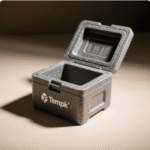
| Isolierter Versender | Wärmepuffer | Process required | Best for longer routes |
Praktische Tipps und Vorschläge
- Choose packaging by route profile: short urban vs long regional needs differ.
- Avoid wet cardboard: wet cartons are a repeat failure point in cold chains.
- Use inserts or pads for bruise-prone items on long routes.
Praktischer Fall: Upgrading to more rigid packaging reduced returns on long-distance routes with unavoidable vibration.
Cold Chain Vegetables Quality Assurance Checklist for Receiving
Direkte Antwort: Receiving inspections make cold chain vegetables quality assurance faster and fairer when they use clear criteria, consistent sampling, and simple pass/hold/fail decisions.
Erweiterte Erklärung: Receiving is where problems become visible. If checks are inconsistent, decisions become inconsistent, and arguments never end. Your receiving checklist should be fast enough to run every shift.
A “fast check” you can complete in under 3 Minuten
- Identität + Rückverfolgbarkeit (Los-ID, Anbieter, dates if available)
- Verpackungsintegrität (zerquetschte Ecken, torn liners, nasse Kartons)
- Surface condition (slime, pooled water, decay spots)
- Texture check (crisp vs limp)
- Temperature check (consistent method and location)
- Entscheidung: akzeptieren, accept with conditions, or hold
Passieren / Halten / Fail table (reduces disputes)
| Artikel prüfen | Passieren | Halten | Fail | Was es für Sie bedeutet |
|---|---|---|---|---|
| Appearance | Knackig, bright | Slightly dull | Severe wilt/yellow | Shelf life risk |
| Feuchtigkeit | Dry surfaces | Light damp | Slime/pooling | High decay risk |
| Schaden | Minimal | Mäßig | Severe bruising | Claim risk |
| Verpackung | Intact | Minor dents | Wet/crushed | Contamination risk |
Sampling plan that works in real life
You don’t need to check every carton. You need a rule staff can follow without debate.
- Small lots: check 1–2 cartons
- Medium lots: überprüfen 3 cartons across the pallet
- Large lots: expand across positions and record where you sampled (for disputes)
Praktische Tipps und Vorschläge
- Use the same checklist across all locations to prevent “site-by-site” arguments.
- Photograph exceptions immediately so root cause is faster.
- Record time and condition at receiving to speed investigations.
Praktischer Fall: Requiring photos for every hold/fail reduced supplier disputes.
Interaktives Entscheidungstool: Build Cold Chain Vegetables Quality Assurance by Route
Use this quick tool to pick controls that match real route risk.
Schritt 1: Choose your vegetable group
A: Leafy greens · B: Herbs · C: Crucifers · D: Roots · E: Fruchtendes Gemüse
Schritt 2: Wählen Sie Ihr Routenprofil
1: Same-day short · 2: Same-day multi-stop · 3: Next-day regional · 4: High-heat/extreme weather
Quick QA recommendations (read the line that matches you):
- A + 2: strict staging time limit + humidity-support packaging + Umgang mit Disziplin
- B + 3: strong moisture control packaging + gentle handling + consistent sampling
- C + 1: stabile Erkältung + airflow-friendly packing + clear receiving checks
- D + 4: crush protection + stable loading + exception plan for delays
- E + 3: avoid over-cold exposure + stabile Verpackung + careful receiving inspection
Monitoring KPIs That Prove Cold Chain Vegetables Quality Assurance
Direkte Antwort: Monitoring makes cold chain vegetables quality assurance defensible when it helps you measure where shelf life is being spent. A tiered approach (checks → lane tests → continuous monitoring) focuses effort where risk is highest.
Erweiterte Erklärung: You don’t need perfect data. You need data that triggers action: Inszenierungszeit, receiving temps, claims by SKU, and shrink trends.
KPI-Dashboard (einfach, action-based)
| KPI | Good signal | Bad signal | Was es für Sie bedeutet |
|---|---|---|---|
| Receiving temp pass rate | Stabil | Drifting up | Supplier/transport issue |
| Auspackzeit | Konsistent | High variance | Workflow problem |
| Claims by SKU | Concentrated | Widespread | Systemic issue |
| Schrumpfen | Stabil | Aufstand | Humidity/handling failing |
Interaktives Tool: QA maturity score (0–10)
Gib dich selbst 1 Punkt for each “yes.”
- Targets by commodity group exist.
- Receiving checklist runs every shift.
- Pack-out time budget rule is enforced.
- Transport cleanliness + pre-cool checks exist.
- Logger lane tests run in hot and cool seasons.
- Claims are tracked by SKU and root cause.
- Compatibility rules exist (temp bands, ethylene/odor).
- Records are stored by shipment ID.
- Corrective actions have owners and deadlines.
- KPIs are reviewed monthly; SOPs updated quarterly.
Score-Bedeutung:
- 0–3: operating on luck
- 4–7: stable but leaving shelf life on the table
- 8–10: ready to scale premium programs
Traceability Records for Cold Chain Vegetables Quality Assurance in 2025
Direkte Antwort: Traceability is now part of cold chain vegetables quality assurance because produce lanes face increasing expectations for shipment-level records. Late 2025 notes described a proposed extension of a traceability compliance date by 30 Monate bis Juli 20, 2028, alongside a directive not to enforce before that date.
Erweiterte Erklärung: The smart move is to use the extra time to standardize simple records now. When an issue happens, “proof in hours” beats “proof in weeks.”
The minimum viable traceability pack (start small)
You don’t need a complicated platform to start. You need consistent fields.
- Product/commodity + bilden (frisch, fresh-cut)
- Lot/batch identifier
- Harvest/pack date (falls verfügbar)
- Supplier and location identifiers
- Shipping and receiving time stamps
- Unit counts + transformations (if you re-pack)
Praktische Tipps und Vorschläge
- Treat fresh-cut as higher record risk: tighten receiving and labeling discipline.
- Standardize label placement: cold rooms destroy weak labels.
- Start with leafy greens and herbs first if you need a focused pilot.
Praktischer Fall: “No lot ID, no ship” policies reduced traceback time in practice.
Exception Management and Corrective Actions
Direkte Antwort: Exception management is part of cold chain vegetables quality assurance because delays, warm staging, and packaging damage happen in real life. The difference is whether you detect and respond quickly.
Erweiterte Erklärung: If you don’t document exceptions, you can’t improve. Your exception protocol should define triggers, decision owners, actions, und Dokumentation.
Exception protocol table
| Exception | Trigger | Aktion | Was es für Sie bedeutet |
|---|---|---|---|
| Delay | Beyond threshold | Return to cold storage or re-ice | Protects quality |
| Wet packaging | Visible pooling | Repack or isolate | Prevents slime |
| Schaden | Crush/bruising | Hold and grade | Reduziert Streitigkeiten |
| Temperaturdrift | Evidence of warming | Hold and assess | Better decisions |
A corrective action method that prevents repeat failures
Use a simple “3-Why” approach, then assign one owner and deadline.
- What failed?
- Why did it fail?
- Why did that happen?
- Fix + owner + Frist + Überprüfung
Praktische Tipps und Vorschläge
- Fix the biggest exception cause first—often staging time or handling.
- Review exceptions weekly and change one variable at a time.
- Trainieren Sie Teams: exceptions are data, not blame.
2025 Developments and Trends in Cold Chain Vegetables Quality Assurance
Trendübersicht: In 2025, cold chain vegetables quality assurance is becoming more performance-driven and route-specific. The focus is moving away from “keep it cold” toward measurable controls like staging time limits, moisture strategies, and standardized receiving criteria.
Aktueller Fortschritts-Snapshot
- More moisture management: condensation prevention is a top KPI for leafy greens.
- More standardization: group-based QA rules reduce training complexity.
- More exception analysis: weekly reviews replace reactive blame cycles.
Market insight: Vegetable quality is a reputation business. Many can deliver produce, but fewer can deliver crisp, premium visuals week after week—QA is how you earn that trust.
FAQ
Q1: What is cold chain vegetables quality assurance in one sentence?
It’s the documented control of temperature, Luftfeuchtigkeit, Handhabung, Hygiene, and proof that keeps vegetables within spec across handoffs.
Q2: Why do leafy greens need stricter cold chain vegetables quality assurance?
Because small temperature differences can cost real shelf life—around 21 days near 0°C versus about 14 days around 5°C in typical conditions.
Q3: What humidity range supports vegetables cold chain QA?
Many vegetables do well around 90–95% RH, while dry onions and garlic often do better closer to 65–75% RH to avoid moisture damage.
Q4: What’s the fastest improvement you can make this week?
Set a staging time limit, run a 3-minute receiving checklist, and measure pulp temperature consistently at receiving.
Q5: Why do shipments get slimy even when the cooler is cold?
Condensation often comes from warm-to-cold swings, not the final setpoint—stability is the best prevention.
Q6: What should you do when you see wet cartons at receiving?
Treat it as an exception: document with photos, hold if needed, and investigate temperature swings and pooling causes.
Q7: What traceability timing should you plan around in 2025?
A late-2025 note described a proposed extension to July 20, 2028 and a directive not to enforce before that date, so build simple records now.
F8: How often should you update SOPs for cold chain vegetables quality assurance?
Zumindest saisonal, and whenever routes, Verpackung, Lieferanten, or handling steps change.
Zusammenfassung und Empfehlungen
Key Takeaways: Cold chain vegetables quality assurance protects crispness, Haltbarkeit, and brand trust by controlling temperature stability, Feuchtigkeitsgleichgewicht, gentle handling, Verpackungsleistung, and consistent receiving checks. Your biggest losses usually come from dehydration, Kondensation, and bruising—often driven by staging time and handling discipline.
Aktionsplan (start this week):
- Assign your top SKUs to 3–4 lanes and label them clearly.
- Enforce a staging time limit + Tür-offene Disziplin, then track “warm minutes.”
- Implement the 3-minute receiving checklist and require photos for holds/fails.
- Run seasonal lane tests (hot and cool days) and update SOPs with what you learn.
- Standardize traceability fields by shipment ID so proof is fast when issues happen.
Über Tempk
Und Tempk, we support cold chain teams with practical packaging systems and operational guidance designed for real-world handling. We focus on repeatable processes—temperature stability, Feuchtigkeitskontrolle, and damage reduction—so vegetables arrive crisp, sauber, and consistent.
Aufruf zum Handeln: If you want stronger cold chain vegetables quality assurance, start by mapping your biggest losses (wilt, slime, Blutergüsse), standardize one high-impact SOP change this week, measure results, then scale lane by lane.