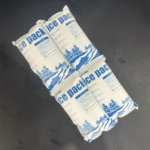
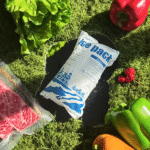
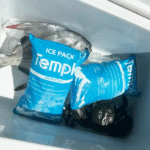
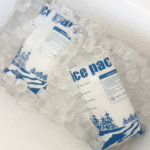
Die Wahl eines Lieferanten für Kaltgelakkus in Australien ist eine der schnellsten Möglichkeiten, die Temperaturstabilität zu verbessern und das Versandrisiko zu reduzieren. You are not only buying gel packs. You are buying predictable performance during delays, Übergaben, and hot-day loading. In 2026, buyers expect longer hold time, cleaner documentation, and fewer pack-out mistakes. This guide helps you choose smarter, test faster, und mit Zuversicht skalieren.
Dieser Artikel wird antworten:
- How to brief a cold gel accumulator Australia supplier using lane mapping
- Which temperature targets and product risks change gel selection
- Which specs predict performance (Phasenpunkt, Masse, Film, Konditionierung)
- How to run a summer stress test using simple data logging
- How to compare suppliers and reduce total landed cost
Cold gel accumulator Australia supplier: What should you define before you buy?
The fastest way to succeed with a cold gel accumulator Australia supplier is to define your “lane reality” Erste. Your lane reality is the honest story of what happens between your freezer and your customer. It includes time, Hitzeeinwirkung, Handhabung, and stop counts. When you share this clearly, your supplier can recommend the right gel type and layout. You avoid buying “strong gel” that fails in your real workflow.
Your lane reality also prevents overpacking. Overpacking increases freight weight and labor. It often hides problems that later return during peak season.
Lane mapping checklist for a cold gel accumulator Australia supplier
Use this simple lane brief. Keep it in plain English. It works for food, Pharma, and biotech shipments.
| Lane input you share | What you write down | Was es für Sie ändert |
|---|---|---|
| Door-to-door hours | Average and worst-case time | Legt das Haltezeitziel fest |
| Hot exposure | Minutes on dock or tarmac | Increases gel needed |
| Stop count | Number of door openings | Drives layout choice |
| Verpackung | Kasten + Isolationsdicke | Steuert den Wärmegewinn |
| Nutzlast | Gewicht + sensitivity | Affects gel mass and spacing |
Praktische Tipps und Empfehlungen
- Multi-stop delivery: Use sidewall-focused layouts to resist repeated door-open heat bursts.
- Long-haul routes: Use higher thermal mass and a buffer beyond the “happy path.”
- Mixed products: Create zones inside the shipper, not one gel rule for everything.
Praktisches Szenario: One shipper improved reliability after redesigning pack-out around “15 door opens,” not perfect lab conditions.
Cold gel accumulator Australia supplier: Which temperature target are you protecting?
Your target temperature range determines which cold gel accumulator Australia supplier option is safe and effective. Many shipments fail because the gel is “zu kalt” for the product or “too weak” for the lane. Your goal is controlled stability, not maximum cold.
Start by classifying the shipment. Then decide whether your main risk is warming, Einfrieren, oder beides.
Simple target-range decision guide
| Versandart | Your typical goal | Primäres Risiko | Gel approach to request |
|---|---|---|---|
| Refrigerated pharma | 2–8 ° C | Einfrieren + warming | Controlled-phase + Trennung |
| Gekühltes Essen | 0–5 ° C | Warming + Kondensation | Ausgewogene Kühlung + Feuchtigkeitskontrolle |
| Kontrollierte Raumtemperatur | 15–25°C | Overheating spikes | Stability-focused thermal mass |
Cold gel accumulator Australia supplier: How do you prevent freeze damage?
Freeze damage is usually a design problem, not a gel problem. If gel touches a sensitive product carton directly, it can create cold spots. Those cold spots can be worse than the average temperature. The fix is almost always spacing, separation layers, and phase-appropriate gel.
| Risiko | Common cause | Supplier-supported fix | Was Sie gewinnen |
|---|---|---|---|
| Product freezing | Too-cold gel + direkter Kontakt | Phase-tuned gel + Abstand | Fewer rejects |
| Warm spikes | Too little gel mass | Mehr thermische Masse + Layout | Better time-in-range |
| Edge warming | Gel only on top | Sidewall + top balance | More uniform temps |
Praktische Tipps und Empfehlungen
- If you see freezing near corners: Add a barrier layer and move gel away from direct contact.
- If you see warming at edges: Shift gel from lid-only to sidewall coverage.
- If your results vary by packer: Simplify SKUs and lock an SOP.
Kurzer Fall: A team reduced “zu kalt” incidents after switching from generic frozen packs to a phase-appropriate option.
Cold gel accumulator Australia supplier: Which six specs predict real performance?
A professional cold gel accumulator Australia supplier should quote more than “size and price.” You want repeatable specs that predict outcomes. If the supplier cannot explain these specs simply, you will end up guessing and overpacking.
Der “Big 6” spec checklist
- Phase point / target behavior (what range it supports best)
- Net gel mass per pack (cooling energy stored)
- Dimensions and thickness (fit and heat-transfer control)
- Film type and seal quality (leak resistance in handling)
- Recommended conditioning (freeze time and freezer type)
- Anleitung zur Wiederverwendung (Zyklen, Reinigung, storage rules)
Phase point and gel mass explained without jargon
Think of phase point like the “sweet spot” where the gel works hardest. Gel mass is the “fuel tank.” You need both to match your lane. A small fuel tank will not last. A wrong sweet spot can create freezing risk.
| Spezifikation | What it really means | What to ask for | Was es für Sie ändert |
|---|---|---|---|
| Phase point | Where the gel stabilizes best | Options matched to your target | Reduces excursions |
| Gel mass | How much cooling you store | Weight per pack tolerance | Verlängert die Haltezeit |
| Dicke | Release speed control | Thin vs thick variants | Helps short vs long lanes |
Praktische Tipps und Empfehlungen
- Ask for a fit-to-box drawing: It reduces packing errors and rework.
- Ask for conditioning rules: Vague freezing guidance creates inconsistent results.
- Confirm film durability goals: Handling damage is a hidden failure driver.
Kurzer Fall: A shipper avoided early warming by standardizing conditioning time and preventing airflow-blocking stacking.
Cold gel accumulator Australia supplier: How do you validate performance on the worst day?
Validation turns supplier claims into predictable operations. You do not need a complex lab to start. You need repeatable steps, clear pass/fail rules, and honest stress conditions. A good cold gel accumulator Australia supplier will support a lane-based test approach.
Howto: A 7-step summer stress test you can run
- Define your target range (Beispiel: 2–8°C or 0–5°C).
- Pick a worst-case day (hot ambient scenario).
- Pre-condition gel correctly (Zeit + freezer type).
- Pack using the intended layout (gleiches Band, same void fill).
- Place two data loggers (Kern + edge near wall).
- Simulate real handling (door opens, short delays, Vibration).
- Review against clear rules (time-in-range, max excursion).
Was zu messen ist (Halte es einfach)
| Metrisch | Was es Ihnen sagt | Pass/fail threshold |
|---|---|---|
| Time-in-range (%) | How long you stayed safe | 95%+ is common target |
| Max excursion (°C) | Worst spike or dip | Depends on product |
| Edge vs core delta | Layout uniformity | Smaller is better |
Cold gel accumulator Australia supplier: How do you compare suppliers and reduce total cost?
Total cost includes more than unit price. It includes freight weight, labor time, Ausfallrate, and reorder frequency. A good cold gel accumulator Australia supplier helps you reduce total cost by improving reliability and simplifying pack-out.
Supplier comparison scorecard
| Faktor | Was soll ich fragen? | Gewicht (1–5) | Ihr Punktestand |
|---|---|---|---|
| Spec clarity | Can they explain Big 6 einfach? | 5 | |
| Dokumentation | SDS, lot trace, Änderungskontrolle? | 4 | |
| Test support | Do they help validate? | 4 | |
| Vorlaufzeit | Can they meet peak demand? | 3 | |
| Preis | Competitive for your volume? | 3 |
Zusammenfassung und Empfehlungen
A high-performing cold gel accumulator Australia supplier helps you achieve stable temperatures with fewer mistakes and less waste. Start by mapping your lane reality and defining your target range. Demand the Big 6 specs and a clear conditioning SOP. Validate using a summer stress test with repeatable pack-out steps. Then standardize SKUs, lock SOPs, and compare suppliers using a weighted scorecard.
Ihr Aktionsplan für den nächsten Schritt
- Write a one-page lane profile for your hottest route.
- Send the RFQ checklist to each cold gel accumulator Australia supplier.
- Test two pack-out layouts with data loggers.
- Scale the design that delivers stable results with the lowest total cost.
Über Tempk
Und Tempk, we support cold chain shippers with practical packaging systems built for real handling conditions. We help you match gel accumulator options to your lanes, Ziele, und saisonales Risiko. We also focus on repeatable pack-out methods, klare Dokumentation, and scalable SOPs so your team packs faster and ships with confidence.
Nächster Schritt: Share your lane time, Zielbereich, and shipper dimensions, and we will recommend a pack-out approach designed for your workflow.