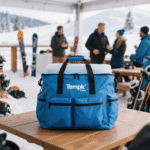
Kommerzieller Eisbox-Anbieter: Wie Sie wählen 2026?
Auswahl eines commercial ice box vendor In 2026 ist keine „Box“-Entscheidung. It is a revenue and safety decision. When chilled goods drift above target temperature, you pay in spoilage, Credits, und Vertrauen. In some programs, teams who move from generic containers to validated systems report up to 38% Weniger Verderb on repeat routes. This guide turns three draft playbooks into one checklist you can use today.
Dieser Artikel wird für Sie antworten
-
Wie ein commercial ice box vendor for restaurants should optimize speed, Reinigung, and lid sealing
-
Was für ein commercial ice box vendor for grocery delivery must prove for mixed baskets and delays
-
How to compare commercial ice box vendor bulk pricing using total cost per successful delivery
-
Welche commercial ice box vendor with compliance documents reduces audit stress and recall risk
-
How to test and approve a vendor with a simple, lane-based pilot
What does a commercial ice box vendor really do?
A commercial ice box vendor supplies insulated containers built for repeated, regulated cold chain use, not weekend cooling. The right vendor helps you match the box, Kühlmittel, and packing method to your route, then proves it works. In many operations, a commercial ice box is designed to cover roughly 12–120 Stunden, depending on insulation and coolant strategy. That range is wide, which is why generic “48-hour” claims often disappoint.
Think of a commercial ice box like a mobile cold room that lives in the messy real world. Lids get opened, boxes get stacked, and trucks sit in the sun. A strong commercial ice box vendor designs around those moments, not around perfect lab conditions. If they can explain your failure points in plain language, they usually know how to reduce them.
Commercial ice box vendor vs regular cooler
Commercial systems are engineered for predictable outcomes, Zyklen wiederverwenden, and inspections. Consumer coolers are built for occasional use and vague performance claims. Use this quick comparison to align stakeholders before you request quotes.
| Besonderheit | Verbraucherkühler | Commercial ice box | Was es für Sie bedeutet |
|---|---|---|---|
| Insulation options | Basic foam | EVP / Pu / VIP | Länger, more predictable hold time |
| Haltbarkeit | Niedrig | High impact resistant | Fewer replacements and less damage loss |
| Compliance readiness | Keiner | Food and medical friendly materials | Lower audit and recall risk |
| Zyklen wiederverwenden | 10–30 | 100–500+ | Lower total cost over time |
| Temperature behavior | Unstable | More repeatable | Fewer “arrived warm” incidents |
Commercial ice box vendor practical tips and quick wins
-
Daily shipping: Pick a vendor that talks about reuse cycles and spare parts.
-
Medical or biologics: Pick a commercial ice box vendor that shares temperature curves, not only “hours.”
-
Long-distance or air: Pick a commercial ice box vendor that offers VIP or hybrid options to cut weight.
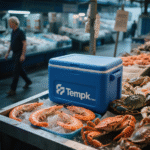
Wirklicher Fall: A seafood distributor reduced rejected deliveries by improving lid sealing and pack-out layout, without changing routes.
Which specs matter most when you compare a commercial ice box vendor?
When you compare a commercial ice box vendor, ignore the long spec sheet first. Focus on the few details that change outcomes: Isolationstyp, lid seal design, coolant-plan support, durability under stacking, und Reinigungsgeschwindigkeit. A vendor that proves these five areas is usually safer than a vendor with “premium” marketing language. Price alone is not a reliable value signal.
Specs only matter when they connect to your lane. Your lane has a duration, Umgebungsbereich, Nutzlastmasse, and handling pattern. If the commercial ice box vendor cannot ask for those four inputs, they are guessing. Guessing is expensive in cold chain.
The 5-proof checklist for commercial ice box vendor evaluation
Answer yes or no:
-
Does the commercial ice box vendor provide hold-time data with a clear test profile?
-
Can the commercial ice box vendor recommend coolant quantity and placement, not only box size?
-
Can the commercial ice box vendor show how seals are checked after repeated use?
-
Can the commercial ice box vendor fit your labeling, scanning, and handling workflow?
-
Can the commercial ice box vendor explain warranty, spare parts, and defect response timing?
If you answered “no” to two or more, treat the vendor as unverified and pilot before scaling.
| What to compare | What vendors may say | Was Sie fragen sollten | Was es für Sie bedeutet |
|---|---|---|---|
| Isolierung | “High performance” | “Material, Dicke, target hours?” | Predictable hold time on your route |
| Lid sealing | “Tight lid” | “Seal design and validation method?” | Fewer leaks and temperature spikes |
| Load handling | “Durable” | “Stacking guidance or rating?” | Less breakage in distribution centers |
| Reinigung | “Easy to clean” | “Compatible cleaners and drying time?” | Schnellere Abwicklung, weniger Gerüche |
| Anpassung | “We customize” | “Tooling, MOQ, Vorlaufzeit, Änderungskontrolle?” | Realistic launch plan and budget |
Commercial Ice Box Vendor Fit Score (quick tool)
Give each commercial ice box vendor a score from 1 (weak) Zu 5 (stark) for every line below. Add your points to get a fast, defendable shortlist.
-
Leistungsbeweis: Clear temperature curves and pack-out photos
-
Einsatztauglich: Schnelles Packen, fast cleaning, low mistake risk
-
Supply stability: Lead time clarity, consistent capacity, spare parts
-
Compliance readiness: Vollständig, updated documents and traceability
-
Service mindset: Quick response, clear warranty, root-cause follow-up
Notenführer:
-
22–25: Strong candidate for scale
-
16–21: Pilot one more lane before committing
-
≤15: High risk for critical routes
How can a commercial ice box vendor prove temperature control?
A commercial ice box vendor should prove performance with tests that resemble your reality. For many food lanes, the practical goal is to keep cold products at or below 41° F (5°C) and reduce time in the common 41–135°F (5–57°C) “danger zone.” For many vaccines and biologics, a common target is 2–8 ° C, which needs tighter validation. Your commercial ice box vendor must validate the lane, not just the box.
The proof you want is simple: a temperature curve, a pack-out photo, and a repeatable method. You should see sensor placement, Nutzlastmasse, and the ambient profile used. If you only get a one-line “72 hours” claim, you have no comparison baseline. Ask for evidence you can compare across vendors.
Cooling options your commercial ice box vendor should support
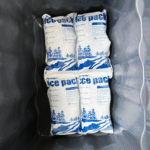
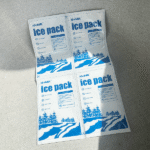
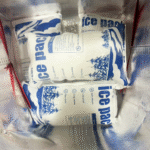
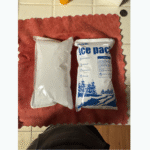
Cooling is not “more ice.” It is matching the coolant to your target band and route time. A good vendor should explain each option in plain language.
| Kühloption | Am besten für | Was soll ich fragen? | Was es für Sie bedeutet |
|---|---|---|---|
| Gelpackungen | Gekühltes Essen, kurze Wege | “Recommended pack-to-product ratio?” | Einfach, repeatable packing |
| Phasenwechselmaterial (PCM) | Tight temperature bands | “Which phase point fits my target?” | More stable temps with less risk |
| Trockeneis (when appropriate) | Gefroren, longer routes | “What venting and handling rules apply?” | Longer frozen hold, more safety steps |
What to request in a commercial ice box vendor temperature validation pack
Copy and paste this checklist into your RFQ:
-
Test method name (lane-specific, or a recognized thermal procedure such as ISTA thermal profiles or ASTM thermal insulation methods)
-
Ambient profile range and duration (summer and winter worst case)
-
Payload mass and product type used in the test
-
Internal temperature graph (not only pass/fail)
-
Pack-out photos showing coolant placement
-
Number of runs (Wiederholbarkeit) and result variation
ISTA and ASTM are common testing frameworks that help you compare thermal claims across vendors.
A simple 7-step pilot you can run in two weeks
Use one route, one payload, and one packing layout. Change one variable at a time, or results become noise.
-
Pick one route and one typical day.
-
Set the target band (gekühlt, gefroren, or mixed) and time window.
-
Standardize packing with a one-page card from the commercial ice box vendor.
-
Place a temperature logger at the payload center, not near the wall.
-
Track handling events: Tropfen, Stapelung, and lid-open moments.
-
Compare outcomes: temperature peaks, Schadensrate, and labor minutes.
-
Decide and document results for audits and scaling.
| Pilot metric | Was zu messen ist | Target direction | Was es für Sie bedeutet |
|---|---|---|---|
| Temperature peak | Highest internal reading | Lower and stable | Less spoilage and fewer claims |
| Packzeit | Minutes per box | Untere | Lower labor cost per delivery |
| Schadensrate | Risse, warps, Lecks abdichten | Untere | Lower replacement and returns |
| Kühlmittelgewicht | Gel/ice/PCM per shipment | Untere (if stable) | Lower freight and easier handling |
Commercial ice box vendor pricing: how do you avoid hidden cost?
Comparing commercial ice box vendor bulk pricing by unit price alone is the fastest way to buy the wrong system. A cheap box that fails creates hidden costs: Produktverlust, Credits, re-delivery, und Markenschäden. Vergleichen Sie die Kosten pro erfolgreicher Lieferung, keine Kosten pro Karton. That single shift changes negotiations and shortlists.
Use a consistent model across vendors:
Total cost per delivery = (Boxkosten ÷ erwartete Fahrten) + Kühlmittel + Arbeit + damage allowance + Retourenlogistik
If a reusable box lasts 30 trips instead of 10, your economics can flip. A strong commercial ice box vendor will help you estimate realistic trip counts and loss rates. If they avoid the topic, expect surprises later.
Commercial ice box vendor bulk pricing questions that uncover the real numbers
-
What is your MOQ for each size, and what are price breaks by volume?
-
How do you nest boxes for inbound freight efficiency?
-
What replacement parts exist (Deckel, Riegel, Dichtungen), and what do they cost?
-
What is your change control process after launch?
-
Can you quote a “validated lane kit” including packing guidance and test support?
| Kostentreiber | Low-cost quote risk | What to request | Was es für Sie bedeutet |
|---|---|---|---|
| Wandstärke / Dichte | Quiet performance drop | Measured specs + Toleranz | Vorhersehbare Haltezeit |
| Lid seal design | Lecks, faster warming | Seal material + Validierung | Fewer temperature spikes |
| Freight efficiency | Shipping “air” | Nesting dimensions | Lower inbound cost |
| Labor minutes | Slow packing | Pack-out diagram | Lower cost per route |
| Garantie | Weak coverage | Written replacement rules | Faster recovery from defects |
Which materials should your commercial ice box vendor offer?
In 2026, leading systems commonly use EVP, Pu, Und VIP Isolierung. Each material trades off cost, Gewicht, und Zeit halten. A good commercial ice box vendor helps you choose the right material for your lane, not the most expensive option. For repeat local delivery, the “best” material is often the one your team can clean and reuse fast.
Material choice controls weight, Lebensdauer, and shipping economics. Heavier boxes increase freight and handling fatigue. Lighter systems can reduce ice volume and speed loading. Your commercial ice box vendor should explain these trade-offs with lane examples you recognize.
| Material | Typische Haltezeit | Gewicht | Best for you if… |
|---|---|---|---|
| EVP | 24–72 Stunden | Licht | You run frequent reuse and want durability |
| PU panels | 48–96 Stunden | Medium | You ship medium-to-long routes and want strong insulation |
| VIP or hybrid | 72–120+ hours | Ultra-light | You ship long routes or air freight and need weight control |
Pick insulation by route length (a quick lane guide)
-
Same-day to 24 Std.: EPP often works, if lid sealing is strong.
-
24–72 hours with delays: PU or thicker-wall designs are usually safer.
-
Export and air lanes: VIP or hybrid designs can cut weight and ice volume.
Wirklicher Fall: A shipper reduced air freight cost after switching to a lighter VIP-based configuration, while holding the same temperature band.
Can a commercial ice box vendor support compliance and audits?
A commercial ice box vendor with compliance documents makes audits routine instead of stressful. You want food-safe material declarations, repeatable performance evidence, and a simple quality control plan. In regulated lanes, documentation is as important as insulation. If paperwork is missing, the risk moves from “temperature” to “business continuity.”
Halten Sie es einfach: build one shared vendor document checklist. Ask every commercial ice box vendor to fill the same folder structure. That creates faster comparisons and faster answers when customers or auditors ask questions.
Documents to request upfront (the audit-ready list)
| Dokumenttyp | Warum ist es wichtig | Wie „gut“ aussieht | Ihr Vorteil |
|---|---|---|---|
| Material statements | Confirms what touches product | Clear material IDs and suppliers | Geringeres Kontaminationsrisiko |
| Thermischer Beweis | Proves performance claims | Profil + graphs + Auspacken | Fewer excursions and disputes |
| QC-Plan | Prevents defects | Incoming + in-process + final checks | Fewer surprises in batches |
| Rückverfolgbarkeit | Links lots to production | Lot codes and records | Schnellere Ursachenanalyse |
| Cleaning guidance | Prevents odor and mold | Compatible cleaners listed | Faster reuse cycles |
Remote audit pack (no travel required)
Ask your commercial ice box vendor for:
-
A short, unedited factory walkthrough video
-
A real QC checklist used on the line
-
Photos of measuring tools and seal checks
-
A sample batch record with customer names removed
If a vendor cannot provide this evidence, treat them as higher risk. You can still pilot, but avoid critical lanes at first.
What lead time, MOQ, and warranty should a commercial ice box vendor commit to?
A commercial ice box vendor lead time and MOQ is not just a procurement detail. It is a risk signal. Unclear timelines often mean unstable capacity or weak planning. You want a vendor that can break lead time into sampling, Werkzeuge, Produktion, und Versand. You also need a plan for defects and spare parts, because every operation sees wear.
Bring your seasonal peaks early. A reliable commercial ice box vendor can plan buffer stock or staged deliveries if you share forecasts. That reduces emergency air freight and last-minute compromises. It also makes your packaging program easier to scale.
Questions that reveal real capability fast
-
What is standard lead time for repeat orders from the same mold?
-
How do you handle quality issues discovered after delivery?
-
Which spare parts exist, and how quickly can you ship them?
-
How do you manage capacity when multiple customers peak at once?
-
What is warranty coverage for seal failure, verziehen, and latch breaks?
Service levels that reduce your workload
A strong commercial ice box vendor can provide:
-
A one-page pack-out SOP for each lane type
-
Seasonal adjustments (“summer kit” vs “winter kit”)
-
Replacement rules with a clear timeline
-
A root-cause process for repeated failures
If they cannot explain their pack-out method, treat it as a red flag.
Reusable or one-way: which commercial ice box vendor model fits your routes?
Reusable systems often win when you control returns and cleaning. One-way systems can win when returns are expensive or loss risk is high. Your commercial ice box vendor should help you choose by lane control, not by trends. The best answer depends on your business model, not on a slogan.
Use this decision table to align operations and procurement. Then ask the commercial ice box vendor to propose a design for each lane. When vendors can support both models, you get better fit and less bias.
| Decision factor | Wiederverwendbare Boxen | One-way shippers | Was es für Sie bedeutet |
|---|---|---|---|
| Return control | Needs a return plan | No return required | Complexity vs simplicity |
| Reinigung | Required every cycle | Minimal cleaning | Labor and sanitation planning |
| Loss/theft | Must be managed | Lower asset risk | Shrink budget planning |
| Branding | Long-term asset | Short-term impression | Customer experience strategy |
| Cost curve | Pays off over time | Pay per shipment | Choose by lane and volume |
Return-loop readiness self-test
If you answer “yes” to most of these, reusable is usually realistic:
-
Do drivers return to the same hub most days?
-
Do you have cleaning capacity and drying space?
-
Can you track assets with simple labels or scanning?
-
Can you tolerate a predictable loss rate and replace fast?
If most answers are “no,” ask your commercial ice box vendor for a one-way design with clear disposal guidance.
2026 trends shaping every commercial ice box vendor decision
In 2026, commercial packaging is shifting from “buy a box” to “standardize a system.” Buyers want fewer SKUs, clearer total cost, and more proof. Commercial ice box vendor competition is also moving toward labor savings, not only insulation. If your team can pack and clean faster, you lower cost and reduce mistakes.
Latest progress you should watch
-
Weitere Wiederverwendungsprogramme: More companies build return loops to cut waste and control quality.
-
More modular design: One base box supports inserts and dividers across use cases.
-
More temperature visibility: Data loggers and indicators are common in pilots.
-
More material transparency: Buyers request clear material IDs and traceability.
-
More labor focus: Vendors compete on faster packing and faster cleaning cycles.
Praktisches Essen zum Mitnehmen: Choose a commercial ice box vendor that talks about standard work and repeatability, not only “premium insulation.”
Häufig gestellte Fragen
Q1: How do I choose a commercial ice box vendor for restaurants?
Pick a commercial ice box vendor that prioritizes fast packing, easy wipe-down, and a lid that seals in seconds. Pilot one dinner route with a logger, then measure packing time and temperature peak. Choose the vendor that is easiest for staff to repeat.
Q2: What should I ask about commercial ice box vendor bulk pricing?
Ask about MOQ, price breaks, nesting efficiency, and spare part costs. Then calculate cost per successful delivery using expected trips and damage allowance. A higher unit price can be cheaper if the box lasts longer.
Q3: Can one commercial ice box vendor handle mixed chilled and frozen orders?
Ja, if the system supports dividers and a repeatable pack-out layout. Ask for a lane-specific packing diagram and test with your real basket. Measure internal temperatures in both “zones” during the pilot.
Q4: What compliance documents should a commercial ice box vendor provide?
Start with material statements, thermal evidence, and a QC plan. Add traceability records and cleaning guidance for reuse programs. For regulated products, keep one standard checklist for every vendor.
Q5: How long should a commercial ice box hold temperature?
It depends on route time, Umgebungsextreme, Nutzlastmasse, and coolant choice. Define your target hours first, then test vendors against the same profile. Avoid buying on generic “48-hour” claims without curves.
Q6: Should I choose reusable insulated boxes in 2026?
Choose reusable when you control returns, Reinigung, and asset tracking. Choose one-way systems when routes are unpredictable or loss risk is high. A good commercial ice box vendor can support both and help you decide by lane.
Zusammenfassung und Empfehlungen
A commercial ice box vendor is a long-term operational partner, not a catalog supplier. Focus on proof: Temperaturkurven, pack-out photos, and repeatable QC. Compare vendors by cost per successful delivery, kein Stückpreis. Demand stable lead time, complete documents, and warranty rules that protect your lanes.
Ihr nächster Schritt (einfacher Plan)
-
List your top three lanes by hours, Umgebungsbereich, und Nutzlastmasse.
-
Ask two vendors for the same validation pack and a one-page pack-out SOP.
-
Run a two-week pilot with a data logger and track packing time.
-
Choose the commercial ice box vendor that performs best in your real workflow.
Über Tempk
Tempk designs cold-chain packaging for real shipping lanes, including reusable insulated boxes and temperature-controlled shipping systems. We focus on practical details like lid sealing, durable corners, and pack-out layouts your team can repeat. We also support documentation and pilot testing, so you can choose a commercial ice box vendor with evidence, keine Vermutungen.
CTA: Share your route hours, Umgebungsbereich, Nutzlastgröße, und Zieltemperaturband. We’ll help you turn that into a vendor-ready spec and a pilot plan.