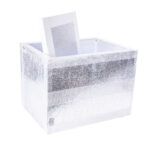
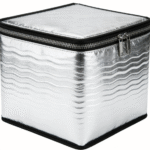
Kompakte EPP-Box: So versenden Sie intelligenter 2026?
If you ship temperature-sensitive items, a compact EPP box can help you keep products safer while wasting less space. EPP is often reported with thermal conductivity around 0.039 W/m · k, which supports steady insulation in small parcels. (Knauf Industries) In 2026, right-sizing matters more because packaging rules and customer expectations increasingly punish “shipping air” and messy deliveries. (Umfeld)
Dieser Artikel hilft Ihnen bei der Beantwortung:
How to validate a compact EPP box with common thermal + handling test logic
When is a compact EPP box the best choice?
A compact EPP box is best when your biggest cost is shipping air, managing damage, or handling repeat deliveries. Smaller shippers usually drift less because there is less internal air warming up and moving around your payload. They also stack better, so you fit more orders in the same van, tote rack, or cold room.
Think of it like a thermos. The less empty headspace you leave, the longer everything stays stable.
Compact EPP box for last-mile delivery: why size wins
Last-mile routes are full of stops, porch time, und wiederholte Handhabung. A compact EPP box reduces the “warm air surge” every time the lid is opened. It also handles bumps better than brittle foams in daily use.
| Last-mile factor | What goes wrong in big boxes | What compact design improves | Praktische Bedeutung für Sie |
|---|---|---|---|
| Van space | Fewer orders per trip | Higher stack density | Lower cost per stop |
| Doorstep waits | Warm air builds inside | Less air warms up | Fewer “arrived warm” claims |
| Sorting impacts | Corners chip or split | Better impact resilience | Fewer replacements and re-ships |
Praktische Tipps, die Sie heute verwenden können
High-stop routes: Use one compact shipper per order, not one oversized mixed container.
Two-size rule: Standardize two compact sizes, not six “almost the same” sizes.
Damage hotspots: Pilot compact EPP boxes first on lanes with the highest claim rate.
Echtes Beispiel: Teams often see the biggest improvement before lab testing—simply from reduced void space and fewer packing mistakes.
How does a compact EPP box maintain stable temperatures in transit?
A compact EPP box maintains temperature by slowing heat flow and reducing warm-air movement inside the shipper. In small parcels, the empty space you leave behind often matters as much as the insulation itself. When you reduce that space, your coolant spends less energy “cooling air” and more energy protecting product.
Your best results usually come from two habits: consistent starting temperature and repeatable packout.
What “good insulation” really means for you
EPP’s insulation advantage is helpful, aber es ist keine Zauberei. Even a strong compact EPP box can fail if you stage warm product, leave the lid open too long, or pack coolant in a messy pile.
Use this simple rule: Consistency beats cleverness. One documented layout repeated perfectly will outperform a “smart” layout that changes every shift.
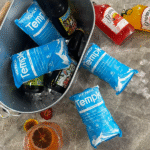
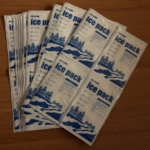
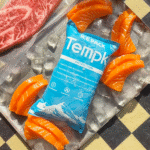
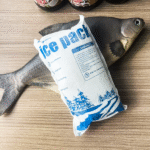
Three compact EPP box gel pack layouts you can standardize
| Packout-Muster | Am besten für | Kühlmittelplatzierung | Praktische Bedeutung für Sie |
|---|---|---|---|
| Sandwich | Flache Nutzlasten | Spitze + unten | Einfache SOP, even cooling |
| Ring | Bottles / tubes | Around side walls | Better edge stability |
| Wiege | Fragile samples | Kühlmittel + cushioning zones | Schock + Temperaturregelung |
Praktische Tipps und Vorschläge
Vorkonditioniertes Produkt: Start at target temperature whenever possible.
Close fast: Stage items first, then load and close in one smooth step.
Kontrollieren Sie Hohlräume: Inserts beat extra gel packs for stability.
Praktischer Fall: Two teams can use the same gel packs and get different outcomes. The difference is usually void space and lid-open time.
How do you right-size a compact EPP box with ice packs?
Right-sizing a compact EPP box means choosing the smallest internal volume that closes cleanly every time, with planned coolant and minimal air gaps. Too large wastes money and coolant. Too small causes crushing, Lücken, or lid leaks.
Your goal is not “tight at all costs.” Your goal is snug and repeatable.
Compact EPP box sizing calculator (quick and practical)
Payload liters = L × W × H (cm) ÷ 1000
Coolant starting point (by route target):
Gekühlte Bahnen (2–8 ° C): start at 20–35% of payload volume
Gefrorene Ziele: start at 35–60% of payload volume
Allowance: add 10–20% for inserts and loading variation
Internal volume target: Nutzlast + Kühlmittel + Zuschuss
| Routentyp | Payload example | Coolant starting point | Internal target | Praktische Bedeutung für Sie |
|---|---|---|---|---|
| Same-day grocery | 8 L | 2–3 L | 12–14 L | Less warm air |
| Clinic handoff | 5 L | 1–2 L | 7–9 L | Predictable loading |
| Frozen doorstep | 6 L | 2–4 L | 10–12 L | More delay buffer |
Praktische Tipps und Vorschläge
If you keep failing: reduce air space before adding more coolant.
If items freeze: add a thin buffer layer between product and cold source.
If packout varies: use dividers that “force” the right layout.
Praktischer Fall: Many teams oversize to reduce packing stress. In Wirklichkeit, oversizing often increases temperature drift.
Compact EPP box vs EPS mini cooler: what should you pick?
The hidden value is not only insulation. It is fewer broken corners, weniger Rücksendungen, and less exception handling.
Schnelles Entscheidungstool: “Mini Lane Fit Score” (2 Minuten)
Score each question 0, 1, oder 2, then add your points.
Do you ship this lane at least weekly?
Do you see corner crush, lid cracks, or messy debris today?
Can you recover packaging within 14 Tage?
Is product value high enough to justify tracking and reuse?
Do customers complain about presentation on arrival?
Ergebnisse
0–3: Optimize one-way packaging first, then revisit a compact EPP box.
4–7: Pilot a compact EPP box on one lane with tracking.
8–10: Build a reusable compact EPP box program with SOPs and returns.
| Option | Stärke | Abtausch | Praktische Bedeutung für Sie |
|---|---|---|---|
| Compact EPP box | Dauerhaft + wiederverwendbar | Needs return loop | Lower failures over time |
| EPS mini cooler | Niedrige Vorabkosten | Breaks easier | Fine for one-way lanes |
| Hybridsystem | Flexibel | Weitere Komponenten | Can improve pack speed |
Praktische Tipps und Vorschläge
If damage drives cost: start with compact EPP boxes where claims are highest.
If returns are uncertain: test a deposit or scan-based incentive first.
If labor is the pain: choose a design with simple inserts and quick closure.
Praktischer Fall: Many reuse programs fail because recovery is not measured. Track recovery rate from day one.
How do you clean and reuse a compact EPP box fast?
The big secret is drying. Moisture drives odor more than “not enough detergent.”
Returnability readiness self-assessment (score 0–2)
You have a defined pickup or return channel.
You can separate dirty and clean containers onsite.
You can dry containers completely before reuse.
You can track losses and damage rate.
You can train packout in under 10 Minuten.
Notenführer
0–3: Start with a tight pilot on controlled lanes.
4–7: You are ready for a broader compact program.
8–10: You can standardize and scale quickly.
Compact EPP box cleaning ladder (pick a level)
| Cleaning level | Schritte | Am besten für | Praktische Bedeutung für Sie |
|---|---|---|---|
| Ebene 1: Wischen + trocken | Wischen, Lufttrocknen | Low-residue shipments | Fastest turnaround |
| Ebene 2: Waschen + trocken | Milde Wäsche, spülen, dry rack | Mahlzeiten, Meeresfrüchte | Lower odor and mold risk |
| Ebene 3: Desinfizieren + Protokoll | Desinfizieren, verifizieren, aufzeichnen | Higher compliance needs | Bessere Prüfungsbereitschaft |
Praktische Tipps und Vorschläge
Drying capacity first: add racks before buying more boxes.
Two-bin rule: one bin for dirty returns, one for clean-ready.
Inspect lids: a leaky lid can ruin both temperature and customer trust.
Praktischer Fall: Programs often fail because drying is the bottleneck. Fix airflow and racks before changing chemicals.
How do you validate a compact EPP box for pharma samples or vaccines?
Validation proves your compact EPP box survives real hazards and holds temperature for your lane. For parcel thermal exposure, many teams reference ISTA STD-7E, a testing standard for thermal transport packaging used in parcel delivery system shipment. (ista.org) For physical distribution hazards, ASTM D4169 is a widely used practice for performance testing of shipping units through a sequence of tests. (ASTM International | ASTM)
If you ship vaccines stored at 2°C to 8°C, your packout must also avoid accidental freezing because freezing can permanently reduce potency for some formulations. (Zentren für Krankheitskontrolle und Prävention)
Ein einfacher Validierungsplan, den Sie ausführen können
Define product temperature limits and maximum allowed out-of-range time.
Choose worst-case seasons and worst-case lanes (heiß und kalt).
Lock one “gold packout” with photos and training notes.
Test thermal performance using a standard profile when appropriate (such as ISTA 7E). (ista.org)
Add distribution hazard testing if handling damage is a known risk (ASTM D4169 logic). (ASTM International | ASTM)
Pilot with temperature monitoring, review exceptions weekly, then freeze the SOP.
| Validation element | What it checks | What you keep | Praktische Bedeutung für Sie |
|---|---|---|---|
| Thermal profile testing | Hold time vs exposure | Temp graphs | Proves lane fit |
| Handling hazard testing | Fallen, Vibration, Kompression | Zusammenfassender Bericht | Reduces break risk |
| Monitored pilots | Real shipment evidence | Logger data + actions | Finds weak points fast |
Praktische Tipps und Vorschläge
Start with your hottest lane, not your easiest lane.
Control packout first: test one standard before testing variations.
Fix dock behavior: warm staging often causes more failures than insulation.
Praktischer Fall: Many “excursions” are actually process variation across shifts, kein materielles Problem.
2026 cold chain packaging trends and innovations
In 2026, the market is shifting from “buy a shipper” to “run a reuse loop.” In the EU, PPWR trat im Februar in Kraft 11, 2025, with a general application date of August 12, 2026. (Umfeld) EU rules have also moved toward limiting unnecessary packaging by setting a 50% maximum empty-space ratio for grouped, Transport, and e-commerce packaging (implementation details can vary). (欧洲议会)
That pressure rewards compact designs, weniger SKUs, and cleaner SOPs.
Latest progress list (und warum es Ihnen hilft)
Richtige Größe + Einsätze: less void fill, more repeatable packout.
Reuse proof: more tracking of cycles, Verluste, and damage rates.
Intelligentere Überwachung: more pilots with simple loggers and clear actions.
Hybridisolierung: mixing materials to hit performance with less bulk.
Markteinblicke, die Sie nutzen können
If your compact EPP box program is not measured (recovery rate, Schadensrate, Ausflugspreis), it is not controllable. The winners in 2026 measure first, dann skalieren.
Häufig gestellte Fragen
Q1: What is a compact EPP box best used for?
A compact EPP box is ideal for small, high-value cold shipments like samples, Bausätze, and premium food where failures are expensive.
Q2: How long can a compact EPP box hold temperature?
Hold time depends on route, Auspacken, und Kühlmittel. Most wins come from right-sizing and repeatable layouts, not “more ice.”
Q3: How do I prevent freezing in a 2–8°C compact EPP box lane?
Use a buffer layer so cold sources do not touch the product, and confirm with a monitored pilot. (Zentren für Krankheitskontrolle und Prävention)
Q5: What test logic is common for parcel thermal validation?
ISTA STD-7E is commonly referenced for thermal transport packaging used in parcel delivery systems. (ista.org)
Q6: What is ASTM D4169 used for in shipping validation?
ASTM D4169 provides a structured approach to test shipping units through sequential hazards like drop, Vibration, und Komprimierung. (ASTM International | ASTM)
Zusammenfassung und Empfehlungen
A compact EPP box helps you ship temperature-sensitive products with fewer surprises by reducing void space, improving packout consistency, and supporting reuse. Your biggest levers are simple: right-size the shipper, standardize one gel-pack layout, and design a return-and-dry workflow that does not slow you down. In 2026, tighter packaging expectations and reuse pressure make compact, measurable systems the safer long-term play. (Umfeld)
Ein einfacher Aktionsplan (schnell und praktisch)
Pick one lane and one payload for a pilot.
Lock one gold packout and document it with photos.
Pilot for 2–3 weeks with basic monitoring and weekly review.
Track recovery rate, Schadensrate, and excursion rate.
Scale only after cleaning, Trocknen, and training stay stable.
Über Tempk
Und Tempk, we build cold chain packaging systems that work in daily operations, nicht nur in einem Labor. We help you choose the right compact EPP box size, design repeatable packouts, and set up return loops that reduce cost per shipment. Our focus is practical: weniger Ausfälle, schnelleres Packen, cleaner reuse, and performance you can prove.
Nächster Schritt: If you want fewer temperature excursions and less damage, start with a one-lane compact EPP box pilot and measure recovery, Schaden, and packout compliance.