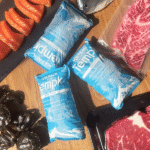
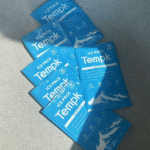
If you’re choosing a gel refrigerant bag India supplier, you’re not buying “cold packs.” You’re buying predictable deliveries, weniger Lecks, and fewer customer escalations. In Indien, heat exposure and last-mile delays can turn one weak bag into a full shipment loss. Many food programs plan chilled storage below about 5°C, and frozen storage around −18°C in training guidance. You should validate your exact requirement by product and lane.
Zuletzt aktualisiert: Januar 30, 2026.
This guide will help you answer:
How a gel refrigerant bag India supplier for cold chain shipping protects your lane in real heat
Which specs and materials reduce leaks with a leak-resistant gel refrigerant bag India supplier
A fast gel refrigerant bag India supplier quality control audit you can run in 60 Minuten
Exactly how to test gel refrigerant bags for shipping with repeatable lane trials
How to compare gel refrigerant bag India supplier pricing using outcome-based math
Which documents and contract terms prevent silent spec drift in 2026
Gel Refrigerant Bag India Supplier: What Temperature Are You Protecting?
Direkte Antwort / key point
A gel refrigerant bag India supplier is only “right” if the bag matches your target temperature band and lane duration. Start with your product requirement, then build a safety margin for delays, Hitzespitzen, und Handling.
Erweiterte Erklärung
Many buyers begin with “How many hours does it stay cold?” That question is incomplete. The same gel refrigerant bag behaves differently in different shippers, payload densities, and placements. Treat your temperature target like a speed limit. You need room for traffic, Wetter, and route surprises. A strong gel refrigerant bag India supplier will help you define a realistic pass/fail rule.
Temperature targets by common use case
| Anwendungsfall | Typisches Ziel | Primäres Risiko | Was es für Sie bedeutet |
|---|---|---|---|
| Gekühlte Lebensmittel | Below ~5°C | quality and safety risk | prioritize coverage and clean handling |
| Fresh cold hold | 0–4 ° C | texture and shelf-life risk | prioritize wall/top placement discipline |
| Gefrorene Lebensmittel | ~−18°C or colder | thaw/refreeze damage | prioritize insulation + Masse |
| Temperature-sensitive healthcare | labeled condition | Potenzverlust | prioritize monitoring, repeat testing, Rückverfolgbarkeit |
Praktische Tipps und Ratschläge
If you ship chilled foods: plan wall and top coverage, not bottom-only cooling.
If you ship frozen items: design for worst-case delays, not average transit hours.
If you ship healthcare goods: treat documentation and traceability as non-negotiable.
Praktischer Fall: A chilled food shipper reduced warm-corner failures by lining side walls with thin gel bags.
Gel Refrigerant Bag India Supplier: Which Bag Design Fits Your Shipper Footprint?
Direkte Antwort / key point
The best gel refrigerant bag India supplier design is the one that maximizes surface coverage without sacrificing durability. If the bag does not match your shipper footprint, you create air gaps and hot zones.
Erweiterte Erklärung
Think of cooling like wrapping a bottle in a wet towel. Coverage matters more than thickness once you reach a minimum mass. Thick bags may hold longer, but they can leave uncovered areas and create uneven cooling. Several thinner bags can outperform one thick bag if they “fit” the shipper and stay in contact.
Bag formats you should compare (and when to use them)
| Bag format | Typische Dicke | Am besten für | Achten Sie auf |
|---|---|---|---|
| Thin sheet-style bag | 10–15 mm | kurze Gassen, tight boxes | may warm early |
| Medium pillow bag | 20–25 mm | 24–48 hour lanes | needs good placement |
| High-mass bag | 30+ mm | 48–72 hour lanes | reduces payload space |
Praktische Tipps und Ratschläge
Use side-wall placement: it reduces warm corners in summer.
Add top coverage: it protects during last-mile exposure in direct sunlight.
Avoid “floating payload”: secure products so they do not drift away from cooling surfaces.
Praktischer Fall: A dairy program improved stability by moving one gel bag from bottom to the top layer.
Gel bag vs gel brick: quick decision table
| Auswahl | Better when | Worse when | Was es für Sie bedeutet |
|---|---|---|---|
| Gel refrigerant bag | you need coverage and flexible placement | you need fixed block mass | better contact, weniger Hotspots |
| Gel brick | you need longer hold with fixed layout | box footprint is tight | simpler placement, less coverage |
Praktische Tipps und Ratschläge
If your shipper is small: flexible bags often reduce wasted space.
If your payload is fragile: bags can distribute cooling gently with fewer pressure points.
Praktischer Fall: A meal-kit shipper reduced crushed packaging complaints after switching from rigid blocks to flexible bags.
Gel Refrigerant Bag India Supplier Quality Control: What Should You Audit First?
Direkte Antwort / key point
A gel refrigerant bag India supplier quality control audit should focus on fill variance, seam strength, film durability, und Chargenrückverfolgbarkeit. These four items predict real-world failures better than marketing claims.
Erweiterte Erklärung
Most failures come from variation. Two bags that look identical can perform differently if fill weight drifts. A disciplined gel refrigerant bag India supplier controls these variables and can explain their tolerance in simple language. You can also detect drift with a fast receiving check.
The “60-minute inbound QC checklist”
| QC check | Wie es geht | Pass-Indikator | Was es für Sie bedeutet |
|---|---|---|---|
| Weight variance (20 Einheiten) | weigh and record min/max | tight spread | consistent cooling per shipment |
| Seam inspection | visuell + gentle pull | no weak edges | lower leak probability |
| Frozen flex test | einfrieren, then flex corners | no cracking | safer handling during packing |
| Puncture exposure | press against typical payload edge | no damage | fewer warehouse leaks |
| Lot coding presence | check cartons | lot code visible | schnellere Ermittlungen |
Factory red flags you should treat as risk
“We do not track lots.”
“We can change film without notice.”
“We don’t have a handling guide.”
“We don’t specify fill tolerance.”
Praktische Tipps und Ratschläge
Photograph seams and corners: it gives you a baseline for future lots.
Reject wet cartons immediately: wet cartons often hide multiple failures.
Track failures by lot: lot trend lines reveal process drift quickly.
Praktischer Fall: A shipper cut leak incidents after rejecting lots that failed a frozen corner flex test.
How to Test a Gel Refrigerant Bag India Supplier With a Validation Ladder
Direkte Antwort / key point
To test a gel refrigerant bag India supplier reliably, use a three-level validation ladder: desk review, bench test, and lane simulation. This reduces wasted time and prevents false confidence.
Erweiterte Erklärung
Many teams jump straight into a lane simulation. That is expensive if a supplier fails basic consistency. The ladder approach filters suppliers quickly, then confirms real performance in your actual shipper. A strong gel refrigerant bag India supplier will support the process and help you standardize pre-conditioning and placement.
Ebene 1: Desk review (fast filter)
Check tolerance claims, lot coding method, documentation pack, and change-control willingness. Ask for standard lead time and surge lead time.
Ebene 2: Banktest (controlled comparison)
Freeze bags the same way, then measure thaw behavior in a stable room. Record time to key temperature points using one consistent setup.
Ebene 3: Lane simulation (real outcome test)
Pack your real shipper, Isolierung, and payload weight. Use two loggers: one at the edge risk zone and one near the payload center. Run at least two repeats per configuration.
| Validation level | Benötigte Zeit | Was es verrät | Your decision benefit |
|---|---|---|---|
| Ebene 1 | 1–2 Tage | process maturity | removes weak suppliers early |
| Ebene 2 | 3–5 Tage | cooling curve behavior | compares designs fairly |
| Ebene 3 | 1–2 Wochen | packout success | prevents expensive failures |
A repeatable 8-step lane test (kopieren/einfügen)
Define your temperature band and maximum hours.
Freeze bags the same way for every run.
Pack with your real shipper and payload weight.
Place one logger at the warmest edge zone.
Place one logger near the payload center.
Simulate worst-case ambient exposure for your lane.
Run for lane hours plus a buffer.
Repeat twice, then compare results.