As companies and consumers demand greener logistics, eco-friendly insulated box cargo shipping has become a critical solution for transporting temperature-sensitive goods. Dieser umfassende Leitfaden, updated for March 2026, explains why sustainable materials, smart technologies and evolving regulations are reshaping the cold-chain. You’ll learn how eco-friendly insulated boxes protect your cargo, Abfall reduzieren, und unterstützen Sie Ihre Nachhaltigkeitsziele. The insights below are grounded in the latest market data and expert recommendations.
Dieser Ratgeber wird Ihnen dabei helfen:
Understand why green insulated boxes matter: Explore the environmental and performance benefits of biodegradable and recyclable insulated packaging.
Select the right material for your shipment: Compare molded pulp, plant-based foam, natural fiber boards and other options to meet your cargo’s needs.
Nutzen Sie intelligente Technologie: Learn how sensors and IoT tools provide real-time temperature data and enhance supply-chain traceability.
Navigate regulations and consumer expectations: Sehen Sie, wie 2026 bans on polystyrene and consumer preferences for recyclability affect your packaging choices.
Bleiben Sie einen Schritt voraus 2026 Trends: Discover industry forecasts, emerging materials and market growth projections that will shape cold-chain logistics over the next decade.
What makes an eco-friendly insulated box vital for cargo shipping in 2026?
Delivering reliability and sustainability
When you ship perishable foods, Impfstoffe oder Biologika, temperature stability is non-negotiable. An eco-friendly insulated box combines thermal performance with minimal environmental impact, protecting your cargo without contributing to landfill waste. Conventional foam coolers often use expanded polystyrene (EPS), a material that is difficult to recycle and contributes to pollution; weniger als 1 % of EPS packaging in the United States was recycled in 2018. Dagegen, biodegradable insulated boxes use plant-based foams or molded pulp that decompose naturally after use, eliminating long-term waste.
Reducing spoilage and returns
Poor temperature control damages cargo, increases spoilage and leads to dissatisfied customers. According to industry experts, 80 % of customers say they won’t return to a brand if packaging is poor. Eco-friendly insulated boxes are designed to maintain the required temperature range for 24–96 hours, depending on wall thickness and refrigerants. A meal-kit company that switched from foam to biodegradable insulated boxes reduced temperature excursions by 18 % and almost eliminated disposal complaints.
Aligning with consumer values
Modern consumers care about environmental impact. A McKinsey survey found that recyclability is the most critical sustainability trait, and many consumers are willing to pay more for sustainable packaging. Gleichzeitig, they expect quality and food safety. An eco-friendly insulated box allows you to meet these expectations by offering both performance and environmental responsibility.
Meeting evolving regulations
Government regulations are accelerating the shift away from single-use plastic and foam. New York’s ban on polystyrene foam, implemented in 2022, expands to coolers and ice chests as of January 1 2026. Virginia’s law similarly prohibits all food vendors from using EPS containers by July 1 2026. Mehr als 30 countries and nine U.S. states have implemented restrictions on EPS. By choosing eco-friendly insulated boxes, you ensure compliance with these regulations and future-proof your supply chain.
How do sustainable materials shape the performance of insulated shipping boxes?
Comparing common eco-friendly insulation materials
Insulated boxes leverage various materials to slow heat transfer and protect cargo. Molded pulp, plant-based foam and natural fiber boards are among the most popular renewable options. Each has unique properties:
| Material | Isolationsniveau | Feuchtigkeitsbeständigkeit | Bester Anwendungsfall |
|---|---|---|---|
| Molded pulp (recycled paper fibers) | Medium | Mäßig | Frisches Essen, produzieren; compostable and breathable |
| Plant-based bio-foam | Hoch | Hoch | Frozen or chilled goods |
| Natural fiber board | Mittel–Hoch | Low–Moderate | Dry or wrapped products |
These materials trap air pockets, similar to a thermos, but use renewable fibers or bio-foams instead of petroleum-based plastics. Nach dem Gebrauch, they degrade naturally, reducing landfill burden.
Matching material to your cargo
Molded pulp: Ideal for perishable produce where breathable insulation prevents condensation and spoilage. When humidity is high, add a moisture-resistant liner. Pulp liners are curbside recyclable and compostable, making disposal easy for customers.
Plant-based foam: Suitable for frozen seafood, meat or vaccines requiring extended cold. Bio-foam inserts retain sub-zero temperatures for up to 72 Std.; a seafood exporter maintained frozen temperatures for 72 hours during cross-border transport without extra refrigerants.
Natural fiber boards: Provide insulation and structural strength for boxed goods or pharmaceuticals. Jedoch, they absorb moisture, so pair them with moisture barriers and ensure tight fits to prevent air gaps.
Reusable versus single-use options
Reusable insulated containers made from rigid plastics or high-density foams offer longer service life and reduce overall material consumption. Jedoch, they require reverse logistics for cleaning and return. Single-use biodegradable boxes eliminate the need for returns and can be recycled or composted. Choose based on your shipping volume and return infrastructure.
Which design features maximize thermal retention and reduce waste?
Layer thickness and box volume
Thermal performance depends on wall thickness, material density and box volume. Thicker walls provide longer insulation but increase weight. Um die Effizienz zu maximieren, match the insulation duration (24–96 Stunden) to your transit time. Oversizing the box wastes material and creates air gaps that degrade performance. Umgekehrt, under-filling reduces insulation because air pockets inside accelerate heat exchange.
Refrigerants and phase-change materials
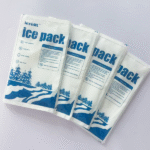
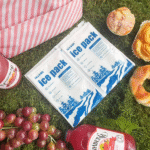
Gelpackungen, ice bricks and phase-change materials (PCMs) complement insulated boxes. PCMs melt or solidify at specific temperatures, absorbing or releasing heat. They help maintain consistent temperatures for long trips. Zum Beispiel, combining bio-foam boxes with PCMs can extend cold retention beyond 72 Std.. Choose refrigerants based on desired temperature range (gefroren, refrigerated or controlled room temperature).
Accessories for moisture control and durability
Feuchtigkeitsbarrieren (Folieneinlagen, wax coatings) prevent condensation from degrading paper-based materials. Reinforced corners or fiber-board inserts protect boxes during stacking and reduce compression damage. Drain-friendly gel packs with recyclable shells can be safely rinsed and recycled after use, um den Abfall weiter zu reduzieren.
External labeling and handling
Use clear labels indicating temperature range, handling instructions and return guidelines. For reusable boxes, include scannable codes to facilitate reverse logistics and encourage return compliance.
Why are smart sensors and IoT transforming cold-chain logistics?
Real-time monitoring improves quality and compliance
Smart sensors integrated into packaging provide continuous monitoring of temperature, Luftfeuchtigkeit und Standort. Wireless sensors and smart labels record conditions in real time, allowing businesses to track shipments and take corrective actions if temperatures deviate. Live temperature monitoring creates an end-to-end audit trail and can automatically flag and isolate compromised stock. This ensures product integrity and helps meet strict regulatory standards in pharmaceuticals and food safety.
RFID and IoT enable supply-chain intelligence
Radiofrequenzidentifikation (RFID) tags encode data into small labels that can be read without line of sight. In temperature-controlled shipping, RFID tags monitor temperature, humidity and expiry dates, allowing rapid inventory scanning and rotation. Integrating RFID with Internet of Things (IoT) platforms enhances traceability, prevents counterfeiting and supports compliance initiatives like the Digital Product Passport expected in 2027.
Smart packaging market growth
Industry forecasts show the smart packaging market is projected to grow from USD 26.3 Milliarden in 2025 in USD 40.8 Milliarden von 2035, eine durchschnittliche jährliche Wachstumsrate von 4.5 %. This expansion is driven by adoption of RFID tags, temperature-sensitive labels and NFC chips that reduce spoilage and improve monitoring. Food and beverage industries account for nearly half of smart packaging adoption because interactive packaging with time-temperature indicators reduces waste and enhances authenticity.
Emerging technologies and innovation
Nanotechnology coatings provide moisture and oxygen barriers while embedding freshness indicators in packaging materials. Hybrid systems combine multiple temperature zones within one shipment, allowing you to ship frozen and refrigerated items together. Autonomous packaging solutions equipped with sensors can sense spoilage and activate protective measures inside the box. As cellular networks advance and IoT becomes more accessible, real-time monitoring will become standard practice across the cold chain.
How are regulations and consumer trends pushing greener cold-chain packaging?
Plastic waste and recycling challenges
Packaging accounts for nearly half of global plastic usage. Yet only 2 % of plastic packaging is recycled, while the remainder is incinerated or ends up in landfills and waterways. Zusätzlich, 30 % of plastic packaging is too complex or too small to recycle. These statistics underscore why sustainable alternatives are essential. The European Union aims to reduce plastic waste by 55 % von 2025 and ensure all packaging materials are recyclable or reusable by 2030. Biodegradable packaging using renewable resources and compostable polymers is a key pathway toward these goals.
National and state-level bans on EPS and single-use plastics
Legislators are acting. New York banned the sale and distribution of polystyrene foam packing peanuts and disposable food service containers in 2022; the ban expands to coolers and cold-storage containers as of January 1 2026. Virginia requires all food vendors to stop using expanded polystyrene containers by July 1 2026. California enacted SB 1053, which restricts grocery stores to recycled paper bags and aims to reduce plastic waste by increasing recycled content over time. These laws drive adoption of curbside-recyclable and compostable insulated boxes.
Consumer attitudes and willingness to pay
Surveys show that while price and quality still rank highest, a significant portion of consumers value sustainable packaging and are willing to pay more. Younger and higher-income demographics express the strongest willingness. Recyclability is viewed as the most critical sustainability trait, though preferences vary by country. For brands, this means that investing in eco-friendly insulated boxes can attract eco-conscious customers without compromising product quality.
Market growth driven by sustainable practices
The insulated shipping box market was valued at USD 2.97 Milliarden in 2024 und soll voraussichtlich auf USD wachsen 4.89 Milliarden von 2034, eine CAGR von 7.6 %. Market growth is fueled by e-commerce and pharmaceutical demand, regulatory compliance requirements and advances in sustainable insulation materials. Biodegradable and reusable insulated boxes are expected to grow three times faster than conventional options as companies prioritize sustainability. In der Zwischenzeit, the biodegradable packaging materials market is forecasted to expand from USD 236.14 Milliarden in 2025 in USD 382.82 Milliarden von 2035, was einer CAGR von entspricht 4.95 %.
2026 Trends: Where is eco-friendly insulated box cargo shipping headed?
Trendübersicht
Ab 2026, the cold-chain industry is evolving rapidly. Market analyses predict that the global cold-chain packaging market will reach $70.69 Milliarden von 2030, wächst bei 14.8 % CAGR, driven by biologics distribution, e-commerce grocery delivery and a focus on carbon footprint reduction. Zu den wichtigsten Trends gehören:
Adoption of sustainable materials: Companies are replacing EPS foam with recyclable paper-based liners and biodegradable foams. Materials like hemp pulp, mushroom mycelium and seaweed biopolymers offer compostability and customizable shapes.
Reusable and returnable packaging: Closed-loop systems using fiber-based boxes or rigid reusable containers reduce waste and deliver long-term cost savings.
Smart labeling and IoT integration: Real-time monitoring through sensors, RFID and IoT platforms becomes the norm, providing traceability and compliance data.
Hybrid and flexible systems: Packaging that allows multiple temperature zones in one shipment optimizes space and reduces waste.
Regulatorische Dynamik: More governments implement extended producer responsibility (EPR) Gesetze, bans on PFAS in packaging and increased recycled content requirements.
Verbraucherengagement: Packaging features QR or NFC codes to communicate product origin, carbon footprint and disposal instructions, aligning with transparency expectations.
Die neuesten Entwicklungen auf einen Blick
Nachhaltige Dämmstoffe: Hemp pulp and mushroom-based packaging provide high cellulose content, rapid growth cycles and natural thermal insulation.
High-barrier coatings: Ultra-thin alumina (aluminum oxide) layers applied to paper create moisture and oxygen barriers without compromising recyclability.
AI-powered diagnostics: Smart packaging with AI algorithms predicts spoilage and suggests proactive measures, enhancing quality assurance.
Rückverfolgbarkeit der Blockchain: Integrating packaging with blockchain platforms ensures verifiable records of temperature history, origin and chain of custody, supporting compliance and consumer confidence.
Expanded legislative bans: New York and Virginia foam bans, California’s bag restrictions and PFAS prohibitions in Maine highlight the increasing regulatory emphasis on sustainable packaging.
Markteinsichten
Global adoption of eco-friendly insulated boxes will accelerate as meal-kit delivery services, grocery e-commerce and pharmaceutical distribution continue to grow. Zum Beispiel, the UK delivered approximately 2.3 million meal delivery boxes in 2025, with chilled food delivery representing about 10 % of retail food value. This demand underscores the need for reliable and sustainable packaging that maintains temperature without excessive plastic. Zusätzlich, cold-chain failures often stem from packaging rather than transport, highlighting the importance of high-performance insulated boxes.
FAQ: your questions answered
Q1: How long can an eco-friendly insulated box keep cargo cold?
Most biodegradable insulated boxes maintain stable temperatures for 24–96 hours, depending on wall thickness, box volume and the quantity of gel packs or phase-change materials. Match the insulation time to your transit duration to avoid over-engineering or under-protection.
Q2: Are paper-based insulated boxes strong enough for heavy shipments?
Ja. Natural fiber board and reinforced paper liners provide structural rigidity. For heavy loads or stacked transport, choose fiber-reinforced designs and add moisture barriers. Proper packing prevents compression damage.
Q3: Can eco-friendly insulated packaging be recycled curbside?
Many paper-based insulated liners like CelluLiner are curbside recyclable and compostable. They come as interlocking panels that collapse for easy disposal and space savings. Always confirm local recycling guidelines.
Q4: What smart technologies are available for cold-chain packaging?
Smart packaging includes wireless sensors, Intelligente Etiketten, RFID tags and IoT platforms that monitor temperature, Luftfeuchtigkeit und Standort in Echtzeit. Advanced systems incorporate nanotechnology coatings and AI diagnostics to detect spoilage and maintain freshness.
Q5: How does regulatory compliance affect my choice of insulated packaging?
Bans on polystyrene foam and single-use plastics in states like New York and Virginia mean that traditional foam coolers may no longer be legal. Choosing biodegradable or recyclable insulated boxes ensures compliance and reduces your environmental footprint.
Q6: Are eco-friendly insulated boxes more expensive?
Costs depend on materials and volume. While biodegradable or smart packaging may have higher upfront costs, they often result in fewer spoilage losses and improved customer satisfaction. Many consumers are willing to pay a premium for sustainable packaging, offsetting the investment.
Q7: What is the difference between biodegradable and compostable packaging?
Biodegradable materials break down naturally into water, carbon dioxide and biomass through microorganisms. Compostable materials meet specific standards for decomposition in controlled conditions. All compostable materials are biodegradable, but not all biodegradable materials are certified compostable.
Practical tips and advice for shippers
Short-haul deliveries: Use a paper-based insulated box rated for 24–48 hours. Pack the box tightly, and pre-cool gel packs to optimize performance. Avoid over-engineering for shorter routes.
Pharmaceutical and biotech samples: Choose thicker walls, validated liners and phase-change refrigerants to maintain narrow temperature bands. Integrate sensors to comply with Good Distribution Practices.
E-commerce shipping: Match the box size closely to the payload to reduce air gaps and heat leaks. Use recyclable or compostable liners and provide customers with disposal instructions.
Feuchtigkeitskontrolle: In humid environments, pair pulp boxes with moisture-resistant liners or foil barriers.
Gefrorene Sendungen: For seafood or ice cream, use bio-foam inserts with phase-change materials to extend cold retention beyond 72 Std..
Retourenlogistik: If you implement reusable containers, establish a reverse logistics program. Provide customers with return labels and incentives to encourage compliance.
Beispiel für reale Welt: A seafood exporter adopted bio-foam insulated boxes with phase-change materials and achieved 72 hours of sub-zero temperature retention during international shipping without adding extra refrigerants. This innovation lowered energy costs and maintained product quality.
Zusammenfassung und Empfehlungen
Key Takeaways
Eco-friendly insulated boxes reduce waste and improve performance. Biodegradable and recyclable materials offer insulation times comparable to or better than conventional foam while eliminating landfill waste.
Die Wahl des Materials ist wichtig. Pulp, bio-foam and fiber boards suit different cargo types, and pairing them with the right refrigerants ensures optimal performance.
Smart technology enhances traceability. Sensoren, RFID and IoT platforms provide real-time temperature monitoring, reducing spoilage and supporting regulatory compliance.
Regulations and consumer expectations drive change. Foam bans, EPR laws and consumer demand for recyclability mean sustainable packaging is no longer optional.
Das Marktwachstum ist robust. The insulated shipping box and biodegradable packaging markets are expanding rapidly, offering opportunities for innovation and competitive advantage.
Aktionsplan
Überprüfen Sie Ihre aktuelle Verpackung. Identify where single-use foam or non-recyclable materials are used, and prioritize replacement with biodegradable or recyclable alternatives.
Select materials strategically. Match your cargo type, transit duration and regulatory requirements to the appropriate insulation material and thickness.
Integrate smart monitoring. Invest in sensors or RFID tags to monitor temperature and provide traceability. Dies reduziert den Verderb, enhances compliance and builds customer trust.
Informieren Sie Ihre Kunden. Provide clear instructions for recycling or composting packaging. Highlight the environmental benefits to reinforce your sustainability commitment.
Bleiben Sie über die Vorschriften auf dem Laufenden. Keep up with state and international packaging laws to ensure compliance and avoid fines.
Partner with innovators. Collaborate with suppliers developing high-barrier coatings, mushroom-based packaging, or AI-powered diagnostic systems to stay ahead of the competition.
Über Tempk
Tempk ist ein führender Anbieter von temperaturkontrollierten Verpackungslösungen, combining cutting-edge thermal engineering with a commitment to sustainability. We develop reusable and biodegradable insulated boxes, gel packs and pallet covers to protect your cargo across the globe. Our solutions are verified through independent testing and are compliant with the latest regulatory standards. We pride ourselves on partnering with clients to reduce waste, improve cold-chain efficiency and deliver safe, fresh products every time.
Nächster Schritt: If you’re ready to upgrade to eco-friendly insulated box cargo shipping, contact our experts for personalized guidance. Zusammen, we’ll design packaging that keeps your goods safe, satisfies your customers and meets evolving sustainability goals.