So meistern Sie den Kühlkettenvertrieb von weißer Schokolade?
Zuletzt aktualisiert: 2025-12-22
Cold chain white chocolate distribution is how you move white chocolate through storage, pflücken, and transport without “invisible” heat spikes. If you get it right, you protect gloss, Schnapp, and flavor. If you get it wrong, you see bloom-like haze, nasse Kartons, odor pickup, and claims that hit margins fast.
Dieser Artikel hilft Ihnen bei der Beantwortung:
- How to set a realistisch Temperatur + humidity target for white chocolate shipping (12–20°C, ≤50% RH)
- Where cold chain white chocolate distribution fails most often (Übergaben, Inszenierung, Cross-Docks)
- How to use lane-based packaging selection so you don’t overpay (or under-protect)
- How temperature monitoring turns arguments into facts (and reduces repeat mistakes)
- The receiving SOP you can share with customers to prevent last-mile damage
What temperature and humidity targets make cold chain white chocolate distribution reliable?
Kernantwort: Cold chain white chocolate distribution is most reliable when you keep product conditions stable, typically targeting about 12–20°C (54–68°F) and ≤50% RH, and avoiding rapid swings.
White chocolate can soften quickly when temperatures climb into the high 20s °C, so a short warm exposure can cause softening and re-set issues later. The biggest enemy isn’t the “average” temperature. It’s the spike you don’t notice during a handoff.
Why white chocolate fails faster than you expect
White chocolate is heavy on cocoa butter and milk solids. Think of cocoa butter like “structured wax.” It can partially melt during brief warmth, then re-solidify in a less stable form. That’s how you get dull shine, smear marks, or a “white film” complaint even when nothing looks fully melted.
| Risikoauslöser | Was geschieht | Where it shows up | Was es für Sie bedeutet |
|---|---|---|---|
| Kurzer Hitzestoß | Erweichung + re-set | Matte Oberfläche, smears | More complaints after delivery |
| Repeated small swings | Fat crystal shifts | Bloom-like haze | Quality drift across batches |
| Hohe Luftfeuchtigkeit | Feuchtigkeitseinwirkung | Sticky wrap, Zuckerblüte | Rückgaben + Kartonschaden |
Praktische Tipps, die Sie heute verwenden können
- Dock control: Keep pallets out of ambient air. Use strict “door-to-truck” discipline.
- Staging time rule: Set a hard limit (Beispiel: 10–15 Minuten).
- Spurkartierung: Flag warm regions and multi-handoff lanes as “high risk.”
Praktischer Fall: One confectionery shipper reduced complaints by cutting hot-dock staging from 30 Minuten bis 10 Minuten and adding simple pallet covers.
Where does cold chain white chocolate distribution break down during handoffs?
Kernantwort: Most failures in cold chain white chocolate distribution happen at handoffs—staging, Laden, Cross-Docks, and customer receiving—because small shortcuts create big temperature swings.
If you want quick wins, focus on three failure points: warm dock staging, cross-dock transfers, and final-mile variability.
The handoff map you can use (and audit)
| Handoff point | Häufiger Fehler | Fix | Profitieren Sie davon |
|---|---|---|---|
| Warehouse → Dock | Pallets staged too long | Set a timer rule | Immediate risk reduction |
| Dock → Truck | Doors open during loading | Pre-cool trailer + fast load | Weniger Spitzen |
| Truck → Customer | Product opened immediately | Sealed acclimation | Besseres Aussehen |
Praktische Tipps, die Sie heute verwenden können
- Use a signed handoff checklist at each step.
- Stamp dwell time (time out of cold room, time loaded).
- Add an escalation rule: if staging exceeds the limit, re-cool the pallet before it ships.
Praktischer Fall: A 3PL cut damage rates by adding a two-step signoff: time out of cold room and time loaded.
How do you control humidity and condensation in cold chain white chocolate distribution?
Kernantwort: Humidity control is a quiet driver of cold chain white chocolate distribution success because moisture creates condensation, which can trigger sugar bloom and packaging damage.
Temperature gets the attention, but moisture is what turns “arrived cold” into “arrived ugly.” Cold product hitting warm, humid air is like a cold soda can on a summer day—water forms fast.
Kondensationsgefahr: the “warm air hit” problem
Condensation is most likely during receiving, Cross-Docks, final-mile handoffs, and customer staging.
| Situation | Condensation likelihood | Einfache Lösung | Profitieren Sie davon |
|---|---|---|---|
| Warm receiving area | Hoch | Temper product in sealed cartons | Fewer wet-box claims |
| Cross-Dock-Transfer | Med–High | Minimize dwell time | Less surface haze |
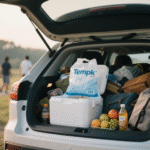
| Final-mile delivery | Medium | Verwenden Sie isolierte Transportboxen | More consistent appearance |
Praktische Tipps, die Sie heute verwenden können
- Keep cartons sealed until acclimated. Let boxes warm slightly before opening.
- Avoid open-air repacking. Repack only in controlled areas.
- Verwenden Sie Feuchtigkeitsbarrieren (liners protect cartons and labels).
- Train receiving teams: a lot of humidity damage happens in the Erste 10 Minuten.
Praktischer Fall: A retailer reduced “wet carton” rejects by keeping product sealed for 30–60 Minuten before opening.
What packaging works for cold chain white chocolate distribution by lane?
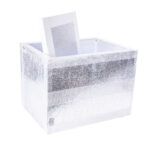
Kernantwort: Packaging for cold chain white chocolate distribution should match your lane risk, not your habits—packaging is a time buffer, and every buffer has a limit.
If your lane is longer or hotter, you need stronger insulation and a smarter refrigerant plan.
Lane-based packaging selection for white chocolate shipping
| Spurtyp | Typisches Risiko | Packaging focus | Was es für Sie bedeutet |
|---|---|---|---|
| Lokal (am selben Tag / nächsten Tag) | Moderate spikes | Insulated carton + strict handling | Niedrigere Kosten, high discipline |
| Regional (1–2 Tage) | Higher dwell time | Bessere Isolierung + Überwachung | More stable delivery |
| Langstrecke (2–5 Tage) | High variability | Hochleistungsisolierung + trip data | Weniger Überraschungen, weniger Ansprüche |
Your pack-out “do’s” that prevent hidden damage
- Add a protective inner layer to reduce airflow around the product.
- Separate product from refrigerants to reduce over-chilling and condensation.
- Ecken und Kanten schützen (boxes fail at corners first).
- Standardize pack-out photos so every site packs the same way.
Praktischer Fall: A shipper improved consistency by standardizing one lane pack-out diagram and auditing weekly.

How should you monitor cold chain white chocolate distribution without overpaying?
Kernantwort: Temperature monitoring makes cold chain white chocolate distribution measurable instead of hopeful. You don’t need complex systems to start—you need consistent data that reveals where spikes occur.
Monitoring also improves teamwork. When you show a clear temperature graph, teams stop arguing and fix the same issue.
Monitoring options that fit real budgets
| Überwachungsmethode | Am besten für | Stärke | Was es für Sie bedeutet |
|---|---|---|---|
| Stichproben (IR / probe) | Empfang | Schnell + billig | Daily discipline |
| Single-use trip data loggers | Lane audits | Clear trip history | Great for root-cause work |
| Real-time trackers | High-value loads | Warnungen + Sichtweite | Best for critical lanes |
Praktische Tipps, die Sie heute verwenden können
- Start with audits: run trip loggers on your highest-claim lanes first.
- Track “time above threshold,” not only the peak.
- Überprüfen Sie wöchentlich with warehouse + transport together.
- Store data with shipment IDs so claims can be verified fast.
Praktischer Fall: One brand found spikes during a specific cross-dock window and shifted pickup times to avoid it.
Ein schnelles Entscheidungstool: Is your cold chain white chocolate distribution “safe”?
Use this 90-second scorecard to decide whether you need better packaging, fewer handoffs, or more monitoring.
Cold chain white chocolate distribution lane scorecard
- Spurdauer
- 0–24 Stunden (1 Punkt)
- 24–48 Stunden (2 Punkte)
- 48+ Std. (3 Punkte)
- Climate exposure
- Mostly cool seasons (1 Punkt)
- Gemischte Jahreszeiten (2 Punkte)
- Heiße Jahreszeiten / hot regions (3 Punkte)
- Übergaben
- Direct ship (1 Punkt)
- One cross-dock (2 Punkte)
- Two+ cross-docks (3 Punkte)
- Verpackung
- Grundisolierung (3 Punkte)
- Mittlere Isolierung + standard pack-out (2 Punkte)
- Hohe Isolierung + validierte Verpackung (1 Punkt)
- Überwachung
- No trip data (3 Punkte)
- Audit loggers sometimes (2 Punkte)
- Trip-level data on key lanes (1 Punkt)
Interpretation:
- 5–7: Low risk → tighten dock discipline.
- 8–11: Medium risk → upgrade pack-out + add lane audits.
- 12–15: High risk → improve insulation, reduce handoffs, add monitoring.
Selbstcheck-Quiz: Are you accidentally creating bloom risk?
Antwort Ja/Nein. Wenn ja 3+ Ja, tighten controls this week.
- Do pallets sit on the dock with doors open?
- Do customers open cartons immediately after delivery?
- Do you lack trip temperature evidence for claims?
- Do different sites pack shipments differently?
- Do you ship white chocolate with strong-smelling goods nearby?
How do you prevent odor pickup in white chocolate cold chain logistics?
Kernantwort: White chocolate absorbs odors easily, so cold chain white chocolate distribution must manage smell contamination. Cold temperatures don’t stop odors from migrating.
If your cartons ride near fish, spices, Chemikalien, or scented packaging, customers can notice flavor taint instantly.
Simple odor controls that work
| Odor source | How it moves | Kontrolle | Profitieren Sie davon |
|---|---|---|---|
| Gemischte Beladungen | Shared air | Load separation + Barrieren | Fewer flavor complaints |
| Warehouse smells | Umgebungseinflüsse | Keep product sealed | Bessere Geschmackskonsistenz |
| Verpackungsmaterialien | Off-gassing | Use food-grade liners | Reduced taint risk |
Praktische Tipps, die Sie heute verwenden können
- Avoid mixed loads with strong odors wann immer möglich.
- Keep product sealed through staging and receiving.
- Use a dedicated confectionery zone in the warehouse.
Praktischer Fall: One shipper stopped “soap-like taste” complaints by separating white chocolate from cleaning supplies and scented materials.
What receiving process should customers use for white chocolate shipments?
Kernantwort: A good receiving process protects cold chain white chocolate distribution from last-mile mistakes—even if it arrives cold, opening immediately in warm air can create condensation and defects.
A simple receiving SOP you can share
- Check the outer carton for wetness, zerquetschen, or broken seals.
- Verify temperature evidence if you use a logger or indicator.
- Keep cartons closed for acclimation in a cool area.
- Open and inspect after acclimation, not right away.
- Store in a stable cool zone, away from odors and sunlight.
Praktische Tipps, die Sie heute verwenden können
- Include a one-page receiving card inside every master carton.
- Ask for one arrival photo (Karton + Siegelbereich) to speed claim decisions.
- Set claim rules: what evidence is required for fast approval.
Praktischer Fall: One brand reduced disputes by requiring one arrival photo and a temperature record for high-value shipments.

2025 trends in cold chain white chocolate distribution
In 2025, cold chain white chocolate distribution is becoming more data-driven and standardized. Teams are replacing tribal knowledge with simple SOPs, Spurwertung, and lightweight monitoring.
Schnappschuss der neuesten Entwicklungen
- Schlauer, cheaper trip data: more brands rotate audit loggers across lanes.
- Standard pack-out libraries: pack-out diagrams stored by lane type.
- Handoff discipline programs: dwell-time limits becoming common KPIs.
Customers also expect premium appearance on arrival, not only “safe delivery.” That means you must protect texture, Glanz, and aroma—not just temperature.
Häufig gestellte Fragen
Q1: What is the biggest risk in cold chain white chocolate distribution?
A short heat spike during handoffs. Reduce dock time and use lane monitoring to find hidden spikes.
Q2: Does cold shipping guarantee no bloom?
NEIN. Rapid temperature swings and moisture can still cause bloom-like defects. Stability and humidity control matter.
Q3: Should I use refrigerated trucks for every shipment?
Nicht immer. Short lanes may work with insulation and strong handling discipline. High-risk lanes benefit more from active control.
Q4: How can I reduce claims without raising costs too much?
Start with dwell-time rules, standardized pack-out, and targeted audits. Fix the biggest failure point first.
Q5: What should customers do when boxes arrive cold and wet?
Keep cartons sealed for acclimation in a cool space. Opening immediately can trigger condensation and surface defects.
Zusammenfassung und Empfehlungen
Cold chain white chocolate distribution works when you control stability across the whole journey. Focus on where failures actually happen: warm dock staging, Cross-Docks, and rushed receiving. Match packaging to lane risk and use temperature evidence to drive improvements. Protect white chocolate from heat spikes, humidity shocks, and odor pickup, because customers judge appearance and taste immediately.
Ihr nächster Schrittplan (klarer CTA)
- Score your Spitze 3 highest-claim lanes using the scorecard above.
- Add a strict staging-time rule and a signed handoff checklist this week.
- Laufen 10 audit shipments with trip data to find where spikes happen.
- Standardize pack-out by lane type and train every site to match it.
Über Tempk
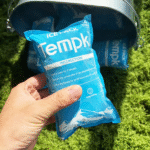
Und Tempk, we focus on practical cold chain execution for sensitive products like white chocolate. We help teams standardize pack-outs, improve temperature visibility, and reduce damage at handoffs. Our approach is process-first: klarere SOPs, better lane decisions, and evidence-based improvements that reduce claims over time.
Aufruf zum Handeln: Share your lane profile (Dauer, Klima, Übergaben, Versandgröße). We’ll outline a cold chain white chocolate distribution plan you can apply immediately.