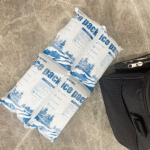
Bei der Wahl eines Lieferanten für industrielle Kühlboxen geht es nicht darum, die günstigste Box zu finden. Es geht darum, Temperaturdrift zu verhindern, Bruch, und vermeidbare Nacharbeit. If you ship high-value or time-sensitive goods, a small packaging mistake can become a big margin leak. In diesem Leitfaden, you’ll learn how to select an industrial ice box supplier using proof, not promises—so your cold chain stays stable in 2026.
What you’ll get from this guide
How an industrial ice box supplier supports real cold chain operations (not just product specs)
Ein einfaches “use-case brief” you can send to any supplier to get cleaner quotes
The industrial ice box supplier quality audit questions that catch problems early
A practical plan for industrial ice box supplier insulation holdover validation in your own lanes
A landed-cost method to compare vendors beyond unit price
What does an industrial ice box supplier really deliver?
Direkte Antwort: An industrial ice box supplier designs, Hersteller, and supports heavy-duty insulated containers built for repeated use in tough logistics environments.
A good industrial ice box supplier is not selling a “cooler.” They are helping you manage risk across handling, Lagerung, und Transport. That includes insulation performance, strukturelle Stärke, and consistent quality across production batches. When those basics are stable, your team packs faster and fails less.
Industrial vs light-duty: was sich für dich ändert?
| Besonderheit | Industrielle Eisbox | Light-duty cooler | Was es für Sie bedeutet |
|---|---|---|---|
| Wall structure | Verstärkt | Dünn | Fewer cracks and returns |
| Isolierung | High-density, konstruiert | Basic | Longer holdover windows |
| Zyklen wiederverwenden | Dozens (oder mehr) | Beschränkt | Lower cost per use |
| Load handling | Schwere Nutzlasten | Light loads | Safer daily operations |
Praktische Tipps, die Sie heute verwenden können
High-volume lanes: prioritize batch consistency and repeatable QC records.
Grobe Handhabung: demand reinforced corners and stacking guidance.
Long dwell time: require documented holdover conditions, not vague claims.
How do you match an industrial ice box supplier to your lane risk?
Direkte Antwort: Match an industrial ice box supplier to your use case—payload, Temperaturband, holdover time, handling level, cleaning routine, und monatliches Volumen.
The five questions that save you weeks
Ask every industrial ice box supplier these first:
What is my target temperature band and holdover time?
What is the worst handling my boxes will face?
What monthly volume should you plan for, including peak season?
What quality checks happen before shipping, and how are they recorded?
How do you control changes in materials or design?
Use-Case Sentence Builder (kopieren/einfügen)
Use this one sentence in your RFQ email:
“We ship [Nutzlast] bei [Temperaturband] für [holdover time], mit [handling level], bei [monthly volume].”
Use-case map (simple but powerful)
| Anwendungsfall | Common priority | Häufiger Fehler | What to demand from an industrial ice box supplier |
|---|---|---|---|
| Lebensmittelverteilung | Cleanability + Haltbarkeit | Nasse Kartons, Geruch | Better liner + drain control |
| Export von Meeresfrüchten | Isolierung + Stapelung | Corner Crush | Verstärkte Ecken + pallet rules |
| Laborproben | Stabilität + SOP | Packing variability | Foto-SOP + revision control |
| Industrial ingredients | Konsistenz + Skala | Lot variation | Rückverfolgbarkeit + stable QC plan |
Which industrial ice box supplier quality checks prevent surprises?
Direkte Antwort: Choose an industrial ice box supplier that proves consistency with controlled materials, in-process checks, final inspection, Rückverfolgbarkeit, and corrective action (CAPA).
Industrial ice box supplier quality audit questions (kopieren/einfügen)
Ask your industrial ice box supplier:
How do you inspect incoming raw materials (Harz, foam components)?
How do you control insulation consistency (Dichte, Hohlräume, uniform fill)?
What are your CTQs (critical-to-quality points) for this model?
What in-process checks happen (Deckel passt, gasket seating, latch function)?
What is your sampling method before shipping, and what gets recorded?
How do you trace a batch (mold ID, shift record, batch ID)?
Can you share one anonymized CAPA example you’ve closed?
QC comparison (Was “Gut” sieht aus wie)
| QC element | Basic supplier | Strong industrial ice box supplier | Was es für Sie bedeutet |
|---|---|---|---|
| Incoming checks | Nur visuell | Measured + recorded | Fewer hidden defects |
| In-process control | Operator habit | Documented steps | Stable outcomes |
| Final inspection | Random checks | Sampling plan + CTQs | Fewer returns |
| Rückverfolgbarkeit | Unklar | Batch records | Schnellere Ermittlungen |
| CAPA behavior | Reactive | Trend-based learning | Fewer repeat issues |
How do you validate holdover time from an industrial ice box supplier?
Direkte Antwort: Validate industrial ice box supplier insulation holdover claims by testing against your lane reality—ambient heat, Nutzlastmasse, coolant setup, opening behavior, and the pass/fail endpoint.
What to request (Die “performance summary”)
Ask your industrial ice box supplier for a short summary that includes:
Target temperature band and pass/fail endpoint
Ambient assumption (hot season vs mild season)
Payload mass and placement
Kühlmitteltyp und Startzustand
Duration and lid-opening assumptions
Simple 30-day pilot plan (low drama, high signal)
Pick one lane and one packing method.
Run three shipments with the same pack-out.
Add one stress factor (delay buffer or extra opening).
Log temperatures and outcomes.
Lock the SOP revision when results are stable.
What compliance paperwork should you request from an industrial ice box supplier?
Direkte Antwort: If your project touches food, Pharma, or regulated lanes, your industrial ice box supplier should provide destination-matched documentation and precise regulatory language—never vague “genehmigt” Ansprüche.
Food-contact packet checklist (destination-matched)
Ask your industrial ice box supplier for a “food-contact packet” aligned to your destination.
EU framework principles aligned to Regulation (EC) NEIN 1935/2004
If plastics apply, documentation aligned to Regulation (EU) NEIN 10/2011
Manufacturing process controls aligned to EC 2023/2006 (GMP for food contact materials)
UNS. regulatory status language that respects FDA FCN scope
| Compliance-Bedarf | EU angle | UNS. angle | Was es für Sie bedeutet |
|---|---|---|---|
| General food-contact safety | 1935/2004 Prinzipien | FDA FCN system concept | Faster buyer approvals |
| Plastics in contact | EU 10/2011 Grenzen | FCN scope is supplier-specific | Lower compliance risk |
| Manufacturing control | EC 2023/2006 | Qualität + traceability expectations | Fewer audit findings |
How do MOQ, Vorlaufzeit, and customization affect industrial ice box supplier fit?
Direkte Antwort: MOQ and lead time control your inventory risk, while customization can add hidden complexity—so keep custom changes simple until your pilot proves the baseline.
Was “Brauch” bedeutet normalerweise (und warum es wichtig ist)
Branding: Etikett, drucken, or molded marks
Farbe: standard vs custom color matching
Hardware: latch upgrades, reinforced handles
Zubehör: Trenner, Liner, saugfähige Pads
Verpackung: nesting method, carton type, Palettenmuster
How do you calculate industrial ice box supplier landed cost?
Direkte Antwort: Anschaffungskosten = Stückpreis + Werkzeugabschreibung + Fracht + Aufgaben + local handling. Comparing suppliers on unit price alone hides the real gap.
Landed cost formula (kopieren/einfügen)
Landed Cost per Unit = (Stückpreis) + (Tooling ÷ Lifetime Units) + (Freight ÷ Units per Shipment) + (Duty Rate × Unit Price) + (Local Handling per Unit)
Industrial ice box supplier final checklist
Before you commit, run through this list:
Use-case brief shared and acknowledged
QC plan reviewed and CTQs confirmed
Holdover validation plan agreed
Compliance packet matched to your destination
MOQ, Vorlaufzeit, and customization terms clear
Landed cost calculated (nicht nur der Stückpreis)
Sample from two batches inspected
Pilot plan scheduled