Choosing an insulated box OEM decides whether your shipments stay in-range or become expensive exceptions. In 2026, temperature excursions still drive major product losses, while smarter OEM partnerships can cut risk by up to two-thirds.
A well-designed shipper can also hold temperature 48–120 hours depending on lane and payload, but only if the system is specified, built, and packed consistently.
Dieser Leitfaden wird Ihnen die Antwort geben
How an insulated box OEM delivers a repeatable shipping outcome (nicht “just a box”)
A quote-ready insulated box OEM RFQ template you can send today
Welche Materialien (EPS, EVP, VIP, Hybrid, fiber) fit your lane and budget
A practical checklist to audit an insulated box OEM factory (even by video)
How to validate performance with lane-based testing and clear pass/fail rules
Was “sustainability in 2026” really means (nachweisen, Beschriftung, substances of concern)
What does an insulated box OEM actually deliver in 2026?
A strong insulated box OEM delivers a repeatable shipping outcome, not just a prototype that looks good. Im Klartext, the OEM controls how the walls are built, how parts fit, and how repeatable production is at scale—because a great sample is useless if mass production drifts.
Here’s the simplest way to avoid confusion: you own the lane reality, the OEM owns the build reality.
What you control vs. what the insulated box OEM controls
| Responsibility | Du (shipper owner) | Insulated box OEM | Was es für Sie bedeutet |
|---|---|---|---|
| Product limits | Definieren Sie Min./Max + Ausflugsregeln | Design around it | Vague limits = overdesign or failures |
| Spurbedingungen | Dauer definieren + Jahreszeiten + stoppt | Model and test to it | Real lane data reduces cost and risk |
| Build quality | Approve specs + Akzeptanzkriterien | Execute process controls | Quality is designed, nicht “checked later” |
| Validation plan | Approve profiles + bestanden/nicht bestanden | Run tests or support labs | Proof must match reality |
Praktisches Essen zum Mitnehmen: Ask your insulated box OEM for a one-page production control plan to prevent “good samples, bad batches.”
Which specs matter most in an insulated box OEM RFQ?
If your RFQ is vague, you’ll get quotes that look cheap—but explode later through redesigns, extra refrigerant, or failed validation. Your RFQ should describe the shipping reality in a way a factory can build and a tester can validate.
The RFQ “must-have” inputs (copy/paste friendly)
Use this table as your insulated box OEM RFQ template.
| RFQ field | Beispiel | Why the insulated box OEM needs it | Was es für Sie bedeutet |
|---|---|---|---|
| Temperaturband | 2–8 ° C | Drives refrigerant choice | Fewer spoilage + erneute Lieferungen |
| Halte die Zeit | 72 Std. | Sets insulation thickness | Fewer “almost made it” Misserfolge |
| Sommerprofil | 35°C peak | Builds worst-case | Less seasonal surprise |
| Nutzlast | 2 kg, 4× vials | Heat capacity matters | Better pass rates in testing |
| Pack-out constraint | <6 Minuten | Arbeit + error risk | Schnellere Erfüllung, weniger Fehler |
Tips that prevent RFQ rework
If lanes vary: create two RFQs—one “typisch” und eins “worst-case.”
If ambient extremes are unclear: use realistic exposure assumptions, then test worst-case.
Wenn Sie per Flugzeug versenden: confirm labeling and booking expectations early.
Echtes Beispiel: A biotech team reduced redesign cycles by adding one RFQ line: “Payload must never drop below 2°C.”
Which materials should your insulated box OEM recommend in 2026?
Material choice is a three-way trade-off: thermische Leistung, Haltbarkeit, and end-of-life. Der “am besten” pick depends on whether your biggest enemy is heat, raues Handling, or disposal pressure.
Think of insulation like a winter jacket: thicker can be warmer, but it can also be heavy and expensive to ship.
Buyer-friendly material comparison
| Material | Stärken | Achtung | Was es für Sie bedeutet |
|---|---|---|---|
| EPS | Niedrige Kosten, gute Isolierung | Policy pressure in some regions | Lower unit cost, more compliance planning |
| EVP | Dauerhaft, wiederverwendbar | Höhere Vorabkosten | Better total cost in return loops |
| PU-Schaum | Starke Isolierung + Struktur | Disposal can be complex | Better long holds, fewer refrigerant bricks |
| VIP Hybrid | Dünne Wände, hohe Isolierung | Needs protection, höhere Kosten | More payload volume, less dim-weight risk |
| Fiber-based | Disposal-friendly in some regions | Moisture resistance varies | Good for sustainability goals if repeatable |
Einfache Regel: Don’t choose VIP “because it’s best.” Choose it when you must hit long durations or tight temperature bands in a small shipper.
Kurz “material fit” Entscheidungsinstrument
If you need low cost + decent insulation: start with EPS or fiber-based, dann validieren.
If you need reuse + Zähigkeit: prioritize EPP and plan cleaning/returns.
If you need thin walls + hohe Leistung: shortlist hybrid or VIP hybrid, then protect panels.
How do you match an insulated box OEM design to your shipping lane?
The right insulated box OEM design starts with your lane profile: Dauer, Umgebungsbereich, Nutzlastempfindlichkeit, und Handling. If you skip this, you’ll either overpay for “extra safety” or underbuild and risk excursions.
Der 5 inputs that decide real-world performance
Dauer: door-to-door hours, including delays
Umgebungsreichweite: hottest and coldest likely conditions
Nutzlast: Masse, Starttemperatur, sensitivity
Kühlmittelstrategie: Gelpackungen, PCM, oder Trockeneis
Pack-out workflow: how fast your team can pack consistently
Pack-out decision tool
Use this mini-tool to align quickly with your insulated box OEM.
Schritt 1: Choose lane duration
0–24 hours → prioritize speed + niedrige Kosten
24–72 hours → prioritize repeatability + seasonal pack-outs
72–120 hours → prioritize insulation quality + validation depth
Schritt 2: Choose temperature mode
Gekühlt (2–8 ° C)
Kontrollierte Raumtemperatur (15–25°C)
Gefroren (-20° C oder niedriger)
Schritt 3: Pick risk level
Niedrig: lokal, few handoffs
Medium: regional, occasional delays
Hoch: multiple hubs, saisonale Extreme
If you picked “72–120 Stunden” oder “Hohes Risiko,” ask your insulated box OEM for a lane-specific qualification plan, not a brochure test.
Practical tips that reduce failures
Define starting temperatures. A “kalt” gel pack is not the same as a “gefroren” eins.
Train one standard pack-out. Variation is the hidden enemy of hold time.
Ask for pack-out photos + a one-page SOP to prevent drift over time.
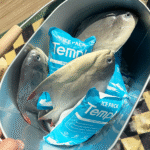
Echtes Beispiel: A seafood exporter reduced spoilage by standardizing gel pack conditioning and adding a top-layer spacer to prevent direct-contact freezing.
How do you audit an insulated box OEM factory before you sign?
Audit process control, not showroom samples. A factory can look clean and still produce inconsistent batches if incoming checks and assembly controls are weak.
Audit checklist (ask these exact questions)
Incoming materials: do they record lot numbers and inspect density/thickness/defects?
Tooling and molds: do they maintain molds and document changes?
Assembly control: do they measure fit, Lücken, lid compression, adhesive cure time?
In-process checks: do they sample during production, not only at the end?
Rückverfolgbarkeit: can they link a finished shipper back to raw material batches?
What to ask for (before or during the visit)
A one-page production control plan
Sample QC inspection records
Change control process for tooling or materials
Tipp: If the factory can’t show you a QC form, they probably don’t use one consistently.
How do you validate insulated box OEM performance?
Validation proves the shipper works in your real-world lane—not just in a lab. Without this, you’re trusting marketing claims instead of data.
Der 3 levels of validation
| Ebene | What it tests | Wann zu verwenden | Was es für Sie bedeutet |
|---|---|---|---|
| Lab simulation | Controlled chamber profile | Early design stage | Fast feedback, not final proof |
| Feldpilot | Real shipment with loggers | Before scale-up | Catches real-world surprises |
| Ongoing monitoring | Spot-checks in production | After launch | Detects drift before failures |
Key insight: Lab tests set the baseline; field pilots catch what labs miss (Verzögerungen, falsche Handhabung, seasonal swings).
Pass/fail rules you should define
Temperaturband: Z.B., 2–8 ° C, no excursions below 2°C or above 8°C
Dauer: Z.B., 72 Stunden von Tür zu Tür
Umgebungsprofil: Z.B., 35°C summer, 5°C winter
Nutzlaststatus: Z.B., product starts at 5°C, gel packs at 0°C
Tipp: Write pass/fail rules into your RFQ so the OEM designs to them—not to a generic brochure spec.
How do you manage change control with an insulated box OEM?
Change control protects your validation. Ohne es, A “klein” material swap or mold adjustment can quietly break performance.
What triggers a change review?
Material supplier change
Density or thickness adjustment
Mold or tooling modification
Adhesive or closure change
Pack-out SOP revision
Simple change control process
OEM notifies you before the change
You assess impact (minor, major, kritisch)
If major or critical: re-validate before production
Document the decision and keep records
Tipp: Fügen Sie a hinzu “no silent changes” clause to your supply agreement.
Was macht? “Nachhaltigkeit” mean for insulated box OEM in 2026?
Sustainability in 2026 is about proof, not slogans. Buyers and regulators want documented materials, clear disposal labels, and awareness of substances of concern.
Der 3 sustainability questions to ask your OEM
What are the materials, and can you document them?
How should the end user dispose of this shipper?
Are there any substances of concern for food-contact or sensitive markets?
Practical sustainability checklist
| Bereich | Was soll ich fragen? | Was es für Sie bedeutet |
|---|---|---|
| Material documentation | Can you provide a material data sheet? | Proof for audits and compliance |
| Disposal labeling | Is the disposal path clear to the end user? | Reduces confusion and complaints |
| Substances of concern | Any restricted chemicals in the product? | Avoids market access issues |
| Richtige Größe | Is the shipper sized to the payload? | Weniger Abfall, geringere Fracht |
Tipp: “Recycelbar” claims are only useful if the end user knows how to recycle it. Ask for clear labeling.
How do you compare insulated box OEM suppliers fairly?
Comparing OEMs on price alone is a trap. The real cost includes validation, nacharbeiten, and failed shipments. Use a scorecard that weights what matters.
OEM comparison scorecard
| Kriterien | Gewicht | Worauf Sie achten sollten |
|---|---|---|
| Wärmeleistung | 25% | Validated hold time for your lane |
| Production consistency | 20% | QC records, process controls |
| Rückverfolgbarkeit | 15% | Lot tracking, Änderungskontrolle |
| Sustainability documentation | 15% | Material data, disposal guidance |
| Gesamtkosten | 15% | Unit + Fracht + nacharbeiten + Validierung |
| Reaktionsfähigkeit | 10% | Vorlaufzeit, communication, Flexibilität |
Tipp: Ask each OEM to fill in the same RFQ template so you can compare apples to apples.
Readiness self-assessment
Use this quick self-assessment to check if you’re ready to scale with an insulated box OEM.
| Frage | Yes = 1 Punkt |
|---|---|
| Do you have a written lane profile (Dauer, Ambient, Nutzlast)? | ☐ |
| Do you have a one-page RFQ with pass/fail rules? | ☐ |
| Do you have a pack-out SOP your team can follow? | ☐ |
| Have you piloted with monitoring data? | ☐ |
| Do you have a change control process with your OEM? | ☐ |
Score interpretation
| Punktzahl | Readiness | Empfohlene Maßnahme |
|---|---|---|
| 0–2 | Hohes Risiko | Don’t scale yet; define lane + pack-out first |
| 3–4 | Mittleres Risiko | Pilot with tight monitoring + clear SOP |
| 5 | Scale-ready | Lock spec, bestätigen, negotiate supply terms |
CTA: If you scored 3 oder weniger, build a one-page RFQ + pack-out SOP, then request a pilot build.
2026 latest insulated box OEM developments and trends
Der Größte 2026 trend is system thinking: the market is moving from “a box that insulates” to a shipping system that is validated, right-sized, and easier to comply with.
Neueste Entwicklungen auf einen Blick
More right-sized designs: weniger Leerraum, geringere Fracht, weniger Abfall
More documentation-ready packaging: buyers want traceability, keine Marketingaussagen
More focus on substances of concern: especially for food-contact and sensitive markets
Betriebsnotiz: Handling guidance keeps evolving, and the document notes updates in IATA Temperature Control Regulations (2026 Ausgabe) that reinforce rising compliance expectations.
Häufig gestellte Fragen
Q1: What’s the biggest mistake when choosing an insulated box OEM? Buying on unit price alone. The real cost is failed deliveries, replacements, and customer churn. Choose based on validated outcomes, documented controls, and repeatable pack-out—not a cheaper sample.
Q2: How long does insulated box OEM development take? Most projects take 4–8 weeks for design, prototyping, und testen. Timelines can be faster if you reuse existing tooling, but you should still protect time for pilot pack-out and data review.
Q3: Kann “too much refrigerant” be a problem in 2–8°C shipping? Ja. Unterkühlung kann zum Einfrieren führen, and many chilled products are harmed by freezing, not just warming. Use lane-based validation and set a clear “no-freeze” rule in your RFQ and SOP.
Q4: What documents should an insulated box OEM provide for audits? Zumindest: Materialspezifikationen, QC checks, traceability approach, and a change control process. For regulated lanes, keep validation reports organized so investigations are faster and less disruptive.
Q5: Do I need testing for every lane? Nicht immer. Start with your highest-risk lanes first (lange Dauer, heiße Jahreszeit, mehrere Übergaben). Once the design and pack-out are stable, expand carefully with periodic verification checks.
Q6: How do I make insulated packaging more “2026-bereit” for sustainability? Passen Sie den Transportbehälter richtig an, improve disposal label clarity, document materials, and plan ahead for stricter rules and timelines in target markets. Ask your OEM for proof, not slogans.
Zusammenfassung und Empfehlungen
A strong insulated box OEM helps you control temperature risk with a repeatable system. Define your lane and product limits first, then write an RFQ with temperature band, Dauer, Umgebungsprofil, Nutzlast, and pass/fail rules. Validate the full system (Kasten + Kältemittel + Auspacken), then lock specs with change control.
Ihr nächster Schritt
Pick one SKU and one worst-case lane.
Create a one-page RFQ + pack-out checklist.
Run a pilot with monitoring, fix the human failure points, dann skalieren.
Über Tempk
Und Tempk, we focus on temperature-controlled packaging that works in real operations. We design insulated shipping systems that prioritize repeatable pack-out, klare Dokumentation, and scalable manufacturing—so your insulated box OEM program is built to ship reliably, not just look good on paper.
Nächster Schritt: Share your lane profile (Dauer, Temperaturbereich, Jahreszeit, Nutzlastgröße). We’ll help you turn it into a quote-ready RFQ and a validation plan your team can actually run.