What is an insulated pouch OEM and why does it matter?—Understand the concept of OEM pouches, their role in cold-chain logistics and why customisation is critical.
How do you select the right OEM partner?—Learn evaluation criteria like material expertise, certifications and production capacity to ensure quality and scalability.
Which materials and technologies are shaping 2026 Isoliertaschen?—Explore phase change materials, vacuum-insulated panels and bio-based alternatives.
What market trends and innovations should you watch?—Get data on market growth, sustainability mandates and digitalisation driving the cold-chain sector.
What is an insulated pouch OEM and why does it matter?
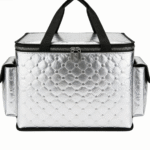
Insulated pouch OEMs manufacture customised thermal pouches that maintain product temperature during transport, Schutz sensibler Güter vor Hitze schützen, cold and shock. Instead of relying on generic off-the-shelf bags, an OEM partner designs pouches to your exact dimensions, insulation requirements and transit duration. According to The Business Research Company’s 2026 Bericht, the primary categories of insulated shipping packaging include pouches and bags, boxes and containers; pouches are compact, lightweight thermal envelopes suitable for small or flat items. They can be made from plastics, Verbundwerkstoffe, paper or even bio-based fibres and serve diverse applications in food, industriell, pharmaceutical and beauty sectors. The ability to customise pouch size, material and closure eliminates excess void space, improves thermal efficiency and reduces waste.
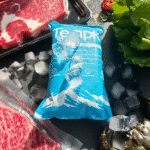
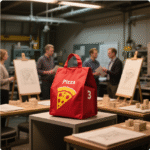
Custom pouches are particularly important for last-mile deliveries where transit times are short and packaging needs to be lightweight. The rise of direct-to-consumer meal kits, grocery deliveries and specialty pharmaceuticals means each household receives its own insulated unit, expanding total demand even as packaging walls become thinner. An OEM can design pouches with integrated phase-change materials (PCMs) or gel packs to hold temperatures for four or more hours—an expectation once reserved for pharmaceutical logistics. Because pouches are easier to store and ship flat, they reduce warehouse footprint and shipping costs compared with rigid boxes.
Benefits of insulated pouches in cold-chain logistics
Insulated pouches offer several practical advantages over traditional box-and-gel pack combinations. The table below summarises common material options, their thermal performance and what that means for your business:
| Materialtyp | Wärmeleistung | Typischer Anwendungsfall | Was es für Sie bedeutet |
|---|---|---|---|
| Reflective foil bubble | Mäßige Isolierung; reflects radiant heat but relies on gel packs for long duration | Short-to-medium deliveries like meal kits or grocery orders | Leicht und faltbar; reduces shipping costs and allows branding; best for trips under 24 Std. |
| Erweiterter Polystyrol (EPS) | Hohe Isolierung; rigid structure retains cold for extended periods | Gefrorene Meeresfrüchte, premium ice cream or vaccines with long transit times | Offers strong thermal barrier and impact resistance; but recycling options are limited |
| Polyurethanschaum | Very high insulation with low thickness; can maintain sub-zero temperatures | Ultra-cold biologics and cell therapies requiring ±1 °C control | Enables slimmer pouch walls with R-values comparable to VIPs; suitable for critical shipments |
| Recyclable paper-based liners | Mäßige Isolierung; often combined with PCMs | Environmentally conscious consumers and regulated markets | Curbside-recyclable and compostable options support sustainability mandates |
| Vakuum-INSULTISCHE PANULLE (VIPs) | Exceptional insulation; R-30 achieved in 20 mm profiles | High-value pharmaceuticals and last-mile grocery deliveries | Minimises wall thickness while maintaining temperature; allows more payload space but costs more |
Beyond the thermal properties, pouches provide flexibility in closing mechanisms (Reißverschluss, Klettverschluss, Heißsiegeln), integrated labels and tamper-evident features. Because they are manufactured flat, they save storage space and can be deployed quickly in distribution centres.
Praktische Tipps und Vorschläge
For short-distance meal kits: Choose reflective-foil pouches with gel packs. They balance cost and performance and are easy for customers to open and reuse.
Für hochwertige Biologika: Opt for polyurethane foam or VIP pouches with pre-conditioned PCMs to maintain tight temperature bands. Ensure your OEM can validate performance through ISTA testing.
For eco-focused markets: Select paper-based or fibre-based pouches with recyclable gel packs. They support curbside recycling programs and align with corporate sustainability goals.
Tatsächlicher Fall: A clinical research organisation shipping cell therapies between the U.S. and Asia adopted a hybrid packaging approach, combining vacuum-insulated panels and phase-change materials. The custom pouches maintained temperatures within ±1 °C for 96 Std., Reduzierung des Produktverlusts und Einsparung von ca $300,000 jährlich durch die Vermeidung von Verderb und Rücksendungen. This demonstrates how tailored pouches with advanced insulation deliver measurable cost savings and reliability.
How to choose the right insulated pouch OEM in 2026?
Selecting the right OEM partner requires careful evaluation of capabilities, quality systems and alignment with your supply-chain strategy. Market demand for temperature-controlled packaging is surging—the global cold-chain packaging market is projected to grow from USD 27.4 Milliarden in 2026 in USD 47.6 Milliarden von 2033, reflektiert ein 8.1 % CAGR. To capture this opportunity, companies need partners who can scale production, innovate with new materials and comply with ever-evolving regulations.
Wichtige Bewertungskriterien
When assessing potential OEMs, consider the following criteria:
| Kriterium | Was es beinhaltet | Fragen, die man stellen sollte |
|---|---|---|
| Material expertise | A strong OEM offers a portfolio of insulation materials (EPS, Polyurethanschaum, Papier, VIPs, PCMs) and understands the thermal requirements of different products. | Which insulation materials do you specialise in? Can you formulate phase-change materials tailored to our temperature range? |
| Quality and certifications | Look for compliance with ISO 9001, Gute Herstellungspraxis (GMP) und ISTA-Standards. Certified facilities ensure consistent quality and validated performance. | What quality certifications do you hold? Do you conduct ISTA 7D or 7E testing on your pouches? |
| Design and customisation capability | An OEM should offer in-house design services, rapid prototyping and the ability to integrate smart features (Z.B., RFID -Tags, Temperaturlogger). | Can you create custom sizes and closures? Do you support embedded sensors for real-time monitoring? |
| Engagement für Nachhaltigkeit | With sustainability mandates accelerating the shift to fibre-based insulators, choose partners investing in recyclable or bio-based materials and reusable systems. | What eco-friendly materials do you offer? How do you manage end-of-life disposal or reuse? |
| Production capacity and scalability | Assess whether the OEM can ramp up production quickly without compromising quality. OEMs that are vertically integrated around material formulation and lamination can unlock pricing power. | What is your monthly production capacity? How do you scale to meet sudden demand surges? |
| Cost transparency and lead times | Understand pricing structure (moulds, Werkzeuge, minimum order quantities) and shipping lead times. Fluctuations in polymer prices can squeeze margins, so a good partner hedges against volatility. | How do you handle raw material price volatility? What are the minimum order quantities and lead times? |
Practical tips for evaluating OEMs
Leistungsdaten anfordern: Ask for thermal performance charts, ISTA test reports and sample pouches. Performance validation is essential, especially for pharmaceuticals where deviations are unacceptable.
Audit production sites: Visit facilities or arrange virtual tours to assess cleanliness, process controls and employee training.
Negotiate scalable contracts: Secure flexible contracts that allow you to adjust order quantities as your business grows. Consider multi-year agreements with pricing tied to raw material indices to mitigate cost swings.
Priorisieren Sie Nachhaltigkeit: Choose OEMs that offer reusable pouches, recyclable materials and closed-loop return programs. Sustainability isn’t just ethical; it appeals to consumers and may soon be mandated by regulations.
Real-world insight: Manufacturers that vertically integrate PCM formulation and VIP lamination not only achieve better margins but also maintain control over supply-chain disruptions. Partnering with an OEM that owns its material processes can protect your business from sudden raw-material shortages or price spikes.
Materials and technologies shaping insulated pouches in 2026
Insulated pouches utilise a variety of materials and innovative technologies to maintain temperatures, reduce weight and meet sustainability goals. Understanding these options helps you design pouches that balance performance, Kosten und Umweltauswirkungen.
Traditional and emerging materials
Plastics and foams: Plastics remain dominant in insulated packaging—plastic accounted for roughly 45 % des Marktanteils in 2025. Erweiterter Polystyrol (EPS) and polyurethane foams offer high thermal resistance and structural rigidity. Jedoch, volatile polymer prices have squeezed converter margins, prompting trials of bio-based aerogels and alternative materials.
Paper and fibre-based substrates: Nachhaltigkeitsmandate, such as the European Union’s recyclable-by-2030 rule, are catalysing a shift toward recyclable fibre-based formats. Companies like Huhtamaki have invested heavily in moulded-fibre complexes to produce curbside-recyclable pouches and shippers that integrate PCM pockets.
Bio-based aerogels: These lightweight materials derived from cellulose, starch or silica provide high insulation with minimal thickness and are poised for the fastest growth (projected CAGR of 6.89 % durch 2031). Aerogel-lined pouches offer good compressibility and are compostable, reducing environmental footprint.
Vakuum-INSULTISCHE PANULLE (VIPs): VIPs deliver exceptional insulation (R-30 in 20 mm) and are increasingly used for last-mile delivery of groceries and premium seafood. Falling prices (runter 15-20 % jährlich) are expanding their use beyond pharma into gourmet coffee and seafood shipments.
Phasenwechselmaterial (PCMs): PCMs stabilise temperatures by absorbing and releasing latent heat. Formulations tuned to +5 °C keep vaccines stable while sub-zero PCMs support frozen shipments. Manufacturers are integrating PCMs into pouch liners so they become part of the structure rather than separate gel packs.
IoT-Sensoren und Smart Labels: Digital sensors embedded in pouches enable real-time temperature and location monitoring, enhancing traceability and regulatory compliance. Data can feed into cloud platforms for predictive alerts, reducing spoilage and insurance claims.
Technologies driving innovation
| Technologie | Wie es funktioniert | Impact on your packaging |
|---|---|---|
| Phasenwechselmaterial (PCMs) | Substances that absorb or release heat at specific transition temperatures, keeping contents within narrow bands. | Reduces reliance on bulk gel packs; enables slimmer pouches for direct-to-consumer deliveries. |
| Vakuum-INSULTISCHE PANULLE (VIPs) | Panels with evacuated cores and microporous fillers achieving very high R-values; require protective lamination to prevent puncture. | Allow high-value products to travel longer routes under ambient conditions; reduce dimensional weight, lowering shipping fees. |
| Bio-based Aerogels | Porous materials derived from natural polymers or silica; provide insulation comparable to foams but with lower density. | Offer compostable options for environmentally conscious brands; may command premium pricing but differentiate on sustainability. |
| IoT-enabled Smart Labels | Sensors that measure temperature, Luftfeuchtigkeit, Schock und GPS-Standort; transmit data via RFID or cellular to cloud dashboards. | Improve compliance and allow proactive intervention; increase customer trust through transparency and reduce product recalls. |
| Hybridsysteme | Combine passive insulation (PCMs) with active elements (rechargeable cooling modules) für Redundanz. | Suitable for long-haul or unpredictable journeys; ensure temperature stability even when power fails. |
Practical tips for materials selection
Match PCM to product needs: PCMs come in different phase points (+5 °C, +15 °C, –20 °C, usw.). Work with your OEM to choose formulations that match your product’s stability profile.
Evaluate VIP cost vs. Wert: VIPs can dramatically reduce wall thickness but may be overkill for short shipments. Use them for high-value pharmaceuticals or international shipments where dimensional weight savings justify the cost.
Consider multi-material designs: Hybrid pouches that combine fibre-based shells with foam inserts or PCM panels can balance recyclability with performance.
Plan for end-of-life: Choose materials that fit your sustainability goals—curbside recyclable paper, compostable fibres or returnable multi-use pouches. Ask your OEM about take-back programs.
Market trends and industry outlook
The cold-chain and insulated packaging sectors are experiencing robust growth driven by pharmaceuticals, Biologika, ready-to-eat meals and global e-commerce. Understanding market dynamics helps you anticipate demand and prioritise product development.
Growth of insulated packaging and pouches
Multiple reports highlight how rapidly the market for insulated packaging and pouches is expanding:
Insulated packaging market: Mordor Intelligence estimates the market will grow from USD 16.58 Milliarden in 2025 in USD 17.65 Milliarden in 2026, USD erreichen 23.22 Milliarden von 2031. Towards Packaging reports that the insulated packaging market was worth USD 17.44 Milliarden in 2025 und wird voraussichtlich USD erreichen 33.67 Milliarden von 2035, reflektieren a 6.8 % CAGR.
Cold-chain packaging market: MarketMinds Advisory projects the global cold-chain packaging market to rise from USD 27.4 Milliarden in 2026 in USD 47.6 Milliarden von 2033 mit einem 8.1 % CAGR. Growth is underpinned by stringent regulatory requirements, the proliferation of biologics and vaccines, and the globalization of food supply chains.
Wiederverwendbare Verpackung: The reusable cold-chain packaging segment is valued at USD 4.97 Milliarden in 2025 und wird voraussichtlich USD erreichen 9.77 Milliarden von 2035, wächst bei 6.98 % CAGR. Demand is increasing as companies adopt circular economy models and consumers push for sustainable solutions.
Insulated shipping pouches: The insulated shipping packaging market is forecast to grow from USD 8.18 Milliarden in 2025 in USD 8.78 Milliarden in 2026 (7.3 % CAGR) and to USD 11.75 Milliarden von 2030. The report notes that pouches and bags are core categories for small, temperature-sensitive items.
These figures underscore the opportunity: as more products require controlled temperatures, demand for customised pouches will continue to climb. North America currently holds the largest share of the insulated packaging market at around 40 %, followed by Asia Pacific at 32 %. Jedoch, Asia-Pacific is projected to register the fastest growth thanks to expanding chemical and biosimilar exports.
Nachhaltigkeit und regulatorische Treiber
Environmental concerns and regulations are reshaping packaging choices. The European Union’s recyclable-by-2030 mandate is pushing companies to replace multi-material foams with recyclable fibre and paper substrates. Consumers are increasingly demanding eco-friendly packaging; nearly half of U.S. shoppers are very or extremely concerned about the environmental impact of packaging. Towards Packaging notes that recyclable materials like jute and corrugated cardboard are gaining traction as companies compete on sustainability. Closed-loop models—where pouches are pooled, cleaned and reused—are growing in fresh produce, dairy and meal-kit delivery segments.
Digitalisation and smart logistics
IoT-enabled packaging is no longer optional in 2026. OpenPR’s market update emphasises that IoT-enabled monitoring devices are enhancing real-time temperature visibility and compliance. MarketMinds Advisory explains that smart technologies like RFID tags and data loggers are transforming risk management and enabling proactive intervention. Combining sensors with predictive analytics can reduce spoilage and provide regulatory documentation with minimal manual effort.
E-commerce and direct-to-consumer delivery
The growth of online grocery and meal-kit services is a significant demand vector for insulated pouches. The Business Research Company notes that e-commerce shipments rely on insulated shipping packaging to maintain product freshness; online sales accounted for 15.4 % der USA. retail sales in Q2 2023 and continue to rise. MarketMinds Advisory highlights the impact of direct-to-consumer (D2C) models on packaging design—manufacturers must develop pouches with extended thermal protection, tamper evidence and user-friendly opening mechanisms. As shipments move to small batches and subscription programs, packaging must be lightweight yet robust and easily returnable for reuse.
Integrating insulated pouches into your cold-chain strategy
An insulated pouch is only one component of a robust cold-chain system. To maximise performance and minimise waste, integrate pouch design with operational planning and monitoring.
Assess shipping lanes and temperature profiles: Map your product’s transit routes, including time in transit, ambient conditions and handling steps. Use climate profiling to determine the PCM melting points or insulation thickness required.
Collaborate with OEMs early: Involve your OEM during product development to co-design pouches that optimise payload and temperature performance. Provide details such as product weight, desired temperature range and packaging constraints.
Condition PCMs and gel packs properly: Pre-condition PCMs at the correct temperature (Z.B., +5 °C für gekühlte Impfstoffe). An unconditioned pouch can lead to temperature excursions despite high-quality materials.
Train staff on packing protocols: Even the best pouch fails if packed incorrectly. Entwickeln Sie Standardarbeitsanweisungen für das Laden, Versiegelung, labelling and monitoring. Use checklists and digital tools to ensure compliance.
Integrate monitoring and data analytics: Combine IoT sensors with cloud platforms to track temperature, Standort und Schock in Echtzeit. Use the data to refine packaging design and shipping methods, and to demonstrate compliance during audits.
Plan for end-of-life: Partner with suppliers who offer take-back programs for used pouches. Evaluate whether cleaning and redeploying pouches is feasible for your product category or whether curbside recyclable materials are better.
2026 new insulated pouch developments and trends
Trendübersicht
The insulated packaging sector is evolving rapidly, with innovations addressing performance, sustainability and logistics efficiency. Key developments to watch in 2026 enthalten:
KI-gestützte Routenoptimierung: Artificial intelligence is enabling real-time adjustments to delivery routes based on traffic, Wetter- und Lieferfenster, improving consistency and reducing fuel consumption.
Solar-powered refrigeration: In Regionen mit unzuverlässigem Strom, solar-powered cold-chain solutions are reducing food waste and enhancing food security.
Blockchain zur Rückverfolgbarkeit: Immutable blockchain records enhance transparency and compliance in cold-chain operations, building consumer trust and simplifying regulatory audits.
Leichte, intelligente Container: Containers equipped with IoT sensors track humidity, Temperatur und Standort in Echtzeit, ensuring sensitive goods remain within specification.
Nachhaltige Verpackungslösungen: Paper-based thermal liners like RecyCold climaliner provide up to 48 hours of protection and are made from 98.5 % Papier, making them recyclable and biodegradable.
Kreislaufwirtschaftsmodelle: Closed-loop systems reuse pouches multiple times, supported by durable materials and cleaning hubs. These models can cut packaging costs and reduce waste over the long term.
Neueste Entwicklungen auf einen Blick
Bio-PCMs and plant-based films: Manufacturers are exploring biodegradable phase-change materials and films made from dairy proteins or starches, offering performance comparable to synthetic PCMs while reducing carbon footprint.
Self-refrigerated smart boxes: Products like Ember’s Cube—an IoT-enabled shipping box that maintains precise temperatures for over 72 hours and transmits live data—illustrate the commercial deployment of smart packaging.
Reusable pouch pooling systems: Companies such as IFCO are implementing pooling models where reusable pouches circulate through cleaning and redistribution hubs, increasing utilisation rates from 30 % Zu 70 %.
Regenerative materials: Cotton-fibre pads used in insulated packaging maintain 2–8 °C for over 24 hours while providing sterilisation and extended shelf life. These materials are finding wider adoption in pharmaceutical and biotech applications.
Collaborative R&D: Partnerships between material scientists and packaging converters are accelerating innovation. Trials of bio-aerogels and laminated VIPs are becoming mainstream as companies seek to reduce dependence on petrochemical feedstocks.
Markteinsichten
The insulated pouch OEM space benefits from overarching cold-chain trends. Regulatory frameworks like the EU Packaging and Packaging Waste Regulation (Pp) are accelerating the shift from single-use EPS to reusable, Kreislaufsysteme. Gleichzeitig, the rising cost of polystyrene (which traded between USD 1,200 und USD 1,550 per tonne during 2024–2025) is encouraging converters to experiment with bio-based alternatives. In der Zwischenzeit, the expansion of global biologics capacity and meal-kit services continues to fuel demand for high-performance pouches. Companies that invest in smarter, more sustainable pouches now will be well positioned as these forces converge.
FAQ
Frage 1: What materials are best for insulated pouches?
The choice depends on your product’s temperature requirements and sustainability goals. EPS and polyurethane foams offer the highest thermal resistance for long transit times, while recyclable paper or fibre-based liners support curbside recycling and meet regulations. Bio-based aerogels and vacuum-insulated panels are emerging premium options.
Frage 2: How long can an insulated pouch maintain temperature?
Performance varies by material and PCM integration. High-quality pouches with PCMs or VIPs can maintain ±1 °C for up to 96 hours in hybrid systems. Paper-based liners like RecyCold climaliner offer up to 48 hours of protection for frozen and chilled goods.
Frage 3: What certifications should I look for when selecting an OEM?
Seek partners certified to ISO 9001 for quality management and ISTA for thermal performance. Compliance with the EU PPWR and FDA/WHO guidelines ensures regulatory readiness.
Frage 4: How do I ensure my insulated packaging is sustainable?
Choose materials that are recyclable, kompostierbar oder wiederverwendbar. Look for OEMs investing in circular models and bio-based materials. Participate in take-back programs to reuse pouches and reduce waste.
Frage 5: Why are IoT sensors important in cold-chain packaging?
IoT-enabled sensors provide real-time temperature and location data, enabling proactive intervention and compliance documentation. They reduce product loss and enhance customer trust.
Anregung
The insulated pouch OEM market is growing rapidly, fuelled by pharmaceuticals, food delivery and a push toward sustainability. Customised pouches designed by OEMs protect temperature-sensitive goods, Abfall reduzieren und Logistik optimieren. Plastics and foams remain the dominant materials, but recyclable fibre, bio-based aerogels and vacuum-insulated panels are gaining ground. Market forecasts project significant growth across cold-chain and reusable packaging segments, while regulatory mandates and consumer preferences accelerate the shift toward eco-friendly, recycelbare Lösungen. Um erfolgreich zu sein, businesses should prioritise OEM partners with strong material expertise, certified quality systems, scalable production and commitment to sustainability. Integrating IoT sensors and data analytics enhances compliance and reduces spoilage, and closed-loop pooling models offer long-term cost and environmental benefits.
Aktion (Nächste Schritte)
Engage an OEM early: Share your product specifications and shipping profiles with OEM candidates to co-develop custom pouches.
Perform material trials: Test different insulation materials and PCMs under real-world conditions to find the optimal combination.
Investieren Sie in digitale Überwachung: Deploy IoT sensors and cloud analytics to monitor shipments and refine packaging strategies.
Plan for reuse or recycling: Choose materials that align with your sustainability commitments and participate in take-back programs.
Bleiben Sie über Vorschriften und Trends auf dem Laufenden: Monitor updates to the EU PPWR, FDA and WHO guidance, and invest in emerging technologies like AI routing and blockchain to future-proof your supply chain.
Über Tempk
Unternehmensübersicht: Tempk is a technology-driven cold-chain packaging company headquartered in China. We specialise in designing and manufacturing insulated bags, box liners and pouches for food, pharmaceuticals and industrial clients. Unser r&D centre develops innovative materials such as vacuum-insulated panels and eco-friendly fibre pads, while our ISO-certified production lines ensure consistent quality and performance. Mit mehr als 20 years in the industry, we hold Sedex certification and focus on reusable and recyclable products.
Hauptvorteile: We offer tailored OEM and ODM services, rapid prototyping and comprehensive testing (including ISTA profiles) to guarantee reliable temperature control. Our commitment to sustainability means we provide curbside-recyclable liners and reusable pouches to help clients meet ESG goals. Through global logistics partnerships, we deliver our products worldwide and support clients with training and after-sales service.
Aufruf zum Handeln: If you’re ready to enhance your cold-chain operations with customised insulated pouches, contact Tempk’s team for a consultation. We’ll help you design the right thermal solution for your products, optimise your logistics and support your sustainability objectives.