Isolierte Tragetaschen: Wie Sie wählen 2025?
Zuletzt aktualisiert: Dezember 12, 2025
If you carry groceries, Mahlzeiten, or takeout, insulated tote bags help you keep food safer and tastier during real-life delays. Food safety matters because bacteria grow fastest in the “Danger Zone” (40°F–140°F), and common public guidance warns against leaving perishables out more than 2 Std. (oder 1 Stunde über 90°F).
Dieser Leitfaden zeigt Ihnen, wie Sie auswählen insulated tote bags that match your routine, not just your aesthetic.
Was Sie in diesem Leitfaden erfahren werden:
-
Wie insulated tote bags actually work (and what they can’t do)
-
How long insulated tote bags keep food cold using simple time-and-temperature rules The best build details for insulated tote bags for food delivery and grocery runs
-
How to pack insulated tote bags with ice packs so cold lasts longer
-
How to clean insulated tote bags without odors or cross-contamination
-
2025 Trends: reuse pressure, material scrutiny, and documentation expectations Umfeld+2SGSCorp+2
What do insulated tote bags actually do?
Direkte Antwort: Insulated tote bags slow heat transfer, buying you time when checkout lines, Verkehr, or elevators steal minutes. They don’t create cold by themselves—think of them like a jacket for your food.
Erweiterte Erklärung:
When you move chilled food through warm air, heat tries to rush in from every direction. Insulated tote bags slow that rush by trapping air (Isolierung) and limiting airflow (Schließung). That “buffer time” helps you reach a fridge or customer faster with fewer temperature swings.
How insulated tote bags block heat
| Heat-control piece | Was es bewirkt | Was es für Sie bedeutet |
|---|---|---|
| Isolationsschicht (foam/air) | Verlangsamt den Wärmefluss | Cold stays cold longer |
| Reflektierender Liner (optional) | Reduces radiant heat gain | Helps in sun and hot cars |
| Dichter Verschluss (zip/flap) | Limits warm air exchange | Fewer “heat dumps” each opening |
| Nähte + Struktur | Verhindert Auslaufen + Lücken | Less mess, ständigere Temperaturen |
Praktische Tipps, die Sie heute verwenden können
-
If your bag is floppy and gappy: expect faster warming. Choose more structure.
-
If you open the bag repeatedly: temps swing faster. Einmal öffnen, schnell schließen.
-
If your trip is unpredictable: treat insulated tote bags like mini coolers—use cold sources.
Fall der realen Welt: If your dairy arrives “sweaty” after errands, the problem is usually Luftspalte + repeat openings, not just “thin insulation.”
How long do insulated tote bags keep food cold safely?
Direkte Antwort: There isn’t one perfect “hours” number. Safety depends on starting temperature, Wetter, and cold sources. Was du dürfen rely on is the public health framework: keep food out of the 40°F–140°F danger zone, and limit time unrefrigerated to 2 Std. (oder 1 Stunde über 90°F).
Erweiterte Erklärung:
Think in “buffer time,” not “magic insulation.” Insulated tote bags buy time, but time still wins if you delay too long. Hot cars can erase your buffer quickly. Ihr Ziel ist einfach: Starten Sie kalt, Pack fest, close well, and shorten the route.
A simple safety table you can follow
| Ihre Situation | Best target | Größter Fehler | Besser bewegen |
|---|---|---|---|
| Short trip home | Bleib kalt; move fast | Leaving bags in the car | Take bags inside immediately |
| Multiple stops | Reduce time + add cold sources | Opening bag at each stop | Pack once; open only at home |
| Heißer Tag (>90° F) | Use the 1-hour rule mindset | Trunk storage in sun | Keep bag shaded in the cabin |
| Delivery route | Konsistenz + weniger Öffnungen | Mixing hot and cold | Use two insulated tote bags |
Praktische Tipps, die Sie heute verwenden können
-
Shop cold/frozen last. It improves your starting temperature buffer.
-
Avoid the trunk in warm weather. Cabin shade helps more than you think.
-
If you deliver food often: consider a small thermometer routine for your longest route.
Realitätscheck: The safest strategy is not “better claims.” It’s better routine aligned with time-and-temperature guidance.
Which insulated tote bags are best for grocery shopping vs delivery?
Direkte Antwort: Der beste insulated tote bags match your load shape, Reiselänge, and handling style. Grocery runs need wide access and comfort. Delivery needs fast open/close, Haltbarkeit, and spill control.
Erweiterte Erklärung:
Most people buy too big (extra warm air) or too flimsy (Lücken + crushed food). Choose for your “real load,” not your “once-a-month mega haul.”
Use-case comparison table
| Anwendungsfall | Beste Taschenform | Typical capacity | Was es für Sie bedeutet |
|---|---|---|---|
| Weekly groceries | Breite Basis, strukturiert | 25–40L | Schnelleres Packen, fewer crushed items |
| Mahlzeiten | Boxy rectangle | 20–30L | Better fit for cold packs + flat items |
| Delivery driving | Groß + zip top | 30–50L | Less heat loss from frequent handling |
| Office lunches | Slim vertical | 10–18L | Leicht zu tragen, enough for 1–2 meals |
Praktische Tipps, die Sie heute verwenden können
-
If you carry bottles: choose taller insulated tote bags with a stable base.
-
If you carry eggs/pastries: choose wider insulated tote bags with structure.
-
If you deliver liquids: prioritize liners + seams before “extra thickness.”
Fall der realen Welt: Many “leak” complaints come from seam gaps, not from the liner material.
What materials and build details make insulated tote bags work better?
Direkte Antwort: Performance comes from a system: Hülse + Isolierung + Liner + Nähte + Schließung. If one part is weak, the whole bag underperforms.
Erweiterte Erklärung:
A shiny liner can help with radiant heat, but it can’t replace insulation thickness or a tight closure. Für den täglichen Gebrauch, “easy to clean” often matters as much as “holds cold.”
Material checklist (plain-English)
-
Außenschale: choose abrasion resistance if you carry heavy loads.
-
Insulation core: dicker, consistent walls usually hold steadier temperature.
-
Innenfutter: smooth and wipeable reduces odors and cleanup time.
-
Nähte: reinforced or sealed seams reduce leaks and heat exchange.
-
Schließung: a zipper usually beats an open top for temperature retention.
| Build feature | Worauf Sie achten sollten | Simple test | Was es für Sie bedeutet |
|---|---|---|---|
| Zipper strength | Thick teeth + smooth track | Open/close 30 mal | Fewer failures on busy weeks |
| Liner wipeability | Glatt, non-absorbent | Wipe sauce with tissue | Schnellere Reinigung, less smell |
| Base structure | Rigid insert or firm panel | Stand it up empty | Less tipping and crushing |
| Handles | Verstärkte Nähte | Carry heavy bottles | Less break risk |
Praktische Tipps, die Sie heute verwenden können
-
If you want daily use: pick “wipe clean” over “pretty fabric.”
-
If you want fewer replacements: prioritize handle stitching and base panel.
-
If you carry raw proteins: leak control is a safety habit, not a luxury.
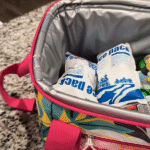
How to pack insulated tote bags with ice packs so cold lasts longer?
Direkte Antwort: Pack eng, Luftlücken reduzieren, and place cold sources above and below verderbliche Eigenschaften. Keep the bag closed until you unload.
Erweiterte Erklärung:
Air gaps behave like little heat highways. Wann insulated tote bags are half-empty, warm air circulates inside faster. A tighter pack holds temperature more steadily.
The “Two Cold Sources” packing plan
| Trip pattern | Cold-source plan | Bag setup | Was es für Sie bedeutet |
|---|---|---|---|
| Direct trip home | 1–2 cold sources | Full bag, zipped | Enough buffer for most shoppers |
| Multiple stops | 2+ kalte Quellen | Minimize opening | Better protection for dairy/meat |
| Heißes Wetter | 2+ kalte Quellen + Schatten | Keep in cabin | Your buffer shrinks faster in heat |
Schrittweises Auspacken (copy this)
-
Die Tasche vornötigen for 10–15 minutes if you can.
-
Setzen one cold source on the bottom (flat pack or frozen bottle).
-
Hinzufügen perishables in the center (Molkerei, Fleisch, Meeresfrüchte).
-
Setzen one cold source on top (top-down cooling helps).
-
Fill gaps with cold-friendly items (frozen veggies work well).
-
Zip it closed and open only when you unload.
Praktische Tipps, die Sie heute verwenden können
-
Use flat packs on the sides for longer errands.
-
Separate hot and cold into two insulated tote bags to stop “temperature fighting.”
-
Don’t overstuff zippers. A broken closure ruins performance.
Fall der realen Welt: One simple rule—“open once, unload fast”—often reduces warm dairy complaints more than buying a new bag.
How do you clean insulated tote bags without odors or cross-contamination?
Direkte Antwort: Sauber schnell, konsequent, and dry completely. Odors usually come from tiny spills that stay damp. Public guidance commonly recommends washing reusable bags after use and wiping insulated bags with disinfecting solution, especially along seams.
Erweiterte Erklärung:
Treat your bag like a cutting board: quick cleaning beats occasional deep cleaning. If raw meat or seafood touches the inside, do a same-day disinfect and dry. This supports safer handling habits around the danger zone guidance.
Cleaning schedule that feels realistic
| What you carried | Cleaning level | When to do it | Was es für Sie bedeutet |
|---|---|---|---|
| Packaged pantry items | Light wipe | Wöchentlich | Prevents grime build-up |
| Produzieren + Molkerei | Wischen + milde Seife | Nach jeder Reise | Less residue, weniger Gerüche |
| Raw meat/seafood | Disinfect + völlig trocken | Am selben Tag | Lower cross-contamination risk |
| Sauce spill | Immediate deep clean | Sofort | Avoid stains + lingering odor |
Praktische Tipps, die Sie heute verwenden können
-
Wipe first, then dry. Moisture left inside is odor fuel.
-
Air-dry fully with the bag open. Closed damp bags smell fast.
-
Pay attention to seams. Seams hold residue more than flat panels.
Fall der realen Welt: The “mystery smell” usually disappears when you add one rule: no storage until fully dry.
Do insulated tote bags need EU food-contact compliance documents?
Direkte Antwort: If the inner materials are intended to contact food directly, EU food-contact rules matter. The EU framework requires food-contact materials not to release constituents into food at harmful levels or change food taste/odor unacceptably. Lebensmittelsicherheit+1
Erweiterte Erklärung:
Most grocery use involves packaged food, which lowers direct-contact risk. But if your operation uses liners that may touch unwrapped food, compliance expectations rise. For plastics intended for food contact, EU rules include specific measures and documentation expectations (like a Declaration of Compliance for certain plastics). EUR-Lex+1
EU good manufacturing practice (GMP) rules also apply to materials intended for food contact.
What to request (einfach und praktisch)
| Ihr Anwendungsfall | Risikostufe | Was Sie von Lieferanten verlangen können | Was es für Sie bedeutet |
|---|---|---|---|
| Packaged food only | Untere | Material + cleaning guidance | Focus on hygiene + Haltbarkeit |
| Liner may touch unwrapped food | Höher | Erklärung zum Lebensmittelkontakt; DoC if plastics apply | Stronger buyer confidence |
| B2B food operations | Highest | DoC + supporting docs + GMP alignment EUR-Lex+1 | Bessere Prüfungsbereitschaft |
Praktische Tipps, die Sie heute verwenden können
-
Decide first: Will food touch the liner directly?
-
Wenn ja: fragen Sie nach food-contact documentation and process controls.
-
If no: still enforce cleaning SOPs, because spills cause cross-contamination.
A 60-second decision tool: which insulated tote bag fits you?
Answer quickly (no overthinking). Gib dich selbst 1 Punkt for each “Yes.”
-
Do you expect trips longer than 45 Minuten at least weekly?
-
Tragen Sie dairy/meat/seafood most trips?
-
Do you shop or deliver in heißes Wetter oft?
-
Tragen Sie soups/sauces or spill-prone items?
-
Will multiple people use the same bag (higher mess risk)?
-
Do you need the bag to survive täglichen Umgang (delivery work)?
Dein Match
-
0–1 Punkte: Basic insulated tote bags with a zipper + 1 kalte Quelle
-
2–3 Punkte: Mid-tier insulated tote bags with thicker walls + starre Basis + room for 2 kalte Quellen
-
4–6 Punkte: Heavy-duty insulated tote bags (starker Reißverschluss, Versiegelte Nähte, abwischbarer Liner) + a “two cold sources” rule
Your “buyer sanity checklist”
-
Does it fest verschließen (zipper or tight flap)?
-
Does it stand up and keep food stable?
-
Is the liner easy to wipe and quick to dry?
-
Are the seams verstärkt where weight pulls hardest?
2025 insulated tote bags trends and what they mean for you
Trendübersicht: In 2025, insulated tote bags are influenced by two strong forces: reuse pressure Und material scrutiny. The EU’s Packaging and Packaging Waste Regulation entered into force on 11 Februar 2025, with a general application date 18 Monate später, pushing more reuse-minded packaging decisions.
Aktueller Fortschritts-Snapshot (2025)
-
Weitere Wiederverwendungsprogramme: Retailers and brands push durable reusables as waste rules tighten. Umfeld
-
More “what’s in the coating?” questions: PFAS scrutiny continues in both the EU and parts of the U.S.
-
More documentation for food-contact and recycled plastics: EU amendments continue to evolve for plastics intended for food contact.
Market insight (plain-English):
Customers trust what looks clean and smells neutral. If your insulated tote bags arrive stained or damp, trust drops fast. Hygiene is branding now, not just safety.
Häufig gestellte Fragen
Q1: How long do insulated tote bags keep food cold?
Es hängt von der Starttemperatur ab, Wetter, and cold packs. Use insulated tote bags to buy time, but follow the 2-hour rule (1 Stunde über 90°F) für verderbliche Waren.
Q2: Do insulated tote bags work without ice packs?
Yes for short trips, but ice packs extend your buffer. For errands and stops, cold sources reduce guessing.
Q3: How should I place ice packs in insulated tote bags?
Use a top-and-bottom approach: one cold source under perishables and one on top. Keep the bag tightly packed knowing air gaps warm faster.
Q4: How do I clean insulated tote bags without odors?
Nach Gebrauch abwischen, disinfect when raw foods were carried, and air-dry fully before storage. Wiping insulated bags with disinfecting solution is commonly recommended.
Q5: Can insulated tote bags keep hot food safe too?
They slow heat loss, but they don’t add heat. Keep hot foods hot, limit lukewarm time, and don’t mix hot and cold in one bag.
Q6: Do insulated tote bags need EU food-contact documents?
If the liner is intended to contact food directly, EU framework rules apply and plastics may require documentation (like a DoC), supported by GMP expectations.
Zusammenfassung und Empfehlungen
Insulated tote bags help you protect food quality by slowing temperature change during everyday transport. You get the best results when you start cold, Pack fest, close well, and keep trips short—especially because public guidance warns against extended time in the 40°F–140°F danger zone.
If you want fewer spoiled groceries and fewer delivery complaints, konzentrieren Sie sich auf Schließung, liner cleanliness, seam quality, and a repeatable packing routine.
Was Sie als nächstes tun sollten
-
Choose insulated tote bags by your real route (Zeit, Hitze, stoppt).
-
Adopt a “zwei Kältequellen for perishables” habit on longer trips.
-
Clean and dry the bag consistently—especially after raw foods.
-
If you sell into the EU and food may touch the liner, align on documentation early
Über Tempk
Bei Tempk, we build temperature-control packaging for real workflows—grocery retail, Mahlzeiten, und Zustellung auf der letzten Meile. Wir konzentrieren uns auf durable insulated tote bags, easy-to-clean liners, and repeatable pack-out methods that help you reduce spoilage and complaints—without making your daily process complicated.
Nächster Schritt: Share your typical trip time, product mix (chilled/frozen/hot), und Umgebungsbedingungen. We’ll help you choose an insulated tote bag setup and a simple packing-and-cleaning routine your team can repeat.