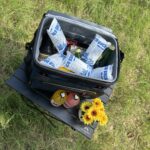
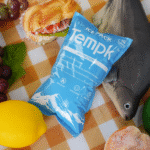
The cold-chain industry is experiencing explosive growth as online grocery, pharmaceuticals and outdoor recreation demand reliable temperature control. Choosing the right refrigerated bag factory—a specialist manufacturer of insulated cooler bags—can make or break product quality, customer satisfaction and sustainability goals. This guide answers common questions about materials, manufacturing processes, Zertifizierungen, eco-friendly options and 2026 market trends so you can confidently partner with a factory that meets your needs.
How a refrigerated bag factory supports food, pharmaceutical and retail supply chains through customized insulated packaging.
What materials, insulation and linings deliver optimal temperature retention and durability.
Which certifications and quality standards ensure safety, performance and compliance.
How sustainable practices and regulations shape factory operations in 2026.
How to evaluate factories based on capacity, Anpassung, R&D and global trade dynamics.
What the latest trends and innovations mean for your business.
What Is a Refrigerated Bag Factory and Why Does It Matter?
A refrigerated bag factory is a manufacturing facility dedicated to designing and producing insulated cooler bags that keep perishable goods within a specified temperature range. These bags are critical for last-mile delivery and promotional programs across retail, food service, healthcare and outdoor recreation. In 2026 the global cooler box market (which includes cooler bags) is expected to grow from USD 7.75 Milliarden in 2025 Zu 8.46 Milliarden in 2026, mit einer durchschnittlichen jährlichen Wachstumsrate (CAGR) von 9.22% durch 2031. Nordamerika hält den größten Marktanteil, while Asia-Pacific is the fastest-growing region.
From meal-kit companies to pharmacies, customers rely on reliable temperature control. Ohne ordnungsgemäße Isolierung, audits show more than 70 % of meal-kit boxes exceed 4 °C after prolonged transit. A durable cooler bag not only preserves quality but also serves as a marketing tool; each bag can generate 1,900–2,000 brand impressions and remains in use for over two years. Investing in a quality factory ensures that your brand’s products arrive cold, safe and memorable.
Why supply chains depend on refrigerated bags
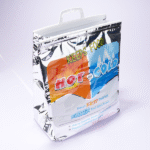
A refrigerated bag factory produces custom soft coolers that extend hold-time between 60–120 minutes or more, bridging the gap between cold storage and the consumer’s doorstep. These bags support diverse applications:
| Sektor | Typische Verwendung | Auswirkungen auf Ihr Unternehmen |
|---|---|---|
| Essen & Lebensmittellieferung | Mahlzeiten, grocery orders, Gastronomie | Maintain safe temperatures during the critical last mile and enhance customer satisfaction |
| Pharmazeutisch & Biotech | Impfkits, Biologika, insulin shipments | Ensure regulatory compliance for temperature-sensitive medicines |
| Einzelhandel & Werbeaktionen | Branded cooler bags for supermarkets and beverage brands | Provide ongoing advertising value and encourage reuse |
| Erholung im Freien | Camping, Picknicks, tailgating | Enhance user experience by keeping food and drinks cold for hours |
Zusamenfassend, a refrigerated bag factory is not just a supplier—it’s a strategic partner that helps you achieve temperature control, marketing exposure and sustainability goals.
How Does a Refrigerated Bag Factory Work? Materialien, Isolierung & Prozesse
Selecting fabrics, insulation and linings
The performance of an insulated bag hinges on the materials chosen for its exterior, insulation core and inner lining. A reputable factory offers a range of fabrics—such as 600D polyester, 420D nylon and canvas—that are laminated with polyurethane (Pu) or polyvinyl chloride (PVC) coatings to resist water and stains. Higher-denier fabrics provide greater abrasion resistance, while recycled PET (RPET) fabrics reduce environmental impact. The main insulation options include:
PE foam (Polyethylen): closed-cell structure, moderate thermal conductivity (~0.038 W/m·K) und kostengünstig.
XPE foam (cross-linked PE): uniform closed cells, better R-value (~0.032 W/m·K), virtually waterproof and durable.
EPE -Schaum (expanded PE): lightest option with strong cushioning; slightly lower insulation (~0.04 W/m·K).
Composite layers: multi-layer assemblies combining foam and aluminum-foil film to reflect radiant heat; dicker Schaum (10–15 mm) extends cold retention from hours to a full day.
Inner linings of PEVA, aluminum-foil film or TPU keep the bag hygienic and leak-proof. Heat-sealed or radio-frequency (RF) welded seams eliminate needle holes, and waterproof zippers, roll-top closures or magnetic seals lock in cold.
Tisch 1 – Materials and their performance
| Komponente | Material options | Schlüsseleigenschaften | Praktische Vorteile |
|---|---|---|---|
| Exterior shell | 600D Polyester, 420D nylon, canvas, RPET | High abrasion resistance, water-resistant coatings; RPET reduces CO₂ by 1.5 kg per kg of fabric and saves 7 L of water | Brandable, durable and sustainable |
| Insulation core | PE foam, XPE foam, EPE -Schaum, multi-layer foil/foam composites | Thermal conductivity 0.032–0.040 W/m·K, thickness 10–15 mm | Maintains 4–10 °C below ambient for 4–8 hours; composites extend beyond 12 Std. |
| Beschichtung | PEVA, aluminum-foil film, TPU | Lebensmittelqualität, leicht zu reinigen, welded seams prevent leaks | Hygiene, leak prevention, odor resistance |
| Umweltfreundliche Alternativen | RPET fabrics, cornstarch-based foams, bio-TPU | Biodegradable or recyclable; reduzierter CO2-Fußabdruck | Aligns with net-zero commitments and regulatory requirements |
Manufacturing process and quality assurance
A refrigerated bag factory combines design engineering with industrial production. The typical workflow includes:
Design & prototyping: Engineers assess required capacity (6–40 L) and hold-time to select appropriate insulation thickness. They create patterns and prototypes, considering printing layouts and brand colours.
Schneiden & Schichtung: Fabrics are cut using CAD machines and layered with foam and lining. High-frequency welding or lamination bonds layers without stitching, ensuring a continuous thermal barrier.
Sewing & Schweißen: Skilled workers or automated equipment assemble panels, add zippers and pockets, and secure seams. Premium factories use RF welding for leak-proof liners and tape reinforcement for heavy-duty coolers.
Adding hardware: Handles, shoulder straps and hardware like zippers, buckles and feet are attached. Durable components—such as heavy-duty zippers and reinforced bases—enhance robustness.
Qualitätskontrolle: Factories conduct thermal retention, leak resistance and load-bearing tests on samples. ISO 9001 and BSCI certified factories implement strict inspections and random sampling.
Verpackung & Versand: Finished bags are cleaned, folded and packed. Leading factories maintain traceability and provide compliance documentation.
Durability and care
Choosing the right materials affects both durability and cleaning. Durable bags combine abrasion-resistant exteriors, reinforced seams and tear-proof liners; laminated fabrics resist staining. UV-stabilized shells prevent fading, and antimicrobial coatings reduce mould growth. Most liners wipe clean with mild soap, but regular inspection of welds and grommets extends product life.
Practical tips for materials and design
Match insulation to hold-time: For deliveries under three hours, 5–8 mm PE or EPE foam is sufficient. For longer transport or ambient temperatures above 30 °C, choose 10–15 mm XPE or multi-layer composites.
Balance weight and capacity: Heavier fabrics and thick insulation reduce usable volume by 15–20 %, so confirm internal dimensions.
Prioritize leak-proof construction: Heat-sealed seams and waterproof zippers prevent spills and maintain hygiene.
Consider eco options: RPET fabrics and plant-based foams cost 10–20 % more but reduce carbon emissions and meet regulatory expectations.
Fallbeispiel: A meal-kit company switched from 5 mm PE foam to 10 mm XPE composites. Customers reported that meals arrived at <4 °C even after 90 minutes on summer days. The increased insulation cost was offset by lower spoilage and higher customer satisfaction.
Schlüsselmerkmale, Zertifizierungen & Compliance -Standards
Performance metrics you should track
Not all cooler bags are created equal. When evaluating prototypes or sourcing from a factory, focus on these metrics:
| Metrisch | Definition | Warum ist es wichtig |
|---|---|---|
| Hold-time | Duration the bag maintains target temperature (Z.B., 0–10 °C) | Ensures product safety and prevents spoilage; meal kits require 60–120 minutes |
| Kapazität & Abmessungen | Volumen (6–40 L) and internal size | Avoid wasted space or insufficient volume; confirm internal dimensions due to insulation thickness |
| Load-bearing strength | Weight the bag can carry without tearing (Z.B., 10–30 kg) | Gepolsterte Gurte, reinforced bases and handles reduce fatigue |
| Auslaufsicherheit | Ability to contain liquids without seepage | Heat-sealed seams and waterproof zippers prevent leaks |
| Cleanability | Ease of cleaning interior surfaces | Smooth linings (PEVA, TPU) facilitate sanitizing |
Certifications and standards to look for
A professional refrigerated bag factory holds certifications that demonstrate compliance with quality, safety and sustainability requirements:
| Zertifizierung | Bedeutung | Vorteile für Ihr Unternehmen |
|---|---|---|
| ISO 9001 | Quality management system standard | Ensures consistent production processes, traceability and continuous improvement |
| BSCI & SEDEX | Ethical sourcing audits | Guarantees fair labour practices and social compliance |
| GRS (Global Recycled Standard) | Verification of recycled content and responsible processing | Confirms that RPET fabrics or recycled foams meet sustainability claims |
| OEKO-TEX Standard 100 & GOTS (for organic cotton) | Textile safety and organic certification | Assures that fabrics are free from harmful substances and follow organic standards |
| FDA & EU 10/2011 food-contact compliance | Safety standards for materials in contact with food | Required for food and pharmaceutical applications |
| CBAM & EU ETS2 alignment | Carbon Border Adjustment Mechanism and Emissions Trading System | Factories exporting to Europe must track carbon emissions and comply with new tariffs |
User considerations
Request test reports: Ask for thermal retention, leak and load-bearing test results. A reputable factory should provide data and quality control documentation.
Check traceability: Verify supply chain documentation for recycled materials and certifications to avoid greenwashing.
Plan MOQs and lead times: Production lead times vary by design complexity and seasonality; negotiating minimum order quantities (MOQs) early avoids delays.
Sustainability and Eco-Friendly Innovations in 2026
Regulatory pressures and sustainability as a competitive criterion
Environmental regulations are intensifying worldwide. In Europa, the calculation of emissions in transport has been standardized and mechanisms like the Carbon Border Adjustment Mechanism (CBAM) internalize the cost of carbon into global supply chains. Maritime transport now falls under the EU Emissions Trading System (EU ETS2), and new regulations push for reduced carbon intensity. Brazil has introduced a national emissions trading system and reverse logistics requirements. These policies mean that sustainability is no longer optional; it’s a regulatory and competitive criterion that demands data transparency, operational efficiency and environmentally responsible materials.
Öko-Materialien, recycling and end-of-life considerations
Refrigerated bag factories are responding by adopting eco-friendly materials and circular practices:
Recycled PET (RPET) fabrics: Each kilogram of RPET fabric saves about 1.5 kg of CO₂ emissions and 7 litres of water compared to virgin polyester production. RPET 300–600 D fabrics maintain strength and print quality.
Plant-based foams and bio-TPU: Cornstarch-derived PE foams and bio-TPU liners are biodegradable under industrial conditions and offer comparable insulation. They support composting and reduce petrochemical use.
Natural fibre shells: Hemp canvas and organic cotton shells with food-grade coatings provide a premium feel and low carbon footprint.
Certifications and traceability: Eco-friendly factories like Headwind Group track carbon and water footprints, monitor energy consumption, maintain chemical toxicity indexes and ensure high recyclability.
Wiederverwendbar & recycelbare Designs: Innovative factories design cooler bags for multiple reuse cycles (two years on average) and provide end-of-life recycling guidance.
User-focused sustainability tips
Opt for factories with eco-certifications: Look for GRS, Bluesign®, OEKO-TEX and GOTS credentials.
Evaluate end-of-life plans: Choose factories that provide recycling or take-back programs and educate customers on proper disposal.
Berücksichtigen Sie die Gesamtbetriebskosten: Eco materials cost 10–20 % more but may qualify for government incentives or marketing premium.
Track carbon data: Ask suppliers to provide life-cycle assessments to align with CBAM and emissions reporting requirements.
Evaluating and Selecting the Right Refrigerated Bag Factory
Kapazität, technology and customization
When selecting a factory, evaluate its production capability, equipment and ability to customize products:
Skala & Ausrüstung: Leading manufacturers operate multiple factories with rotomolding, blow molding and foaming machines. Zum Beispiel, KUER Group runs five factories with 22 automatic rotomolding machines, allowing it to produce up to 1,500 cooler boxes per day. Malaysian factories can manufacture over 200,000 units per month and offer quick response times. A high production capacity ensures reliable supply and shorter lead times.
R&D and patents: Manufacturers with strong R&D capabilities apply for patents and innovate materials or structures. KUER has applied for over 50 Patente, demonstrating commitment to innovation.
Anpassung: Top factories support OEM and ODM projects, offering a wide range of sizes, colours, logo prints and sustainable materials.
Qualitätssicherung: Suchen Sie nach ISO 9001, BSCI and other certifications. KUER, Zum Beispiel, holds these certifications and emphasizes strict quality control, thick insulation and premium materials.
Standort, logistics and geopolitical factors
The geopolitical landscape influences supply chains. Tariff uncertainty in the United States and shifting trade routes due to geopolitical tensions (Z.B., Red Sea disruptions) require resilient and flexible logistics. Companies are turning to nearshoring, free trade zones and diversified supplier bases. When choosing a factory, halten:
Proximity to markets: Factories located in Southeast Asia (Z.B., Malaysia, Vietnam) offer competitive labour costs, large capacities and strategic shipping routes.
Tariff exposure: Diversifying suppliers across countries can mitigate the impact of tariffs and trade barriers.
Infrastrukturinvestitionen: Regions investing in port and logistics modernization (Z.B., Brazil, Golf-Kooperationsrat) can enhance export efficiency.
Decision framework and interactive tools
To reduce bounce rates and increase engagement, use interactive checklists or decision matrices when evaluating factories. Consider these steps:
Anforderungen definieren: Determine your product volumes, hold-time needs, branding requirements and regulatory obligations.
Score potential factories: Rate each candidate on production capacity, Zertifizierungen, R&D, Nachhaltigkeitsinitiativen, location and cost.
Request samples and test: Conduct thermal, leak and load tests on prototypes.
Negotiate terms: Discuss MOQs, Lieferzeiten, customization options and warranty policies.
Leistung überwachen: After selecting a supplier, maintain regular communication and perform periodic audits to ensure continued compliance and quality.
2026 Trends und Innovationen
Trendübersicht
The cold-chain packaging landscape in 2026 is shaped by market growth, technological innovation and evolving regulations:
Markterweiterung: The global cold chain packaging market was valued at USD 30.88 Milliarden in 2025 und soll voraussichtlich wachsen 34.00 Milliarden in 2026, greifen 81.01 Milliarden von 2034, mit einer CAGR von 11.46 %. Europa gehalten 33.68 % des Marktes in 2025.
Treiber: Growth is fueled by increasing demand for pharmaceuticals and biologics, rising consumption of frozen foods and ready-to-eat meals, and the outdoor recreation boom. Last-mile grocery and meal-prep delivery continue to expand.
Technologische Fortschritte: Multi-layer polyethylene shells and high-performance foams extend ice retention beyond five days. Smart and IoT-enabled packaging with temperature sensors, RFID tags and data loggers provides real-time monitoring. Electric coolers and plug-and-play thermoelectric units are gaining popularity.
Nachhaltigkeit & Verordnung: Climate policies like the EU Green Deal and carbon border adjustments accelerate adoption of eco-friendly refrigerants and biodegradable materials. Störungen der Lieferkette (Z.B., Red Sea crises) drive investment in robust packaging. Sustainable and smart packaging with recyclable, compostable materials and QR-code sensors enhances traceability and compliance.
Latest progress and what it means for you
Trend 1 – Smart monitoring: Sensors for temperature, humidity and GPS tracking will become standard features. This helps businesses meet regulatory requirements and reduce spoilage by providing real-time data. Implikation: Consider integrating smart tags into your bags or partnering with factories that support sensor integration.
Trend 2 – Eco-materials adoption: Rapid growth in recycled and biodegradable materials for bag exteriors and insulation offers new opportunities to reduce environmental impact. Implikation: Stay ahead of regulations by choosing factories that offer RPET, bio-foams and natural fibre options.
Trend 3 – Geopolitical diversification: Tariff volatility and trade route reconfigurations push companies toward regional manufacturing and nearshoring. Implikation: Evaluate factories in multiple regions to mitigate risk and reduce lead times.
Trend 4 – Integration of IoT & Ai: AI-driven predictive models optimize logistics and capacity planning in cold chains. Smart packaging fosters data-driven decision-making. Implikation: Collaborate with factories and logistics providers that use AI to enhance forecasting and maintain temperature integrity.
Markteinsichten
The cold chain packaging market’s growth is intertwined with pharmaceuticals, food and beverage industries and regional demand patterns:
Pharmazeutische Nachfrage: Die USA. ist Marktführer mit 64.4 % of new medicines launched between 2016–2021. India ranks third globally by production volume and grows 6–8 % jährlich, driving cold chain infrastructure improvements.
Personal care and cosmetics: Germany’s USD 103 billion personal care sector and Mexico’s USD 1.4 billion import market are spurring demand for temperature-sensitive packaging.
Regionale Unterschiede: Europe dominates market share due to biologics and proximity to emerging markets, while Asia-Pacific will experience the fastest growth.
FAQ
Frage 1: What distinguishes a refrigerated bag factory from a standard bag manufacturer?
A refrigerated bag factory specializes in insulated products designed to maintain temperature. It uses closed-cell foams, reflective films and leak-proof linings, and conducts thermal retention tests. Standard bag makers lack these materials and quality controls.
Frage 2: How can I verify eco-friendly claims from a factory?
Ask for GRS or OEKO-TEX certificates for recycled fabrics and FDA or EU 10/2011 compliance for food safety. Request traceability documents and life-cycle assessments.
Frage 3: What minimum order quantities (MOQs) should I expect?
MOQs vary by size and customization. Basic lunch totes may start at 500–1,000 units, while large capacity coolers or custom prints may require 3,000–5,000 units. Discuss MOQs during the quotation stage to avoid surprises.
Frage 4: How long will a high-quality cooler bag last?
With proper materials and care, reusable cooler bags can last for over two years and generate thousands of brand impressions. Nähte prüfen, zippers and liners regularly to extend their lifespan.
Frage 5: Are smart sensors necessary for all coolers?
Smart sensors are valuable for high-value pharmaceuticals or long routes where real-time monitoring prevents spoilage. For short deliveries or promotional giveaways, simple insulated bags may suffice.
Anregung
Key Takeaways
Refrigerated bag factories are strategic partners that provide insulated bags designed to keep goods cold and promote brands. The cooler box market is expected to grow significantly, ab USD 7.75 Milliarden in 2025 Zu 8.46 Milliarden in 2026.
Material selection drives performance: choose durable exteriors, appropriate insulation thickness (Pe, XPE or multi-layer composites) and leak-proof linings.
Zertifizierungen (ISO 9001, BSCI, GRS, OEKO-TEX, FDA/ich) Qualität sicherstellen, ethics and safety.
Sustainability is now a regulatory requirement; embrace recycled fabrics, plant-based foams and transparent carbon tracking.
Evaluate factories based on capacity, Technologie, Anpassung, and geographic diversification to mitigate geopolitical risks.
2026 will bring smart sensors, IoT and AI integration, eco-materials adoption and shifting trade patterns.
Umsetzbare nächste Schritte
Bewerten Sie Ihre Bedürfnisse: Identify product volumes, hold-times and regulatory requirements.
Shortlist factories: Evaluate at least three factories for capacity, Zertifizierungen, sustainability initiatives and geographic diversity.
Request samples and documentation: Testleistung, verify certifications and ask for LCA reports.
Negotiate partnerships: Discuss MOQs, Lieferzeiten, customization options and warranty terms.
Implementieren Sie die Überwachung: For critical products, integrate smart sensors and partner with logistics providers using AI predictive models.
Planen Sie Nachhaltigkeit: Choose materials with recycled or biodegradable content; establish end-of-life recycling programs and collect carbon data to comply with CBAM and other regulations.
Kontinuierliche Verbesserung: Monitor supplier performance, conduct regular audits and stay informed about evolving regulations and technologies.
Über Tempk
Wir sind Tempk, a company specializing in reusable cooler bags and thermal packaging for the cold-chain industry. Our team combines durable fabrics with high-performance insulation to design long-lasting coolers that maintain cold temperatures for extended periods. We prioritize sustainability by integrating recycled materials and offering recycling guidance at end of life. Whether you need compact lunch totes for delivery riders or large-capacity bags for catering, we collaborate with you to tailor solutions that meet your hold-time, branding and budget requirements.
Nächste Schritte
Ready to enhance your cold-chain operations? Reach out to our experts for a consultation and discover how our insulated bag solutions can protect your products, promote your brand and support your sustainability goals.