Aktualisiert: Dezember 3 2025
If you’re wondering how to keep artisanal gelato silky smooth across long distances or in busy retail cabinets, refrigerated gelato smart services are the answer. By combining precise temperature control with internet connected sensors, Predictive Analytics und nachhaltige Verpackung, these services ensure that frozen desserts stay perfect from the factory to the customer’s bowl. Today’s gelato market, geschätzt bei $27.39 Milliarden in 2025 und voraussichtlich erreichen $45.50 Milliarden von 2033, demands reliable quality, eco friendly practices and data driven operations. AI enabled freezers already boost sales by up to 30 % and improve forecast accuracy by 10 %, proving that smart services are more than hype. This guide shows you how they work and why they matter.
Why temperature precision matters for gelato quality and safety, and how IoT sensors maintain stability.
How IoT and predictive analytics transform refrigerated gelato services by enabling real time monitoring, Bedarfsprognose und vorausschauende Wartung.
What sustainability and energy efficiency mean for refrigerated gelato—covering eco friendly packaging, Kältemittel mit niedrigem GWP und erneuerbare Energien.
Das Neueste 2025 Trends und Markteinblicke driving refrigerated gelato smart services, including plant based gelato and digital cold chain adoption.
Why is Temperature Precision Critical for Gelato Quality?
When gelato is churned, rund 60–70 % of its mass is water, and at serving temperatures around 0 °F bis 5 ° F (–18 °C bis –15 °C) um 80–85 % of that water remains frozen. This delicate balance creates the creamy mouthfeel consumers love, but it also means even minor temperature deviations can quickly form large ice crystals, causing a gritty texture or freezer burn. Maintaining a stable environment extends shelf life up to 12–24 months for pints and 6–9 Monate for novelties and prevents microbial growth. Tatsächlich, A two hour temperature excursion can spoil an entire frozen shipment worth hundreds of thousands of dollars. Regulatorische Rahmenbedingungen wie z Gute Vertriebspraxis (BIP), Haccp und die UNS. Gesetz zur Modernisierung der Lebensmittelsicherheit require documented evidence that products stay within validated ranges, making precise control a legal necessity.
Exploring Gelato Temperature Ranges and Cold Chain Stages
Smart services begin with understanding the recommended temperature ranges at each stage of the gelato supply chain. The table below summarises best practice ranges and why they matter for your business.
| Cold chain stage | Empfohlene Temperatur | Grund | Was es für Sie bedeutet |
| Härten & Produktion | Rapid freezing through a ventilated tunnel at ≈ 31 ° F (–35 °C) followed by cooling to unten 5 ° F (–15 °C) | Prevents large ice crystals, locks in texture | Ensure your equipment hardens gelato quickly; delays cause graininess |
| Exit from manufacturer | Etwa –5 °F (–20 °C) | Allows filling and packaging while minimising crystal growth | Coordinate schedules so gelato leaves the facility at the right temperature; monitor transit times |
| Transport to warehouse | Luft ≤ 13 ° F (–25 °C); product ≤ –4 °F (–20 °C) | Keeps gelato below maximum allowable temperature during transit | Benutzen Sie Kühlfahrzeuge; verify door openings, defrost cycles and ambient heat loads |
| Kühllager (short term) | Pflegen –18 °F (–28 °C) with fluctuations no greater than ±3 °F | Slows crystal growth and preserves texture | Calibrate your storage; this is the backbone of inventory control |
| Retail display | –8 °F (–22 °C) and top racks no warmer than –4 °F (–20 °C) | Slightly warmer to aid scoopability and prevent freezer burn | Balance quality with customer experience; train staff to stock freezers correctly |
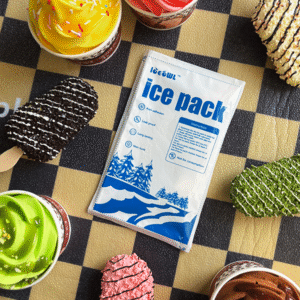
| Point of sale & home consumption | Ideal 0 ° F (–18 °C) oder unten | Maintains frozen state through last mile and into consumers’ freezers | Use insulated packaging and clear handling instructions; consider dry ice or gel packs |
Practical Tips for Temperature Management
Kalibrieren Sie die Geräte regelmäßig: Ensure your hardening tunnels, refrigerated trucks and cold storage units meet the recommended ranges; even a few degrees off can degrade texture.
Train staff on “heat shock”: Limit the time products spend at ambient temperature during loading and unloading, and avoid leaving freezer doors open.
Monitor small packages: Pints warm faster than larger containers, so use sensors or data loggers to track temperature history and catch deviations early.
Communicate with retail partners: Provide clear guidelines on display case temperatures and stock rotation; encourage regular equipment checks.
Use appropriate cooling media: Für Lieferungen auf der letzten Meile, passive systems like insulated liners with a 1:1 dry ice to gelato ratio for one to two day shipments help maintain safe temperatures.
Fallbeispiel: A 2015 industry white paper cited in the cold chain literature found that keeping ice cream below 13 ° F (–25 °C) during distribution and never warmer than –4 °F (–20 °C) at any point prevents irreversible texture damage. Businesses following these standards report fewer customer complaints and longer shelf life.
How Do IoT and Predictive Analytics Drive Smart Gelato Services?
Cold chain precision alone is not enough; the true value of refrigerated gelato smart services comes from connecting equipment, analysing data and responding proactively. IoT enabled sensors measure temperature, Luftfeuchtigkeit und Standort kontinuierlich überwachen, sending data to cloud platforms that trigger alerts and generate actionable insights. Unternehmen mögen ISA, an Italian manufacturer of gelato cabinets, partnered with Telenor Connexion to embed connectivity into their products. The system automates temperature control, sends real time alarms when readings deviate and supports predictive maintenance to minimise downtime. Reports can be generated easily for internal use or regulatory compliance.
In der Zwischenzeit, Unilever, one of the world’s largest ice cream producers, betreibt 35 Fabriken und eine geschätzte 3 million freezer cabinets across 60 Länder. By feeding weather and sales data into AI algorithms, Unilever improved demand forecasts by 10 % in Sweden and increased sales by 8–30 % in markets where 100,000 KI-fähige Gefrierschränke capture stock images. AI adjusts production volumes and routes products toward regions experiencing heat waves, reducing raw material waste by up to 10 %. These examples demonstrate how smart services integrate forecasting, production planning, routing and warehouse automation into one continuous data stream.
Predictive Maintenance and Smart Cabinets
Remote monitoring helps prevent breakdowns before they occur. In the ISA example, digital and analog sensors collect data continuously, and automated analysis identifies failing components. Predictive maintenance reduces routine service calls and allows targeted repairs, lowering costs and extending equipment life. Real time alerts notify operators when temperatures fall outside the set range or when a cabinet uses excessive energy. By analysing historical data, manufacturers can even determine the mean time between failures and improve design. Customers benefit from remote control functionality—operators can adjust temperatures or check status from a smartphone, giving peace of mind that gelato remains fresh and within regulatory limits.
IoT -Sensoren, Data and Benefits
| IoT -Technologie | Data captured | Profitieren Sie von Ihrem Betrieb |
| Temperatur-/Feuchtigkeitssensoren | Surface temperature, humidity and shock during transit | Sends alerts when gelato drifts outside safe ranges; enables quick intervention to prevent spoilage |
| Location and GPS modules | Real time position, time stamps and shipment routes | Improves traceability and route optimisation; supports last mile visibility |
| ProAct™ monitoring & Connect+ cloud portals | Data from retail sites and shipping vessels | Provides aggregated insights and a holistic view of your cold chain; vereinfacht die Compliance |
| Predictive maintenance algorithms | Component performance data and failure predictions | Reduces unplanned downtime and service costs; extends equipment lifespan |
| AI enabled image capture in freezers | Stock levels and product presentation | Improves demand forecasts and merchandising; increases sales by 8–30 % |
Practical Tips for Implementing IoT and Analytics
Install sensors at critical points: Equip freezers, trucks and warehouses with temperature and humidity sensors. Embed GPS modules to track location and improve route planning.
Wählen Sie die richtige Konnektivität: As 2G/3G networks sunset, adoptieren Cat M or NB IoT devices that ensure reliable data transmission even in remote areas.
Centralise your data: Use a cloud portal (such as Oversight 2 or Connect+) to consolidate data from sensors, refrigeration units and fleet trackers into a single dashboard.
Nutzen Sie prädiktive Analysen: Apply machine learning to historical data to predict equipment failures or temperature excursions. Set threshold alarms and automate maintenance scheduling.
Investieren Sie in digitale Zwillinge: Create virtual replicas of warehouses and assets to simulate operations and plan contingency strategies. Digital twins reduce forklift travel and energy use while improving planning.
Train staff in data interpretation: Empower employees to read dashboards, respond to alerts and adjust processes based on insights.
Beispiel aus der Praxis: In Unilever’s ice cream supply chain, AI analysis of weather data and stock images improved forecast accuracy by 10 % and boosted sales by 8–30 % across markets with AI enabled cabinets. The company adjusts production volumes and routes products to markets experiencing heat waves, Reduzierung von Abfall durch 10 %. This illustrates how integrated data flows enable agile responses to demand spikes.
How Do Sustainability and Energy Efficiency Enhance Gelato Smart Services?
Smart services aren’t just about technology; they also support environmental goals and cost savings. Traditional refrigeration can be energy intensive and relies on high GWP refrigerants. In 2025, sustainability is a top priority: 33–40 % der Lebensmittel auf der Welt werden verschwendet jährlich, contributing roughly 8 % der globalen Treibhausgasemissionen. Energy efficient cold chain systems reduce electricity use, cut emissions and improve profitability. Emerson’s digital cold chain emphasizes digital modulation compressors, umweltfreundliche Kältemittel, Solarbetriebener Kühlraum Und waste management solutions. A convenience store chain that installed Copeland X Line digital refrigeration units and switched to natural refrigerants saw energy bills drop by 15 % while continuously monitoring product temperatures.
Smart Packaging and Green Refrigeration Solutions
Innovation extends beyond the machinery. Intelligente Verpackungen integrates sensors, RFID tags and QR codes that change color when gelato is exposed to unsafe conditions. These indicators allow retailers and consumers to scan packages for expiry dates, Hinweise zur Rückverfolgbarkeit und Lagerung. Edible and biodegradable materials aus Algen hergestellt, PLA or PHA offer zero waste options. Aktive Verpackung uses oxygen scavengers and antimicrobial films to inhibit bacteria, während Hochdruckverarbeitung preserves nutrients without heat. Nanotechnologie introduces antimicrobial coatings that slow oxidation. Automation and AI on packaging lines deploy collaborative robots (Cobots) for palletising, sorting and labelling, and AI powered cameras that detect defects and optimise material usage. These approaches increase productivity and reduce waste.
| Sustainability innovation | Beispiel | Wie es Ihnen nützt |
| Digital modulation compressors | Copeland scroll compressors that adjust capacity based on demand | Reduce energy use and extend equipment life by avoiding constant on/off cycles |
| Kältemittel mit niedrigem GWP | Natural refrigerants like R 290 or CO₂ | Lower environmental impact and comply with evolving refrigerant regulations |
| Solarbetriebener Kühlraum | Solar installations that power rural cold rooms | Cut operational costs and ensure reliable refrigeration where grid power is unstable |
| Intelligente Etiketten & Sensoren | Zeit-Temperatur-Indikatoren, RFID -Tags, QR -Codes | Enable proactive removal of spoiled items, reduce liability and engage consumers |
| Essbar & Biologisch abbaubare Materialien | Seaweed films, PLA, PHA-Biokunststoffe | Offer compostable options; Ideal für umweltbewusste Marken, die Differenzierung suchen |
| Aktive Verpackung & HPP | Sauerstofffänger, Feuchtigkeitsabsorber, Hochdruckverarbeitung | Extend shelf life without chemicals and preserve flavour and nutrients |
| Nanotechnologie | Antimikrobielle Nanobeschichtungen, nanoverkapselte Antioxidantien | Provide advanced protection against bacteria and oxidation |
| Automatisierung & AI in packaging | Cobots and AI powered cameras for sorting and labelling | Streamline operations, reduce errors and allow small batch customisation |
Practical Tips for Energy Efficient Operations
Upgrade compressors: Replace outdated units with digital modulation compressors that adjust capacity based on demand. This lowers energy bills and maintains more stable temperatures.
Setzen Sie auf natürliche Kältemittel: Shift to low GWP refrigerants like CO₂ or hydrocarbons to meet regulatory requirements and reduce your carbon footprint.
Install solar solutions: For facilities in high cost electricity regions, consider solar powered cold rooms to decrease operational costs and improve resilience.
Reduce waste through monitoring: Use IoT platforms to track expiration dates and inventory levels, enabling stock rotation and reducing product loss.
Investieren Sie in nachhaltige Verpackungen: Choose biodegradable or edible materials to meet consumer expectations and reduce landfill waste.
Beispiel aus der Praxis: A convenience store chain installed Copeland X Line digital outdoor refrigeration units and switched to natural refrigerants, was zu a 15 % reduction in energy bills. By integrating Locus Traxx sensors, the stores also tracked product temperatures continuously, Verderb verringern.
Was sind die neuesten 2025 Trends und Markteinblicke?
2025 Trends at a Glance
AI and digital twins in cold chains: Companies increasingly use AI algorithms, digital twins and autonomous robots to forecast demand, die Produktion optimieren, plan routes and automate sub zero warehouses. Unilever’s supply chain uses digital twins and AI guided robots to reduce forklift travel and energy consumption.
Smart freezers and connected cabinets: Retail freezers with embedded sensors and image capture technology transmit real time stock data. Last mile visibility remains challenging, but costs are falling, paving the way for widespread adoption.
Blockchain and cloud based traceability: Cloud portals combined with tamper proof ledgers simplify compliance documentation and speed up recall investigations.
Sustainable micro fulfilment: New distribution models include small scale cold rooms near urban centres to enable rapid e commerce deliveries while reducing transportation emissions.
Plant based and functional gelato growth: Market analysts note a surge in plant based, low sugar and probiotic gelato options, appealing to vegan, lactose intolerant and health conscious consumers. Gourmet and limited edition flavours are the fastest growing flavour segment.
Premium and artisanal boom: Consumers increasingly seek authentic, high quality gelato made with natural ingredients. Artisanal gelato is the fastest growing production segment, mit einer projizierten 21.7 % CAGR.
Markteinsichten
The global gelato market was valued at $27.39 Milliarde In 2025 und wird voraussichtlich erreicht werden $45.50 Milliarden von 2033, wächst bei a 6.52 % CAGR. Die USA. market alone is expected to climb from $5.01 Milliarden in 2025 Zu $8.31 Milliarde von 2033, driven by premium and plant based offerings. Key drivers include rising disposable incomes, a shift toward upscale frozen desserts and expanding distribution channels through supermarkets, specialty stores and online platforms. Verbraucher verlangen zunehmend umweltfreundliche Verpackungen, and brands adopting biodegradable materials gain an edge. Jedoch, high production costs and seasonal demand fluctuations remain significant restraints; artisanal gelato can cost 3–5 times more than conventional ice cream, making operational efficiency and inventory planning critical.
Häufig gestellte Fragen (FAQ)
Q1: How do refrigerated gelato smart services prevent temperature deviations?
Smart services use an integrated network of IoT sensors embedded in freezers, trucks and storage units to continuously monitor temperature and humidity. If readings drift outside safe ranges, the system sends real time alerts to operators, who can intervene immediately. Predictive algorithms analyse historical data to anticipate equipment failures, reducing the risk of unplanned excursions.
Q2: What IoT technologies are used in smart gelato cabinets?
Gelato cabinets often include temperature and humidity sensors, GPS-Module, cloud connectivity and image capture cameras. Predictive maintenance algorithms identify failing components, while remote control interfaces allow operators to adjust settings from a smartphone.
Q3: How does smart packaging enhance gelato’s cold chain?
Smart packaging incorporates time–temperature indicators, RFID tags and QR codes that change colour when gelato experiences unsafe conditions. Edible and biodegradable materials like seaweed films or PLA eliminate waste. Active packaging uses oxygen scavengers and antimicrobial films to inhibit bacteria, Haltbarkeit verlängern.
Q4: Why is plant based gelato trending in 2025?
The move toward wholesome, functional alternatives drives growth in plant based, low sugar gelato. Consumers seeking dairy free, vegan or lactose intolerant options fuel this trend. Plant based gelato is the fastest growing segment, mit einem 18.5 % CAGR.
Q5: How can gelato producers reduce energy consumption while maintaining quality?
Producers should upgrade to digital modulation compressors, adopt low GWP refrigerants and integrate renewable energy sources like solar panels. IoT platforms enable real time monitoring and predictive maintenance, ensuring equipment operates at peak efficiency. Sustainable packaging and waste management further reduce environmental impact and operating costs.
Zusammenfassung und Empfehlungen
Refrigerated gelato smart services combine precise temperature control, IoT -Sensoren, predictive analytics and sustainable practices to ensure gelato remains creamy and safe from factory to consumer. Maintaining strict temperature ranges prevents ice crystal growth and microbial risks, while cloud connected sensors offer continuous visibility. Predictive maintenance reduces downtime and enables proactive interventions. Sustainable innovations such as digital modulation compressors, low GWP refrigerants and smart packaging cut energy consumption and waste. Market trends highlight growing demand for premium, artisanal and plant based gelato, emphasising the importance of high quality cold chain solutions.
Nächste Schritte für Ihr Unternehmen:
Assess your current cold chain infrastructure: Map existing processes, identify temperature weak points and set clear goals for quality, Nachhaltigkeit und Effizienz.
Implementieren Sie IoT-Überwachung: Equip your freezers and transport vehicles with sensors and choose connectivity devices that support modern networks. Centralise data into a cloud dashboard for real time visibility and analytics.
Optimise refrigeration equipment: Upgrade to energy efficient compressors and adopt natural refrigerants. Consider solar powered storage where appropriate.
Nehmen Sie nachhaltige Verpackungen an: Use smart labels, biodegradable materials and active packaging to extend shelf life and demonstrate environmental responsibility.
Trainiere dein Team: Educate staff on interpreting data, responding to alerts and following proper handling techniques to minimise heat shock and waste.
Invest in data driven forecasting: Use AI and digital twins to forecast demand, plan production and adjust routes quickly during heat waves or seasonal surges.
Über Tempk
Tempk is a global provider of cold chain packaging solutions, IoT sensors and insulated shipping materials for food and pharmaceutical industries. We combine research and development expertise with eco friendly products to help clients maintain temperature stability and comply with strict regulations. Our smart packaging solutions include gel ice packs, Isolierte Kisten, sensor enabled bags and digital monitoring platforms, ensuring your products remain fresh and safe. With a strong focus on sustainability, we design reusable and recyclable materials to reduce waste and support green logistics. We invite you to explore our range of refrigeration and packaging solutions to elevate your gelato business.
Aufruf zum Handeln: Ready to upgrade your gelato operation? Contact Tempk for a personalised consultation on smart refrigerated services and discover how our solutions can boost quality, reduce waste and drive growth.