Temperature controlled box liner wholesale price is one of the most searched terms in cold chain packaging because buyers want a simple answer. The truth is simple in one way and complex in another: the right price is the one that protects your product at the lowest total delivered cost. That is why the best buying decisions do not stop at unit price. They look at material design, Temperaturziel, Kühlmittelbedarf, fit, Fracht, operational speed, und Dokumentation.
If you are buying for chilled food, gefrorene Produkte, Arzneimittel, biologics support, Mahlzeiten, or specialty e-commerce, this guide will help you evaluate quotes the way experienced packaging teams do. It combines practical sourcing logic, Materialwissenschaft, market reality, Und 2026 compliance direction into one working decision framework.
Dieser Artikel hilft Ihnen bei der Beantwortung:
- What temperature controlled box liner wholesale price really includes
- Which material and design choices raise or lower total cost
- How to compare suppliers on performance, kein Marketing
- Why testing, Einhaltung, and sustainability now affect buying decisions
- What you should ask before approving a liner program
What does temperature controlled box liner wholesale price really mean?
It means the cost of achieving a target temperature outcome, not the cost of buying a sheet of material. A liner is part of a system. The system includes the outer carton, Kühlmittel, Nutzlast, Streckendauer, outside temperature exposure, and packing method. That is why one liner quote can be “cheap” on paper but expensive in operation.
A buyer who focuses only on piece price can easily miss hidden costs. A poor-fit liner may increase warm air gaps. A bulky liner may require a larger box. A weak structure may need more coolant. A hard-to-fold design may slow packing labor. All of those outcomes change your real cost.
The core cost drivers
- Material structure
- Thermal duration target
- Carton size and fit
- Coolant requirement
- MOQ and annual volume
- Flat-packed density
- Lead time reliability
- Validation and documentation depth
- Praktische Ratschläge
- If your shipments are short and local: Avoid over-specifying the liner.
- If your shipments cross long parcel lanes: Compare total pack cost, not liner cost alone.
- If your products are high value: Add documentation quality into supplier scoring.
Praktischer Fall: A regional frozen-food shipper compared three liner offers. The cheapest liner needed extra coolant and a larger carton. The best-value option had a slightly higher unit price but lower total pack cost and faster packing.
Which materials give the best value for money?
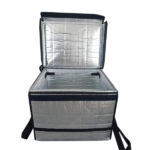
The best value comes from the material that fits your route, not the material that sounds most advanced. Reflective bubble liners are often cost-effective for chilled deliveries and lighter parcel programs. Foam-laminated liners can support stronger thermal resistance for longer or tougher routes. Paper-forward or hybrid thermal liners may help brands that want a more sustainability-aligned presentation, but they must still be validated against real shipping conditions.
Think of material selection like choosing tires. A premium tire is not always the best choice for every driver. What matters is the road, the weather, and the load. Liners work the same way. A structure that performs beautifully in one application may be unnecessary or inefficient in another.
Material comparison for buyers
Why material detail matters
Small changes matter more than many buyers expect. Bubble size, foil quality, seam integrity, folding pattern, and tolerance control can affect how consistently the liner performs. Two products can look almost identical in photos and still behave differently in a real shipment. This is why it is dangerous to compare liner price without sample testing or at least a well-documented pack-out proposal.
Praktische Ratschläge
- For chilled e-commerce: Start with a reflective bubble system and test coolant reduction options.
- For frozen parcel shipments: Compare stronger barrier liners before adding more weight.
- For brand-led packaging: Balance user disposal experience with thermal performance.
Praktischer Fall: A dessert brand moved to a better-fitting liner that cost slightly more per piece. Because the liner held the pack geometry more consistently, the team reduced gel weight and improved summer delivery results.
How should you compare supplier quotations fairly?
Use a structured RFQ and compare qualified outcomes, not isolated numbers. The most useful quote is one built around a defined scenario: your box size, Nutzlast, target temperature range, Kühlmitteltyp, und Versanddauer. Without that context, suppliers may be quoting different assumptions and giving you numbers that cannot be compared fairly.
An effective sourcing process includes procurement, Operationen, and quality from the start. Procurement looks at price and commercial terms. Operations looks at folding time, fit, and storage density. Quality looks at temperature control and consistency. When all three teams review the same assumptions, supplier selection becomes much cleaner.
A better RFQ checklist
- Define product type and target temperature range
- Confirm expected transit duration and seasonal exposure
- State outer box dimensions and board grade
- Define coolant type and current pack method
- Fragen Sie nach dem Stückpreis, total pack logic, and pallet density
- Request sample plan and recommended validation path
- Review MOQ, Vorlaufzeit, and repeat-order reliability
- Quick supplier scorecard
- Score each supplier from 1 Zu 5 An:
- Thermal fit for your lane
- Stückpreis
- Total pack cost
- MOQ flexibility
- Vorlaufzeit
- Sample speed
- Dimensional consistency
- Packaging density
- Communication quality
- Problem-solving support
- Praktische Ratschläge
- For first-time sourcing: Compare at least three suppliers using the same brief.
- For scaling programs: Ask how repeat orders are prioritized in peak season.
- For finance review: Include labor time and freight impact in total cost.
Praktischer Fall: A seafood exporter selected the second-lowest quote because the supplier provided a clearer pack-out recommendation and better pallet density. The landed-cost model favored the higher unit price once freight and claims were included.
Why do testing and compliance matter so much in 2026?
Because buyers increasingly need proof, keine Versprechen. FDA’s FSMA sanitary transportation rule establishes requirements for covered food transport operations including vehicles, Ausrüstung, Operationen, Aufzeichnungen, und Training. EMA says good distribution practice is the minimum standard wholesalers must meet to ensure medicine quality and integrity through the supply chain. WHO also notes that almost all vaccines used in immunization programs still operate in the traditional 2°C to 8°C cold chain. When products are sensitive, packaging claims must support those realities. (UNS. Food and Drug Administration)
Testing language is also becoming more important in buying conversations. ISTA says Standard 7E is the new standard for thermal transport testing in parcel delivery and that the temperature profiles are based on real-world transport data. ASTM D3103 is intended for evaluating the thermal performance of insulated packaging used for high-value, high-risk materials. In der Praxis, this means buyers increasingly ask how a liner was assessed, with what box, what coolant, and against which outside-temperature profile. (Internationaler Verband für sichere Transporte)
You do not need to turn every purchase into a laboratory project. But you do need enough evidence to know what the liner is supposed to do. This is especially important when shipping lanes are long, temperatures are unstable, or the product value is high.
What buyers should ask about qualification
- Was the liner recommendation based on my box or a similar box?
- What temperature range was used as the pass criterion?
- How much coolant was assumed?
- Was the result repeated?
- Is the recommendation best for parcel, local delivery, or pallet movement?
- Praktische Ratschläge
- Für Lebensmittelversand: Use route-based testing when the product is sensitive or the lane is hot.
- For pharma-adjacent shipping: Document packaging assumptions early.
- For operations teams: Make sure the tested pack-out is realistic on your packing line.
Praktischer Fall: A nutrition brand almost launched a low-cost liner on a nationwide summer route. Once the team reviewed the actual pack-out assumptions, they realized the quoted performance depended on more coolant than their line could handle efficiently.
How are market trends and sustainability changing price expectations?
The market is growing, and the specification is getting smarter. Eins 2025 industry report estimated the global cold chain packaging market at USD 33.73 Milliarden in 2025 und USD 38.30 Milliarden in 2026, with strong growth tied to pharmaceuticals, Impfungen, and temperature-sensitive logistics. As demand expands, more suppliers enter the market, but the difference between low-price capacity and true packaging capability becomes more visible. (Grand View Research)
Gleichzeitig, sustainability is moving from marketing language into packaging requirements. The European Commission says the EU Packaging and Packaging Waste Regulation entered into force in February 2025, begins applying from mid-2026, verlangt, dass alle Verpackungen recycelbar sind 2030, and includes a PFAS ban in packaging from August 2026. That pushes buyers to think about right-sizing, material simplification, weniger Abfall, and future-ready packaging design. (Umfeld)
Für dich, this means price conversations are expanding. The winning liner program may be the one that lowers box cube, reduces coolant, and supports a cleaner packaging story. A slightly higher liner quote can still be the better commercial choice if it improves waste, Fracht, and customer experience.
2026 trend snapshot
- More semi-custom liner sourcing
- More requests for flat-packed, storage-efficient formats
- More interest in hybrid and paper-forward solutions
- More supplier comparison based on documentation depth
- More focus on total pack cost rather than piece price
- Praktische Ratschläge
- For current tenders: Ask suppliers how their design supports lower packaging waste.
- For growing brands: Review flat-packed density before final approval.
- For long-term sourcing: Balance today’s quote with tomorrow’s compliance and packaging strategy.
Praktischer Fall: A meal-kit brand redesigned its shipper around a better-fitting flat liner. The liner price changed only slightly, but the brand reduced unused space, improved pallet efficiency, and simplified the unboxing experience.
Häufig gestellte Fragen
What is the main factor behind temperature controlled box liner wholesale price?
The biggest factor is the thermal job the liner must do. Dauer, route severity, fit, and coolant pairing drive value more than marketing labels.
How can I reduce total packaging cost without increasing risk?
Test better fit, lower cube, and lower coolant demand before chasing a lower liner quote. That usually reveals the real savings.
Do I need a custom liner to get good performance?
Nicht immer. Standard sizes can work well if they match your cartons closely. Custom liners are most useful when fit or consistency is a problem.
Are sustainable liners always more expensive?
Nicht immer. Some cost more upfront, but they may support lower cube, better brand alignment, or better future compliance positioning.
What should I ask in a first supplier call?
Ask how they would specify a liner for your actual product, Route, Karton, and temperature target. That question reveals how serious the supplier is.
Summary and recommendation
Temperature controlled box liner wholesale price is not a simple commodity question anymore. In 2026, the best buying decisions balance liner cost with thermal performance, pack-out speed, freight efficiency, Dokumentation, and sustainability direction. The smartest buyers compare total delivered value, not only the line-item quote.
Your next step is to build a route-based sourcing brief. Include product temperature range, Transitdauer, Kastengröße, Kühlmitteltyp, and annual volume. Then score suppliers on price, validation logic, and operational fit together. That is the most reliable path to a better liner program.
Über Tempk
Und Tempk, we focus on practical cold chain packaging decisions that help teams ship with more confidence. We believe the best liner program is one that protects product, fits the operation, and makes commercial sense over time. That is why fit, pack-out logic, and measurable performance matter as much as the material itself.
If you are evaluating liner quotes now, begin with your route and your real operating constraints. That will lead you to the right price conversation.