Vegetables Cold Chain Inspection Services in 2025?
Aktualisiert: Dezember 23, 2025
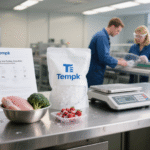
Vegetables cold chain inspection services give you one thing buyers now demand in 2025: nachweisen. You get time-stamped photos, pulp temperature checks, humidity clues, and a clear accept/hold decision tied to lot and pallet IDs. When wilt, nasse Kartons, or hidden decay show up, that evidence turns arguments into fast fixes. In diesem Leitfaden, you will learn what to inspect, where to inspect, and how to keep inspection spend under control.
Dieser Artikel hilft Ihnen bei der Beantwortung
-
Wie vegetables cold chain inspection services work across real handoffs (not just storage)
-
What a defensible produce temperature inspection checklist should include
-
Wie man benutzt temperature and humidity inspection for vegetables Abfall reduzieren
-
What belongs in a cold chain inspection report for vegetables to close disputes faster
-
How to choose inspection scope (basic vs standard vs advanced) mit a 2025 Entscheidungsinstrument
What are vegetables cold chain inspection services?
Vegetables cold chain inspection services are structured checks that document condition, Temperaturrisiko, and handling quality at key points in your shipment. Think of it as a “health check” for the vegetables plus a “travel diary” showing how they were treated. A strong program does not only catch problems. It shows when quality is good, pinpoints where it drops, and creates a repeatable prevention plan.
You should expect evidence you can act on the same day: Fotos, Zeitstempel, pallet IDs, temperature sampling, and a clear recommendation.
Der 5 checkpoints your produce cold chain audit checklist must cover
| Kontrollpunkt | What gets checked | Evidence captured | Die praktische Bedeutung für Sie |
|---|---|---|---|
| Pre-cooling verification for vegetables | pulp temp at pack-out, cooldown timing | Lesungen + Zeitstempel | prevents shipping “warm from the start” |
| Cold room discipline | door-open minutes, Luftstrom, Sollwerte | logs + observations | reduces temperature swings and sweating |
| Verpackungsschutz | Lüftungsschlitze, Liner, Stapelung, zerquetschte Ecken | Fotos + Notizen | cuts bruising, dehydration, nasse Kartons |
| Handoff exposure | dock/ramp dwell time, staging zones | Zeitstempel | finds “hidden warm time” that kills shelf life |
| Hygiene basics | Sauberkeit, pests, condensate control | Checkliste + Korrekturmaßnahmen | reduces spoilage and complaint risk |
Praktische Tipps, die Sie diese Woche anwenden können
-
Start at the handoff: Most failures hide in “in-between time,” not inside a closed cold room.
-
Demand labeled photos: “Pallet 3, Corner Crush, 09:14” beats 20 random images.
-
Treat the report as a tool: If it does not include actions, it is not worth paying for.
Beispiel für reale Welt: A receiver added inspections at the cold room door and found pallets waiting too long in a warm staging zone. One SOP change cut repeat spoilage.
When do vegetables cold chain inspection services pay off?
Vegetables cold chain inspection services pay off when risk and value are high—new lanes, hot seasons, premium vegetables, or repeated claims. You do not need full inspection on every shipment forever. You need the right inspection at the right moment, especially when partners change or weather shifts.
Use inspections to protect margin and reduce chargebacks when it matters most.
High-ROI situations vs “keep it lighter” lanes
| Shipment situation | Risikostufe | Recommended approach | Die praktische Bedeutung für Sie |
|---|---|---|---|
| New supplier / new growing region | Hoch | Standard or Advanced | protects your launch and reputation |
| Hot-season lanes or long dwell | Hoch | Standard + dwell mapping | prevents wilting and wet cartons |
| Premium leafy greens, Kräuter | Hoch | Pulp sampling + scoring | protects shelf life expectations |
| Multi-stop distribution / Cross-Dock | Mittel–Hoch | Add a mid-point spot check | catches handoff damage early |
| Stable commodity, proven lane | Untere | Stichproben + Trends | controls cost without losing control |
Interaktives Entscheidungstool: “Do I need inspection for this shipment?”
Score each item and add points.
Product risk (0–10)
-
Leafy greens or herbs: +4
-
Premium value per carton: +2
-
Shelf-life promise over 7 Tage: +2
-
Recent claims history: +2
Lane risk (0–10)
-
Two or more transfers: +3
-
Hot season or hot region: +3
-
Typical dwell over “a few hours”: +2
-
Cross-dock or mixed handling: +2
Interpretation
-
0–6: Spot checks or Basic inspections are usually enough
-
7–12: Standard vegetables cold chain inspection services empfohlen
-
13–20: Advanced vegetables cold chain inspection services until stable
Praktischer Fall: One shipper stopped “random inspections” and inspected only connection handoffs and hot-afternoon arrivals. Costs dropped, results improved.
How do vegetables cold chain inspection services verify temperature and humidity?
Vegetables cold chain inspection services verify temperature and humidity by combining measurements with time stamps and handling observations. Temperature alone is not enough. Humidity often explains limp texture (dehydration) or wet cartons (Kondensation). A good inspector treats temperature + Luftfeuchtigkeit + time out of cold as one system.
Expect three layers of proof: Produkt (Fruchtfleisch), Umfeld (Luft), and event exposure (loading/staging).
Pulp vs air vs surface: what each tells you
| Measurement | Was es Ihnen sagt | Beste Verwendung | Die praktische Bedeutung für Sie |
|---|---|---|---|
| Pulp temperature | what the vegetables actually experienced | pre-cool + Erhalt von Schecks | predicts shelf life better |
| Air temperature | what equipment is set to | cold room / truck checks | shows system performance |
| Surface temperature | quick indicator of short exposure | ramps and loading | catches brief warm spikes |
| Relative Luftfeuchtigkeit | dehydration vs condensation risk | Lagerung + packaging review | protects weight and texture |
Praktische Tipps und Ratschläge
-
Define targets by commodity: One setpoint does not fit all vegetables.
-
Measure before delays: Check pulp temperature vor long staging time changes it.
-
Record door-open minutes: Short door events can undo hours of refrigeration.
Beispiel für reale Welt: A leafy-greens program added humidity notes and carton moisture checks. Limp complaints dropped without changing transport schedules.
How do vegetables cold chain inspection services use a produce temperature inspection checklist?
A produce temperature inspection checklist turns inspection into repeatable evidence, keine Meinungen. Your checklist should be short enough to follow under pressure, yet detailed enough to defend decisions. Das Ziel ist einfach: link identity + Zeit + Ort + Messung + Aktion.
If your checklist cannot answer “what happened and when,” you will still lose disputes.
A receiving checklist you can run in minutes
-
Sendungs-ID, Los-ID, pallet count, seal status
-
Exact inspection location (dock, staging zone, cold room door)
-
Arrival time, Türöffnungszeit, put-away start/end time
-
Pulp temperature sampling: Verfahren, sample count, carton positions
-
Carton condition: Nässe, zerquetschen, vent blockage, liner issues
-
Odor/decay signals: slime, mold, soft spots, abnormal smell
-
Entscheidung: akzeptieren / accept with sorting / halten / ablehnen
-
Immediate action + owner + verification date (closure loop)
Sampling plan you can actually follow
| Pallet count / Risiko | Suggested pulp samples | Where to sample | Die praktische Bedeutung für Sie |
|---|---|---|---|
| Geringes Risiko (stabile Spur) | 6–10 cartons | 4 edge + 2 Center | cost control with basic confidence |
| Mittleres Risiko | 10–16 cartons | edge + center across 2–3 pallets | catches hidden warm pockets |
| Hohes Risiko (claims/hot season) | 16–24 cartons | edge/center + top/bottom layers | strongest defensible evidence |
Praktische Tipps und Ratschläge
-
Use the same sampling rule every time: consistency beats “more samples sometimes.”
-
Record position: edge vs center results often explain uneven cooling.
-
Tie measurement to action: “out of range” without a decision wastes money.
Beispiel für reale Welt: A receiver sampled the same carton positions each week and finally saw patterns. They stopped blaming “bad luck.”
What are practical vegetable receiving inspection standards?
Vegetable receiving inspection standards define what “acceptable” looks like before arguments start. They reduce opinion fights at the dock. They also help your team move fast: akzeptieren, Sortieren, or hold—without guessing.
Standards should be tighter for herbs and leafy greens than for root vegetables. Keep rules simple so they get used.
A simple 1–5 scoring model you can adopt
Score each category 1–5:
-
Appearance (Farbe, Frische)
-
Firmness (turgor, Knusprigkeit)
-
Moisture/condensation (free water, nasse Kartons)
-
Verpackungsintegrität (zerquetschen, Tränen, vent blockage)
-
Odor/decay signs (slime, mold, soft spots)
Entscheidungsregel
-
4–5 average: akzeptieren
-
3 Durchschnitt: accept with sorting or shorter shelf-life plan
-
1–2 average: halten, escalate, or reject per contract
| Kategorie | 5 (Exzellent) | 3 (Gemischt) | 1 (Arm) |
|---|---|---|---|
| Firmness | crisp and fresh | slight limp | limp and weak |
| Feuchtigkeit | dry cartons | slight wetness | soaked cartons |
| Decay | keiner | minor spots | active decay |
| Verpackung | intakt | minor dents | crush/tears |
Praktische Tipps und Ratschläge
-
Define tolerance by SKU: greens need tighter limits than hard veg.
-
Use photos as proof: evidence ends disputes quickly.
-
Avoid all-or-nothing: sorting plans often save value safely.
Beispiel für reale Welt: A distributor reduced rejections using “accept with sorting” rules for minor carton damage. Customer standards stayed high.
What should be inside a cold chain inspection report for vegetables?
A cold chain inspection report for vegetables should be readable in five minutes and defensible for weeks. It must answer: What arrived? Is it acceptable? What evidence proves that? What action do we take now?
A report that is slow, vague, or unlabeled is not a report. It is a story.
A one-page executive summary template (what “good” looks like)
| Report section | Strong output | Weak output | Die praktische Bedeutung für Sie |
|---|---|---|---|
| Summary decision | clear accept/hold/reject | vague opinion | faster receiving actions |
| Temperaturnachweis | sample count + Positionen + Ergebnisse | “cold” only | defensible claims |
| Handling notes | Verweilzeit + Standort | “warehouse delay” | root cause you can fix |
| Fotos | beschriftet + mit Zeitstempel versehen | random images | weniger Streitigkeiten |
| Korrekturmaßnahmen | owner + date to verify | generic advice | issues stop repeating |
Praktische Tipps und Ratschläge
-
Require photo labeling: “Pallet 2, nasse Kartons, 08:41.”
-
Store reports by shipment ID: searchable history becomes a power tool.
-
Ask for a closure loop: verify fixes, not just findings.
Beispiel für reale Welt: A buyer reduced decision time by standardizing reports. Teams stopped arguing and started following consistent hold rules.
Where should you place inspection points in a vegetables cold chain?
You do not need inspections everywhere—you need them where the cold chain is most likely to break. The highest value inspection points are usually at handoffs: dock arrival, cold room door entry, cross-dock transfer, and before final delivery for premium customers.
Think “proof at the moment risk happens.”
The practical 3-point inspection plan
| Inspection point | Am besten für | Kostenniveau | Die praktische Bedeutung für Sie |
|---|---|---|---|
| Origin release (optional) | new suppliers | Medium | prevents bad loads from shipping |
| Destination receiving (most important) | Schadensprävention | Hoher Wert | strongest evidence and fastest action |
| Exception-based inspections | alerts/complaints | Niedrig | targets spend where risk rises |
Praktische Tipps und Ratschläge
-
If you can choose only one: choose destination receiving.
-
If you cross-dock: add a mid-point spot check.
-
If you do last mile: inspect one route per week for trend data.
Beispiel für reale Welt: A company learned most damage happened during cross-dock. One mid-point inspection changed pallet rules and reduced losses.
How do you choose scope and provider for vegetables cold chain inspection services?
Choose scope based on risk, and choose a provider based on method, produce experience, and corrective-action skill. A good partner does not just inspect. They help you improve and verify that improvements hold.
If you need independence for disputes, third-party cold chain inspection for fresh produce can be the difference between “he said/she said” and facts.
Basic vs standard vs advanced scope (choose with confidence)
| Umfang | Includes temperature? | Includes scoring? | Am besten für Sie, wenn… |
|---|---|---|---|
| Basic | optional | limited | risk is low and lane is stable |
| Standard | Ja (pulp sampling) | Ja | you need proof + clear decisions |
| Fortschrittlich | Ja + Rezension zum Logger + dwell mapping | Ja + root-cause actions | you have repeat claims or hot-season risk |
Provider scorecard (quick questions to ask)
| Kategorie | Was soll ich fragen? | Wie „gut“ aussieht | Die praktische Bedeutung für Sie |
|---|---|---|---|
| Produce expertise | what vegetables they inspect most | commodity-specific guidance | fewer generic recommendations |
| Measurement method | Stichprobenregeln + Werkzeuge | repeatable plan | comparable results over time |
| Reporting speed | when results arrive | same-day summary | faster corrective actions |
| Korrekturmaßnahmen-Workflow | how issues get closed | owner + verify date | problems actually get fixed |
| Independence | conflict-of-interest policy | transparent boundaries | stronger dispute resolution |
Praktische Tipps und Ratschläge
-
Request a sample report first: you should see photos, Zeitstempel, and actions.
-
Pilot before scaling: one month reveals real value quickly.
-
Pay for outcomes: weniger Ansprüche, schnellere Entscheidungen, längere Haltbarkeit.
Beispiel für reale Welt: A shipper switched providers after vague reports. A new partner delivered action lists that reduced losses within one season.
How do you keep vegetables cold chain inspection services affordable?
Vegetables cold chain inspection services stay affordable when you inspect by risk, not by habit. Inspect more during launches and hot seasons, then shift stable lanes to spot checks plus remote evidence review. You also save money by shortening checklists and improving data quality, so you do not pay for repeat visits.
Affordability is not “lowest invoice.” It is lowest cost per prevented loss.
Cost drivers and cost-down levers
| Kostentreiber | Why it increases cost | Kostensenkungshebel | Die praktische Bedeutung für Sie |
|---|---|---|---|
| Too many sites | reisen + scheduling | cluster by region | fewer travel fees |
| Overly long checklists | more labor per visit | focus on top 10 Risiken | faster visits |
| Low data quality | Streitigkeiten + re-inspections | standard templates | fewer repeats |
| No closure loop | recurring issues | verify corrective actions | repeat losses drop |
| Rare inspections only | issues grow unnoticed | mix remote + Stichproben | steady control at lower cost |
Praktische Tipps und Ratschläge
-
Inspect more during change: new partners and packaging deserve higher frequency.
-
Shrink the checklist: keep “must-have evidence,” remove “nice-to-have.”
-
Use exception triggers: Alarm, Beschwerden, heißes Wetter, multi-handoff days.
Beispiel für reale Welt: A shipper cut spend by moving stable lanes to remote log review. Spot checks stayed, and performance remained strong.
2025 latest developments and trends in vegetables cold chain inspection services
In 2025, vegetables cold chain inspection services are shifting from “manual checklists” to evidence-first workflows. Inspections still happen on-site, but proof is captured faster, labeled better, and shared sooner. Programs are also paying more attention to Luftfeuchtigkeit, because dehydration and condensation can destroy quality even when temperature setpoints look correct. The winning approach is less paperwork, more usable evidence, und schnellere Korrekturmaßnahmen.
Aktueller Fortschritts-Snapshot
-
Faster reporting: same-day summaries with clear actions are becoming the norm.
-
More risk-based sampling: stable lanes get fewer visits, risky lanes get more.
-
More integrated proof: Fotos + Zeitstempel + Los-IDs + temperature evidence live together.
Market insight: Buyers want predictable quality and quick resolution. Inspection history is becoming a negotiation tool for better SOPs, better packaging decisions, and clearer accountability.
Häufig gestellte Fragen
Q1: What is the most important part of vegetables cold chain inspection services?
A consistent receiving inspection with time stamps, labeled photos, and pulp sampling. It creates proof and prevents repeat errors.
Q2: How many cartons should I sample for pulp temperature?
Use a consistent rule based on risk. Sample across edge and center positions so you do not miss hidden warm pockets.
Q3: Can vegetables cold chain inspection services replace temperature loggers?
NEIN. Inspections are a snapshot. Loggers show temperature history. Many programs use both for stronger evidence.
Q4: What should I do if cartons are wet on arrival?
Treat it as a condensation clue. Inspect for decay risk, check dwell time and door-open minutes, and review packaging and humidity controls.
Q5: When should I hire third-party cold chain inspection for fresh produce?
Use third-party support when you launch new lanes, face recurring claims, or need independent evidence for disputes and audits.
Q6: What should be in a corrective action report for produce cold chain issues?
Ursache, immediate fix, prevention step, owner, and a verification date. Without verification, the issue returns.
Zusammenfassung und Empfehlungen
Vegetables cold chain inspection services protect freshness by documenting condition, Verpackungsintegrität, Temperaturrisiko, humidity clues, and handling quality at the moments that matter most. The highest value comes from inspections that are consistent, mit Zeitstempel versehen, photo-supported, and tied to clear accept/hold decisions. When you standardize your checklist, inspect the right handoffs, and run a closure loop, Sie reduzieren den Verderb, speed up receiving decisions, and close disputes with facts.
Aktionsplan (klarer CTA)
-
Nächste Lieferung: run a standard receiving inspection with labeled photos, scoring, and pulp sampling.
-
Nächste 14 Tage: track dwell time at your top handoff and set a “max minutes” rule.
-
Innerhalb 30 Tage: move to risk-based frequency and exception-triggered advanced inspections only where needed.
Über Tempk
Und Tempk, we support cold chain teams with practical packaging and process controls that make inspections easier and outcomes more stable. We focus on solutions that help you reduce temperature swings, limit condensation risk, and build repeatable handling routines across partners. The result is fewer surprises at receiving, weniger Ansprüche, and clearer evidence when you need it.
Nächster Schritt: Share your vegetable type, lane steps (origin → transfers → destination), and your top complaint (wilt, nasse Kartons, kurze Haltbarkeit). We can help you build an inspection checklist and a packing/handling plan that targets the real cause.