If you need a precise, safe answer fast: the best all‑around choice for a 10 LB Trockeneisbeutel ist a vented 12″ × 16″ lay‑flat LDPE (2–3 mil); for an upright packout, Verwenden Sie a vented gusseted 10.5″ × 10.5″ × 21″ (2–3 mil). Both fit a typical 10″ × 10″ × 2–2⅜” Block, leave fold‑over headroom, und treffen 2025 Umgang mit Best Practices. You’ll pack faster, Bleiben Sie konform, and cut breakage.
-
Welche 10 lb dry ice bag size fits best?—with long‑tail guidance like 10 lb dry ice bag dimensions.
-
How thick should the film be?-vented dry ice bag thickness for rough handling.
-
How do you calculate bag size from volume?—a simple method you can reuse.
-
How do you pack for compliance?—labels, Entlüftung, Und UN1845 dry ice Tipps.
-
Was ist neu in 2025?– Materialien, Sensoren, and sustainability that affect your choice.
Welche 10 lb dry ice bag size works best in 2025?
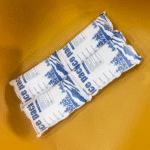
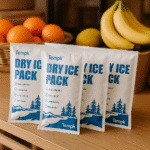
Kurze Antwort: Use a vented 12″ × 16″ 10 LB Trockeneisbeutel (2–3 mil) for flat “slice” blocks, oder a vented 10.5″ × 10.5″ × 21″ 10 LB Trockeneisbeutel for upright loading. Both provide safe slack, easy fold‑over, and clean labeling. Avoid airtight closures.
Why this fit? A 10 lb block is typically ~10″ × 10″ × 2–2⅜”. A 12″ lay‑flat width clears the 10″ face with insertion slack; 16″ height leaves room to fold without sealing. The gusseted footprint mirrors the 10″ × 10″ face for neat stacking in crates. Venting prevents pressure buildup and supports IATA/OSHA‑style handling norms.
Flat vs. gusseted 10 lb dry ice bag—how to choose
Flat lay‑flat (12″ × 16″, 2–3 mil, entlüftet): Easiest to source, fast to load, generous fold‑over.
Gusseted (10.5″ × 10.5″ × 21″, 2–3 mil, entlüftet): Self‑standing, tidy footprint, better for narrow crates.
Tight liner fit (≈10″ × 10″ × 3″ gusseted): Use only inside rigid liners when you want minimal air gaps and controlled headspace.
| Szenario | Recommended 10 LB Trockeneisbeutel | Filmdicke | Was es für Sie bedeutet |
|---|---|---|---|
| Flat “slice” block (10″ × 10″ × 2–2⅜”) | 12″ × 16″ lay‑flat, entlüftet | 2–3 mil | Fast loading, reliable fold‑over, broad availability |
| Upright in crate/liner | 10.5″ × 10.5″ × 21″ gusseted, entlüftet | 2–3 mil | Neat footprint, besseres Stapeln, cleaner unpack |
| Grobe Handhabung / shards | 13″ × 20″ lay‑flat, entlüftet | 3–4 Mio | Extra circumference for fragments; fewer tears |
| Tight inside rigid VIP/EPS liner | ~ 10″ × 10″ × 3″ gusseted, entlüftet | 3 Mil | Minimaler Kopfraum, langsamere Sublimation (Niemals luftdicht) |
Praktische Tipps, die Zeit und Produkt sparen
-
Einen Entlüftungsweg hinterlassen. Fold—don’t heat‑seal—the 10 lb dry ice bag mouth.
-
Den Versender vorschreien. Pre‑cooling reduces early sublimation spikes.
-
Separate cargo. Add a rigid divider to keep product off the block.
Wirklicher Fall: A dessert shipper switched from 10″ × 12″ Zu 12″ × 16″ 10 LB Trockeneisbeutel (3 Mil, entlüftet). Tears during loading fell sharply and hold time improved, thanks to cleaner fold‑overs and better foam placement. Re‑pack errors dropped and QA cleared more outbound boxes per hour.
How do you calculate a 10 lb dry ice bag from volume?
Kernidee: Calculate block Volumen, add loading slack, Dann hinzufügen fold‑over for safe venting.
Schritt für Schritt (copy this):
-
Mass → volume: Dry ice density ≈ 1.56 g/cm³. A 10 lb block = 4,536 g → ~2,910 cm³.
-
Typical slice: 10″ × 10″ × 2–2⅜” (≈200–238 in³).
-
Lay‑flat width: Verwenden width ≥ face + 1–2″ slack → 12″ for a 10″ face.
-
Bag height: height ≥ thickness × 5–8 to allow fold‑over and labels → 16–21″.
-
Kopfspace: Ziel ~1″ each side or gusseted cross‑section that equals the face.
Kopfspace, Entlüftung, and fold‑over length
A 10 lb dry ice bag needs fold‑over headroom (2–5″) und a non‑airtight mouth. Mikroperforationen, loose twist ties, or a simple fold work well. Halten empty headspace modest to slow heat ingress, but never trap CO₂.
| Block thickness | Good bag height | Good bag width | Praktische Bedeutung |
|---|---|---|---|
| 2.0″ | 16″ | 12″ | Easy fold‑over; minimal air volume |
| 2.25″ | 16–18″ | 12″ | Extra fold room for labels |
| 2.375″ | 18–21″ | 12″ | Tolerates slight block variance |
Which materials and thickness are best for a 10 LB Trockeneisbeutel?
Best all‑rounder: LDPE/HDPE with metallocene (for low‑temp flexibility). Für die meisten Routen, A 2–3 mil vented film is ideal. Steigen zu 3–4 Mio for rough handling, shards, or long routes.
-
Why LDPE/HDPE blends? Tough at −78.5 °C, resist haze/brittleness, and print cleanly for labels.
-
When to add a wrap? A loose kraft‑paper inner wrap reduces frost on film and cushions edges.
-
Was zu vermeiden ist? Thin grocery bags or non‑vented “water‑ice” bags—risk cracking and pressure buildup.
When to step up to 3–4 mil on a 10 LB Trockeneisbeutel
-
Sharp fragments expected: Broken blocks, frequent re‑packs.
-
Heavy conveyor handling: Automated sortation, lange Naben.
-
VIP/EPS liners with tight tolerances: Film sees more abrasion.
How should you pack a 10 lb dry ice bag for compliance?
Follow this sequence for a safer, faster packout:
-
PSA zuerst. Tragen Sie isolierte Handschuhe und Augenschutz.
-
Wickeln, then bag. Light kraft wrap → 10 LB Trockeneisbeutel (12″ × 16″ lay‑flat or 10.5″ × 10.5″ × 21″ gusseted), entlüftet.
-
Rigid separator. Place a board/foam sheet above the block; keep product off direct contact.
-
Insulated outer. Use a vented cooler/shipper; crack the drain/vent or use designed vents.
-
Label outer shipper. “Trockeneis / Kohlendioxid, solide, UN1845” and Nettogewicht (kg).
-
Nicht luftdicht verschließen. Neither the 10 lb dry ice bag nor the outer may be airtight.
-
Wiegen und protokollieren. Log net dry ice for audits and customer notifications.
Schnelle Compliance -Checkliste (print for your bench)
-
10 lb dry ice bag vented and folded (nicht versiegelt)
-
Divider in place; no product touching dry ice
-
Outer has vent path; UN1845 markieren + Netto-kg auf dem Etikett
-
Packout sheet updated with starting weight and target hold time
Cold‑chain trends in 2025 that affect your 10 LB Trockeneisbeutel
Was ist neu: Vented membranes, tougher low‑temp films, and smarter liners are making every 10 LB Trockeneisbeutel safer and cleaner to use. Recycled and bio‑content blends are advancing without sacrificing impact strength. VIP liners and data loggers extend hold time and reduce re‑ice events.
Neueste Fortschritte auf einen Blick
-
Micro‑vent films: Controlled CO₂ release without manual perforation.
-
Metallocene‑rich blends: Better tear resistance with thin gauges.
-
Returnable liners: Reuse programs that fit the 10″ × 10″ Fußabdruck.
Market insight: Forderung nach 10 lb formats stays high in last‑mile frozen food and biologics, favoring 12″ × 16″ 10 LB Trockeneisbeutel with clear label real estate and quick fold‑over.
Häufig gestellte Fragen
Q1: What’s the single safest pick for most teams?
Wählen Sie a vented 12″ × 16″ 10 LB Trockeneisbeutel In 2–3 mil. It loads quickly, folds cleanly, and fits standard 10″ × 10″ Scheiben.
Q2: When should I use a gusseted 10 LB Trockeneisbeutel?
Verwenden 10.5″ × 10.5″ × 21″ when you want an upright, self‑standing footprint inside a crate or liner.
Q3: Can I heat‑seal a 10 LB Trockeneisbeutel?
NEIN. Niemals luftdicht versiegeln. Fold or loosely tie to maintain a vent path for CO₂.
Q4: Wie lange dauert a 10 lb block last in practice?
Erwarten ~18–36 hours in einem typischen Kühler. VIP/EPS systems can extend this, assuming minimal openings.
Q5: What if my blocks vary in thickness?
Design for 2–2⅜” Dicke. Choose 16–21″ height to preserve fold‑over headroom and venting.
Q6: Do I need to log dry ice weight?
Yes—log starting net kg for labels and audits. It simplifies re‑ice planning and regulatory checks.
Zusammenfassung & Empfehlungen
Drei Imbissbuden:
-
A 12″ × 16″ entlüftet 10 LB Trockeneisbeutel (2–3 mil) fits most 10″ × 10″ Scheiben.
-
For upright packouts, pick a 10.5″ × 10.5″ × 21″ entlüftet 10 LB Trockeneisbeutel.
-
Hinterlassen Sie immer eine Entlüftungsweg, fügen Sie a hinzu Teiler, und Etikett UN1845 + Netz kg.
Nächste Schritte (do this today):
-
Standardize on one lay‑flat and one gusseted SKU.
-
Print the compliance checklist for your bench.
-
Add a divider to every packout.
-
Run a 24‑hour hold‑time test and record weight loss.
CTA: Want a one‑page spec for your line? Talk to Tempk’s cold‑chain team for a fast packout review.
A tiny decision helper (Fügen Sie in Ihre SOP ein)
Vorgeschlagene interne Links (on your site)
-
Trockeneis vs. PCM: choosing the right cold source → /knowledge/dry-ice-vs-pcm
-
UN1845 labeling checklist for dry ice packages → /knowledge/dry-ice-label-checklist-un1845
-
How much dry ice do I need for 24–72 hours? → /knowledge/how-much-dry-ice
-
Dry ice bag venting: best practices in 2025 → /knowledge/dry-ice-bag-venting
-
Choosing the right insulated shipper → /knowledge/insulated-shipper-guide
Über Tempk
Wir entwerfen high‑performance cold‑chain packaging that balances reliability, Einhaltung, und Kosten. Unser 10 LB Trockeneisbeutel options are engineered for low‑temperature toughness, clean fold‑overs, and easy labeling. With validated packouts and quick‑start SOPs, we help your team ship on time and in temp—every day.
Bereit, Ihre zu optimieren 10 lb dry ice bag spec? Contact our specialists for a tailored packout and a one‑page line guide.