Actualizado en febrero 23, 2026 – A medida que aumenta la demanda de logística con temperatura controlada y se endurecen los estándares de sostenibilidad, Las empresas deben repensar cómo obtienen envases aislados.. This guide helps you procure the right cooler bag by explaining performance metrics, materials and testing methods. You’ll discover how to balance cost, compliance and user comfort so your investment protects both product quality and brand reputation.
Lo que aprenderás
-
Why cooler bags matter for your supply chain – Understand high‑impact use cases and KPIs for 2026 cold‑chain and promotional programs.
-
Key features and materials to consider – Dive into capacity planning, insulation performance and durability factors that determine temperature retention.
-
How to test and ensure quality – Follow simple thermal retention, leak resistance and load‑bearing tests before bulk ordering.
-
Cumplimiento, certification and sustainability – Learn how to verify eco‑friendly claims and meet food‑contact regulations.
-
Procurement strategy and pricing essentials – Set KPIs, plan MOQs and navigate cost levers for efficient sourcing.
-
2026 tendencias e innovaciones del mercado – Explore the latest market size projections, drivers and new technologies shaping cooler bags.
Why Cooler Bags Matter: Business Impact and KPIs
High‑Impact Use Cases in 2026
Cooler bags have become indispensable across retail, food‑service, atención médica y recreación al aire libre. In last‑mile grocery and meal‑prep delivery, these bags protect chilled or frozen goods for 60–120 minutes outside of refrigeration; Las auditorías muestran que más de 70 % of meal‑kit boxes exceed 4 °C después de un tránsito prolongado, so investing in proper insulation is vital.
For supermarkets and F&B brands, branded cooler bags double as advertising. A study cited in 2025 estimated each bag generates about 1,900–2,000 impressions and remains in use for over two years. This combination of temperature control and brand visibility makes cooler bags a strategic asset rather than a simple cost.
Key Performance Indicators (KPI)
When procuring cooler bags, focus on performance metrics that align with your operations:
-
Hold‑time vs. ruta realidad: Evaluate how long your products spend outside refrigeration. For meal kits or pharmaceutical samples, target hold‑times of 60–120 minutes or more.
-
Comodidad de transporte: Asas reforzadas, balanced drop and padded straps reduce fatigue when bags are carried by delivery riders or shoppers.
-
Hygiene and care: Liso, wipe‑clean liners prevent odour build‑up and simplify sanitizing.
-
Brand recall: Durable materials and attractive printing encourage repeated reuse, extending brand exposure.
From a customer’s perspective, a reliable cooler bag means your food arrives cold, your brand is remembered and cleaning doesn’t become a chore.
Características clave y materiales: What to Look for
Capacidad y tamaño
Choosing the right capacity prevents under‑performing insulation or wasted space. Las bolsas refrigeradoras comerciales varían desde 6 l a 40 l. Bolsas compactas (6–10 litros) suit single‑meal deliveries or corporate lunch kits, mid‑size bags (15–20 litros) serve multi‑meal orders and promotional giveaways, y bolsas grandes (30–40 litros) support group catering or beverage programs. Note that thick insulation can reduce usable volume by 15–20 %, so always confirm internal dimensions.
| Categoría de capacidad | Rango típico | Casos de uso | Implicaciones prácticas |
|---|---|---|---|
| Compacto | 6–10 litros | Single‑meal deliveries, kits de almuerzo personales | Ligero y portátil; ideal for quick‑service outlets; cabe una comida y bebida. |
| Mid‑size | 15–20 litros | Meal‑prep services, paquetes de comestibles, obsequios corporativos | Offers flexibility while remaining manageable; se adapta a múltiples contenedores; bueno para programas promocionales. |
| Grande | 30–40 litros | Eventos de catering, servicio de bebidas, activaciones al aire libre | Requiere una construcción robusta y un aislamiento grueso.; suits group meals or large containers; ensure 80–90 % fill for best insulation. |
Consejo: Underfilling a large cooler bag can create warm air pockets and reduce efficiency. Aim to fill bags to 80–90 % de capacidad.
Insulation Performance and Duration
The primary job of a cooler bag is to maintain temperature. Insulation performance depends on the foam type, thickness and liner materials. R‑value measures thermal resistance; higher values indicate better insulation.
-
Foam Types: Closed‑cell foams like PU or cross‑linked polyethylene (XPE) offer high R‑values (alrededor 6 por pulgada), mientras que el polietileno expandido (EPE) and expanded polystyrene (EPS) range between R 3.6–4.2 per inch.
-
Espesor de la espuma: Entry‑level bags with 3 mm EPE foam retain temperature for up to six hours. Increasing thickness to 5 mm plus an aluminum liner extends retention to 8–12 hours, mientras 8 mm foam with sealed zippers can maintain temperature for 12–24 hours when paired with gel packs.
-
Lining Materials: Aluminum foil liners reflect radiant heat and improve cold retention, especially under sunlight. PEVA liners are food‑safe but have lower reflectivity and may deform over time.
-
Closure Design: Cremalleras, flaps and Velcro prevent ambient air infiltration. Poor closure design quickly undermines insulation performance.
| Componente de aislamiento | Especificación típica | Performance Impact | Lo que significa para ti |
|---|---|---|---|
| Tipo de espuma (EPE, PU, XPE) | EPE (R 3,6–4,2/pulgada), PU/XPE (R 6.0+/inch) | Higher R‑values deliver longer cold/hot retention | Select PU or XPE for premium applications; EPE for standard food delivery. |
| Espesor de la espuma | 3 milímetros, 5 milímetros, 8 milímetros | Longer insulation at thicker levels | Elegir 5 milímetros + foil for 8–12 hour retention; 8 mm for 12–24 hours with gel packs. |
| Material del revestimiento | Papel de aluminio vs.. HOY | La lámina refleja el calor y resiste la humedad.; PEVA es flexible pero menos reflectante. | Use foil for outdoor and long‑duration transport; PEVA para peso ligero, bolsas aptas para alimentos. |
| Sistema de cierre | Cremalleras dobles, solapas, Velcro | Los sellos herméticos evitan la entrada de calor. | Inspeccionar la calidad del cierre; weak zippers lead to rapid cooling loss. |
Durabilidad, Materials and User Comfort
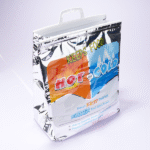
A cooler bag must withstand daily handling, repeated folding and exposure to moisture. Outer materials like 600 D o 900 D Oxford fabric deliver abrasion resistance and water repellence, while non‑woven fabrics are cheaper but less durable. Sustainable options such as recycled polyester (RPET) support eco‑branding without sacrificing performance.
Interior linings of aluminum foil offer structural stability and easy cleaning, whereas PEVA liners are softer but prone to wrinkling. A combination of Oxford or RPET exterior and aluminum foil interior provides balanced durability and insulation.
User comfort is also critical. Ajustable, padded straps distribute weight evenly and reduce shoulder fatigue, especially for larger bags. Reinforced base panels and anti‑slip handles maintain shape and improve grip. Choose the structure (totalizador, lunch bag or backpack) that matches your delivery mode: tote bags suit short hand‑carrying, lunch bags fit meal‑prep services, and backpack‑style cooler bags suit bike couriers and foot delivery.
Testing and Quality Assurance Before Bulk Orders
Even high‑spec bags can fail in real conditions. Conduct practical tests on samples before committing to large volumes:
-
Prueba de retención térmica: Pre‑cool or preheat contents, coloque un termómetro adentro y registre la temperatura interna cada hora durante 6 a 12 horas. Compare results with your required hold‑time.
-
Filtración & Spill Resistance: Pour 100–200 ml of water directly into the bag, sellarlo e inclinarlo suavemente. Verifique si hay humedad en el exterior o a lo largo de las costuras..
-
Load‑Bearing & Integridad de la forma: Llene la bolsa hasta 80–90 % capacidad y llévelo durante 20 a 30 minutos. Inspeccionar manijas, costuras y paneles inferiores para estrés; dejar la bolsa cargada para 24 horas para verificar la recuperación.
-
Limpieza & Odor Resistance: Wipe the interior with disinfectant and air dry repeatedly; observar si los materiales se agrietan, arrugarse o retener olores.
-
Real‑Use Simulation: Simule una ruta de entrega típica y recopile comentarios de los usuarios sobre el saldo, comodidad de la correa y rendimiento de temperatura.
Avoid Common Mistakes: No priorices el precio sobre el rendimiento; Las bolsas baratas suelen utilizar espuma fina y costuras débiles.. Pregunte siempre a los proveedores por las dimensiones internas para evitar sorpresas.. Verify certifications like GRS, OEKO‑TEX or FDA to support sustainability and safety claims. Pay attention to closure design and ergonomics to prevent temperature loss and user discomfort.
Cumplimiento, Certifications and Sustainability
Compliance Packs and Documentation
For products touching the food supply chain, compliance is non‑negotiable. Trusted suppliers provide a concise compliance pack that includes:
-
Labeling guidance: Clear information on country of origin and material identification.
-
Documentación de trazabilidad: Batch production records and material sourcing details to support audits.
-
Test certificates: Proof of food‑contact safety (p.ej., FDA o UE 10/2011) y sostenibilidad (p.ej., GRS or OEKO‑TEX).
A structured quality control plan should include pre‑production sample approval, in‑process checks and final random inspections. Pre‑production sample (PPP) sign‑off ensures colours, dimensions and materials are correct. Continuous monitoring of stitching and print tolerances during production guards against defects, and final random inspection verifies workmanship and packaging before shipment.
Sustainability and Regulations
Sustainability is increasingly mandatory rather than optional. In 2025–2026, climate regulations such as the EU Green Deal and carbon border adjustments accelerated adoption of eco‑friendly refrigerants and biodegradable packaging materials. Corporate net‑zero commitments drive demand for reusable cooler bags and recycled fabrics, as businesses seek to reduce Scope 3 emisiones.
Using RPET outer fabrics or biodegradable foam helps meet these mandates without compromising durability. End‑of‑life handling should also be addressed: suppliers must provide instructions on recycling or proper disposal to support circular economy goals.
Procurement Strategy: Precios, MOQ and Logistics
Effective procurement requires clear expectations about volume, cronograma y factores de costo. Here’s how to navigate your next cooler bag order.
Cantidades mínimas de pedido (Cantidad mínima de pedido) and Lead Times
MOQ depends on design complexity, branding coverage and material choice. Suppliers confirm ranges during quoting; more intricate builds or full‑colour printing may require higher volumes. Typical lead times span from final artwork approval to shipment departure; espere horarios más largos durante las temporadas altas (Q3 y Q4).
Cost Levers
Key factors influencing unit cost include:
-
Estandarización de tamaño: Smaller or standardized sizes help reduce material waste.
-
Nivel de aislamiento: Thicker foam and premium liners increase costs but extend performance.
-
Complejidad de la marca: Multiple colours, matte lamination or custom finishes raise printing costs.
-
Handle type and hardware: Correas acolchadas, reinforced handles and double zippers add durability but also cost.
-
Estilo de embalaje: Retail‑ready folded and tagged bags require additional labour, whereas flat‑packed bags maximize freight efficiency.
By balancing these levers, you can tailor specifications to your budget while meeting performance requirements.
Packaging and Logistics
Most cooler bags are delivered flat‑packed in polybags and shipped in corrugated cartons, maximizing container loading capacity. Retail‑ready options involve individual folding and custom carton sizes for easy in‑store display. Consider freight efficiency when selecting materials and finishes; heavier fabrics and thick foam may reduce the number of units per shipment but improve hold‑time.
Procurement Process: From Brief to Delivery
A well‑structured procurement process simplifies approval and protects quality. TLP Packaging outlines a five‑step path that can serve as a template:
-
RFQ Intake: Definir materiales, presupuesto y cantidades.
-
Dieline y maqueta: Receive dielines and digital mockups to align on design and branding.
-
Pre‑Production Sample (PPP): Aprobar una muestra física que confirme los colores., dimensiones y materiales.
-
Producción con control de calidad en línea: Monitorear la costura, handle strength and print tolerances throughout manufacturing.
-
Envío con Documentación: Final random inspection ensures workmanship; shipment includes compliance and traceability documents.
Speed‑run approval checklist: To avoid delays, prepare your brand manual and vector logos, define your preferred finishes and colours, specify your budget and timeline, and provide the shipping destination.
2026 Tendencias e innovaciones del mercado
The cooler bag market is experiencing rapid growth due to several converging trends.
Tamaño y crecimiento del mercado
Según la inteligencia de Mordor, the global cooler box market (which encompasses cooler bags) is expected to grow from USD 7.75 mil millones en 2025 a USD 8.46 mil millones en 2026 y llegar a USD 13.15 mil millones por 2031, que representa una tasa de crecimiento anual compuesta (Tocón) de 9.22 %. North America remained the largest market with 41.75 % participar en 2025, while Asia‑Pacific is forecast to be the fastest‑growing region through 2031. Hard‑sided coolers held 59.15 % cuota de mercado en 2025, but electric/thermoelectric units are projected to grow at 10.12 % Tocón.
Drivers and Innovations
Several factors are driving demand:
-
Outdoor recreation boom: Post‑pandemic lifestyles have revitalized camping, tailgating and outdoor events, increasing demand for portable cooler bags.
-
Logística farmacéutica y biotecnológica: Expanding cold‑chain requirements for vaccines and biologics are propelling adoption of insulated packaging with validated temperature control.
-
Food delivery growth: The ongoing rise of meal delivery and home grocery services demands reliable cooler bags for last‑mile transport.
-
Avances tecnológicos: Innovations in insulation and rotomolding technology enable multi‑layer polyethylene shells and high‑performance foams that extend ice retention beyond five days while reducing production costs. Electric cooler adoption is also rising as consumers seek plug‑and‑play convenience.
Sustainability and Regulation Trends
Supply chain disruptions—such as Red Sea shipping crises and Suez Canal bottlenecks—have increased shipping costs and transit times, forcing businesses to invest in more robust cold‑chain packaging. Al mismo tiempo, climate policies like the EU Green Deal and carbon border adjustments accelerate adoption of eco‑friendly refrigerants and biodegradable materials. Companies are turning to reusable and recycled fabrics to meet net‑zero commitments, and innovations like recyclable corrugated pallet shippers maintain temperature for up to 120 horas.
Perspectiva futura
Mirando hacia el futuro, expect cooler bag designs to integrate smart monitoring. Sensores de temperatura, humidity and GPS tracking will provide real‑time data, helping businesses meet compliance requirements and reduce spoilage. Reusable electric coolers, advanced vacuum‑insulated panels and biodegradable foams will gain traction as regulatory pressures mount and consumers demand sustainable solutions.
Preguntas frecuentes
Q1: How do I determine the correct cooler bag capacity for my business?
Assess the volume and type of products you transport. Compacto (6–10 litros) bags suit single meals or small grocery orders, mid‑size (15–20 litros) bags work for multi‑meal deliveries or promotional packs, y grande (30–40 litros) bolsas sirven catering grupal. Recuerde que el aislamiento grueso reduce el volumen interno entre un 15 y un 20 %, so confirm inner dimensions with suppliers.
Q2: ¿Qué materiales proporcionan el mejor rendimiento de aislamiento??
Closed‑cell foams such as PU or XPE offer the highest R‑values (alrededor 6 por pulgada) and retain temperature longer. Combinar espuma espesa (5–8mm) con revestimientos de papel de aluminio para una retención de 8 a 24 horas. Para aplicaciones ligeras, 3 La espuma EPE de mm es adecuada para hasta seis horas.
Q3: How can I verify eco‑friendly claims for cooler bags?
Request certifications like GRS or OEKO‑TEX for recycled fabrics and FDA or EU 10/2011 compliance for food‑contact safety. Suppliers should provide traceability documents and clear recycling instructions.
Q4: ¿Cuáles son los plazos de entrega típicos y las cantidades mínimas de pedido??
Los plazos de entrega varían según la complejidad del diseño y la estacionalidad.; abarcan desde la aprobación final del diseño artístico hasta el envío y pueden extenderse durante los trimestres pico. Las cantidades mínimas de pedido dependen del tamaño de la bolsa, Cobertura de marca y materiales.; negotiate these during the quotation stage.
Q5: How can I ensure the bags perform as promised?
Realizar retención térmica., resistencia a fugas, load‑bearing and cleaning tests on samples. Simulate your real‑world delivery routes and gather feedback from carriers. También, implement a quality control plan with pre‑production sample approval and final random inspections.
Resumen y recomendaciones
En 2026, cooler bags are more than simple carriers; they are critical components of cold‑chain logistics, marketing and sustainability strategies. Selecting the right bag involves balancing insulation performance, durabilidad, user comfort and cost.
Control de llave:
-
Priorizar el rendimiento: Choose foam thickness and liner materials based on required hold‑time. Avoid cheap bags with thin insulation and poor closures.
-
Consider usability: Proper capacity, padded straps and reinforced bases enhance user comfort and reduce complaints.
-
Test before you commit: Realizar térmica, leak and load tests to verify claims.
-
Documentación de la demanda: Require compliance packs and sustainability certifications to meet regulatory demands.
-
Plan procurement strategically: Definir KPI, negociar MOQ, Gestione los plazos de entrega y aproveche los factores de costos, como la estandarización del tamaño y el estilo de empaque..
By following these guidelines and staying aware of market trends, you can procure cooler bags that protect product quality, promote your brand and support your sustainability goals.
Acerca de Tempk
Tempk is a trusted provider of cold‑chain solutions and insulated packaging. We design and manufacture reusable cooler bags and thermal containers tailored to the food, industrias farmacéutica y logística. Our products combine durable outer fabrics with high‑performance insulation and user‑friendly designs to ensure long‑lasting temperature control. We also prioritize sustainability by incorporating recycled materials and offering end‑of‑life recycling guidance. Whether you need compact lunch bags for delivery riders or large‑capacity bags for catering, our experts work with you to develop a solution that meets your hold‑time, requisitos de marca y presupuesto.
Siguientes pasos: To discuss your cooler bag requirements or explore custom designs, contact our team of experts. We’re ready to help you enhance your supply chain and create memorable brand experiences.