If you need a collapsible plastic crate wholesaler for medical packaging, the smartest purchase is the one that balances real operating pain, engineering evidence, requisitos de cumplimiento, and total reuse economics. That means looking at the container as a system asset instead of a one-line procurement item. A reusable asset only pays back when it fits the lane, el método de manipulación, and the people using it. The goal is not to buy the most features. The goal is to build a reusable flow that protects product, works with your people, and keeps paying you back after the first few turns. For medical packaging work, dimensional consistency and stable stacking matter as much as raw strength.
Este artículo te ayudará a responder.:
• what the best 2026 specification looks like for collapsible plastic crates in medical packaging
• how material, carga, temperatura, and cleaning requirements fit together
• which supplier proofs and route tests you should ask for before rollout
• how to build a reusable program that works operationally and financially
• which trends deserve action now and which ones are still just nice-to-have
What does the best 2026 specification look like for collapsible plastic crates?
The best specification starts with the route, no el catalogo. Define what the pack must carry, where it will travel, who will handle it, cómo se limpiará, and how it will come back. Para embalaje médico, that means a design that protects device components, bandejas, bolsas, assembled kits, and secondary packaging materials, apoya el manejo limpio, low empty-return volume, easy line-side staging, and clear component segregation, and fits component stores, clean assembly support zones, kitting aisles, and outbound medical pack stations without awkward workarounds. If your specification does not describe the real lane, it will eventually force operators to invent their own rules.
En 2026, a good specification also has to reflect stronger expectations around proof and reuse. Buyers want a container that stacks consistently, survives repeated turns, and can be tracked, limpiado, and justified financially. A smart brief therefore combines dimensions, support conditions, etiquetado, recovery logic, and environmental exposure in one document. That is the difference between buying a product and designing a system.
What should go into the first draft of your packaging brief?
Keep the first draft practical. Include payload weight, route steps, top-load assumption, exposición a la temperatura, metodo de limpieza, label method, and return process. If you already know the biggest pain point, name it clearly. That could be damage, saneamiento, excursiones, pérdida de activos, or wasted cube. The clearer the brief, the faster good suppliers can rule in or rule out the right design.
| <fuerte>Artículo de especificación</fuerte> | <fuerte>Por que importa</fuerte> | <fuerte>Typical buyer mistake</fuerte> | <fuerte>Mejores prácticas</fuerte> |
| Route map | Shows the real handling hazards | Buying from a static warehouse view | Map every touchpoint first |
| Huella | Controls stacking and storage fit | Using too many sizes | Standardize wherever possible |
| Cleaning and return logic | Determines service life and real cost | Treating returns as someone else's problem | Design the loop from day one |
| Evidence required | Turns claims into proof | Accepting generic data | Ask for route-relevant validation |
Consejos prácticos y recomendaciones.
• Write the packaging brief with operations, calidad, and procurement in the same conversation.
• Standardize footprint first, then refine material and accessories.
• Treat recovery and washing as core design inputs, not downstream chores.
Ejemplo ilustrativo de proyecto: a buyer cut months from rollout simply by rewriting the brief around the real route and removing unclear assumptions about stacking, regresa, y limpieza.
How do material, carga, and temperature requirements fit together?
Packaging performance is never one-dimensional. Material choice affects impact behavior, rigidez, facilidad de limpieza, and how the container responds to cold, calor, and wash chemistry. Load design affects whether force is spread across the shell or concentrated into weak points. Temperature exposure changes both product risk and material response. The right answer comes from fitting all three together, not optimizing one while ignoring the others.
If your route includes mostly ambient cleanroom-adjacent or temperature-managed warehouse use, the container may need thermal support or at least a defined temperature strategy. If your route includes forklifts, transportadores, or edge support, base stiffness and dynamic behavior matter more than a static load number. If the pack must be washed often, smooth geometry and chemical compatibility can decide service life. That is why strong buyers ask how the design behaves in the lane, not only what resin name appears on a brochure.
Which design questions reveal real performance fastest?
Ask where the pack fails first, how the load is supported during testing, how labels survive wash and abrasion, and what happens after repeated impacts. If thermal control matters, ask where the logger sits and how pack-out consistency is maintained. Those questions reveal whether the supplier understands system behavior or is only repeating product features.
| <fuerte>Design factor</fuerte> | <fuerte>Que revisar</fuerte> | <fuerte>Por que importa</fuerte> | <fuerte>Lo que significa para ti</fuerte> |
| Sistema de materiales | Impacto, rigidez, wash chemistry, and temperature fit | Sets the base behavior | Avoids early cracking or distortion |
| Estructura | Ribs, esquinas, soporte básico, and lid interface | Controls stress flow | Improves stack reliability |
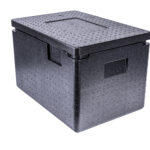
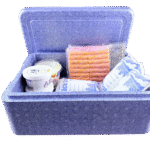
| Thermal logic | Aislamiento, refrigerante, tiempo de permanencia, and logger position | Protects sensitive product | Supports evidence-based release |
| Handling environment | Carretillas elevadoras, bastidores, transportadores, lavado, y regresa | Defines real abuse | Keeps the specification honest |
Consejos prácticos y recomendaciones.
• Review load support conditions every time a supplier shares a rating.
• Match the design to the route’s worst condition, not the average condition.
• Do not assume a thermal design is better if the lane does not truly need it.
Ejemplo ilustrativo de proyecto: a program improved both service life and cube efficiency after switching from a bulkier thermal shell to a route-qualified design with better logger placement and base support.
Cual cumplimiento, higiene, and proof points should you verify before rollout?
Good packaging decisions reduce quality risk because they make correct handling easier. Medical packaging operations care less about extreme load and more about disciplined handling. Smooth surfaces, low particle shedding, traceable labels, and predictable empty returns matter because the crate often moves components that will later enter controlled packaging areas. The packaging asset has to support the workflow without becoming a contamination source. For the buyer, this means the packaging file should cover more than dimensions and price. It should show how the asset supports cleanliness, identificación, route control, and any temperature or segregation requirements that matter to the product.
The most useful proof is specific. Ask for route test logic, cleaning compatibility, label durability, damage criteria, y soporte de servicio. If the program is regulated or audit-sensitive, ask how shipment evidence is stored and retrieved. If the pack is foldable or collapsible, look closely at hinges, articulaciones, and hidden areas because convenience should never create a sanitation penalty. The right proof helps you scale with less guesswork.
What should your approval checklist contain?
Build a short but non-negotiable checklist: adaptar, load support, exposición ambiental, facilidad de limpieza, visibilidad de datos, recovery plan, y soporte postventa. Then assign ownership. Operations should approve handling fit, quality should approve cleanliness and evidence, procurement should approve commercial terms, and engineering should confirm route performance. Cross-functional approval protects you from one-sided decisions.
| <fuerte>Approval topic</fuerte> | <fuerte>Pregunta clave</fuerte> | <fuerte>Needed proof</fuerte> | <fuerte>Por que importa</fuerte> |
| Capacidad de limpieza | Can the pack be cleaned as used? | Surface and method review | Protects quality and labor efficiency |
| Trazabilidad | Can the pack and load be identified quickly? | Label or digital ID plan | Supports control and investigations |
| Route proof | Was the pack tested under realistic conditions? | Pilot or validation result | Prevents scale-up surprises |
| Recovery support | Who owns returns and damaged assets? | Loop design and service plan | Protects payback |
Consejos prácticos y recomendaciones.
• Keep the approval checklist short enough to use but strict enough to matter.
• Do not separate technical review from commercial review. They influence each other.
• Re-approve when the route, producto, or wash process changes in a meaningful way.
Ejemplo ilustrativo de proyecto: one buyer caught a hygiene issue before rollout by reviewing fold joints during the approval process rather than after the first wash cycle.
How do you build a reusable system that pays back in the real world?
Real payback comes from operating discipline. The first cost of a reusable asset is only one line in the model. The real value appears in lower damage, better cube, manejo más rápido, fewer expendables, and more stable processes. But those gains only show up when turns are real, losses are controlled, and someone owns the return and cleaning loop. A reusable program without loop discipline is just durable chaos.
Build the model around actual route numbers: purchase cost, vueltas, tasa de pérdida, handling or wash cost, avoided damage, and avoided labor. Then run a pilot and compare the model with reality. If recovery is weak, fix that before buying more containers. If one footprint solves most of the route, standardize around it. Programs scale faster when the loop stays simple and measurable.
Una herramienta de decisión práctica para los equipos de adquisiciones
Score suppliers against four big questions. Does the design fit the route? Can the supplier prove performance? Is the pack easy to clean, pista, y recuperarse? Can the service model support scale? If the answer is weak on any one of those, a lower piece price will not save the project. Use that tool to keep operations, finance, and quality aligned on the same decision.
| <fuerte>Impulsor de costos</fuerte> | <fuerte>Que revisar</fuerte> | <fuerte>Typical reality</fuerte> | <fuerte>Lo que significa para ti</fuerte> |
| Impulsor de costos | que estimar | Common blind spot | Better buyer view |
| Turns and recovery | How many successful loops you will really achieve | Using optimistic assumptions | Model with pilot data |
| Damage avoided | Reclamos, deterioro, and breakage reduction | Leaving quality savings out | Include product-protection value |
| Labor avoided | Reembalaje, restacking, búsqueda, y eliminación | Ignoring time savings | Count handling as part of ROI |
| Service support | Refacción, reemplazos, and fleet visibility | Treating after-sales as optional | Price the whole program |
Consejos prácticos y recomendaciones.
• Pilot one route first and capture turn data before scaling.
• Report cost per successful turn and damage avoided every month.
• Keep footprint variety low until the loop is stable and visible.
Ejemplo ilustrativo de proyecto: a buyer expected the payback to come mainly from reusing the container, but the largest gain came from faster receiving and fewer product claims.
What should you do now if you want a strong 2026 resultado?
Act on the trends that change daily work. Reuse and recyclability rules are tightening, digital visibility is easier to add, and buyers increasingly expect route-specific proof. That means the opportunity is real, but so is the need for discipline. el mas fuerte 2026 programs are not the ones with the most features. They are the ones with the clearest route logic and the cleanest operating standard.
If you are comparing suppliers today, ask for one pilot design, one clear success scorecard, and one honest view of the recovery loop. That will tell you more than a dozen generic presentations. Once the route is proven, scale deliberately, keep your footprint family tight, and use simple visibility metrics to keep the loop healthy. That is how a packaging purchase turns into a durable competitive advantage.
The best next step for most buyers
Choose the lane where failure hurts most and where recovery is easiest to observe. That combination gives you fast learning and a fair test of value. For many organizations, one route, one footprint, and one quarter of measured use will reveal whether the design deserves a wider rollout. Good reusable systems are built through disciplined iteration, expansión sin prisas.
| <fuerte>2026 acción</fuerte> | <fuerte>Por que importa</fuerte> | <fuerte>primer movimiento</fuerte> | <fuerte>Expected result</fuerte> |
| Pilot a real lane | Turns assumptions into data | Choose one repeat route | Better sourcing confidence |
| Tighten the brief | Reduces misalignment with suppliers | Define route, limpieza, and return logic | Menos rediseños más adelante |
| Add visibility | Improves recovery and exception control | Use IDs and simple dashboards | Lower losses and clearer ROI |
| Scale with standards | Protects performance as volume grows | Standardize approved footprints | More stable operations |
Consejos prácticos y recomendaciones.
• Pick the lane with the clearest pain and the clearest return path.
• Review pilot data with operations, calidad, ingeniería, and procurement in the same room.
• Scale only after you can explain the value with numbers everyone trusts.
Ejemplo ilustrativo de proyecto: a company that limited the first rollout to one high-frequency lane found problems early, corrected them quickly, and then expanded with much stronger internal support.
2026 developments and trends for collapsible plastic crates for medical packaging
el mas fuerte 2026 buying trend is convergence. Buyers now want one packaging decision to support protection, velocidad operativa, auditabilidad, and waste reduction all at once. That is why the best collapsible plastic crates are designed around a specific lane, tested with real loads, and connected to a simple recovery plan from the beginning.
Últimos desarrollos de un vistazo
• Reusable packaging programs are being tied more closely to barcode, QR, or RFID-based asset visibility.
• Procurement teams are asking for route-specific proof instead of generic brochure claims about load or hold time.
• Sustainability pressure is shifting sourcing toward reusable systems with clear recovery plans and measurable turn counts.
Another important shift is regulatory timing. En Europa, PPWR moves from policy discussion into operational planning, and in healthcare and food, documentation and cleanliness remain as important as the shell itself. The best next step is usually a disciplined pilot with measurable criteria rather than a broad rollout based on vendor promises.
Preguntas frecuentes
What is the first thing to standardize when buying collapsible plastic crates?
Start with footprint and handling rules. If the base size works across storage, transporte, y regresar, everything else becomes easier to control, from stacking to washing to asset counting.
When should you choose a thermal or insulated design?
Choose it when the route and product label require temperature buffering or documented control. Do not pay for insulation on lanes where the product, tiempo de permanencia, and environment do not justify it.
What makes a reusable packaging rollout fail most often?
Poor recovery discipline is the most common reason. A great container cannot save a program if no one owns returns, cleaning flow, y manejo de excepciones.
How big should the first pilot be?
Big enough to reveal losses, handling issues, y limpiando la realidad, but small enough to fix quickly. One route, one footprint, and clear success criteria is usually better than a wide but vague pilot.
What should a supplier conversation sound like in 2026?
Debería sonar específico. You want route details, lógica de prueba, metodo de limpieza, recovery assumptions, and service support discussed in practical terms, not generic promises.
Resumen y recomendaciones
The best collapsible plastic crates for medical packaging combine route fit, reliable structure, and a realistic reuse model. You need the container to protect device components, bandejas, bolsas, assembled kits, and secondary packaging materials, support clean handling, low empty-return volume, easy line-side staging, and clear component segregation, and stay manageable across component stores, clean assembly support zones, kitting aisles, and outbound medical pack stations. That usually means fewer, better footprints, clearer evidence, and a return loop that someone actually owns.
Tu próximo paso debería ser simple: define one pilot lane, write the qualification criteria, test the pack with the real product, and measure turns, daño, mano de obra, y recuperación. If the numbers work, scale with discipline. If they do not, improve the design before ordering more assets. That is how you turn reusable packaging from a good idea into an operating advantage.
Acerca de Tempk
Y tempk, we focus on reusable cold-chain and transport packaging solutions that are easier to handle, más fácil de limpiar, and easier to standardize. Nuestro enfoque es práctico.: match the container to the route, el producto, and the return loop rather than forcing a generic item into a complex operation.
For projects involving medical packaging, we typically emphasize fit-for-process design, materiales duraderos, and packaging layouts that support traceability and repeatable handling. If you are planning a new program, the most useful next move is to compare one or two candidate designs on a real lane and review the results with operations, calidad, and procurement together.