OEM de caja de hielo comercial: Cómo elegir, Personalizar & Manténgase a la vanguardia en 2026
Actualizado: 08 Enero 2026
OEM de cajas de hielo comerciales (fabricantes de equipos originales) construye las neveras portátiles que ves en los camiones de reparto, hospitales y en viajes de campamento. Su elección de socio afecta el tiempo que sus productos permanecen fríos, qué tan duradero es el refrigerador y si cumple con las regulaciones en evolución. En esta guía completa aprenderá cómo los diferentes métodos de fabricación afectan el aislamiento., Los materiales que mantienen el hielo congelado durante días., y por qué la automatización y la sostenibilidad están dando forma al 2026 paisaje de cadena de frío. En el camino verás ejemplos prácticos., un diagrama de sección transversal de una nevera moderna y consejos prácticos para ayudarle a seleccionar el OEM adecuado.
Este artículo te ayudará:
Comprender los métodos de fabricación.. Descubra cómo funciona el moldeo rotacional, El moldeo por inyección y el moldeo por soplado afectan la resistencia., retención de peso y hielo.
Compara materiales y tecnologías de aislamiento.. Descubra por qué las carcasas de polietileno y la espuma de poliuretano siguen siendo populares, pero los paneles de aislamiento al vacío ofrecen el mejor rendimiento térmico.
Navegar por las tendencias regulatorias y del mercado. Descubra cómo está creciendo el mercado de los refrigeradores y por qué las normas de embalaje de la UE que prohíben determinados plásticos de un solo uso 2030 están acelerando la demanda de productos duraderos, refrigeradores reutilizables.
Personalización del plan y branding.. Explore cómo los OEM pueden incrustar logotipos, elija colores y agregue características funcionales para diferenciar su producto.
Prepárate para 2026 tendencias. Obtenga información sobre la automatización, microcumplimiento, La eficiencia energética y la integración de tecnologías inteligentes darán forma a la cadena de frío del mañana..
¿Qué es un OEM de caja de hielo comercial??
un comercial caja de hielo OEM es un fabricante que diseña y produce refrigeradores para que otras marcas los etiqueten y vendan.. Estas empresas se encargan del diseño de moldes., selección de materiales, Inyección de aislamiento y control de calidad para que los minoristas y las empresas farmacéuticas puedan centrarse en la marca y la distribución.. A diferencia de los productos disponibles en el mercado, Los OEM le permiten personalizar la capacidad, características y estética para su caso de uso. Ya sea que necesite una hielera resistente para los equipos de construcción o una unidad liviana para la entrega de comestibles en el último kilómetro, asociarse con un OEM capaz garantiza un rendimiento y cumplimiento consistentes.
Cómo funciona la fabricación OEM y por qué es importante
cajas de hielo comerciales se fabrican utilizando uno de los tres procesos principales:
moldeo rotacional (rotomoldeo) hace girar un molde hueco lleno de polvo de polietileno en un horno calentado. El material cubre el molde uniformemente., produciendo un sin costura, carcasa de paredes gruesas con esquinas reforzadas. Este lento proceso crea refrigeradores duraderos con una retención de hielo superior pero aumenta el peso y el costo..
moldeo por inyección Inyecta plástico fundido, como polipropileno, en un molde de acero.. Se producen dos carcasas que luego se unen con aislamiento de espuma.. Las costuras visibles pueden convertirse en puntos débiles.. Estas hieleras son más livianas y económicas de producir, pero normalmente conservan el hielo solo durante uno a tres días..
moldeo por soplado Infla un tubo de plástico fundido dentro de un molde para formar una parte hueca.. Es rápido y rentable para formas simples, pero ofrece un espesor de pared menos uniforme y requiere aislamiento separado..
Comprender estos métodos le ayudará a elegir el OEM adecuado según su durabilidad., volumen y costo de producción. Los refrigeradores rotomoldeados son ideales para aplicaciones premium como excursiones al aire libre o transporte de vacunas.. Las unidades moldeadas por inyección son ideales para obsequios promocionales o viajes cortos, mientras que los diseños moldeados por soplado funcionan para grandes volúmenes, necesidades de bajo costo.
| Método de fabricación | Espesor de pared típico | Retención de hielo | Mejor para |
| rotomoldeo | 2–3 pulgadas | 7–10 días | Viajes largos, uso profesional |
| Moldeo por inyección | < 1 pulgada | 1–3 días | salidas casuales, obsequios |
| Moldeo por soplado | Variable | 2–4 días | formas simples, alto volumen |
Consejos prácticos para elegir un proceso de fabricación
Evalúe su solicitud: Si tus productos deben permanecer fríos durante una semana en lugares remotos, invertir en refrigeradores rotomoldeados o aislados al vacío. Para una lonchera rápida o una campaña promocional, una unidad moldeada por inyección puede ser suficiente.
Considere el volumen y el momento del pedido: El rotomoldeo se adapta a tiradas de volumen bajo y medio porque los ciclos son lentos, mientras que el moldeo por inyección y soplado escala fácilmente para pedidos grandes. Planifique los plazos de entrega en consecuencia.
Plan de personalización: El rotomoldeo permite moldear logotipos y amarres.. El moldeo por inyección ofrece detalles finos y colores vibrantes.. El moldeo por soplado permite mangos básicos pero de complejidad limitada..
Ejemplo del mundo real: Una startup de entrega de alimentos lanzó dos líneas de refrigeradores con su OEM. El modelo rotomoldeado premium presentado 5 mm paredes de polietileno, un núcleo de espuma de poliuretano de dos pulgadas, Pies antideslizantes y válvula de liberación de presión.. Ofrecía retención de hielo durante una semana pero costaba más por unidad.. La línea básica de moldeo por inyección utilizada 3 paredes de mm con inserciones de espuma, pestillos simples y portavasos. Los bajos costos de herramientas permitieron una producción de gran volumen para obsequios..
Cómo los materiales y el aislamiento afectan el rendimiento de la caja de hielo
Una nevera es tan buena como sus materiales.. Las carcasas exteriores proporcionan resistencia estructural y resistencia al impacto., mientras que el aislamiento ralentiza la transferencia de calor. Elegir la combinación correcta es crucial para el rendimiento térmico, durabilidad y peso.
Comparación de materiales de concha
| Material de la carcasa | Conductividad térmica (W/m·K) | Ventajas | Desventajas |
| Polietileno rotomoldeado | ~0,41 | Sin costura, durable, UVestable | Pesado; mayor costo |
| Nylon (conchas blandas) | ~0,25 | Ligero, flexible | Menos rigidez estructural |
| Espuma de poliestireno (EPS) | 0.026–0,04 | Barato, buen aislante | Frágil; monouso |
| Espuma de poliuretano (PU) | 0.022–0,035 | Excelente aislante, utilizado en refrigeradores duros | Agrega peso; mayor costo |
| Paneles de aislamiento de vacío (VIP) | 0.004–0,02 | Mejor aislamiento; puede mantener el hielo hasta 10 días | Alto coste de fabricación; solo modelos premium |
Por qué el polietileno y la espuma siguen siendo populares
Los refrigeradores de alta gama a menudo combinan una carcasa de polietileno rotomoldeado con espuma de poliuretano inyectada a presión.. Esta combinación equilibra resistencia y aislamiento.. El polietileno resiste la luz ultravioleta y los impactos., mientras que la espuma de PU tiene baja conductividad térmica. Estos refrigeradores pueden soportar un manejo brusco y mantener el hielo durante días..
El auge de los paneles aislantes al vacío
Los paneles de aislamiento al vacío reducen drásticamente la transferencia de calor al evacuar el aire de un núcleo poroso.. Los informes de la industria señalan que los VIP alcanzan conductividades térmicas tan bajas como 2 a 4 W/(m · k)—mucho más bajo que la espuma. Las cajas integradas pueden mantener temperaturas frías durante más de 120 horas en rangos de temperatura de –30 °C a 80 °C. Algunos modelos de consumo, como las cajas Qool, mantienen las temperaturas congeladas por debajo de –15 °C durante más de 3 días y hielo durante más de 17 días. Sin embargo, Los VIP son costosos y requieren un manejo cuidadoso para evitar pinchazos.. Aparecen principalmente en refrigeradores premium utilizados en productos farmacéuticos y envíos de alto valor..
Innovaciones en materiales aislantes.
Espumas avanzadas: Nuevas espumas con ratios de expansión de hasta 120× y muy baja conductividad térmica (~26,69 mW·m⁻¹ K⁻¹) ofrecer paredes más delgadas sin sacrificar el aislamiento.
Tubos de polímero compuesto.: Tubos livianos con conductividad alrededor. 6.5 con/(m · k) Iguala el rendimiento del titanio y resiste la corrosión., permitiendo estructuras más delgadas pero fuertes.
VIP basados en aerogel: La investigación de la NASA muestra que los núcleos de aerogel de sílice modificados con polímeros mantienen el espesor bajo vacío y al mismo tiempo ofrecen un aislamiento superior..
Dentro de una hielera moderna
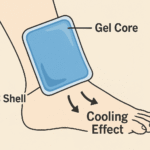
La sección transversal de arriba ilustra cómo las diferentes capas trabajan juntas.:
capa exterior: El polietileno rotomoldeado o el acero inoxidable proporcionan integridad estructural..
Capa de aislamiento: La espuma de poliuretano o múltiples VIP minimizan la transferencia de calor.
Revestimiento interno: El polipropileno o el acero de calidad alimentaria protegen el contenido y resisten las manchas..
Accesorios: Pestillos, Las bisagras y los pies antideslizantes añaden funcionalidad sin comprometer el aislamiento..
Elegir los materiales adecuados para su aplicación
Aventuras al aire libre: Opte por carcasas de polietileno rotomoldeado con espuma de PU para máxima resistencia y retención de hielo durante varios días.. Es posible que en algunas regiones se requieran pestillos resistentes a los osos.
Transporte médico: Considere refrigeradores basados en VIP con materiales de cambio de fase integrados para mantener rangos de temperatura estrechos (2–8 ° C) para vacunas y productos biológicos.
Eventos promocionales: El plástico moldeado por inyección con inserciones de espuma ofrece un aislamiento adecuado para un día y permite colores y logotipos vibrantes a un costo menor..
Personalización y marca: Adaptando las cajas de hielo a sus necesidades
Una de las mayores ventajas de trabajar con un OEM de cajas de hielo comerciales es la capacidad de personalizar funciones para casos de uso específicos.. Desde la marca y la capacidad hasta los mangos y los sensores inteligentes, La personalización puede diferenciar su refrigerador y mejorar la experiencia del usuario..
Control de diseño e identidad de marca.
Los OEM experimentados diseñan y fabrican sus propios moldes., lo que les permite controlar el espesor del aislamiento, ajuste de la tapa e integración del hardware. Puedes especificar:
Logotipos incrustados: Moldee logotipos o patrones directamente en la carcasa para mayor durabilidad..
Herramientas útiles para tomar decisiones
Comprueba los detalles antes de elegir el embalaje.
Estas herramientas rápidas pueden ayudarle a comparar el riesgo de la ruta, necesidades de dimensionamiento, opciones de refrigerante, y detalles del embalaje antes de solicitar una cotización.
Generador de lista de cumplimiento
Cree una lista de verificación práctica para la revisión del embalaje, envío, y documentación.
Crear lista de verificaciónCalculadora de hielo seco
Calcule las necesidades de hielo seco para envíos congelados o ultrafríos antes de empacar.
Estimar hielo secorefrigerante & Referencia PCM
Compare las opciones de refrigerante y PCM cuando una ruta necesite soporte de temperatura adicional.
Comparar opcionesColores y acabados: Elija colores personalizados o acabados metálicos que combinen con su marca.
Capacidad: Varía desde tamaño almuerzo 20 modelos qt a 110 cofres qt para uso comercial.
Funciones adicionales: Añadir abridores de botellas, gobernantes de peces, ruedas o mangos telescópicos.
Gestión de cantidades mínimas de pedido y plazos de entrega.
Enfriadores rotomoldeados A menudo tienen cantidades mínimas de pedido más bajas porque los moldes son más baratos., haciéndolos adecuados para tiradas más pequeñas.
Enfriadores por inyección y soplado Requieren mayores volúmenes para amortizar los costos de herramientas, pero permiten ciclos rápidos para pedidos grandes..
Al interactuar temprano con su OEM, puede pronosticar volúmenes y garantizar la producción oportuna. Muchos fabricantes ofrecen pedidos de prueba para probar el mercado antes de comprometerse con grandes compras..
Protegiendo tu diseño
Firme siempre acuerdos de confidencialidad y aclare los derechos de propiedad intelectual cuando comparta diseños personalizados.. Los OEM acreditados proporcionan informes de control de calidad, incluidas inspecciones dimensionales y pruebas de presión, para garantizar que su producto cumpla con las especificaciones..
Aplicaciones y casos de uso para cajas de hielo comerciales
Las hieleras comerciales sirven a diversos sectores, desde barbacoas en el patio trasero hasta partos médicos que salvan vidas. Comprender estos contextos le ayudará a elegir las funciones adecuadas y comunicar valor a sus clientes..
Recreación al aire libre y estilo de vida.
Neveras portátiles acompañan a los campistas, pescadores y seguidores. El caja más fresca mercado alcanzado A NOSOTROS $7.75 mil millones en 2025 y se proyecta que crecer a nosotros $12.83 mil millones por 2030, impulsado en parte por la recreación al aire libre. Los refrigeradores rotomoldeados dominan este segmento porque pueden mantener el hielo congelado durante 7–10 días y soportar un manejo brusco. Las marcas premium populares utilizan paredes gruesas y espuma inyectada a presión para lograr una retención de hielo durante una semana.. Los compradores buscan características como pies antideslizantes., puntos de amarre y pestillos a prueba de osos.
Entrega de alimentos y bebidas.
El aumento de las entregas de alimentos directas al consumidor y de los centros de microcumplimiento ha creado una demanda de soluciones compactas., refrigeradores apilables. Se prevé que las ventas de comestibles en línea alcancen 21.5 % de EE.UU.. ventas de comestibles por 2025, incitando a los minoristas a construir más pequeños, instalaciones estratégicamente ubicadas. Luz, Las cajas de hielo plegables con asas ergonómicas e insertos de refrigeración reemplazables ayudan a los repartidores a mantener temperaturas seguras mientras se instalan en vehículos pequeños.. Los tamaños personalizados garantizan un apilamiento eficiente en almacenes de microcumplimiento.
Logística farmacéutica y biomédica
Las vacunas y los productos biológicos requieren un transporte frío fiable (normalmente entre 2 y 8 °C). Se espera que la logística farmacéutica crezca a un ritmo 9.8 % Tocón. Los refrigeradores basados en VIP con materiales de cambio de fase y monitoreo de temperatura en tiempo real mantienen rangos de temperatura estrechos para hasta 6 días. Muchos modelos incluyen sensores GPS e IoT para garantizar el cumplimiento y permitir una intervención rápida si las temperaturas cambian.. Cumplimiento normativo y certificación (p.ej., seguridad en contacto con alimentos, resistencia al oso, Pruebas de la ONU para materiales peligrosos) son fundamentales a la hora de seleccionar un OEM.
Hieleras metálicas de baja temperatura.
Sectores especializados como laboratorios y transporte de productos químicos utilizan neveras metálicas con carcasa de aluminio o acero inoxidable.. El Mercado mundial de cajas de hielo metálicas de baja temperatura fue valorado en A NOSOTROS $401 millones en 2024 y se prevé que alcance A NOSOTROS $516 millones por 2032. Los consumidores valoran la eficiencia térmica y la longevidad; Se prevé que el mercado crecerá a 7.2 % Tocón a medida que las soluciones de refrigeración portátiles se vuelven más populares. Sin embargo, Las cajas de metal son más pesadas y costosas., limitar la adopción para el uso diario.
Cocinas industriales y comerciales.
Restaurantes, Las empresas de catering y los procesadores de alimentos utilizan grandes refrigeradores comerciales para almacenar ingredientes y transportar comidas preparadas.. A menudo requieren ruedas., Revestimientos aptos para uso alimentario y superficies fáciles de limpiar.. Los diseños plegables o entrelazados ayudan a optimizar el espacio en almacenes y vehículos de reparto.
Consejos para el usuario y orientación práctica
Para el transporte de vacunas: elija cajas rotomoldeadas o basadas en VIP con rendimiento validado. Utilice paquetes de cambio de fase en lugar de hielo húmedo para evitar congelar productos sensibles..
Para eventos al aire libre: embalar bloques de hielo en lugar de cubos, Predite la caja, y evite abrir repetidamente la tapa. Incluso el mejor refrigerador pierde eficiencia si se usa incorrectamente.
Para cargas pesadas: seleccione hieleras con asas reforzadas y considere diseños con ruedas para reducir la tensión.
Estudio de caso: Una empresa de logística farmacéutica adoptó cajas equipadas con VIP y sensores de temperatura IoT. Durante una ola de calor, los datos meteorológicos predictivos provocaron el desvío de los envíos de vacunas, garantizar que todos los paquetes permanezcan entre 2 y 8 °C y evitar su deterioro. Este enfoque proactivo ahorró miles de dosis y destacó el valor de la tecnología de aislamiento inteligente..
2026 Tendencias e innovaciones que dan forma a los OEM de cajas de hielo comerciales
La industria de la cadena de frío está evolucionando rápidamente. Mantener sus productos competitivos requiere comprender las tendencias que definirán 2026.
Revolución de la automatización
Instalaciones de almacenamiento en frío están adoptando tecnologías de automatización avanzadas para mejorar la eficiencia y abordar la escasez de mano de obra. Los desarrollos clave incluyen robots móviles autónomos (AMR), sistemas automatizados de almacenamiento y recuperación (COMO/RS), Gestión de inventario impulsada por IA y preparación de pedidos robótica. Estas tecnologías manejan la recolección y el embalaje en entornos hostiles., reducir la exposición a condiciones bajo cero y mejorar el rendimiento. Para fabricantes de equipos originales, La automatización significa una producción de moldes más precisa., procesos de formación de espuma consistentes y sensores inteligentes integrados en los refrigeradores.
Microfulfillment y logística urbana
El auge del comercio electrónico está cambiando dónde y cómo se construyen las instalaciones de almacenamiento en frío. Los minoristas están creando pequeñas, Centros estratégicamente ubicados para acortar la entrega de última milla.. Este cambio da como resultado instalaciones más pequeñas con zonas multitemperatura y clasificación automatizada. Los fabricantes de equipos originales de cajas de hielo deben diseñar piezas compactas, neveras portátiles apilables con asas ergonómicas, inserciones modulares y intercambio rápido paquetes de enfriamiento para cubrir las necesidades de estas instalaciones.
Ampliación de infraestructura
La demanda de espacio de almacén se está disparando. Los EE. UU.. requerirá un adicional 1 mil millones de pies cuadrados de espacio de almacén por 2025, y 50,000 nuevos almacenes serán necesarios a nivel mundial durante los próximos seis años. Las instalaciones más grandes y el almacenamiento en frío especialmente diseñado crean oportunidades para refrigeradores comerciales más grandes y diseños modulares que se integran perfectamente con los sistemas de paletas..
Eficiencia energética y sostenibilidad
Los crecientes costos de la energía y las regulaciones más estrictas están empujando a los operadores hacia soluciones sustentables. Las instalaciones están instalando aislamiento avanzado y refrigerantes naturales., integración de energía solar y uso de sistemas inteligentes de gestión de edificios para reducir el consumo de energía al 20–30 %. Para cajas de hielo, esto se traduce en formulaciones de espuma libres de agentes espumantes de hidrofluorocarbonos., Mezclas de resinas recicladas y adopción de VIP.. Reglamento de la UE sobre envases y residuos de envases (Páginas) prohíbe determinados envases de plástico de un solo uso a partir de 1 Enero 2030 e introduce requisitos de reutilización de Agosto 2026. OEM que diseñan duraderos, Los refrigeradores reutilizables e incorporan materiales reciclados se alinearán con estas regulaciones..
Integración de tecnología inteligente
La convergencia de la IoT, La inteligencia artificial y el análisis predictivo están convirtiendo los refrigeradores en dispositivos inteligentes. Por 2026, esperar generalizado monitoreo de temperatura en tiempo real, alertas de mantenimiento predictivo y recomendaciones de enrutamiento dinámico. El seguimiento meteorológico predictivo ayuda a optimizar el uso del refrigerante y la planificación de rutas, reduciendo el desperdicio hielo seco y gastos de envío. Los sistemas Trackandtrace proporcionarán alertas y acciones recomendadas si un envío se detiene, proteger la integridad del producto. Los OEM que incorporan sensores y se asocian con proveedores de software ofrecerán más valor a los clientes.
Presiones laborales y de recursos
Persiste la escasez de mano de obra en ambientes fríos. Muchos 3PL están cambiando a turnos rotativos o a tiempo parcial para evitar el agotamiento. Los suministros de hielo seco y refrigerante están limitados, hacer que la gestión de recursos sea crítica. Diseñar refrigeradores que maximicen la eficiencia del refrigerante (como los diseños VIP que requieren menos refrigerante) puede ayudar a los proveedores de logística a gestionar recursos limitados..
Preguntas frecuentes
Q1: ¿Cuánto tiempo puede una hielera comercial rotomoldeada mantener el hielo congelado??
Los refrigeradores rotomoldeados de alta calidad tienen espesor, paredes sin costuras y aislamiento de espuma inyectada que mantienen el hielo durante 7–10 días cuando se preenfría y carga correctamente. Son ideales para viajes prolongados o uso profesional..
Q2: ¿Vale la pena el costo superior del aislamiento al vacío??
Los paneles de aislamiento al vacío ofrecen la conductividad térmica más baja. (2–4 con/(m · k)). Pueden mantener temperaturas frías durante más de 120 horas y reducir la cantidad de hielo seco necesaria, haciéndolos valiosos para productos farmacéuticos o bienes de alto valor. Sin embargo, Son caros y deben manipularse con cuidado para evitar pinchazos..
Q3: ¿Qué tamaño de hielera debo elegir para el transporte de vacunas??
Las vacunas normalmente requieren temperaturas entre 2 y 8 °C. Seleccione una hielera con aislamiento validado, paredes gruesas y, idealmente, VIP o materiales de cambio de fase. Asegúrese de que se ajuste a la cantidad de viales y deje espacio para el refrigerante.. Pruebe siempre el enfriador en condiciones reales y utilice un registrador de temperatura para cumplir con las normativas..
Q4: ¿Cómo afectarán las regulaciones de embalaje de la UE al diseño de las cajas de hielo??
El PPWR de la UE introduce prohibiciones sobre formatos específicos de envases de plástico de un solo uso de Enero 1 2030 y requiere sistemas de reutilización de Agosto 12 2026. Los fabricantes deben diseñar refrigeradores que sean duraderos, reciclable o reutilizable y puede necesitar incorporar contenido reciclado. Elegir un OEM comprometido con prácticas sustentables ayudará a su marca a cumplir.
Q5: ¿Cómo evalúo las capacidades de un OEM??
Busque fabricantes con diseño y producción de moldes internos., Experiencia comprobada con los materiales y certificaciones que desee. (p.ej., seguridad en contacto con alimentos, pruebas resistentes a los osos). Pregunta por sus procesos de control de calidad., R&D apoyo y disposición para firmar acuerdos de confidencialidad.
Resumen de puntos clave
Los OEM de cajas de hielo comerciales le dan a su empresa control sobre el rendimiento del aislamiento, durabilidad y marca. El moldeo rotacional produce materiales resistentes, refrigeradores de alta retención con paredes gruesas, mientras que el moldeo por inyección y soplado ofrecen opciones más ligeras y asequibles. La selección de materiales importa: Las carcasas de polietileno con espuma de poliuretano siguen siendo fiables., pero los paneles de aislamiento al vacío proporcionan un rendimiento térmico inigualable. El crecimiento del mercado es fuerte en la recreación al aire libre, entrega de alimentos y productos farmacéuticos, y las regulaciones están presionando para que sean reutilizables., envases reciclables por 2030. Tendencias emergentes: automatización, microcumplimiento, sostenibilidad y tecnología inteligente: darán forma a los requisitos de los productos a través de 2026. Elegir un OEM confiable con capacidades de personalización, Los compromisos de control de calidad y sostenibilidad garantizan que su línea de enfriadores se destaque y cumpla con las demandas futuras..
Próximos pasos viables
Defina su caso de uso: Decida si necesita retención de hielo a largo plazo, portabilidad liviana o un equilibrio de ambos. Esto determina el mejor método y materiales de fabricación..
Interactúe temprano con un OEM: Comparte tus objetivos de diseño, pronosticar volúmenes de pedidos y discutir características personalizadas. Solicitar prototipos e informes de calidad.
Centrarse en la sostenibilidad: Opte por materiales reciclables, Espuma ecológica y diseños que cumplen con las regulaciones emergentes.. Comunica estos beneficios en tu marketing.
Integrar tecnología inteligente: Considere la posibilidad de incorporar sensores de temperatura y módulos de IoT para proporcionar visibilidad en tiempo real y cumplimiento de futuros estándares de cadena de frío..
Manténgase informado sobre las tendencias: Siga las publicaciones de la industria y las actualizaciones regulatorias para anticipar cambios en las leyes de embalaje., Desafíos laborales y preferencias de los consumidores..
Acerca de Tempk
Tempk es un fabricante líder de envases para cadena de frío que se especializa en cajas de hielo reutilizables., paquetes de gel y bolsas aisladas. Nuestro equipo combina experiencia en ciencia de materiales con fabricación moderna para ofrecer productos duraderos., refrigeradores de alto rendimiento para alimentos, Clientes farmacéuticos e industriales.. Priorizamos los materiales ecológicos y apoyamos a nuestros socios con R&D, orientación de personalización y cumplimiento. Ya sea que necesite un cofre rotomoldeado resistente o una caja avanzada con aislamiento al vacío, Le ayudaremos a diseñar una solución que mantenga sus productos seguros y su marca fuerte..
Listo para enfriar de forma más inteligente? Póngase en contacto con los expertos de Tempk hoy para una consulta sobre su próximo proyecto de caja de hielo comercial.