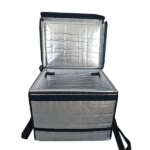
Freeze-sensitive vaccine packaging must prevent the coldest product location from falling outside the vaccine's approved limits while still protecting the shipment from heat. The main risks are often local: direct contact with frozen media, an unprotected carton near a wall, a lightly loaded shipper, or winter exposure during staging. A central air reading can look acceptable while a vial or carton near the coolant experiences a different condition.
The governing vaccine information should confirm freeze sensitivity and the approved transport condition. Packaging suppliers should not infer those limits from the word vaccine or from another product with a similar presentation.
Confirm the product risk before selecting coolant
The CDC Vaccine Storage and Handling Toolkit states that, for some refrigerated vaccines, a single exposure to 0°C or colder can completely destroy potency. It also notes that appearance is not a reliable indicator of proper storage. This is United States provider guidance, and the exact product instructions still control the disposition decision.
Record the vaccine, presentación, diluente, authorized temperature range, sensibilidad a la congelación, light requirements and excursion authority. If several products share a load, verify that every product permits the same packout and receiving process.
Find the credible freezing pathways
| Freezing pathway | Por que ocurre | Control to evaluate |
|---|---|---|
| Contacto directo con el refrigerante | A frozen surface touches a vial carton or transmits cold through a thin divider | Qualified barrier, payload basket and fixed spacing |
| Cold wall or corner | Coolant placement and enclosure geometry create a local cold point | Development sensor map and controlled payload location |
| Low payload | Lower thermal mass responds faster than the full load used in an informal test | Minimum-load qualification with representative dunnage |
| Overconditioned media | Coolant enters the packout colder or in a different phase than the approved procedure | Conditioning range, equipo, time and release check |
| Winter ambient exposure | Cold docks, vehicles or airside staging extract heat from the shipper | Perfil frío, seasonal configuration and dwell control |
| Variación de embalaje | un divisor, relleno, logger or carton is moved or omitted | Visual work instruction, training and line verification |
The most useful risk review follows the packout from coolant preparation through receiving. It includes time on the packing bench, movement to the carrier, vehicle and hub exposure, customs or transfer delays, delivery staging and the receiver's unpacking process.
Use a freeze protection architecture
A freeze-protection design typically separates the vaccine from the cold source and controls the thermal state of the media. The design may use conditioned water-based packs, a PCM selected for the operating region, a protected payload cavity or a purpose-built freeze-preventive carrier. The correct choice depends on the product, route and operating resources.
WHO's cold box and vaccine carrier guidance describes freeze-preventive products with a barrier between frozen water packs and the vaccine compartment. WHO notes a tradeoff: the barrier can reduce storage volume. The feature is useful only when the container and loading method fit the program's actual needs.
For United States non-emergency provider transport, the CDC toolkit discusses PCMs conditioned between 4°C and 5°C and warns against using frozen paquetes de gel o paquetes de refrigerante from original vaccine shipments for refrigerated vaccines. Para programas de vacunación, WHO's passive-container and coolant guidance gives context-specific instructions for frozen, acondicionado, cool and warm water packs. These are not interchangeable recipes; the applicable product and program procedure must choose the method.
Herramientas útiles para tomar decisiones
Comprueba los detalles antes de elegir el embalaje.
Estas herramientas rápidas pueden ayudarle a comparar el riesgo de la ruta, necesidades de dimensionamiento, opciones de refrigerante, y detalles del embalaje antes de solicitar una cotización.
Calculadora de acumuladores de frío
Estimación de la cantidad de bolsas de hielo en gel para envíos refrigerados y planificación práctica de rutas.
Estimar las bolsas de hielorefrigerante & Referencia PCM
Compare las opciones de refrigerante y PCM cuando una ruta necesite soporte de temperatura adicional.
Comparar opcionesRevestimiento de caja & Dimensionamiento de la cubierta de paleta
Lógica de tamaño de revestimiento de cajas y cubiertas de paletas para proyectos de embalaje aislado.
Estimar el tamañoTest the coldest credible configuration
Qualification should challenge the packout with conditions that could create the lowest product temperature. A hot profile alone cannot establish freeze protection.
- Test the minimum payload or another justified low-thermal-mass case.
- Apply the approved cold ambient profile and route duration.
- Use the exact coolant, cantidad, conditioning and placement intended for operations.
- Place development sensors near likely cold points as well as representative product locations.
- Include the approved separators, cestas, relleno de vacíos, cartons and closure.
- Define acceptance criteria before testing and record every deviation.
The WHO shipping-container qualification supplement recommends documenting the full assembly, acondicionamiento de componentes, product loading and monitor locations. It also recommends testing representative minimum and maximum loads and accounting for route, modo, perfil ambiental y duración. Those details keep a successful result attached to the configuration that produced it.
Map sensors before choosing routine logger positions
Development testing should use enough measurement points to identify the coldest and warmest product locations. Likely cold points may sit beside a coolant face, at a corner, under the lid or in a lightly buffered layer. The sensor map should represent actual product positions rather than only the empty air space.
Routine monitoring can use fewer devices if their positions are justified by mapping and the receiving decision. The SOP should state whether the device measures air, a buffered condition or product-adjacent temperature, and the quality team should understand the lag and limitations of that measurement.
Control packing and receiving decisions
Freeze protection can fail when a correct design is assembled incorrectly. A packing instruction should include photographs or drawings, coolant release criteria, disposición de carga útil, barrier orientation, posición del registrador, closure and maximum staging time. Operators need a clear check for the wrong coolant, missing divider and incorrect payload count.
Al recibir, record the delivery time, condición del paquete, logger status and any evidence of displacement, leakage or wet cartons. If monitoring shows an excursion or the packout is visibly compromised, quarantine the product and follow the vaccine owner's excursion procedure. Do not release or discard vaccine based only on the look of the vials, the state of the coolant, or a generic packaging rule.
Evaluate supplier evidence and change control
Ask the supplier for evidence tied to the proposed configuration:
- Packout drawing with usable payload space and coolant separation.
- Especificación de refrigerante o PCM, fill mass and conditioning method.
- Cold and hot profiles, minimum and maximum payloads and sensor map.
- Results against predefined acceptance criteria and documented deviations.
- Packing instruction and training materials.
- Critical material list and notification process for design or supplier changes.
- Inspection and retirement criteria if the shipper or coolant is reused.
Requalification or documented review should follow changes that can alter the thermal path. Examples include coolant formulation, pack fill, aislamiento, disposición del panel, espesor de barrera, geometría de carga útil, ruta, duration and seasonal exposure.