Actualizado 30 Diciembre 2025
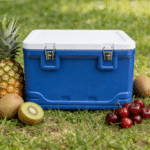
La cadena de frío mueve las vacunas, kits de comida y mariscos en todos los continentes manteniéndolos fríos. Un EPP aislado resistente a productos químicos y de alta resistencia. (Polipropileno expandido) Box es el caballo de batalla detrás de esta cadena de suministro.. Estos recipientes reutilizables pueden conservar vacunas entre 2 y 8 °C o alimentos congelados a –18 °C durante hasta 72 horas, y los diseños híbridos con paneles aislados al vacío amplían el rendimiento a 96 horas. Porque las cajas son livianas., químicamente inerte y reutilizable cientos de veces, Ofrecen mejor protección y sostenibilidad que las neveras portátiles de espuma desechables.. Esta guía explica la ciencia de los materiales., beneficios, criterios de selección y 2025 Tendencias para ayudarle a elegir la solución adecuada..
Este artículo responderá:
¿Qué es una caja de EPP aislada y resistente a productos químicos??
¿Cómo mejora la resistencia química la seguridad y la durabilidad??
¿Qué industrias se benefician más de estas cajas en 2025?
Cómo seleccionar, Empacar y mantener una caja de EPP para maximizar la reutilización.?
¿Cuáles son las últimas tendencias e innovaciones que están dando forma a los envases de EPP en 2025?
¿Qué es una caja de EPP aislada y resistente a productos químicos??
Polipropileno expandido (PPE) Es una espuma de células cerradas conocida por su excepcional relación resistencia-peso., resistencia al impacto, aislamiento térmico y absorción de energía. A diferencia del poliestireno quebradizo, Cada perla de polipropileno atrapa el aire dentro de una celda sellada., dando a la espuma resistencia y baja conductividad térmica. Según la Federación Británica de Plásticos, El EPP proporciona una excelente absorción de energía, resistencia al impacto múltiple, flotabilidad y resistencia al agua y a los químicos, y el material ofrece una alta relación resistencia-peso y 100 % Reciclabalidad. Las densidades pueden variar desde 15 a 200 gramos por litro y se moldean en fuertes, formas ligeras.
A Caja de EPP aislada y resistente a productos químicos es un recipiente reutilizable hecho de esta espuma. Sus celdas selladas bloquean la transferencia de calor y absorben los impactos., mientras que la química del polipropileno resiste los aceites., ácidos, disolventes y soluciones alcalinas. Las pruebas industriales califican al EPP como "bueno" frente a productos químicos como el ácido acético, acetona e hidróxido de sodio. El material permanece estable desde –40 °C hasta +110 °C y se funde sólo por encima 160 °C, permitiendo la esterilización con agua caliente sin deformación. con menos de 0.3 % Absorción de humedad y capacidad de recuperarse después de impactos repetidos., una caja de EPP bien construida puede soportar 500 ciclos de reutilización.
Propiedades del material central y resistencia química
El EPP combina varias propiedades que lo hacen ideal para embalaje de cadena de frío y servicio resistente a productos químicos.:
| Propiedad | Evidencia | Por que importa |
| Impacto y absorción de energía. | La estructura de celda cerrada del EPP proporciona una excelente absorción de energía y resistencia a múltiples impactos.. | Evita daños por caídas o vibraciones durante el transporte y prolonga la vida útil de la caja.. |
| Aislamiento térmico | La espuma atrapa aire en cada cuenta., lo que resulta en una baja conductividad térmica y la capacidad de mantener temperaturas de -40 °C a +110 °C. | Mantiene las vacunas entre 2 y 8 °C o los mariscos congelados a –18 °C durante 72 horas y hasta 96 horas con paneles híbridos. |
| Resistencia química | Las cadenas de polipropileno resisten la hinchazón o la degradación cuando se exponen a aceites., grasas, ácidos y disolventes. Las pruebas muestran una buena resistencia al ácido acético, acetona, álcalis y ácidos. | Protege los envíos de derrames y contaminación., especialmente para productos farmacéuticos y alimentarios. |
| Resistencia a la humedad | La superficie no porosa del EPP absorbe menos de 0.3 % humedad. | Mantiene el aislamiento incluso en condiciones de humedad y previene el crecimiento microbiano.. |
| Reutilizabilidad & Reciclabalidad | La resiliencia de la espuma permite 500 o más ciclos de reutilización. EPP es 100 % Reciclable y reprocesable sin pérdida significativa de rendimiento.. | Reduce el costo total de propiedad y respalda los programas de sostenibilidad.. |
| Fuerza ligera | Las densidades de 15 a 100 kg/m³ significan que el EPP ofrece alta resistencia con un peso reducido., proporcionando una alta relación resistencia-peso. | Reduce los costos de envío y mejora el manejo.. |
¿Cómo te ayuda esto?? Si envía productos sensibles que deben permanecer fríos mientras soportan un manejo brusco, una caja de EPP resistente brinda tranquilidad. Su resistencia química evita que las fugas degraden la espuma y contaminen el contenido., mientras que el aislamiento mantiene los productos dentro de los rangos de temperatura requeridos. Porque la caja se puede limpiar y reutilizar cientos de veces., Recupera su inversión rápidamente en comparación con las neveras portátiles desechables..
Producción y ciencia de materiales en términos simples
El EPP comienza con pequeñas perlas de polipropileno infundidas con un agente espumante. Estas cuentas están pre expandidas con vapor como palomitas de maíz., envejecido para estabilizar la presión interna y luego moldeado bajo calor y presión. durante el moldeo, Las cuentas se fusionan sin pegamento para formar un bloque de espuma sólido.. Puedes imaginar miles de globos en miniatura soldados entre sí: el aire atrapado proporciona aislamiento y amortigua los golpes.. La espuma resultante es flexible pero fuerte y mantiene su forma después de repetidos impactos.. Porque es termoplástico, el material se puede refundir y reciclar al final de su vida útil【447297896061516†L213-L214】.
La estructura de celda cerrada del EPP también significa que no absorbe agua.. Espumas tradicionales como el poliestireno expandido. (EPS) agrietarse y desmoronarse después de algunos impactos, pero el PPE se recupera. Su resistencia a la temperatura (–40 ºC a +110 °C) le permite transportar productos congelados y calientes. Al esterilizar la caja, Puedes usar agua caliente porque el material no se ablanda hasta alrededor 160 °C. Estas características se combinan para crear un recipiente resistente a productos químicos., duradero y seguro para el contacto con alimentos.
Consejos prácticos y sugerencias
Haga coincidir el espesor de la pared con el tiempo de viaje: Para viajes bajo 24 horas, una caja de EPP estándar con paquetes de gel puede ser suficiente. Para viajes de 48 a 72 horas, elige una caja con paredes al menos 1.5 pulgadas de espesor y considere agregar hielo seco o paneles aislados al vacío (VIP). Los sistemas híbridos EPP/VIP pueden extender los tiempos de espera más allá 96 horas.
Preenfriar todo: Enfría tus productos, refrigerantes y la propia caja antes de empacar. Llene los espacios vacíos con paquetes de gel adicionales para minimizar la circulación de aire..
Usar sensores: Conecte un registrador de temperatura o un sensor Bluetooth para realizar un seguimiento de las condiciones durante el tránsito. Esto ayuda con el cumplimiento normativo y proporciona datos para la mejora continua..
Limpiar después de cada uso.: Porque la superficie del EPP no es porosa y es resistente a productos químicos., es fácil de limpiar con detergente suave. Inspeccione si hay grietas y realice un seguimiento del número de ciclos de reutilización..
Ejemplo del mundo real: Un distribuidor farmacéutico cambió a cajas de EPP y eliminó el deterioro de las vacunas, reduciendo las pérdidas anuales de USD 1.2 millones a cero sobre 18 meses. La empresa realizó un seguimiento del uso de cada contenedor y los desinfectó entre envíos., demostrando el retorno de la inversión.
¿Qué industrias se benefician de las cajas de EPP resistentes a productos químicos??
Las cajas de EPP de alta resistencia se utilizan en productos farmacéuticos, alimento & bebida, comercio electrónico, embalajes para electrónica y automoción. Su capacidad para mantener rangos de temperatura estrechos., resistir la contaminación química y absorber impactos los hace versátiles. Veamos cómo los utilizan diferentes sectores y cómo puedes aplicarlos.
Aplicaciones específicas de la industria
| Industria | Requisitos clave | Cómo ayuda una caja de EPP resistente a productos químicos | Consejo práctico |
| Productos farmacéuticos | Mantener entre 2 y 8 °C y cumplir con las buenas prácticas de distribución (PIB). Prevenir la contaminación por derrames. | Mantiene la temperatura durante 72 a 96 horas con paquetes de gel o insertos VIP; integra sensores Bluetooth o RFID para monitoreo en tiempo real; Resiste la humedad y los derrames químicos., preservando las condiciones estériles. | Para ensayos clínicos, elija cajas híbridas EPP/VIP y conecte registradores Bluetooth para realizar un seguimiento de las excursiones. |
| Alimento & comercio electrónico | Mantenga la comida debajo 4 °C; minimizar el desperdicio; maximizar la eficiencia de entrega. | Aísla hasta 72 horas; Los diseños plegables o apilables ahorran espacio.; Las superficies resistentes a la humedad evitan la condensación.. | Para kits de comida, Utilice cajas apilables o plegables y paquetes de gel preenfriados.. Llene los espacios vacíos para reducir la circulación de aire.. |
| Electrónica & Automotor | Proteja los equipos sensibles de los golpes, aceites y solventes; reducir el peso del envío. | El EPP absorbe los impactos y recupera su forma.; La resistencia química protege los componentes de los aceites.. | Inserciones internas de moldes personalizados para dispositivos electrónicos y cajas limpias después de cada viaje para eliminar residuos aceitosos.. |
Por qué esto es importante para ti: Si opera en alguno de estos sectores, Las cajas de EPP resistentes a productos químicos reducen las pérdidas por variaciones de temperatura, derrames y roturas. Porque son reutilizables y ligeros, También reducen los costos de envío y reemplazo.. En productos farmacéuticos y alimentarios., Los reguladores requieren estabilidad de temperatura e higiene.; Las cajas de EPP le ayudan a cumplir esos estándares. En electrónica y automoción., La absorción de energía y la resistencia química de la espuma protegen los componentes de alto valor de golpes y aceites..
Estudios de casos y ejemplos
Ensayo farmacéutico: Un proveedor de logística de ensayos clínicos cambió de refrigeradores de EPS desechables a cajas híbridas de EPP/VIP con sensores Bluetooth. Los datos en tiempo real les permitieron intervenir antes de cualquier variación de temperatura., garantizar el cumplimiento y la seguridad del paciente.
Entrega de kit de comida: Un minorista de comestibles en línea utilizó cajas plegables de EPP para entregar kits de comida. El diseño plegable redujo el volumen de envío de devolución en 40 %, y la resistencia a la humedad impidió que la condensación dañara las etiquetas.
Envío de electrónica: Un fabricante de tecnología creó inserciones de EPP personalizadas para placas de circuito. El diseño liviano redujo los costos de envío., y los aceites resistentes a la espuma de células cerradas utilizados en la fabricación.. Las cajas reutilizables redujeron el desperdicio de embalaje en 60 % más de doce meses.
Cómo elegir y mantener una caja de EPP resistente
La selección de la caja EPP correcta depende de la duración del envío, fragilidad del producto, Logística de devolución y requisitos reglamentarios.. Aquí encontrará una guía de decisiones simplificada para ayudarle a determinar la mejor configuración para sus necesidades.:
Guía rápida de selección y mantenimiento
| Criterio de selección | Elección recomendada | Por que importa | Pregunta de autoevaluación |
| Duración del envío | • < 24 h: Caja EPP estándar con paquetes de gel. | ||
| • 48–72 horas: caja gruesa de EPP (≥1,5 en la pared) con hielo seco o paneles VIP | |||
| • > 72 h: sistema híbrido EPP/VIP | Hacer coincidir el aislamiento con el tiempo de tránsito garantiza que los productos permanezcan dentro de temperaturas seguras. | ¿Cuánto tiempo estará en tránsito su envío?? | |
| Fragilidad del producto | Utilice cajas con formas personalizadas y con inserciones para artículos frágiles.. | Los insertos evitan el movimiento y la rotura durante el transporte.. | ¿Su carga requiere amortiguación o particiones?? |
| Logística de devolución | Elija cajas plegables o apilables para reducir el volumen de devolución y ahorrar espacio en el almacén. | Los diseños plegables reducen los costos de envío y almacenamiento.. | ¿Planea devolver y reutilizar el contenedor?? |
| Cumplimiento regulatorio | Conecte registradores de temperatura y asegúrese de que las cajas cumplan con los estándares cGMP/GDP. | Admite auditorías y evita costosas excursiones. | ¿Necesita documentar el historial de temperatura para auditorías regulatorias?? |
| Limpieza y reutilización | Limpiar con detergente suave; Inspeccione si hay daños después de cada viaje.. | Maximiza la vida útil y mantiene la higiene.. | ¿Está su equipo capacitado en procedimientos de limpieza e inspección?? |
Mejores prácticas de embalaje y manipulación
Preenfriar todo: refrigerar los productos, refrigerantes y la caja para reducir la carga de calor inicial.
No escatimes en refrigerantes: Utilice más paquetes de gel o hielo seco de los que crea necesarios; subestimar puede provocar variaciones de temperatura.
Llenar espacios vacíos: Utilice rellenos de huecos o refrigerantes adicionales para minimizar el flujo de aire y los gradientes de temperatura..
Sellar correctamente: Asegúrese de que los pestillos y las juntas estén cerrados. Las cajas plegables pueden requerir atención adicional en las bisagras.
Monitorear y registrar: Conecte registradores Bluetooth o RFID para registrar las condiciones durante el tránsito.
Limpiar e inspeccionar: Después de cada uso, lavar la caja con detergente suave; La resistencia química del EPP facilita la eliminación de residuos.
Autoevaluación interactiva
Para ayudarle a elegir la caja EPP adecuada, responde las siguientes preguntas:
- ¿Cuánto tiempo dura su envío en tránsito?? (A) <24 h (B) 24–48 H (do) 48–72 h (D) >72 h
- ¿Sus productos son frágiles o contienen líquidos que podrían derramarse?? (Y/N)
- ¿Devolverás y reutilizarás el contenedor varias veces?? (Y/N)
- ¿Las regulaciones exigen que registres la temperatura durante todo el viaje?? (Y/N)
- ¿Tiene instalaciones para limpiar y desinfectar los contenedores después de su uso?? (Y/N)
Basado en tus respuestas, consultar la tabla de selección: Elija cajas más gruesas y sistemas híbridos para duraciones más largas., insertos personalizados para mercancías frágiles, diseños plegables para logística de devolución, registradores de temperatura para el cumplimiento y garantizar que los protocolos de limpieza estén implementados.
2025 Últimos desarrollos y tendencias en envases de EPP resistentes a productos químicos
El mercado de cajas de aislamiento EPP está evolucionando rápidamente a medida que convergen la sostenibilidad y la tecnología.. Archive Market Research estima que el mercado de cajas aislantes de EPP asciende a unos 2.000 millones de dólares en 2025 con un proyectado 7 % tasa de crecimiento anual compuesta a 2033. Más ampliamente, El mercado mundial de envases de cadena de frío está valorado en USD. 34.08 mil millones en 2025 y se prevé que alcance aproximadamente USD 95.31 mil millones por 2034 en una CAGR de 12.15 %. Otro análisis proyecta que el mercado crecerá desde USD 34.28 mil millones en 2025 a USD 100 mil millones por 2035 (Tocón 11.3 %). Las solicitudes de alimentos representan aproximadamente 60 % del mercado de cajas aislantes de EPP, mientras que los productos farmacéuticos representan aproximadamente 25 %. Estas son las tendencias clave que están dando forma 2025 y más allá:
Últimos avances de un vistazo
Sistemas de aislamiento híbridos: Combinando paneles aislados al vacío (VIP) con espuma EPP ofrece hasta cinco días de estabilidad de temperatura. Esto permite entregas remotas o de larga distancia sin hielo seco..
Sensores inteligentes: Los rastreadores Bluetooth o RFID integrados envían alertas cuando las temperaturas se salen de los rangos seguros, mejorar el cumplimiento y prevenir el deterioro.
Programas de logística circular: Programas de devolución para recoger cajas usadas, límpielos y vuelva a moldear el material en nuevos contenedores.. El reciclaje de EPP reduce la demanda de materias primas y respalda los objetivos de sostenibilidad corporativa.
Logística habilitada por IA: Las plataformas de inteligencia artificial optimizan el enrutamiento, predice fallas en los equipos y habilita etiquetas inteligentes que cambian de color si se incumplen las condiciones de temperatura. Los análisis de IA mejoran la eficiencia y mantienen la integridad del producto.
Compromisos de sostenibilidad: Las corporaciones persiguen el respeto al medio ambiente, Embalaje reutilizable para cumplir con la responsabilidad ampliada del productor. (EPR) regulaciones. La reciclabilidad y durabilidad del EPP lo hacen atractivo para estos objetivos..
Presión regulatoria: Las directrices farmacéuticas y de seguridad alimentaria más estrictas exigen un control de temperatura y envasado validado.
Crecimiento del mercado reutilizable: Se espera que el mercado de envases reutilizables para la cadena de frío crezca desde USD 4.97 mil millones en 2025 a USD 9.13 mil millones por 2034 (Tocón 6.98 %).
Perspectivas del mercado y tendencias regionales
Dominio de América del Norte: En 2024 América del Norte se mantuvo alrededor 36 % del mercado de envases de cadena de frío, impulsado por la fuerte demanda de productos farmacéuticos y alimentos procesados. El segmento de contenedores y cajas isotérmicos representó más de 58 % de la cuota de mercado.
Región de más rápido crecimiento: Se prevé que Asia Pacífico será el mercado de más rápido crecimiento debido al aumento de los ingresos y la ampliación de la infraestructura de la cadena de frío.. La bien establecida industria farmacéutica y el auge del comercio electrónico en esta región impulsan la adopción.
Cambios de material: Mientras que EPS dominó el 2024 mercado, El cambio hacia materiales reutilizables como EPP y VIP indica un alejamiento a largo plazo de los plásticos de un solo uso.. Las empresas están invirtiendo en materiales de cambio de fase de base biológica y aislamientos reciclables..
Inversión e innovación: Capital riesgo y grandes empresas de logística financian startups que desarrollan envases inteligentes, Seguimiento habilitado por IA y modelos de alquiler por caja basados en suscripción.
Conclusiones prácticas: Manténgase a la vanguardia de las regulaciones en evolución; integre sensores de IoT para visibilidad en tiempo real; asociarse con proveedores que ofrecen programas de devolución. Estas medidas mejoran el cumplimiento, reducir el desperdicio y señalar el liderazgo en sostenibilidad.
Preguntas frecuentes
¿A qué productos químicos son resistentes las cajas de EPP?? EPP resiste los aceites, grasas, Ácidos y muchos disolventes.. Las pruebas muestran una buena resistencia al ácido acético, acetona y soluciones alcalinas, haciéndolo adecuado para envíos desordenados y reactivos de laboratorio..
¿Cuánto tiempo puede mantener la temperatura una caja de EPP resistente a productos químicos?? Una caja de EPP estándar mantiene el contenido frío durante aproximadamente 72 horas con paquetes de gel y hasta 96 horas cuando está equipado con paneles VIP. El preenfriamiento y suficientes refrigerantes prolongan el tiempo de espera.
¿Cuántas veces se puede reutilizar una caja de EPP?? Una caja de EPP bien diseñada se puede limpiar y reutilizar 500 o más veces. Realice un seguimiento del uso e inspeccione si hay daños para maximizar la vida útil.
¿Es una caja de EPP segura para alimentos y productos farmacéuticos?? Sí. El EPP no es tóxico, resistente a la humedad y a los productos químicos, y no apoya el crecimiento microbiano. Se puede esterilizar con vapor o agua caliente gracias a su alto punto de fusión..
¿Se pueden reciclar las cajas de EPP?? EPP es 100 % Reciclable y reprocesable sin pérdida significativa de rendimiento.. Sin embargo, la infraestructura actual recicla sólo entre 15 y 20 % de EPP posconsumo; programas de recuperación mejoran la recuperación.
Resumen y recomendaciones
Las cajas de EPP aisladas y resistentes a productos químicos ofrecen una combinación única de durabilidad., aislamiento y sostenibilidad. La estructura celular cerrada del material proporciona una excelente absorción de energía., aislamiento térmico y resistencia química, mientras que densidades tan bajas como 15 kg/m³ mantienen las cajas ligeras. Una sola caja puede mantener entre 2 y 8 °C o –18 °C durante 72 a 96 horas y resistir 500 ciclos de reutilización. Porque el EPP es químicamente inerte y no poroso., resiste los aceites, ácidos y disolventes. Su reciclabilidad y reutilización respaldan los objetivos de la economía circular.. El mercado de envases de cadena de frío está creciendo rápidamente (proyectado alcanzar el USD 95 mil millones por 2034), y el papel del EPP se ampliará a medida que las empresas busquen sostenibilidad, aislamiento de alto rendimiento.
Plan de acción
Evalúa tus necesidades: Determinar la duración del envío, fragilidad del producto, Requisitos reglamentarios y logística de devolución.. Utilice la tabla de selección para elegir el espesor de pared adecuado, Insertos y sistemas híbridos..
Invertir en sensores: Incorpora rastreadores Bluetooth o RFID para monitorizar temperatura y ubicación en tiempo real, ayudándole a cumplir con las regulaciones GDP/CGMP y evitar daños.
Implementar programas de reutilización: Limpio, Inspeccionar y rastrear cada caja después de su uso.. Considere diseños plegables o apilables para reducir el volumen de envío de devolución.
Prepárate para el futuro: Manténgase informado sobre las próximas regulaciones de embalaje e iniciativas de sostenibilidad. Explora el aislamiento híbrido, La IA permitió que los programas circulares y de logística siguieran siendo competitivos.
Conéctate con expertos: Trabaje con especialistas en embalaje para diseñar insertos personalizados o soluciones híbridas EPP/VIP adaptadas a sus productos.. Busque proveedores que ofrezcan programas de devolución y reciclaje.
Acerca de Tempk
Tempk se especializa en soluciones de embalaje para cadena de frío de alto rendimiento. Nuestras cajas de EPP son ligeras, duraderos y proporcionan un aislamiento térmico y una resistencia al impacto superiores en comparación con las espumas tradicionales. Mantienen temperaturas estables para cargas sensibles como alimentos y productos farmacéuticos y se pueden personalizar según el tamaño., densidad y marca. La notable durabilidad y resistencia al impacto de la espuma significa que cada caja resiste manipulaciones repetidas.. Apostamos por la sostenibilidad a través de diseños reutilizables, Programas de recuperación e integración de sensores inteligentes para mejorar la trazabilidad..
Llamado a la acción: Para analizar cómo las soluciones de EPP resistentes a productos químicos de Tempk pueden proteger sus productos y reducir costos., contacta con nuestros expertos. Le ayudaremos a diseñar un sistema de embalaje reutilizable que cumpla con sus normativas., Necesidades medioambientales y logísticas..