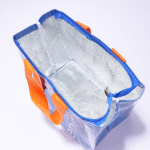
An insulated backpack manufacturer in 2026 must combine thermal design, human comfort, and production consistency. Unlike a standard insulated bag, the backpack format lives in motion. It is worn, opened quickly, moved through public spaces, and reused under physical stress. That means the best product is not simply the coldest one. It is the one that protects temperature while staying stable, cómodo, y fácil de usar.
Este artículo te ayudará a responder.:
- What makes an insulated backpack technically different from other thermal bags
- Which material and structure choices work best for mobile cold chain routes
- How current healthcare and transport expectations affect backpack qualification
- Why reusability, monitoring readiness, and ergonomics matter more in 2026
- How to evaluate an insulated backpack manufacturer with more confidence
Why is the backpack format special?
An insulated backpack is a thermal system and a wearable system at the same time. That means body contact, movimiento, load shift, and access frequency all affect real-world performance. If the backpack is unstable, users will compensate in ways that hurt temperature protection. If the straps are uncomfortable, the bag may be dragged or set down more often. If access is awkward, the bag may stay open longer than expected.
That is why the first step is to define the actual use environment. Is the user on a bike, on foot, inside a hospital campus, or moving between field sites? A backpack built for urban delivery is not automatically right for medical outreach or sample collection.
Which materials and thermal systems should you prioritize?
Weight matters more in backpacks than in many other cold chain bags, so material discipline is critical. Flexible foam remains the core solution for many backpack products because it balances weight, aislamiento, y capacidad de fabricación. PCM becomes useful when the temperature band is narrow and you need more stability. VIP-enhanced structures can help in premium or highly constrained applications, but they add cost and design sensitivity.
Research reviews show that PCMs can store significant latent heat during phase change, which is useful for narrow-range thermal control, but they also require proper stabilization to avoid leakage and cycling problems. DOE materials work similarly explains why VIP concepts remain attractive in compact cold chain design: they can deliver insulation performance far beyond conventional systems, though with real cost and durability tradeoffs. (PMC)
Material and design guide
- Practical design advice
- Keep the load center close to the back for stability
- Use reinforced strap anchoring and a strong base
- Match opening style to the user task
- Add modular dividers only when they improve real workflow
- Choose liners that clean fast and reveal residue clearly
Which current standards and guidance matter?
WHO’s current guidance is especially relevant for backpack products used in healthcare. Es 2026 temperature mapping tool says mapping and monitoring are integral to correct pharmaceutical storage conditions, and its 2025 temperature-monitoring device guidance says cold chain monitor cards are no longer recommended for in-country use. This supports a market direction where portable cold chain products increasingly need better logger-based evidence and smarter monitoring placement. (Organización Mundial de la Salud)
For healthcare air transport, IATA’s Temperature Control Regulations remain the key reference for packaging, cumplimiento, y manejo, and CEIV Pharma is now accessible to SMEs. That matters because smaller operators using backpack-style transport in healthcare or specialty logistics now encounter more professional quality expectations than before. (国际航空运输协会)
How should you evaluate the manufacturer?
The best insulated backpack manufacturer should understand both ergonomics and thermal validation. Ask how the supplier tests strap anchoring, balances load distribution, protects the base, and supports real-route testing. Ask how it controls material substitutions and locks the approved design for production. A good-looking sample without process control is not enough.
ISO describes ISO 9001 as a globally recognized quality-management standard, which is why it remains a useful sign of process maturity. ISO also says ISO 14001:2026 is in final production steps, which makes environmental-management capability increasingly relevant for buyers with sustainability targets. (国际标准化组织)
Cuadro de mando de proveedores
- Strap and seam durability logic
- Thermal packout understanding
- Pilot validation support
- Raw material control
- Reuse and cleaning design knowledge
- Documentation and change management
Ejemplo práctico: A campus medical team improved field usability after switching to a backpack manufacturer that rebalanced the load, added a more stable base, and redesigned the access panel. The thermal system stayed similar, but the field result improved because the product fit the user better.
Why is sustainability part of the conversation now?
The backpack format is naturally reusable, which already gives it an advantage in many workflows. Broader packaging pressure strengthens that position. The EU Packaging and Packaging Waste Regulation entered into force on 11 Febrero 2025 y se aplica desde 12 Agosto 2026, increasing pressure for packaging reduction, defensible material choices, and reuse thinking across many organizations. (EUR-Lex)
Life-cycle evidence in cold chain packaging supports the broader commercial case for reuse as well. A 2023 study found reusable VIP packaging outperforming disposable EPS systems across all evaluated environmental categories. The lesson for backpack buyers is not that every backpack beats every box. It is that lifecycle logic is now a meaningful part of product selection. (科学直达)
2026 latest insulated backpack manufacturer developments and trends
The category is growing more professional and more specialized. Food-delivery volume is still important, but healthcare outreach, sample movement, and institutional mobile logistics are raising technical expectations. Monitoring-friendly compartments, better ergonomics, cleaner reusable materials, and more modular interiors are becoming stronger product themes.
Últimos desarrollos de un vistazo
- Portable healthcare workflows increasingly favor better monitoring discipline. (Organización Mundial de la Salud)
- SMEs can now access stronger pharma-quality frameworks more easily. (国际航空运输协会)
- EU packaging policy is reinforcing the value of reusable formats ahead of August 2026. (EUR-Lex)
- Lifecycle-based buying is becoming more common in cold chain product selection. (科学直达)
Preguntas frecuentes
What is the biggest buying mistake in insulated backpacks?
Treating the product like a normal insulated bag. The wearable format changes stability, comodidad, and how users interact with the opening and payload.
Do I need a very rigid backpack?
No siempre. Use more structure when balance and access speed matter. Use a lighter flexible format when mobility and storage efficiency matter more.
How should I test a backpack before launch?
Use real users, real payload, real access frequency, and multiple temperature points. This reveals both thermal and ergonomic weaknesses.
Resumen y recomendaciones
The best insulated backpack manufacturer in 2026 is the one that can balance thermal protection, wearable comfort, and repeatable production. Good sourcing decisions start with a real route, a real user journey, and a clear idea of reuse expectations.
Your next step should be to build one pilot brief around a single use case and ask shortlisted manufacturers to solve that specific problem. It is the fastest way to identify real expertise.
Acerca de Tempk
Y tempk, we design portable cold chain products with practical attention to motion, load stability, and day-to-day usability. We value products that work well in the field and can be repeated reliably in production.
A strong next step is to test one backpack design with actual users and actual route behavior before scaling the project.