Sugerencias de enlaces internos
• /seafood-cold-chain-packaging/
• /how-to-ship-fresh-seafood/
• /leak-resistant-insulated-box-guide/
• /frozen-seafood-transport-best-practices/
Insulated Box Distributor Seafood Distributor
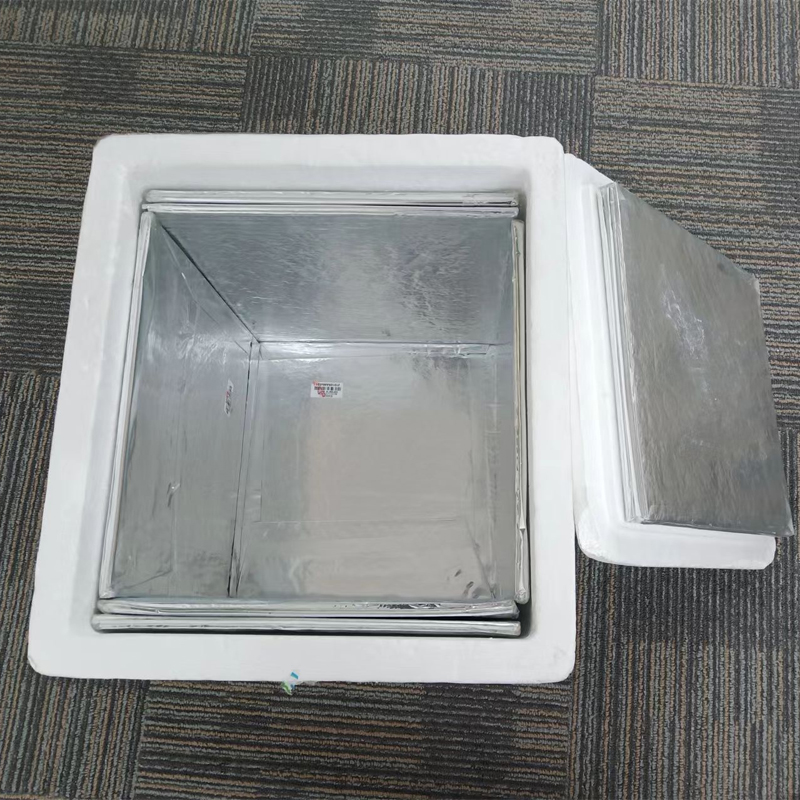
Insulated Box Distributor Seafood Distributor works best when you combine product education, qualification logic, and market reality into one buying decision. For fresh seafood, frozen fillets, mariscos, and value-added seafood products, you are balancing close-to-ice temperatures for fresh seafood or at or below -18°C for frozen products control, 12 a 96 hours lane protection, operator simplicity, and auditable documentation. Esta optimizado 2026 guide blends the strongest buyer, ingeniería, and industry viewpoints into a single decision framework so you can choose faster and with less risk.
Qué te ayudará a responder esta guía
• How insulated box distributor seafood distributor should be matched to fresh seafood, frozen fillets, mariscos, and value-added seafood products rather than chosen as a generic cooler
• Which design details protect close-to-ice temperatures for fresh seafood or at or below -18°C for frozen products performance during 12 a 96 horas de transito
• What proof, documentos, and qualification records reduce risk for seafood importers, distribuidores, procesadores, and wholesale logistics teams
• How to compare cost, sostenibilidad, and operational simplicity without sacrificing protection
• What a practical step-by-step selection process looks like for high-risk lanes in 2026
How should you evaluate Insulated Box Distributor Seafood Distributor in one practical framework?
Start with four questions. What exact temperature range must the payload hold? How long can the lane actually take under a realistic worst case? Who assembles the pack-out, and how often will they do it? What evidence will your customer, regulator, or quality team expect if something goes wrong? When you use those four questions together, a strong insulated box distributor seafood distributor choice becomes much clearer.
The right answer is usually not the cheapest box, the thickest wall, or the greenest claim in isolation. It is the design that reliably protects fresh seafood, frozen fillets, mariscos, and value-added seafood products across landing point to processor, processor to distributor, and distributor to foodservice or retail channels for 12 a 96 hours while keeping assembly simple enough to repeat. That means matching the insulated box to the lane, controlling refrigerant and cavity geometry, and validating the pack-out with real data instead of assumptions.
What does a good frozen seafood insulated shipper decision look like?
A good decision is specific. It identifies the payload temperature band of close-to-ice temperatures for fresh seafood or at or below -18°C for frozen products, the lane risk profile, the approved assembly method, and the proof needed before release. It also explains the business logic: why this shipper class was chosen, what failure it is designed to prevent, and where the operational limits sit. That level of clarity helps procurement, operaciones, and quality align instead of arguing from separate priorities.
| Framework step | Que hacer | Por que importa | Valor empresarial |
| Product requirement | Define true temperature and duration need | Remove unnecessary over-packaging | Reduces overspend |
| Mapeo de carriles | Model worst credible exposure | Avoid false confidence from average conditions | Cuts excursion risk |
| control de montaje | Simplify the pack-out | Lower operator variability | Mejora la repetibilidad |
| Qualification proof | Document data and limits | Support audits and customer review | Protects decisions under pressure |
Quick-start actions
• Use insulated box distributor seafood distributor only after you define the payload requirement, the lane, and the acceptable evidence standard.
• Standardize the visual work instruction before you scale purchasing volume.
• Pilot the design on a real lane with logger placement that reflects true product risk points.
• Review total delivered cost and recovery path together, because waste and freight often matter more than box price alone.
Fused lesson: the best-performing programs combine buyer discipline, lógica de ingeniería, y la realidad del mercado. When one of those three is missing, packaging decisions become fragile.
How should design and assembly be optimized for Insulated Box Distributor Seafood Distributor?
The strongest design is the one that can survive both the lane and the workplace. That means the box must be thermally capable, but it also must be easy to build correctly, close cleanly, etiqueta claramente, and receive without confusion. For fresh seafood, frozen fillets, mariscos, and value-added seafood products, that usually means minimizing loose parts, right-sizing the cavity, and using a refrigerant configuration that is hard to misplace.
Optimization also means setting boundaries. Define the approved payload mass range, the accepted refrigerant conditioning state, the maximum transit duration, and any prohibited substitutions. Without those limits, even a good design turns into a guess each time the order changes. Operationally mature programs use the insulated box as a controlled recipe, no es una sugerencia.
What should be standardized first?
Standardize the assembly sequence, the conditioning rules, and the small set of approved size options first. That gives you the biggest reduction in variability with the least complexity. Once those basics are stable, you can optimize freight cube, sostenibilidad, or market-specific accessories without destabilizing the core shipper performance.
| Optimization lever | Meta | Por que importa | Resultado |
| Cavity size | Fit the real payload mix | Removes excess air and extra coolant | Lower cube and better stability |
| Assembly sequence | Define the exact order of steps | Cuts operator variability | Mayor consistencia |
| Approved options | Limit the number of valid pack-outs | Simplifies training and purchasing | Ampliación más rápida |
| Operational limits | State what is not allowed | Prevents silent drift in the field | Better quality control |
Optimization actions
• Use three or fewer default pack-outs whenever possible and control exceptions tightly.
• Write conditioning rules in measurable terms, not vague words like chilled or frozen enough.
• Train both packing and receiving teams so the box is understood at both ends of the lane.
• Review failed shipments against the approved assembly recipe before blaming material performance.
Operational truth: many organizations improve faster by standardizing the basics than by chasing one more percentage point of lab performance.
How do qualification and supplier control strengthen Insulated Box Distributor Seafood Distributor?
Once the design concept is clear, qualification and supplier control turn it into a dependable program. A qualified shipper tells you what was tested, ¿Bajo qué condiciones?, and where its limits sit. A controlled supplier tells you how drawings, materiales, and assembly documents are managed over time. Necesitas ambos. Good data without supply discipline becomes unstable in scale-up. Good supply discipline without relevant data becomes orderly guesswork.
For fresh seafood, frozen fillets, mariscos, and value-added seafood products, a useful qualification package should cover the intended lane, the chosen refrigerant state, the payload mass assumptions, and the acceptance criteria. A useful supplier review should cover component consistency, control de revisión, and support during changes. Juntos, those elements reduce surprise when seasons shift, customers change receiving behavior, or a new site begins packing.
What is the minimum proof worth asking for?
Ask for a clear thermal summary, a defined pack-out instruction, stated design limits, and a documented approach to revisions. For higher-risk applications, add monitored launch shipments and periodic review of live data. The proof does not need to be theatrical. It needs to be specific enough that you can defend the decision internally and improve it later.
| Control element | Función | Por que importa | mejor movimiento |
| Thermal summary | Shows what was tested and what passed | Makes approval more objective | Request lane-relevant detail |
| Pack-out instruction | Controls field assembly | Turns test success into operating success | Use visual steps |
| Control de revisión | Tracks meaningful changes | Prevents silent drift in production | Define requalification triggers |
| Launch monitoring | Checks field performance | Confirms the lab translates to reality | Use loggers on pilot shipments |
Control actions
• Treat the packaging specification and the pack-out instruction as linked documents.
• Review any material, geometría, or process change for its possible effect on thermal behavior.
• Launch new box programs with a monitored review period instead of assuming lab work tells the whole story.
• Keep approval criteria simple enough that procurement, operaciones, and quality can all use them.
Strong packaging programs get calmer over time because the proof, the process, and the supplier controls all point in the same direction.
How do cost and sustainability fit into a final Insulated Box Distributor Seafood Distributor decision?
Once performance and control are acceptable, cost and sustainability become the optimization layer. The goal is not to make the shipper as cheap as possible. The goal is to remove waste that does not create protection. That includes unused cube, refrigerante innecesario, excessive size variation, and materials that complicate recovery without adding thermal value.
A final decision should therefore compare three outcomes at once: delivered cost, failure prevention, and recovery practicality. For fresh seafood, frozen fillets, mariscos, and value-added seafood products, the best design is often the one that looks balanced rather than extreme. It protects the lane with clear margin, uses a manageable number of components, and tells a credible story about post-use handling in the markets that matter.
What should the final approval discussion include?
It should include the approved lane assumptions, the total delivered cost view, the pack-out simplicity score, and the sustainability reality check. If one of those four is missing, the choice is easier to challenge later. When all four are covered, the packaging decision becomes more durable.
| Final criterion | Que revisar | Por que importa | Consejo de decisión |
| Delivered cost | Transporte, mano de obra, refrigerante, and box | Prevents narrow price decisions | Use cost per successful shipment |
| Risk margin | How much protection headroom exists | Reduces fragile approvals | Prefer defined margin over bare pass |
| Simplicidad operativa | How easy the pack-out is to repeat | Improves scale-up and training | Limit optionality |
| Recovery practicality | What users can do after delivery | Strengthens sustainability credibility | Match claims to real markets |
Final optimization moves
• Approve a design only when delivered cost and thermal logic both make sense.
• Prefer credible sustainability gains over untested claim inflation.
• Use pilot shipment results to refine cube and refrigerant before wide rollout.
• Keep the final approved family small enough that people can remember it and use it correctly.
The most resilient packaging programs are balanced. They are not the cheapest, the heaviest, or the greenest on paper. They are the ones that keep working in daily operations.
What implementation plan works best for Insulated Box Distributor Seafood Distributor?
A good implementation plan moves in phases. Primero, define one priority shipment profile. Segundo, approve the pack-out and train the team with a visual work instruction. Tercero, launch monitored shipments and review the data quickly. Cuatro, widen the program only after you confirm that the field build matches the approved design. This phased approach keeps complexity low and gives you a stronger baseline for continuous improvement.
The biggest advantage of a phased rollout is learning speed. Small monitored launches show where the real friction is: tiempo de embalaje, claridad de la etiqueta, receiving confusion, or lane variability. Once those issues are visible, optimization becomes much easier and much cheaper than trying to fix everything after full-scale deployment.
Rollout sequence
1. Select one lane and define the exact payload and duration assumptions.
2. Approve the pack-out and create a visual instruction that operators can follow easily.
3. Launch monitored shipments and review both data and receiving feedback.
4. Refine the design, then standardize the solution before wider rollout.
2026 trends shaping Insulated Box Distributor Seafood Distributor
El mejor 2026 programs combine three trends rather than reacting to them separately: more realistic lane qualification, more pressure for credible sustainability, and more need for operational simplicity as shipment patterns fragment. That combination favors packaging decisions built on specific lane assumptions, documentación controlada, and small families of right-sized solutions.
Most important developments
• Lane realism now matters more than generic worst-case storytelling.
• Sustainability claims need operational proof and destination-market honesty.
• Standardized pack-outs are becoming more valuable as labor variability and shipment frequency both rise.
• Cross-functional packaging reviews are replacing isolated procurement-only decisions.
Para compradores, the message is practical: validate what you sell, simplify what you use, and be precise about what happens after the box is opened. That combination is increasingly what defines a strong packaging program.
Preguntas frecuentes
What is the first thing to check before buying insulated box distributor seafood distributor?
Start with the product temperature requirement and the real lane duration. A box that is perfect for another product or another route may be wrong for your shipment. Define the payload, duración, and handling pattern before comparing suppliers.
How many box sizes should you keep for Insulated Box Distributor Seafood Distributor?
Most teams perform better with a small controlled family rather than a large catalog. Too many sizes create training and purchasing complexity. Start with the fewest sizes that cover the majority of shipment profiles without major wasted cube.
Does a thicker insulated box always perform better?
No. Thicker walls can help, but geometry, estrategia de refrigerante, payload conditioning, and lane profile matter just as much. A well-balanced design often outperforms a heavier box that is poorly configured.
How should you compare suppliers for Insulated Box Distributor Seafood Distributor?
Compare evidence, control de cambios, simplicidad de embalaje, y costo total de entrega. A lower quote is not safer if it comes with weak documentation or a difficult assembly process.
Can you improve sustainability without increasing risk?
Sí, when you focus first on right-sizing, unnecessary component reduction, and clear post-use handling. The safest sustainability gains usually come from removing waste that does not add protection.
When should you requalify an insulated box program?
Review requalification whenever the material, geometría, refrigerante, payload mass range, or shipping lane changes in a meaningful way. Small unmanaged changes can shift performance more than teams expect.
Resumen y próximos pasos
Insulated Box Distributor Seafood Distributor should be evaluated as a controlled shipping system, not as a commodity purchase. The strongest programs match the box to fresh seafood, frozen fillets, mariscos, and value-added seafood products, protect close-to-ice temperatures for fresh seafood or at or below -18°C for frozen products across landing point to processor, processor to distributor, and distributor to foodservice or retail channels, and make the pack-out easy to repeat. They also document limits, compare total delivered cost, and avoid sustainability claims that outpace real performance.
Treat the box as a controlled process, not as a commodity, and your shipping results improve faster. Begin with one defined shipment profile, confirm the pack-out with real data, standardize the instructions, and then expand to additional lanes or order types. That approach gives you a safer decision, a stronger story for internal stakeholders, and a packaging program that improves instead of drifting over time.
Acerca de Tempk
Tempk focuses on practical cold chain packaging programs built around real shipping conditions. We work on insulated box design, pack-out simplification, and qualification thinking for healthcare, alimento, biotecnología, and export applications. Our approach emphasizes repeatable assembly, documentación clara, and right-sized solutions that help customers reduce risk without adding unnecessary complexity.
If you are comparing options, the next useful step is to define your payload, carril, duración, and evidence requirement. With those four inputs, you can review the right insulated box family much faster and make a decision that is easier to defend.