Selección de cubiertas térmicas para palés para productos lácteos por carga, carril, y evidencia
El derecho pallet thermal covers for dairy are specified from the shipment backward. Comience con la condición de que los productos lácteos, productos cultivados, queso, manteca, crema, ingredientes lácteos, y otros productos paletizados con requisitos de temperatura e higiene específicos del producto deben mantener, identificar el segmento incontrolado que lo amenaza, y decidir si una cobertura pasiva puede reducir ese riesgo sin interferir con el equipo activo, manejo, seguridad, o cumplimiento. Una cubierta térmica puede amortiguar un palet preenfriado durante transiciones cortas. No pasteuriza, refrigerar, congelar, o fabricar un vehículo inadecuado capaz de transportar productos lácteos perecederos de forma segura. Por lo tanto, un buen proceso de compra combina el mapeo de rutas, ajuste de paleta, revisión de material y cierre, evidencia representativa, y un procedimiento operativo claro.
Utilice aislamiento pasivo sólo cuando resuelva un problema limitado.
El caso de uso más sólido es una exposición definida entre pasos controlados.. En la distribución de la cadena de frío de lácteos, esa exposición puede implicar exposición en el muelle, zonas de carga cálidas, delayed retail receiving, temperature stratification across cases, condensación, and confusion between chilled, congelado, and shelf-stable dairy categories. Una cubierta puede ralentizar la respuesta del pallet mientras el equipo completa la carga, transferir, inspección, o recibiendo. Es menos convincente cuando el recorrido carece de un control de temperatura adecuado durante un largo período o cuando el producto parte fuera de las condiciones requeridas..
Esta distinción apoya una decisión simple. Utilice aislamiento pasivo para gestionar un desafío térmico limitado que persiste después de que se implementen buenos controles de proceso.. Utilice refrigeración activa, calefacción, almacenamiento acondicionado, o un servicio diferente cuando el entorno debe ser controlado en lugar de simplemente amortiguado. Utilice el monitoreo cuando se necesite evidencia de exposición. Estas herramientas pueden complementarse entre sí., pero no realizan la misma función.
El requisito de carga debe ser específico.. Dairy pallets combine food safety, calidad, embalaje, and condensation concerns. Product heat capacity can slow internal temperature change, but exposed cases and air spaces respond faster. Moisture on cases or the cover can weaken cartons and complicate reuse. El transportista debe definir la condición inicial aceptable., política de excursiones, preocupación por la calidad o la seguridad, y recibir decisión. sin esa informacion, El proveedor sólo puede ofrecer una cobertura genérica., y el comprador no puede determinar si el resultado es adecuado.
Entornos de mapas, custodia, y el siguiente paso controlado
Dibuja la ruta como una secuencia de entornos en lugar de una línea entre ciudades.. Marcar el acondicionamiento del producto., construcción de paletas, almacenamiento controlado, puesta en escena del muelle, cargando, permanencia terminal, inspección aduanera o de seguridad, recorrido de línea, transferir, puesta en escena del destino, y recibiendo. Para cada paso, registrar el probable desafío ambiental, duración normal, retraso creíble, custodia, y si la tapa está cerrada, abierto, o eliminado.
La exposición crítica puede ser corta e intensa o larga y moderada.. El sol directo sobre una plataforma puede crear un problema de diseño diferente al de un piso frío, viento en un aeropuerto, humedad dentro de un contenedor, o un retraso de fin de semana en una terminal LTL. Una única temperatura ambiente promedio oculta estas diferencias. La especificación debe centrarse en el peor segmento posible que la cobertura pretende abordar..
Identifique también el siguiente entorno.. Si el pallet entra en refrigeración activa, Es posible que sea necesario abrir o quitar la cubierta para permitir el flujo de aire.. Si una paleta fría entra en contacto con aire cálido y húmedo, Es posible que sea necesario retrasar o gestionar la eliminación para limitar la condensación.. Si los inspectores requieren acceso, la cubierta necesita un método repetible de apertura y cierre. El proceso downstream es parte del diseño de la cubierta..
Un marco de compra basado en información verificable
| Área de especificación | Información a proporcionar | Se necesitan pruebas o decisión |
|---|---|---|
| Requisito de carga | Producto, paquete, condición inicial, exposición aceptable, y consecuencia de la desviación | Criterios de envío y recepción aprobados por el propietario |
| Palet cargado | Huella terminada, rango de altura, sobresalir, distribución del peso, esquinas, envoltura, y moderación | Control de aptitud física en un palé representativo. |
| Exposición de ruta | Perfil ambiental, exposición solar o eólica, habitar, demora, contacto con el suelo, y cambios de modo | Mapa de carriles normal y peor plausible |
| Diseño de portada | capas, dimensiones terminadas, cierre, superposición, acceso, ventanas, protección de base y superior | Tolerancias de producción y muestras aprobadas. |
| Evidencia de desempeño | Carga útil, condición de inicio, prueba ambiental, sensores, aberturas, y regla de aceptación | Comparación representativa, estudio de cámara, o piloto |
| Operación y reutilización | Solicitud, eliminación, inspección, limpieza, el secado, reparar, almacenamiento, devolver, y jubilación | COMPENSACIÓN, capacitación, y propiedad |
Este marco ayuda a evitar compras por un solo número. Conductividad térmica, espesor, o una duración establecida puede informar la decisión, pero ninguno es suficiente sin el contexto de prueba y ensamblaje.. El departamento de adquisiciones debe poder rastrear cada afirmación importante hasta un dibujo del producto., declaración de materiales, condición de prueba, o regla de funcionamiento.
La mayoría de las fallas de campo comienzan en el momento del ajuste., acceso, o cierre
Mida el palet cargado terminado. Las dimensiones de la base estándar no capturan el voladizo de la carga., apilamiento desigual, tableros de esquina, topes superiores, o cambios de altura. La cubierta necesita suficiente superposición para cerrar consistentemente sin arrastrarse excesivamente ni bloquear el acceso del montacargas.. Si se esperan construcciones de múltiples paletas, decidir si un diseño ajustable o varios tamaños específicos producen un mejor control.
Examinar la portada como un artículo terminado.. mira las costuras, esquinas, ventanas, manijas, solapas, extremos de la cremallera, áreas de gancho y bucle, y el perímetro inferior. Estos lugares concentran tensiones mecánicas y pueden convertirse en vías de flujo de calor.. Aplicar la funda con las correas previstas., envoltura elástica, redes, o asegurar el contenedor de manera que la compresión y el enganche sean visibles antes de la aprobación.
El acceso es otra compensación. Una ventana puede preservar el escaneo de códigos de barras, pero puede necesitar refuerzo y puede diferir térmicamente del panel circundante. Una trampilla puede facilitar la inspección, pero sólo si los manejadores saben cómo cerrarlo. Una cubierta unidireccional sellada puede ser más sencilla, mientras que un diseño reutilizable puede justificar cierres reparables. Seleccione funciones que resuelvan tareas conocidas en lugar de agregar complejidad por conveniencia hipotética..
Traducir reclamaciones de materiales en comportamiento de cobertura terminada
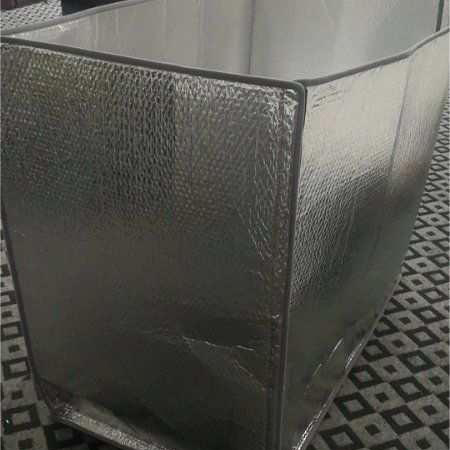
Una superficie reflectante, capa de espuma, estructura de burbuja, o textiles pesados no establece de forma independiente el rendimiento del envío. Las capas reflectantes abordan principalmente el calor radiante bajo la orientación y condiciones adecuadas.. Las capas aislantes reducen el flujo de calor conductivo, pero pueden perder efectividad cuando se comprimen o se mojan.. El refuerzo mejora la durabilidad pero puede añadir rigidez., costuras, y peso. La cubierta terminada debe equilibrar la resistencia térmica con la aplicación., acceso, limpieza, y seguridad en ruta.
Solicite una descripción clara de la capa y pregunte qué puede cambiar entre la muestra y la producción.. Adhesivos, películas, espumas, revestimientos, hilo, cierres, y las dimensiones del panel pueden afectar el comportamiento. Un acuerdo de control de cambios es especialmente importante para pedidos repetidos o aplicaciones calificadas.. La inspección entrante puede incluir dimensiones, condición de la costura, función de cierre, limpieza, olor, defectos visibles, y cualquier declaración de material crítico.
Dairy shippers should follow the product specification, applicable food-safety rules, procedimientos sanitarios de transporte, vehicle hygiene, temperature-control agreement, y criterios de recepción. Requirements differ among fluid milk, queso, manteca, productos cultivados, polvos, and other formats. Los límites específicos del producto y los requisitos de transporte actuales deben ser verificados por el responsable de calidad., regulador, seguridad alimentaria, EHS, o equipo de mercancías peligrosas. El lenguaje más seguro del proveedor describe la construcción de la cubierta y las condiciones de prueba sin implicar aprobación universal..
Utilice evidencia que coincida con la decisión y el riesgo.
Utilice pruebas que coincidan con la decisión. Un estudio de detección en paralelo puede mostrar qué cubierta ralentiza el cambio de temperatura de manera más efectiva bajo una exposición controlada. Un estudio de cámara puede reproducir un perfil ambiental definido y retrasar. Un piloto monitorizado puede mostrar si los empleados aplican la cobertura correctamente y si la ruta incluye aperturas no planificadas.. Los envíos de alto riesgo pueden requerir un trato más formal., calificación documentada bajo el sistema de calidad del propietario.
Herramientas útiles para tomar decisiones
Comprueba los detalles antes de elegir el embalaje.
Estas herramientas rápidas pueden ayudarle a comparar el riesgo de la ruta, necesidades de dimensionamiento, opciones de refrigerante, y detalles del embalaje antes de solicitar una cotización.
Resistencia a la caída del material aislante
Revise la resistencia a caídas y los factores de manipulación antes de elegir materiales aislantes..
Comprobar resistenciarefrigerante & Referencia PCM
Compare las opciones de refrigerante y PCM cuando una ruta necesite soporte de temperatura adicional.
Comparar opcionesCalculadora de hielo seco
Calcule las necesidades de hielo seco para envíos congelados o ultrafríos antes de empacar.
Estimar hielo secoCualquier prueba debe documentar la carga útil., condición inicial, dimensiones de la plataforma, muestra de portada, desafío ambiental, contacto con el suelo, ubicaciones de sensores, eventos de apertura, y criterios de aceptación. Las curvas de temperatura sin este contexto son difíciles de interpretar. Un tiempo de protección establecido nunca debe separarse de las condiciones que lo produjeron..
El seguimiento no sustituye a la protección, y la protección no es evidencia de condición. Decida qué deben mostrar los sensores. Un sensor ambiental apoya el análisis de ruta; un sensor de superficie muestra el borde expuesto; un sensor central puede responder lentamente; un simulador de producto puede aproximarse al comportamiento térmico. El proceso de disposición debe indicar quién revisa los datos y cómo se relacionan con la aceptación del producto..
Hacer que el diseño aprobado sea repetible en el manejo diario
En origen, verificar que el producto y el pallet estén listos para el cierre. Verifique la identidad y el estado de la cubierta, aplicarlo en la orientación definida, cerrar todas las superposiciones, mantener visibles las etiquetas y las marcas requeridas, Coloque los dispositivos de monitoreo según lo aprobado., e inspeccionar la base y las esquinas.. Registrar la solicitud cuando los procedimientos de trazabilidad o calidad lo requieran.
Durante el transporte, especificar si los manipuladores pueden abrir la tapa y qué deben hacer después. Proporcionar una regla de escalada para las lágrimas., mojada, contaminación, fugas, conexiones perdidas, permanencia extendida, falla del equipo activo, o una carga encontrada fuera del entorno planificado. La instrucción debe dirigir el envío a un control adecuado en lugar de confiar en la cubierta más allá de su uso evaluado..
En el destino, inspeccionar antes de abrir, siga cualquier procedimiento de aclimatación o flujo de aire, evaluar registros de temperatura o condición, y separar las cubiertas reutilizables dañadas o contaminadas. Cubiertas limpias y secas según un método aprobado., inspeccionar cierres y aislamientos, registrar reparaciones si es necesario, y retirar unidades que no puedan proporcionar un ajuste o higiene consistentes.
Errores comunes a eliminar de la orden de compra
- Solicitar un número fijo de horas de protección sin definir la carga útil y el perfil ambiental.
- Especificar solo la base del palet ignorando la altura cargada, sobresalir, superposición de cierre, y acceso.
- Tratar la apariencia reflectante, espesor, o lenguaje “reutilizable” como prueba del desempeño terminado.
- Dejando etiquetas, restricción, flujo de aire, inspección, saneamiento, o interacción con mercancías peligrosas para que las operaciones las descubran más adelante.
- Aprobar una muestra sin controlar los materiales de producción., dimensiones, costuras, y cierres.
- Ejecutar una prueba de temperatura pero no registrar eventos de manejo o condiciones visibles.
- Usar la cobertura para justificar una exposición más prolongada en lugar de aumentar el envío cuando las condiciones exceden el plan..
Una aplicación realista
A dairy processor transfers chilled cultured products from a cold room to a regional trailer during a busy afternoon. The pallet waits near the dock door while paperwork is resolved. un limpio, well-fitted cover may reduce that transition risk, provided the load enters suitable transporte refrigerado inmediatamente.
Esta aplicación tiene éxito sólo si la cobertura sigue siendo un control definido dentro del carril más amplio.. La condición inicial, transporte activo, momento de entrega, inspección, y el proceso de escalamiento continúan siendo responsables de la protección del producto..
Preguntas del comprador antes de la aprobación
- Which dairy product and package format is being shipped?
- What temperature and excursion criteria does the product owner require?
- Is the cover for staging only, or will it remain on in refrigerated transport?
- How will condensation, integridad del cartón, and cover hygiene be managed?
- What receiving checks and temperature records are needed for release?
Preguntas frecuentes
Can a thermal cover replace a refrigerated dairy truck?
No. Perishable dairy that requires refrigeration should move in equipment capable of maintaining the required conditions. A cover is a supplementary buffer for exposed transitions or identified lane risks.
Do all dairy products need the same temperature control?
No. leche fluida, productos cultivados, queso, manteca, postres congelados, polvos, and shelf-stable formats have different requirements. Use the product owner’s specification and applicable rules.
How can condensation be reduced?
Start with stable product and room conditions, minimize unnecessary warm-cold cycling, choose materials that can be dried, and define when the cover is applied or removed. Condensation behavior should be assessed on the real lane.
What makes a reusable cover suitable for dairy?
It should fit the pallet, tolerate routine handling, support the site’s cleaning method, dry completely, resist odor retention, and have a clear inspection and retirement process. Food-contact status should not be assumed unless specifically established.
Conclusión
Choose pallet thermal covers for dairy by connecting five things: el requisito de carga, el segmento de ruta expuesto, la geometría de la paleta terminada, el proceso operativo, y evidencia que representa el uso previsto. Una cubierta es más defendible cuando tiene un estrecho, rol explícito y cuándo sus limitaciones están escritas en el plan de envío.
El siguiente paso no es un pedido al por mayor. Es una muestra representativa sobre el palet real., seguido de una revisión de ajuste y manejo y una comparación térmica adecuada o prueba piloto.. Una vez que el equipo comprende cómo funciona la cobertura y cómo la usan los empleados., La adquisición puede escalar a una especificación controlada en lugar de una afirmación de marketing..
Acerca de Tempk
suministros temporales embalaje de cadena de frío y cubierta térmica para palés opciones para aplicaciones de envío B2B. For clean, practical pallet-level buffering for dairy staging, distribución, and receiving operations, Podemos ayudar a organizar una discusión sobre el tamaño de la paleta., materiales de construcción, cierres, acceso, uso unidireccional o reutilizable, y evaluación de muestras. No tratamos una cobertura pasiva como un reemplazo de los controles de transporte requeridos por el cliente o la calificación específica del producto..
Comparte tu construcción de paleta, requisito de carga, exposición de ruta, y proceso de manipulación con Tempk para comparar una muestra práctica y definir los controles necesarios antes de la producción..