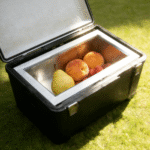
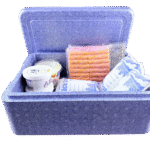
Caja enfriadora de EPP con absorción de impactos: Cómo elegir?
Actualizado el: Diciembre 16, 2025.
A shock-absorbing Caja refrigeradora EPP gives you two things at once: insulation and impact protection. PPE (polipropileno expandido) is a closed-cell bead foam known for energy absorption, resistencia a múltiples impactos, and thermal insulation. BPFC+1 It is also made in a wide density range (acerca de 15–200 g/L), which lets you “tune” protection for your lane risk. BPFC Many EPP systems remain functional across extreme temperatures, often cited around -40°C a +110°C (grade dependent).

Esta guía te ayudará:
-
Elija un reusable EPP insulated box for cold chain sin pagar de más
-
Fósforo EPP foam density for impact protection to drops, vibración, and stacking loads BPFC
-
Entender EPP cooler box thermal conductivity and what it means for hold time FEURER+1
-
Prove performance with practical testing like ASTM D5276 drop testing and parcel simulations ASTM Internacional | ASTM+1
-
Avoid compliance surprises with food-contact checks in the EU and US EUR-Lex+1
-
Prepare for 2025–2030 reuse and recyclability pressure under EU packaging policy Ambiente+1
Shock-absorbing EPP cooler box: What makes EPP special?
A shock-absorbing EPP cooler box works because EPP behaves like a springy honeycomb. It absorbs energy, then rebounds. That “bounce-back” is why EPP is used where repeated impacts happen. Industrias Knauf+1 EPP is also a closed-cell foam, so it resists water uptake better than open-cell foams. BPFC
Here’s the simple picture. If EPS is like a crisp cookie, EPP is more like a sponge cake. The cookie cracks once. The sponge cake compresses and returns.
Density tuning: how a shock-absorbing EPP cooler box matches your risk
EPP can be produced in a wide bead density range (acerca de 15–200 g/L). BPFC Lower density is lighter and often cheaper. Higher density typically improves stiffness, fuerza de apilamiento, y protección contra impactos.
Use density like a “risk dial,” not a badge of quality.
| Density band (típico) | lo que se siente | Mejor para | Lo que significa para ti |
|---|---|---|---|
| 20–35 g/L | Muy claro, softer | Short local loops | Menor costo, lower stacking margin BPFC |
| 35–60 g/L | Equilibrado | Most reusable cold chain lanes | Solid durability without heavy weight |
| 60–120 g/L | Más rígido, tougher | Cargas útiles pesadas, frequent stacking | Better protection, higher cost/weight |
| 120–200 g/L | Very stiff | Special engineered parts | Only if your use case demands it BPFC |
Consejos prácticos que puede usar hoy
-
If your damage is “corner crush," you likely need better corner design, not just higher density.
-
If your damage is “lid pop-open," focus on closure geometry and seal design first.
-
If your damage is “repeat dents," EPP’s multiple-impact behavior is your friend. BPFC+1
Caso práctico: A meal-delivery operator reduced cracked gel packs by switching from single-use foam to a shock-absorbing EPP cooler box plus a simple internal divider.
Shock-absorbing EPP cooler box: How good is the insulation?
A shock-absorbing EPP cooler box insulates well because EPP has low thermal conductivity and a closed-cell structure. Some molded EPP packaging components cite thermal conductivity around 0.038 W/mK, while other EPP insulation products cite ~0.040 W/mK at 10°C. FEURER+1
That number matters, but it is not the full story. Your hold time is driven by three levers:
-
Material insulation (k-value)
-
Espesor de la pared
-
Air leaks (ajuste de la tapa, brecha, warped lids)
Lid seal and wall thickness: simple math without the headache
You do not need complicated modeling to choose thickness. Think in “relative insulation steps.” If you increase wall thickness, you usually reduce heat flow. If your lid leaks, thickness helps less than you think.
| Palanca de diseño | lo que cambias | lo que suele pasar | Lo que significa para ti |
|---|---|---|---|
| Espesor de la pared | 20 → 30 → 40 milímetros | Mejor aislamiento | Mayor estabilidad, heavier box |
| Geometría de la tapa | Deeper overlap | Less leakage | More reliable temperature lane |
| Calidad del sello | Tighter fit | Menos intercambio de aire | Less “mystery warming” |
A quick “hold-time reality check” (interactivo)
Answer these questions and pick your design priority:
-
Do you ship for 6–12 hours or 24–72 hours? (Longer needs better seal and thickness.)
-
Do you ship in parcel or on pallets? (Parcel needs shock + seal discipline.)
-
Does the receiver open immediately? (Fast opening rewards easy access and good lid closure.)
If you answered “longer + parcela + immediate,” your best first upgrade is usually lid seal quality, then thickness.
Consejos prácticos que puede usar hoy
-
Treat the lid like a door on a refrigerator. A small gap can ruin the day.
-
Standardize packing photos for every lane. Visual standards reduce mistakes.
-
Add internal spacing so cold media does not slam the product during drops.
Caso práctico: A seafood shipper stopped “warm-on-arrival” complaints by improving lid overlap, not by adding more gel packs.
Shock-absorbing EPP cooler box: Can it handle hot, frío, y limpieza?
A shock-absorbing EPP cooler box is popular for reuse because many EPP grades remain functional in harsh temperature ranges and resist many chemicals and oils. Several technical sources describe EPP usability around -40°C a +110°C (grade dependent). RUCH NOVAPLAST+1 EPP is also described as having water and chemical resistance, plus buoyancy and strength-to-weight advantages. BPFC
This matters if you run:
-
Hot summer last-mile routes
-
Frozen payloads
-
Regular washing and sanitizing cycles
Limpieza y reutilización: what to ask before you buy
Ask these questions once, then file the answers. You will use them again during audits and onboarding.
-
Which detergents and sanitizers are recommended for the EPP grade?
-
What is the cleaning method: limpiar, spray, or wash tunnel?
-
How do labels behave after washing? (Peel, frotis, or stay readable?)
-
What is the “retire rule” for damaged boxes?
| Reuse factor | Riesgo si se ignora | control sencillo | Lo que significa para ti |
|---|---|---|---|
| Cleaning chemistry | Material degradation | Approved chemical list | Stable appearance and performance BPFC |
| El secado | Odor and mold risk | Drying racks + flujo de aire | Mejor experiencia del cliente |
| Damage inspection | Hidden cracks | Quick visual checklist | Fewer leaks and returns |
Consejos prácticos que puede usar hoy
-
Write a 30-second inspection checklist (ajuste de la tapa, grietas, hinge points, olor).
-
Keep “wash + dry” time consistent. Consistency beats heroic cleaning.
-
Use removable inserts for high-mess payloads, not disposable liners everywhere.
Caso práctico: A pharmacy courier reduced returns by adding a simple “lid fit test” after washing.
Shock-absorbing EPP cooler box: How do you design for drops and stacking?
A shock-absorbing EPP cooler box protects products when the box structure spreads force and the interior stops movement. EPP is known for resilience and reforming after impact. Engineered Foam Products+1 But design choices decide whether that resilience helps your payload or just makes the box “bounce.”
Think in three layers:
-
Outer structure (esquinas, costillas, espesor de pared)
-
Cierre (lid overlap, pestillos, seal geometry)
-
Inner restraint (divisores, inserciones, product immobilization)
The “Drop + Stack Risk Score” (autoevaluación)
Date puntos. Higher score means you should prioritize tougher design.
-
Parcel shipping (múltiples traspasos): +3
-
Stacked more than 3 high in transit: +2
-
Payload contains glass, viales, or fragile corners: +3
-
Temperature media is heavy (platos, ladrillos): +2
-
Returns and reuse cycles exceed 20 usos: +2
0–3: basic shock-absorbing EPP cooler box is usually enough.
4–7: prioritize lid closure and inner restraint.
8–12: prioritize density band, costillas, and validated testing.
Design features that matter most
| Riesgo | What fails | Característica de diseño | Lo que significa para ti |
|---|---|---|---|
| Corner drops | aplastamiento de esquina | Rounded corners + thicker corners | Fewer cracks and leaks |
| Vibración | Product rub | Insertos + ajuste perfecto | Less scuffing and breakage |
| Apilado | Lid warp | Nervaduras + stable lid geometry | Better seal reliability |
| Heavy media | Internal slam | Media pockets + separadores | Less product impact |
Consejos prácticos que puede usar hoy
-
Lock media in place. Moving gel packs can act like hammers.
-
Avoid “empty air pockets.” Air space lets payload accelerate during drops.
-
Choose handles that don’t tear. Handles often fail before the walls do.
Caso práctico: A lab courier stopped vial breakage by adding a simple foam insert and fixing media movement.
Shock-absorbing EPP cooler box: How do you prove it works?
The fastest way to defend a shock-absorbing EPP cooler box decision is testing that matches your lane. A common drop-test reference is Norma ASTM D5276, which covers free-fall drop testing of loaded containers. ASTM Internacional | ASTM+1 Para entornos de paquetería, ISTA Procedure 3A is designed for individually packaged products shipped through a parcel delivery system. asociación internacional de transporte seguro+1
You do not need to run every test on earth. You need the right test for your risk.
A practical validation plan you can run in 2 semanas
Semana 1: Define your “worst day.”
Pick the hottest week, the longest lane, and the roughest handling.
Semana 1: Choose pass/fail rules.
Ejemplos: lid stays closed, Sin fugas, payload stays within target temperature band.
Semana 2: Run 3–5 repeats.
Repeatability builds confidence. One lucky run does not.
| Test type | What it simulates | Por que importa | Typical pass focus |
|---|---|---|---|
| ASTM D5276 drops | Free-fall shocks | Corner and edge damage | No break, no leak ASTM Internacional | ASTM+1 |
| ISTA 3A sequence | Parcel hazards | Gotas + patrones de manejo | Integridad del paquete asociación internacional de transporte seguro+1 |
| Stacking compression | Warehouse loads | Lid warp + seal loss | Lid remains stable |
| Thermal hold check | Condiciones del carril | Real temperature outcome | Payload stays in spec |
Consejos prácticos que puede usar hoy
-
Test the packed system, not the empty box. Payload changes everything.
-
Film your drops. Video reveals failure modes you will miss in notes.
-
Log “exception stories.” A failure teaches more than a pass.
Caso práctico: A frozen meal shipper passed drops but failed leakage—until they redesigned the lid overlap.
Shock-absorbing EPP cooler box: Is it food-contact compliant?
A shock-absorbing EPP cooler box is often made from polypropylene, but food-contact compliance depends on the exact resin and additives used. En la UE, plastic materials intended to contact food fall under Commission Regulation (UE) No 10/2011. EUR-Lex en los estados unidos, olefin polymers for food-contact use are covered under 21 CFR 177.1520 (subject to conditions of use and limitations). 联邦登记册
Here is the key point: “EPP” is a material family, not a compliance certificate. Your supplier should provide paperwork.
Your compliance checklist (ask-and-file)
Request and store:
-
Declaration of compliance for EU 10/2011 (if you sell into the EU) EUR-Lex
-
Statement of compliance with 21 CFR 177.1520 (if you sell into the US) 联邦登记册
-
Additives disclosure status (what is used, and where it is permitted)
-
Cleaning chemical compatibility list (so your wash process stays safe)
| Necesidad de cumplimiento | lo que pides | Who should provide it | Lo que significa para ti |
|---|---|---|---|
| EU food contact | UE 10/2011 documentación | Resin or box supplier | Fewer customer audits EUR-Lex |
| US food contact | 21 CFR 177.1520 statement | Resin or box supplier | Easier retail onboarding 联邦登记册 |
| Trazabilidad | Lot and resin batch | Proveedor | Resolución de problemas más rápida |
Consejos prácticos que puede usar hoy
-
Do not guess. Ask for documents before you scale orders.
-
Match the document to the exact grade. “Similar material” is not enough.
-
Store docs per SKU. Future you will thank you.
Caso práctico: A catering brand avoided a launch delay by pre-collecting food-contact statements for every cooler SKU.
Shock-absorbing EPP cooler box: How does sustainability and reuse affect your choice?
Sustainability pressure is now part of best practice for a shock-absorbing EPP cooler box, especialmente en europa. The European Commission describes the shift from the Packaging and Packaging Waste Directive to the Reglamento de Envases y Residuos de Envases (Páginas) 2025/40, and highlights goals like making packaging recyclable in an economically viable way by 2030. Ambiente A regulatory summary also notes PPWR reuse targets for transport packaging starting 1 Enero 2030, including minimum shares for certain transport packaging types. KPMG
This matters even if you do not sell in the EU. Buyers copy EU expectations fast.
Mientras tanto, EPP is widely described as reciclable and valued for durability and reuse. BPFC+1 That fits a “reuse-first” direction.
Reuse models that work in real operations
| Reuse model | Mejor para | Operational must-have | Lo que significa para ti |
|---|---|---|---|
| Closed loop | Same depot returns | Reliable reverse logistics | Lowest loss rate |
| Semi-open loop | Partner locations | Seguimiento + deposit | Manageable shrink |
| Open loop | Consumer returns | Strong incentives | Highest shrink risk |
Consejos prácticos que puede usar hoy
-
Start with a pilot loop. Prove returns before you buy 10,000 unidades.
-
Use a simple loss KPI. Loss rate often kills reuse economics faster than cleaning.
-
Design for repair. Replaceable lids and inserts can extend life.
Caso práctico: A grocery delivery service improved reuse ROI by adding a deposit and a weekly pickup route.
2025 trends for the shock-absorbing EPP cooler box market
En 2025, the best designs are getting more “system-like.” It is not just a box. It is a repeatable process.
Here are the trends that matter most to your day-to-day results:
Última instantánea del progreso
-
More lane-specific designs: One box for “everything” is losing to fit-for-lane SKUs.
-
More modular interiors: Inserts are used to stabilize payload and speed packing.
-
More compliance documentation: Food contact and packaging policy questions arrive earlier in sales cycles. EUR-Lex+1
Insight del mercado: customers reward reliability. A shock-absorbing EPP cooler box that performs the same in July and January reduces refunds, reenvíos, y abandonar.
Preguntas frecuentes
Q1: What is a shock-absorbing EPP cooler box, in plain words?
It’s an insulated reusable box made from expanded polypropylene bead foam. EPP is known for energy absorption, resistencia a múltiples impactos, and thermal insulation. BPFC+1
Q2: How do I choose the right EPP density for impact protection?
Start with lane risk. Parcela, heavy media, and stacking usually need higher stiffness. EPP can be produced across a wide density range (about 15–200 g/L), so you can tune it. BPFC
Q3: What thermal conductivity should I expect from an EPP cooler box?
Many EPP insulation components cite values around 0.038–0.040 W/mK (product and test conditions vary). Use it as a guide, then validate hold time in your lane. FEURER+1
Q4: Which drop test should I use to validate packaging strength?
ASTM D5276 is a common reference for free-fall drop testing of loaded containers. Pair it with your real packing method and pass/fail rules. ASTM Internacional | ASTM+1
Q5: What testing fits parcel delivery shipments?
ISTA Procedure 3A is designed for individually packaged products shipped through a parcel delivery system. It helps simulate typical parcel hazards. asociación internacional de transporte seguro+1
Q6: Is every shock-absorbing EPP cooler box automatically food-contact safe?
No. EPP is usually polypropylene, but compliance depends on the exact grade and additives. En la UE, look for documentation aligned to Regulation (UE) 10/2011. en los estados unidos, buscar 21 CFR 177.1520 statements. EUR-Lex+1
Resumen y recomendaciones
A shock-absorbing EPP cooler box is a strong choice when you need repeat use, aislamiento estable, and protection from real-world handling. EPP is widely described as a closed-cell bead foam with energy absorption, resistencia a múltiples impactos, y reciclabilidad. BPFC+1 Many EPP grades are cited as functional across roughly -40°C to +110°C, which supports cold chain and mixed-temperature operations. RUCH NOVAPLAST+1
Your next steps should be simple:
-
Pick your lane risk score and set pass/fail rules.
-
Choose density and design features that solve your actual failure mode. BPFC
-
Validate with drop and parcel-relevant testing (Norma ASTM D5276, ISTA 3A). ASTM Internacional | ASTM+1
-
Collect food-contact documents early for EU and US needs. EUR-Lex+1
CTA: If you share your payload type, maximum weight, duración del carril, y modo de envío (paquete versus palet), I can draft a one-page spec for your next shock-absorbing EPP cooler box and a test plan your team can run.
Acerca de Tempk
Y tempk, we build cold chain packaging systems that are easy to run every day. We focus on reusable insulation solutions, lane-based packing standards, and testing plans that match real handling. Our goal is practical performance: fewer breakages, fewer temperature claims, and cleaner operations across seasons.
Siguiente paso: Ask us for a lane-matched design checklist and a validation template for your shock-absorbing EPP cooler box.