Cómo especificar cubiertas de carga aisladas para agricultura
La pregunta útil no es si una funda para palé “funciona”. La pregunta útil es si controla una exposición nombrada sin crear otro problema.. Cubiertas de carga aisladas para la agricultura puede disminuir la ganancia o pérdida de calor alrededor de una carga unificada durante la puesta en escena, transferir, inspección, o recibiendo. No pueden eliminar el calor del campo., alimentar una cadena de frío, o demostrar que un producto sigue siendo aceptable. Por lo tanto, una especificación sólida comienza con una brecha en el proceso., no es un material. Conecta el requerimiento del cultivo., condición de la plataforma, ambiente, diseño de portada, regla de funcionamiento, y evidencia en una decisión que los trabajadores pueden repetir y los equipos de calidad pueden revisar.
Defina una brecha térmica antes de definir el producto
Comience con una oración que describa el uso previsto.. Por ejemplo: “Proteger los productos paletizados preenfriados mientras se mueven desde el almacenamiento controlado a través de un área de carga expuesta hasta transporte refrigerado."Esto es más valioso que "Proporcionar una cubierta aislante para paletas de exportación" porque establece la condición inicial., formato, ubicación, y control de destino.
Ahora prueba la frase con la ruta.. ¿El palet también espera inspección?? ¿Puede detenerse la carga?? ¿Es posible el sol directo?? ¿El viento levanta las aletas sueltas?? ¿Permanecerá la funda en el vehículo frigorífico?? quien lo quita? Si se espera que la cubierta sirva para varios huecos, documentar cada uno por separado. Un diseño puede ser adecuado para más de un uso., pero la aprobación no debe expandirse silenciosamente.
El enfoque de brecha de proceso también expone situaciones en las que una cobertura es una primera inversión incorrecta.. Si el producto no se preenfría adecuadamente, mejorar la eliminación del calor. Si el flujo de aire del frigorífico está bloqueado por un mal apilamiento, configuración de carga correcta. Si los pallets esperan porque falla la programación de citas, reducir la permanencia. Si una base expuesta es la ruta de calor dominante, El aislamiento lateral por sí solo no lo solucionará.. El embalaje debe seguir el modo de fallo diagnosticado..
Hay tres puertas tempranas:
Puerta del producto: ¿Qué condiciones requiere el producto?, y que variaciones de temperatura, humedad, o ventilación puede tolerar?
Puerta de ruta: ¿Qué exposición incontrolada es importante en condiciones de funcionamiento normal y con un retraso creíble??
Puerta de control: ¿Es una cobertura pasiva capaz de soportar ese intervalo?, o es refrigeración activa, movimiento más rápido, sombra, una sala de amortiguamiento controlada, o se necesita un paquete diferente?
No continúe con la comparación de proveedores hasta que las tres puertas hayan sido respondidas lo suficientemente bien como para un resumen de muestra..
Preservar la condición del producto sin bloquear la cadena de frío
La gestión de la temperatura agrícola comienza antes de cubrir un palé. Momento de la cosecha, sombra, preenfriamiento, embalaje, almacenamiento en frío, y transporte refrigerado establecer y mantener la condición del producto. Las orientaciones de la FAO describen la cadena de frío como actividades vinculadas ascendentes y descendentes, mientras que la guía poscosecha enfatiza el flujo de aire a través de los paquetes de productos y las cargas apiladas.. Se debe insertar una cubierta sin contradecir esos controles..
Un error recurrente es aplicar el aislamiento demasiado pronto. El producto caliente puede continuar respirando y liberando calor., mientras que la cubierta ralentiza la eliminación del calor. Otra es dejar la cubierta alrededor de cajas de cartón ventiladas dentro de un frigorífico sin confirmar el efecto del flujo de aire.. En ambos casos, un producto destinado a reducir la exposición externa puede interferir con el proceso planificado.
Escriba los puntos de aplicación y eliminación en la especificación.:
El estado de lanzamiento del producto requerido antes de cubrir
La ubicación donde está instalada la cubierta.
La geometría máxima de palet permitida
El control de cierre
Los lugares aprobados donde puede esperar el pallet cubierto.
El evento que desencadena la eliminación
La acción tomada durante un retraso.
La disposición de recepción o devolución.
La cobertura no debe convertirse en permiso para prolongar una permanencia incontrolada.. Una regla de retraso puede enviar la paleta nuevamente al almacenamiento en frío., en un tampón con temperatura controlada, o mediante otra respuesta aprobada. La acción exacta depende de la operación.. Lo que importa es que los trabajadores no lo inventen junto al muelle.
Convierta la transferencia de calor en opciones de diseño
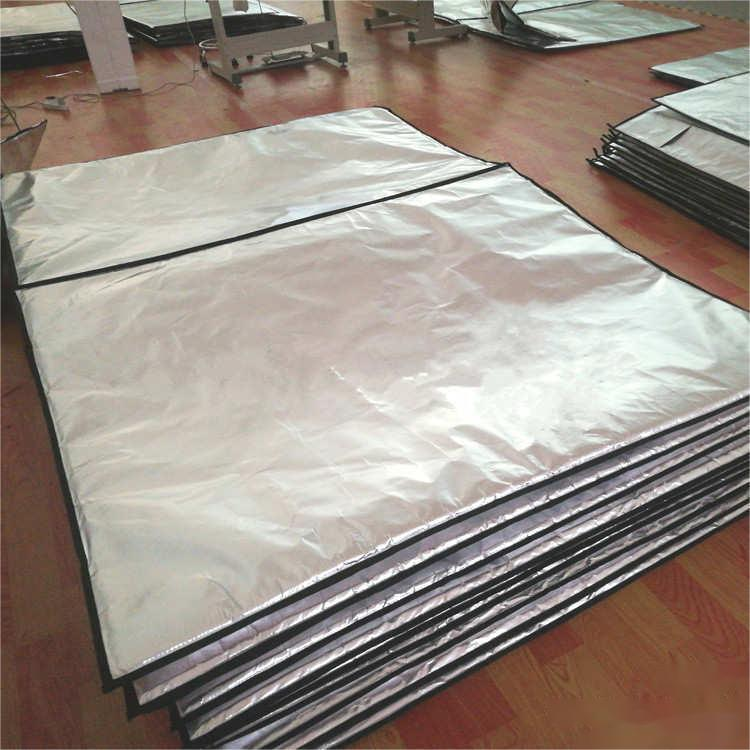
Cada cubierta gestiona una combinación de tres vías externas de transferencia de calor.. Las capas aislantes ralentizan la conducción a través del conjunto.. Los cierres y superposiciones reducen el intercambio de aire caliente no deseado. Un exterior reflectante puede reducir la carga de calor radiante cuando se enfrenta al espacio aéreo relevante y a la exposición.. la carga útil, pila de cartón, base de paleta, y el aire interno determinan cómo esas cargas externas afectan la temperatura del producto..
Ninguna capa describe el resultado final. Un núcleo grueso con un faldón corto puede dejar expuestas las cajas inferiores.. Una cara altamente reflectante puede hacer poco contra la exposición prolongada al aire caliente si las costuras permanecen abiertas.. Un diseño ajustado puede mejorar la cobertura, pero su instalación lleva demasiado tiempo u obstruye la ventilación necesaria.. La selección de materiales y la geometría deben revisarse juntas..
La descripción mínima del diseño debe incluir:
dimensiones utilizables terminadas y tolerancias dimensionales;
arriba, lado, esquina, y cobertura inferior;
descripción funcional de la cara exterior, aislamiento, y forro interior;
construcción de costuras y bordes;
tipo de cierre, superposición, y ubicación;
acceso a etiquetas o escaneo cuando sea necesario;
peso, tamaño de plegado, y características de manejo;
Herramientas útiles para tomar decisiones
Comprueba los detalles antes de elegir el embalaje.
Estas herramientas rápidas pueden ayudarle a comparar el riesgo de la ruta, necesidades de dimensionamiento, opciones de refrigerante, y detalles del embalaje antes de solicitar una cotización.
Referencia del material aislante
Compare opciones de materiales aislantes para diferentes necesidades de embalaje de la cadena de frío.
Comparar materialesSelector de embalaje
Compare las opciones de embalaje aislado por producto, ruta, y necesidad de temperatura.
encontrar embalajeCalculadora de hielo seco
Calcule las necesidades de hielo seco para envíos congelados o ultrafríos antes de empacar.
Estimar hielo secométodo de limpieza y secado compatible para productos reutilizables;
identificación y marcado de lotes de producción;
criterios de reparación y retiro aprobados, si está disponible.
Evite el uso de "impermeable" o "grado alimentario" sin una definición precisa y documentación de respaldo para el uso previsto.. Una cara resistente al agua aún puede tener costuras permeables.. Una cubierta que toca únicamente cajas de transporte tiene una situación de contacto diferente a la del material que toca alimentos no envasados.. Los equipos de calidad y regulación deben evaluar la interfaz real..
Especificar cubiertas de carga aisladas para agricultura contra modos de falla
Una revisión del modo de falla es más productiva que una larga lista de características. Pregunta cómo podría fallar el control previsto y convierte la respuesta en un diseño., proceso, o requisito de evidencia.
| Modo de falla | Consecuencia probable | Especificación o respuesta operativa. |
|---|---|---|
| El producto se cubre antes de completar el acondicionamiento. | El calor se retiene y el enfriamiento posterior puede ralentizarse. | Vincular la aplicación a la versión documentada del producto o al estado de preenfriamiento |
| La cubierta es demasiado pequeña para que el palé sobresalga o sobresalga | Los espacios exponen las cajas y los cierres no pueden encajar | Mida los pallets de producción aceptables en el peor de los casos y defina las dimensiones internas utilizables |
| La parte superior o la base se dejan fuera del límite térmico. | La carga de calor desigual pasa por alto la protección lateral | Indique qué superficies deben cubrirse y si una solución base es parte del sistema. |
| La cubierta bloquea la ventilación planificada. | Se reduce el flujo de aire refrigerado a través de cajas o pilas. | Defina el punto de eliminación o demuestre la compatibilidad con el plan de flujo de aire real. |
| La exposición al sol está representada únicamente por una prueba de temperatura del aire. | La evidencia no aborda la carga radiante | Incluir exposición radiante relevante o limitar claramente el reclamo. |
| Los trabajadores levantan la cubierta repetidamente para escanear las etiquetas. | La protección se interrumpe y la cubierta está dañada. | Agregue una función de acceso colocada correctamente o revise la secuencia de escaneo |
| La funda reutilizable regresa mojada o contaminada. | Olor, deterioro, o se desarrolla un riesgo para la higiene | Establecer segregación, limpieza, secado completo, inspección, y soltar pasos |
| El proveedor cambia una capa o cierre sin revisión | Adaptar, durabilidad, facilidad de limpieza, o el comportamiento térmico puede cambiar | Requiere especificaciones controladas, notificación, y reglas de reevaluación |
La respuesta no siempre tiene que ser una cobertura más compleja. A veces, un cambio de ruta o una instrucción de trabajo es el control más eficaz.. La tabla también previene un problema común de adquisiciones.: pedirle a una propiedad material que resuelva fallas causadas por las operaciones.
Construya evidencia en capas
La evidencia debería volverse más representativa a medida que la compra pasa de la idea a la implementación.. Un programa disciplinado puede utilizar cuatro capas.
Capa 1: Revisión de documentos
Revisar la construcción propuesta., dimensiones, uso previsto, instrucciones de manejo, declaraciones materiales, y cualquier informe de prueba existente. Un informe útil identifica el artículo probado, carga útil o simulador, condiciones iniciales, perfil ambiental, duración, configuración de medición, y criterios de aceptación. Los resúmenes de marketing sin esos detalles pueden respaldar la evaluación, pero no una decisión de ruta..
Capa 2: Prueba de ajuste y usabilidad
Aplicar la muestra a una paleta representativa y a la paleta más grande aceptable.. Incluye saliente de cartón, correas, tableros de esquina, y etiquetas. Aplicación y eliminación del tiempo., observar los puntos problemáticos, cierres de prueba, comprobar el acceso del montacargas, y practicar el almacenamiento. Realice la prueba con operadores reales durante un período de trabajo realista.
Capa 3: Comparación térmica controlada
Compare la configuración cubierta propuesta con la línea base relevante bajo condiciones documentadas.. El diseño de la comparación debe reflejar la decisión.. Una transferencia al sol directo requiere una exposición diferente a la de una espera cálida en el interior.. Se debe planificar la ubicación de los sensores y el equipo de medición., pero la interpretación de los datos debe utilizar los criterios del producto del propietario del producto básico..
Capa 4: Confirmación de ruta y revisión de excepciones
Cuando el riesgo lo amerita, revisar el carril completo o un piloto representativo. Incluir traspasos y el proceso de demora., no solo el tiempo normal. Un piloto exitoso en un carril no aprueba todos los climas, cultivos, formatos de palet, o estaciones. Registre los límites para que los equipos posteriores sepan lo que se estableció..
ISTA 7E puede aparecer en la literatura del proveedor, pero está diseñado para térmica embalaje de transporte en sistemas de entrega de paquetes. No es una calificación universal para cubiertas de paletas o carriles agrícolas. Utilizar estándares cuyo alcance coincida con la decisión., y complementarlos con trabajo específico de ruta cuando sea apropiado.
Haga visible el control en cada entrega
Un programa de cobertura eficaz tiene control físico e informativo.. El control físico es la tapa correctamente colocada. El control informativo le dice a la siguiente persona cuál es el palet., que estatus tiene, cuando estaba cubierto, donde debe ir, y qué hacer si el plan cambia.
Para una funda desechable, La información puede ser parte de una etiqueta de envío e instrucciones de trabajo.. Para una funda reutilizable, el artículo en sí puede llevar un identificador de activo único además de un tamaño visible y una marca de estado. Mantenga la trazabilidad del producto y el seguimiento de los activos de cobertura distintos: el identificador de palet sigue a la mercancía, mientras que el identificador del activo sigue a la portada.
Al recibir, El destinatario no debe utilizar la condición de la cubierta como única señal de aceptación.. Una cubierta desplazada o dañada es evidencia relevante, pero una cubierta intacta no prueba la condición del producto. Revisar registros de temperatura, historial de envíos, estado del embalaje, e inspección del producto según el procedimiento establecido.
Si el envío cumple con los requisitos de transporte de alimentos, Los roles y registros aplicables deben considerarse por separado.. En los Estados Unidos, Los requisitos de transporte sanitario de la FDA abordan los vehículos, operaciones, capacitación, archivos, y protección contra los riesgos de seguridad alimentaria dentro de su alcance. Una funda puede apoyar el procedimiento., no sustituirlo.
Decidir si la reutilización se adapta a la red
La reutilización es atractiva cuando los flujos agrícolas son predecibles, pero la temporada de cosecha hace que el desequilibrio de activos sea especialmente probable. El argumento económico y ambiental depende de los retornos reales, durabilidad no teórica.
Dibuja la ruta inversa. Las cubiertas pueden regresar en el mismo camión., consolidar en un centro de distribución, o moverse a través de un grupo de terceros. Cada opción necesita propiedad, eventos de escaneo, responsabilidad de limpieza, espacio de secado, buffers de inventario, y manejo de pérdidas. Si ninguna de las partes acepta responsabilidad en el destino, Es posible que el ciclo de retorno previsto nunca comience.
El pensamiento del ciclo de vida es más creíble que una simple afirmación de que “lo reutilizable es sostenible”. El marco de gestión de materiales sostenibles de la EPA enfatiza el uso productivo de materiales durante todo el ciclo de vida.. Aplica esa idea a la portada considerando la cantidad de material., fabricación, transporte ida y vuelta, limpieza, reparar, pérdida, utilización, y fin de la vida.
Las reglas de destino también importan. El Reglamento de Envases y Residuos de Envases de la Unión Europea generalmente comienza a aplicarse a partir de 12 Agosto 2026 e introduce requisitos a lo largo del ciclo de vida del embalaje, con aplicación dependiendo del operador y formato de embalaje. Los exportadores agrícolas que abastecen a los mercados de la UE deberían obtener información actualizada, consejos para situaciones específicas. No asuma que una etiqueta reutilizable o una declaración de material establecen el cumplimiento.
Un producto unidireccional puede seguir siendo la mejor opción operativa para una vía de exportación abierta. Un diseño duradero y reutilizable puede ser más resistente en una ruta nacional cerrada. La conclusión correcta proviene de la red., no de una jerarquía universal.
Pasar de la muestra a la producción controlada
Antes de escalar, convertir la muestra aprobada en una especificación controlada. conservar fotografías, dibujos, descripciones de capas, detalles de cierre, etiquetas, y tolerancias. Acordar puntos de inspección y notificación de cambios. Decida si el primer lote de producción necesita una inspección mejorada o una prueba de ajuste repetida..
La formación debe ser breve y visual.. Mostrar la orientación correcta, secuencia de cierre, tratamiento de fondo, acceso a la etiqueta, y método de eliminación. Incluir defectos que requieran segregación.. Los supervisores deben poder observar el uso correcto sin desmontar el palet..
Utilice datos de implementación temprana para mejorar el sistema. Seguimiento de portadas faltantes, tiempo de aplicación, ubicaciones de daños, retornos mojados, errores de tamaño, y excepciones. Estos datos revelan si el diseño o el proceso necesita atención.. No deben convertirse en declaraciones de rendimiento sin un estudio adecuado..
El control de cambios continúa después del lanzamiento. Revisar la decisión cuando haya un nuevo producto básico., caja de cartón, patrón de paleta, ruta, clima, vehículo, metodo de limpieza, material del proveedor, o requerimiento del cliente. El aislamiento es parte de un proceso de distribución viva..
Preguntas frecuentes
¿Cuánto tiempo protegerá una plataforma una cubierta de carga agrícola aislada??
No existe una duración universal responsable. El resultado depende de la condición inicial del producto., masa termal, configuración de paleta, exposición ambiental, sol y viento, construcción de cubierta, adaptar, base, y criterio de aceptación. Pregunte por las condiciones completas detrás de cualquier reclamo de duración, luego decida si se necesitan pruebas adicionales para su ruta.
¿Es siempre necesaria una cobertura total del fondo??
No siempre, pero hay que considerar la base. El calor puede entrar a través del contacto con una superficie caliente o el aire alrededor de un faldón abierto.. Algunos sistemas utilizan una base aislada., hoja de paleta, o superficie de preparación controlada. Defina la condición base e inclúyala en la evaluación en lugar de asumir que la cobertura lateral y superior representa toda la plataforma..
¿Puede la cubierta permanecer puesta durante el transporte refrigerado??
Sólo si el producto, ventilación de cartón, flujo de aire del vehículo, y evaluó el soporte de configuración que utiliza. Muchas cargas de productos frescos dependen del aire que se mueve a través de las rejillas de ventilación de los paquetes y los canales de paletas alineados.. Es posible que sea necesario retirar una cubierta utilizada durante el traslado al aire libre antes de la carga final.. Poner el punto de eliminación en las instrucciones de trabajo..
¿Cuál es el documento de proveedor más importante??
Ningún documento responde a todas las preguntas. La especificación del producto controlado establece lo que se suministrará., mientras que un informe de prueba detallado explica cualquier evidencia térmica. Instrucciones de limpieza, documentación de materiales, términos de control de cambios, y los registros de inspección de producción también pueden ser importantes. Juntos conectan la muestra., afirmar, y lote de producción.
¿Cuándo se debe retirar una funda reutilizable??
Utilice criterios observables respaldados por el proveedor y su proceso de higiene y calidad.. Los ejemplos pueden incluir cierres dañados., costuras abiertas, aislamiento perforado o mojado, delaminación, Contaminación que no se puede eliminar., pérdida de ajuste, o una reparación no aprobada. Evite asumir un número fijo de viajes a menos que sea compatible con las condiciones reales..
Conclusión
Una especificación de cobertura agrícola defendible comienza con una brecha en el proceso y la sigue a través de la condición del producto., flujo de aire, transferencia de calor, geometría, manejo, evidencia, y propiedad. La funda debe conservar una condición establecida por la cadena de frío., no ocultar un control faltante. Prueba en capas, mantener los reclamos vinculados a su configuración, y definir la respuesta de retraso antes de la implementación. Para diseños reutilizables, Pruebe el circuito de retorno con tanto cuidado como el producto físico.. Este método basado en rutas produce un menor, reclamo más claro y una operación más confiable.
Acerca de Tempk
Tempk es un B2B embalaje de cadena de frío proveedor cuyas ofertas relevantes incluyen paletas aisladas y cubiertas térmicas y productos relacionados. embalaje con temperatura controlada. Podemos ayudar a los compradores a convertir la descripción de una ruta en una discusión de portada que aborde las dimensiones utilizables., cobertura, cierres, manejo de acceso, y reutilización prevista. La exigencia del producto agrícola, estrategia de calificación, y la aprobación operativa siguen siendo responsabilidad del transportista y su equipo de calidad.. Por lo tanto, el punto de partida más útil de Tempk no es una duración solicitada genérica., pero una paleta representativa y una descripción clara de la exposición que debe soportar la cubierta..
Comparte tu mercancía, geometría de la paleta, secuencia de transferencia, exposición ambiental, y plan de regreso con Tempk. Utilice esa información para solicitar una muestra enfocada y una revisión de evidencia antes de escalar.