A Practical Guide to thermal pallet covers for biologics
Cobertores Térmicos para Palets For Biologics are best understood as a pallet-level risk control for moments when biologics, medicamentos especializados, muestras, and other high-value healthcare cargo leave the most protected part of the cadena de frío. Pueden retardar la transferencia de calor., reducir la exposición durante las entregas, y respaldar un procedimiento de envío más consistente. No deben considerarse como un sustituto universal de los equipos frigoríficos., embalaje calificado, escucha, o reglas de manipulación específicas del producto.
La elección correcta comienza con el carril.. Pregunte dónde se encuentra el palet., quien lo maneja, cuanto tiempo puede estar expuesto, si el fondo y las esquinas están protegidos, y qué pruebas necesita su equipo antes de aprobar el uso repetido. Cuando esas preguntas sean respondidas, la cubierta se convierte en una herramienta práctica en lugar de una capa decorativa alrededor del palet.
Definir el trabajo antes de definir el producto.
Un error de compra común es comenzar con una especificación de producto y luego intentar imponerla en todos los carriles.. Un mejor método es definir el trabajo.. For biologics shipments, El trabajo puede ser proteger un palet durante la carga., reducir la exposición corta al muelle, Proteger la carga durante un traslado al aeropuerto., apoyar la disciplina de puesta en escena del almacén, o agregue un amortiguador durante el calor o el frío estacional. Cada trabajo apunta a un diseño de portada diferente.
Si el trabajo es de corta puesta en escena., la velocidad y la facilidad de uso pueden importar más que un aislamiento pesado. Si el trabajo es manejo de exportaciones, la eliminación fácil del receptor y el etiquetado claro pueden ser más importantes. Si el trabajo se repite distribución regional, La devolución y la limpieza pueden decidir si las fundas reutilizables son económicas.. Si el trabajo es atención médica delicada o carga de alto valor., La documentación y la revisión de calidad pueden tener tanto peso como el material de construcción..
Este enfoque también evita la reclamación excesiva. A cover can reduce thermal stress at exposed pallet surfaces, but it is only one part of a documented temperature-control plan. Soporta el proceso sólo cuando el proceso está definido.. Antes de preguntar qué funda es mejor, Pregunte qué problema se supone que debe resolver la cubierta y qué resultado contaría como éxito..
Mapee la exposición real del palet
El mapa de carriles más útil comienza en el momento en que se completa el palet. De eso, trace every step through validated or semi-controlled pharma distribution lanes with handovers between warehouse, transportador, aerolínea, y receptor. Tenga en cuenta cuando el palet sale de una zona controlada, si espera cerca de la puerta de un muelle, como se carga, si pasa por una terminal, y que pasa al recibir. Muchos equipos descubren que el principal riesgo no es el tramo de viaje más largo sino un corto periodo de espera incontrolado.
Para biológicos, medicamentos especializados, muestras, and other high-value healthcare cargo, El mapa debe incluir el estado del producto al inicio del envío.. Una cubierta es más efectiva cuando la carga ya está en las condiciones previstas.. Si el producto aún se está enfriando, no completamente acondicionado, o fuera de especificación, cubrirlo puede retardar la corrección. This is why confirm temperature limits from the product label and quality team; do not assume one range fits all biologics.
El mapa también debe mostrar quién es el responsable en cada punto.. Una cobertura aplicada por el equipo de origen pero retirada demasiado pronto por el transportista puede no proteger la exposición prevista.. Una funda reutilizable que llega al receptor sin instrucciones de devolución puede desaparecer. La propiedad del procedimiento convierte el equipo pasivo en un control administrado.
Haga coincidir la estructura de la cubierta con la ruta
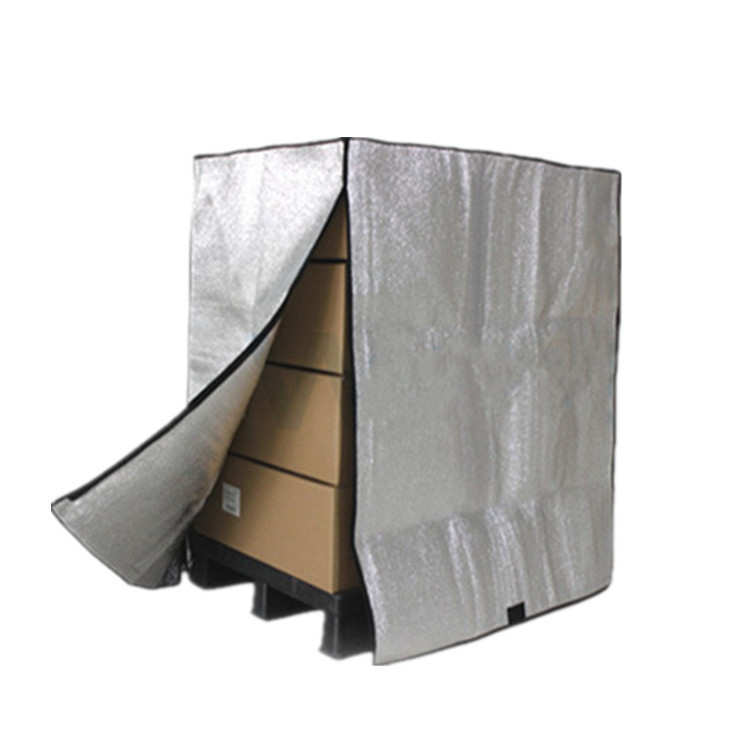
La estructura de cobertura debe seguir las necesidades de la ruta.. Las superficies reflectantes son útiles cuando el calor radiante y la luz solar son importantes.. Los núcleos aislantes ralentizan el movimiento del calor alrededor del palet. Las costuras y cierres reforzados son importantes cuando los pallets se mueven a través de carretillas elevadoras, remolques, o terminales. Una estrategia de lámina inferior o base puede ser importante cuando la plataforma se asienta sobre pavimento caliente., pisos frios, o placas de muelle.
For biologics buyers, Los detalles de ajuste suelen ser más importantes que el nombre comercial del producto.. Verifique la altura del palet envuelto, bulto de cartón, protectores de esquinas, ventanas de etiquetas, correas, y acceso al escáner. Pregunte si los trabajadores que usan guantes o trabajan rápidamente pueden asegurar la cubierta.. Un pequeño problema de ajuste puede crear un canal de aire., código de barras bloqueado, o acceso directo del operador.
La decisión material también debe considerar la limpieza y el almacenamiento.. Reusable pallet protection must be balanced against cleaning, cadena de custodia, inspección, y expectativas de control de cambios. Si la ruta es de ida o el receptor no puede gestionar las devoluciones, un formato diferente puede ser más realista. Si la ruta es de circuito cerrado, Puede que valga la pena considerar una funda reutilizable más duradera., siempre que la inspección y la limpieza estén integradas en el proceso.
Qué verificar con los proveedores
| pregunta del comprador | Por qué es importante para esta palabra clave | Riesgo si se ignora |
|---|---|---|
| Can the supplier explain whether the cover is supplementary protection or part of a qualified packaging system? | Confirma forma física y rol en la ruta. | La cubierta puede dejar huecos o usarse para un propósito incorrecto. |
| What test profile, condición de carga útil, and acceptance criteria support the stated performance? | Conecta el rendimiento con las condiciones del carril | Es posible que las reclamaciones no se apliquen a su paleta o perfil de exposición. |
| How will temperature loggers be placed so the cover does not block retrieval or scanning? | Mantiene las operaciones viables en el envío y la recepción. | Etiqueta, loggers, o los pasos de inspección pueden estar bloqueados |
| What change-control process applies if the cover material, costura, or closure is changed? | Admite repetibilidad y revisión de calidad. | Un material cambiado o un proceso de devolución deficiente pueden crear inconsistencias |
| Can the supplier provide material information for quality and purchasing review? | Muestra si el proveedor puede respaldar la revisión de compras. | Es posible que el comprador carezca de pruebas para la aprobación o la ampliación |
Esta reseña de proveedor no pretende dificultar la compra.. Se trata de evitar que una muestra barata se convierta en un costoso problema operativo. Si un proveedor puede responder estas preguntas claramente, El comprador puede comparar opciones según la ruta en lugar de solo el precio..
Cuando las cubiertas para palets son una buena opción
thermal pallet covers for biologics are a good fit when the risk is temporary, visible, y repetible. Son útiles cuando un palet se desplaza por una zona corta y no controlada., espera durante la carga, pasa por una terminal, o necesita protección adicional sin dejar de depender del proceso principal de la cadena de frío. También pueden ayudar a estandarizar el comportamiento del almacén al brindarle al personal una acción clara cuando un pallet sale del área controlada..
Herramientas útiles para tomar decisiones
Comprueba los detalles antes de elegir el embalaje.
Estas herramientas rápidas pueden ayudarle a comparar el riesgo de la ruta, necesidades de dimensionamiento, opciones de refrigerante, y detalles del embalaje antes de solicitar una cotización.
Revestimiento de caja & Dimensionamiento de la cubierta de paleta
Lógica de tamaño de revestimiento de cajas y cubiertas de paletas para proyectos de embalaje aislado.
Estimar el tamañoComprobador de riesgos de ruta
Revise las condiciones del carril antes de seleccionar el embalaje para requisitos operativos reales..
Comprobar riesgo de rutaResistencia a la caída del material aislante
Revise la resistencia a caídas y los factores de manipulación antes de elegir materiales aislantes..
Comprobar resistenciaNo encajan bien cuando la ruta no tiene disciplina de control de temperatura., cuando los productos regularmente comienzan fuera de su condición requerida, cuando la exposición dura más de lo que la cubierta fue diseñada para, o cuando nadie es dueño de la aplicación y eliminación. For biologics cargo, también pueden ser insuficientes cuando el producto necesita una remitente calificado, contenedor activo, frigorífico supervisado, o calificación de carril formal.
La mejor respuesta a veces es una combinación.. Una funda para palet se puede combinar con el transporte frigorífico., revestimientos aislados, paquetes de refrigerante, o un SOP de puesta en escena más sólido. No es necesario que la portada resuelva todos los problemas para ser valiosa.. Necesita resolver la parte correcta del problema..
Un flujo de trabajo de implementación realista
- Identify the product requirement and confirm the acceptable condition for biologics, medicamentos especializados, muestras, and other high-value healthcare cargo.
- Mapear la ruta y marcar cada punto de exposición no controlado o semicontrolado..
- Medir un palé completamente envuelto, incluyendo la altura superior, esquinas, etiquetas, y cualquier dispositivo de monitoreo.
- Pruebe una cubierta de muestra con el personal del almacén durante el flujo de trabajo de carga o preparación real.
- Revisar la evidencia térmica disponible y verificar si las condiciones de la prueba se parecen a la ruta..
- Escriba un procedimiento simple que cubra la solicitud., eliminación, inspección, almacenamiento, limpieza, y regresar.
- Utilice la recepción de comentarios y, donde sea apropiado, Monitoreo de temperatura para decidir si escalar la cubierta para repetir envíos..
Este flujo de trabajo mantiene la decisión conectada a las operaciones reales.. También crea un registro de que las adquisiciones, logística, y los equipos de calidad pueden discutir juntos. Esa revisión compartida es especialmente útil cuando la primera muestra parece aceptable pero la empresa se está preparando para envíos más grandes o más regulares..
Ejemplo práctico: de la muestra al carril de repetición
Imagine a buyer evaluating thermal pallet covers for biologics after seeing exceptions on one route. El equipo primero confirma que los principales equipos de almacenamiento y transporte están funcionando.. Luego revisa el carril y descubre que los pallets esperan cerca de una puerta durante la secuenciación de la ruta.. Se prueba una cubierta de muestra en un palet envuelto real, con aplicación de cronometraje del personal y control de acceso a etiquetas. El receptor registra si la funda llega correctamente montada y si el estado del palet es aceptable..
después del juicio, El comprador no aprueba la funda simplemente porque parecía fuerte.. El comprador comprueba si la funda se utilizó en el momento correcto., si el personal lo encontró práctico, si la documentación era suficiente, y si el comportamiento de la ruta mejoró. Si la respuesta es si, la cubierta se puede agregar al SOP. Si la respuesta es no, el equipo puede ajustar el proceso de puesta en escena, elige otra estructura de cubierta, o utilice un método diferente de control de temperatura.
Preguntas frecuentes
Are thermal pallet covers for biologics enough for full temperature control?
No. thermal pallet covers for biologics provide passive insulation and surface protection, pero no enfrían ni calientan activamente la carga. Son más útiles cuando reducen la exposición durante puntos de riesgo predecibles, como la puesta en escena., Entregar, y cargando. Para requisitos estrictos de temperatura, aún necesita reglas de manejo específicas del producto, equipo de transporte adecuado, y un plan de seguimiento.
Qué se debe verificar antes de pedir cubiertas para palets?
Start with product label, calificación de carril, tiempo de permanencia, Colocación del monitor, cadena de custodia, y documentación de calidad. Luego pregunte por las dimensiones reales montadas., materiales de construcción, diseño de cierre, metodo de limpieza, y cualquier documentación de prueba que coincida con su carril esperado. Una portada que parece adecuada en un catálogo puede no funcionar en un libro envuelto., desigual, o palet más alto que el estándar.
¿Puede una cubierta de palé hacer que un envío farmacéutico cumpla con el PIB??
Una cubierta de palé por sí sola no puede hacer que un envío cumpla con las normas. Las operaciones orientadas al PIB suelen requerir responsabilidades definidas, equipo adecuado, procedimientos documentados, y evidencia de que se mantiene la calidad del producto.. Una cubierta puede soportar un proceso controlado, pero el equipo de calidad debería revisar cómo se utiliza., monitoreado, y documentado.
¿Dónde se deben colocar los registradores de datos de temperatura cuando se utiliza una cubierta??
La ubicación del registrador debe reflejar el riesgo que necesita evaluar. No esconda el monitor donde solo mide un bolsillo protegido o donde el personal no pueda recuperarlo al recibirlo.. Para carriles sensibles, El plan de seguimiento debe revisarse con el propietario del producto., transportador, y equipo de calidad.
Conclusión
The best use of thermal pallet covers for biologics is not to promise perfect temperature control, pero para reducir la exposición conocida a nivel de paleta. Comience con los requisitos del producto., trazar la ruta, confirmar cuánto tiempo puede permanecer el palet fuera de la zona prevista, y compruebe si la cubierta se ajusta a la carga envuelta en funcionamiento real. Luego solicite documentación que respalde el material., dimensiones, y uso previsto. Cuando esos conceptos básicos están claros, una cubierta para palés se convierte en una parte práctica del plan de la cadena de frío en lugar de un complemento esperanzador.
Acerca de Tempk
Tempk trabaja con compradores B2B comparando embalaje de cadena de frío para carriles reales, incluyendo cubiertas de paletas, bolsas aisladas, revestimiento, cajas más frescas, y paquetes de enfriamiento. Para este tema, Nuestra función es ayudarle a formular las preguntas adecuadas.: que se esta enviando, donde ocurre la exposición, cómo se manipula el palet, y qué evidencia necesita su equipo antes de pasar de una muestra a repetir pedidos.
Envía a Tempk la categoría del producto, formato de palet, y ruta de envío que desea proteger, y le ayudaremos a identificar opciones prácticas de embalaje.