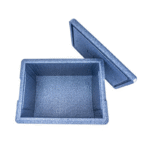
Envasado de la cadena de frío de vacunas: From Vaccine Label to Receiving Decision
The hardest part of vaccine embalaje de cadena de frío is often preventing a package from becoming demasiado frio while keeping it cold enough for the entire route. A frozen refrigerant positioned near a freeze-sensitive vaccine can be as serious a risk as a delayed delivery in summer. That is why a credible vaccine shipper is not simply an caja aislada, and why a supplier’s advertised hold time is not sufficient evidence for using it.
A complete vaccine shipping system includes the insulated enclosure, thermal media, carga útil definida, freeze-protection layers, handling instructions and monitoring process. Its suitability can only be judged against the specific vaccine requirements and the route on which it will be used. This guide explains how to turn those requirements into a packout that can be tested, purchased and repeatedly operated without confusing materials, device certifications and shipment qualification.
Start with the vaccine’s authorized condition—not a universal temperature claim
Many commonly used refrigerated vaccines are stored in the range of +2°C to +8°C, pero not every vaccine travels under that condition. Some products require frozen or ultra-low-temperature handling; others have product-specific thawed-use periods, light-protection requirements or rules concerning diluents. The authorized product information and applicable immunization program determine the acceptance limits. A label temperature requirement is not something the packaging supplier may replace with a generic “vaccine-grade” specification.
For United States vaccine providers, the CDC Vaccine Storage and Handling Toolkit updated on July 14, 2026, directs users to the manufacturer package insert for FDA-approved products and the relevant provider fact sheet for products authorized under an emergency-use pathway. WHO’s seventh edition of Guidelines for the International Packaging and Shipping of Vaccines, published in July 2025, provides guidance for a different context: envío internacional, predominantly by air. These sources are complementary within their intended scopes, not interchangeable substitutes for the particular vaccine’s instructions.
A buyer’s first step is to issue a product-condition record with the exact vaccine name and presentation, approved transport conditions, sensibilidad a la congelación, light considerations, manejo de diluyente, temperature-monitoring requirements and receiving-release authority. If a distributor ships several vaccines together, its quality team must determine whether their requirements genuinely permit a shared load. Similar-looking vials do not establish compatible temperature or handling needs.
Why freeze prevention deserves its own line in the specification
CDC’s clinical guidance identifies that liquid vaccines containing aluminum adjuvants can permanently lose potency after freezing. A refrigerated shipment cannot be declared safe simply because its central logger never recorded a warm excursion. Cold spots can exist near coolant faces, corners and closely fitted cartons. The relevant question is whether the vaccine product is protected from temperatures outside its permitted range, including at the coldest plausible payload location.
Using additional frozen coolant may improve resistance to summer heat but can increase freeze risk. Reducing coolant may prevent deep cooling yet shorten protection during delay. Engineering has to manage the two failure modes together; a single headline temperature or more ice is not an adequate solution.
Treat the shipper as a six-part controlled system
El contenedor aislado, thermal mass and monitoring device do different jobs. Keeping their roles separate makes quotations and test results more meaningful.
1. Insulated shell. EPS, PPE, insulated cartons and vacuum-insulated-panel assemblies limit the rate of heat transfer. Their usable performance depends on walls, esquinas, juntas de la tapa, closures and damage state—not solely on a material datasheet. A VIP system may improve insulation in a suitable architecture but increases the need to control panel integrity and handling.
2. Thermal medium. Frozen or conditioned water packs, paquetes de gel, rígido ladrillos de hielo and selected phase change materials absorb or release heat. A PCM is chosen for its defined phase-change behavior; a generic paquete de hielo en gel should not be assumed to behave like a specific PCM. Refrigerant performance is conditional on its formulation, masa, geometry and starting thermal state.
3. Freeze-protection structure. Espaciadores, a well-designed payload compartment or an engineered barrier can reduce direct exposure to frozen packs. A makeshift barrier without evidence is not proof that vaccine vials remain above their lower permitted temperature.
4. Real payload. Vaccine carton dimensions, cantidad, mass and stacking arrangement influence the thermal field. A nominal “10 L” or other volume statement does not tell a buyer how much vaccine fits after coolant, divisores, logger and protective layers are installed.
5. Equipo de monitoreo. A temperature data logger records conditions at its probe location. It cannot cool or heat the product and cannot independently decide if a vaccine remains fit for use. Posición del sensor, evidencia de calibración, alarms and data retrieval need to be defined.
6. Controlled procedure. A packout instruction defines coolant conditioning, orden de montaje, permissible open time, load configuration, cierre, labeling and receiving checks. Without repeatable execution, a successful chamber test may not represent routine production shipments.
The WHO IMD-PQS E004 category provides an important distinction for public immunization buyers. It concerns cold boxes, vaccine carriers and other passive devices used in vaccine transport. For a model claiming WHO prequalification, verify the exact model and applicable category, not a similar-looking design. A custom medical cooler should not inherit a PQS claim from another product.
Choose a coolant strategy by the risk at both temperature limits
The relevant question is not whether a coolant can get cold; it is whether the complete packed system protects the specific vaccine throughout the expected exposure. WHO’s vaccine cold-chain device guidance distinguishes frozen water packs, properly conditioned bolsas de hielo, cool water packs and specialized freeze-preventive carriers. The correct combination depends on the program, product and exact carrier instructions.
Freeze-preventive vaccine carriers include a designed barrier between the storage compartment and frozen packs. WHO guidance explains that compatible frozen water packs can be loaded without the conventional conditioning step in specified freeze-preventive designs. This operational advantage does not carry over to conventional carriers. Barrier geometry may also reduce usable storage volume. Follow the verified loading instructions of the particular carrier rather than using a technique borrowed from another model.
For a custom pharmaceutical shipper, procurement should ask the supplier to define each conditioning step: starting location and temperature, verificación de preparación, allowed staging time, orientación del paquete, separation requirement and changeover control. The phrase “use pre-frozen packs” is too vague to serve as a regulated packout instruction.
Herramientas útiles para tomar decisiones
Comprueba los detalles antes de elegir el embalaje.
Estas herramientas rápidas pueden ayudarle a comparar el riesgo de la ruta, necesidades de dimensionamiento, opciones de refrigerante, y detalles del embalaje antes de solicitar una cotización.
Referencia del material aislante
Compare opciones de materiales aislantes para diferentes necesidades de embalaje de la cadena de frío.
Comparar materialesRevestimiento de caja & Dimensionamiento de la cubierta de paleta
Lógica de tamaño de revestimiento de cajas y cubiertas de paletas para proyectos de embalaje aislado.
Estimar el tamañoComprobador de riesgos de ruta
Revise las condiciones del carril antes de seleccionar el embalaje para requisitos operativos reales..
Comprobar riesgo de ruta| Shipping situation | Dominant technical concern | Design or verification question |
| Refrigerado, freeze-sensitive vaccine in a short parcel route | Cold contact close to frozen media | Are the coldest loaded positions protected under the approved packing SOP? |
| Refrigerated vaccine through a long warm handoff | Heat ingress and depleted thermal reserve | Does the ambient challenge include the dwell and credible delay? |
| Refrigerated shipment in a cold winter lane | Ambient overcooling and coolant starting state | Was a cold seasonal profile tested, not only a summer one? |
| Field immunization with repeated access | Warm gain during openings and possible direct pack contact | Is the device intended and evaluated for an outreach use cycle? |
| Product requiring frozen or ultra-low handling | Incompatible temperature architecture | Has the product-specific shipper and transport mode been separately evaluated? |
This table is a decision map, not a universal packing recipe. Temperature conditions and acceptable methods must come from the actual vaccine and responsible program.
Define the exposure window from final packout closure to controlled receiving storage
A route is more than travel time. For an international air shipment, the protected interval can include assembly, levantar, export warehouse dwell, cargando, vuelos, transfer airports, customs and the receiving facility. For a regional clinic delivery, it includes vehicle staging, unsuccessful delivery attempts and the minutes before placement into approved storage. The most serious exposure may occur during a brief uncontrolled handoff rather than the longest leg.
de la OMS 2025 international vaccine shipping guidance explicitly discusses the challenges of size, peso, receiving checks and maintaining temperatures during air freight and related ground movements. The EU Good Distribution Practice guidelines for medicinal products similarly emphasize risk-based transport, product-defined temperature conditions, foreseeable ambient extremes, transit storage and investigation of deviations within their EU distribution scope.
Before selecting a shipper, draw a handoff map that names each responsible party and controlled facility. Record when the package may leave protected storage, the longest credible transit duration, weekend closures, expected hot and cold ambient exposures, and action contacts when a route fails. Qualification duration should be supported by a defined challenge and explicit margin, not merely by subtracting departure from arrival time in a best-case schedule.
Consider a hypothetical distributor serving several regional vaccination sites. One facility receives packages immediately; another accepts deliveries only during limited business hours. The same vehicle distance does not create the same protected window. For the second destination, the right change might be a controlled handoff arrangement or a delivery schedule adjustment, not a heavier gel pack. Packaging is one part of route risk control.
When passive packaging is not the only answer
Passive systems are attractive when exposure duration and handling can be bounded and the packout can be conditioned and repeated reliably. They do not actively replenish thermal energy after departure. Largo, uncertain routes, high-variability storage conditions or large shipments may require refrigerated vehicles, controlled cargo spaces, powered containers or more reliable transfer points. An active container is not automatically superior; it brings equipment, fuerza, maintenance and custody dependencies that also require management.
Dry ice is especially easy to misunderstand. Appropriate ultra-low-temperature vaccine air freight may use dry ice when supported by the approved product instruction and applicable airline and dangerous-goods rules. That is a distinct case from routine refrigerated clinic transport. Los CDC 2026 provider toolkit specifically warns against dry ice in its non-emergency vaccine transport guidance. Do not transfer rules between these different operations.
Read qualification evidence as a set of conditions, not a certificate of universal performance
A useful thermal report answers a narrow question: did an identified packout keep a specified representative payload within stated acceptance limits during a defined ambient challenge under controlled starting conditions? lo hace no automatically prove all seasons, vaccine types, box sizes or packing variations. The decision boundary should be visible in the report.
A technical approval package should include the bill of materials and revisions, a dimensioned loaded packout, the chosen coolant and conditioning procedure, temperaturas iniciales, payload simulation rationale, posiciones de los sensores, ambient test profile, time-temperature records, acceptance criteria and observations. If a report says “72-hour protection” without these conditions, treat the duration as an unverified marketing claim until the supporting evidence is reviewed.
Estándar ISTA 20 describes a process for designing and qualifying contenedores de transporte aislados, and ISTA 7E provides thermal exposure profiles for parcel shipping tests. These are tools for evaluation; a test using an ISTA profile does not by itself approve a vaccine for distribution or establish that a particular product remained potent after an excursion. A WHO PQS device listing and an organization’s transport qualification are likewise different decisions.
Different load states also matter. A fully packed shipper has a different thermal mass and air distribution from a near-empty one. A revised carton height can change the gap to the lid or bring vials closer to a coolant surface. A change of coolant supplier or gel formulation can alter the starting state and thermal behavior. Quality personnel should define which modifications can be bridged with justified evidence and which require new testing.
An operational design review should also question the coldest part of a box. Mapping only the warmest central point may miss a local freezing hazard. Durante el desarrollo, multiple sensors can help identify thermal extremes and establish a justified position for routine shipment monitoring. The final monitoring plan should accurately describe what the field logger represents and what it does not.
Plan receipt and excursion handling before buying the first box
The final step in the temperature-controlled chain is acceptance by a trained recipient. A good receiving procedure specifies what to inspect before opening, where to find the logger, how to review its time trace, how quickly the vaccine must move to approved storage, and what records are retained. The procedure should cover damaged seals, etiquetas mojadas, missing sensors, unexpected coolant contact and late shipments.
An out-of-range reading must trigger the agreed quality and program process rather than a quick decision based on whether the vials still look acceptable. CDC guidance cautions against using vaccines exposed to conditions outside recommended temperatures until suitability is established through appropriate authority or manufacturer input. The packaging seller cannot make a vaccine potency determination from a box model or gel pack specification.
Reusable packaging brings additional controls: inspección de componentes, limpieza, controles de sello, identificación del refrigerante, return handling and retirement criteria. A shipper may be economical over repeated cycles only if reverse logistics, damage and maintenance are considered. The strongest repeat-use claim is one supported by controlled inspection and performance evidence within the defined service life.
Build an RFQ that forces comparable answers
To compare offers fairly, provide the following information in a single controlled specification:
- Condición del producto: exact vaccine, labeled temperature limits, sensibilidad a la congelación, special light or diluent instructions, and release authority.
- Cargar sobre: minimum and maximum cartons, real dimensions, masa, presentation and acceptable orientation.
- Transport envelope: duración puerta a puerta, all handoffs, hot and cold seasonal exposures, delay risk and receiving operating hours.
- System architecture: acceptable outer dimensions, insulation formats, opciones de refrigerante, barreras, logger integration and reuse needs.
- Requisito de evidencia: required thermal profile, carga útil representativa, worst-case positions, report format and applicable quality review.
- Production controls: lista de materiales, tolerance criteria, trazabilidad de componentes, notificación de cambio, sampling and handling SOP.
Request that every quote identify the exact tested configuration, capacidad de vacuna utilizable, operational conditioning burden, known limitations and what is excluded. Price comparison should include freight cube, coolant conditioning space, mano de obra de embalaje, escucha, damage replacements and returns where applicable. The least expensive empty shell may be the costliest controlled route.
Tempk’s public product range includes gel and phase-change cooling media, ladrillos de hielo, bolsas aisladas and medical EPP/VIP packaging, along with packout-planning support. These are candidate building blocks, not a claim that any particular assembly is automatically WHO-prequalified or qualified for every vaccine. A useful supplier discussion begins with the vaccine requirement, route handoff map, representative cartons and the test evidence your quality team needs.
The decision that matters
Bien cadena de frio de vacunas packaging is producto específico, freeze-aware, route-qualified and repeatable. It must prevent unacceptable warming without creating unacceptable cold spots, and it must leave the receiver with the evidence and process needed to decide what happens next. Select the full system and its operating limits before committing to a box or coolant type. To develop a candidate packout with Tempk, share the product conditions, dibujo de carga útil, route exposure assumptions and planned qualification approach; then evaluate the resulting sample against those stated conditions.