Selecting a VIP Cold Shipping Box for Blood Plasma Shipping with a Defensible Approval Basis
Un VIP caja de envío en frío for blood plasma shipping should be approved as a complete packout for an identified plasma product, not purchased on a generic frozen or medical-grade claim. The decision needs the correct transport requirement, protection of the actual primary containers, controlled coolant preparation, and evidence relevant to the route and payload range. Receiving and exception ownership must be defined as well. Vacuum insulation can be part of that system, but it does not authorize product release, establish regulatory suitability, or make one configuration appropriate for every plasma category.
Create one approved record of what is being shipped
The first purchasing document should identify the plasma, not the container. Record the exact component name, uso previsto, estado actual, primary-container format, destino, and procedure governing transport. This prevents different teams from using the word plasma while assuming different products and conditions.
Distinguish transfusion components from Source Plasma intended for further manufacturing. Also distinguish Liquid Plasma from material handled after an approved thawing process. These categories should not be merged because they look similar or share a blood-derived origin. The responsible product and quality teams need to establish the actual requirement.
United States regulations provide a useful example of the distinction. Bajo 21 CFR 600.15, Fresh Frozen Plasma has a shipment entry of −18°C or colder, while Liquid Plasma has an entry of 1°C to 10°C. The storage table in 21 CFR 610.53 lists Liquid Plasma at 1°C to 6°C. These are differently scoped requirements, not interchangeable numbers.
Source Plasma adds another reason to avoid copying a general table into an operating instruction. Its shipment entry in 21 CFR 600.15 differs from the colder storage provisions for frozen injectable material in 21 CFR 610.53 y 640.69. The actual transport specification should be set by the authorized team with the product, applicable license, agreements, and procedures in view.
Do not use those United States references as a global shipping protocol. They do not establish the configuration, cantidad de refrigerante, permitted exposure, or release criteria for a particular international shipment. Confirm the applicable requirements for the product and route, including any more restrictive conditions that govern the operation.
Turn the approved requirement into a clear acceptance basis. Define the temperature evidence needed, the primary-container checks, the required identification, and the person or function responsible for exceptions. Resolve ambiguity before requesting a performance claim. A supplier cannot meaningfully qualify a box against an undefined target.
Decide whether a passive VIP system fits the transfer
Map the complete exposure from the controlled starting environment to the required destination storage. Incluir puesta en escena, embalaje, recopilación, transferencia intermedia, entrega, y recibiendo. A carrier's advertised transit interval may not cover the full period the packaging must support.
Then assess the available operating model. un pasivo palco vip limits heat exchange and relies on prepared coolant and payload conditions. It does not provide powered refrigeration. If the proposed route cannot remain within a supported passive protection window, consider another approved transport service or a properly arranged controlled intervention.
VIP panels can be useful when thermal performance must be achieved within a particular packaging layout. Sin embargo, the complete assembly matters: tapa, articulaciones, capa protectora, refrigerante, inserciones, y carga útil. Do not transfer a panel's material performance into a universal claim about the duration of an untested plasma packout.
The starting state must be controlled. The box should not be assumed to freeze, Frío, or restore plasma to an approved condition during the journey. Preparation belongs to the product's established process. Staging and loading need to preserve that process rather than consume an unmeasured part of the intended protection.
Clarify what happens when the plan changes. An after-hours delivery, lanzamiento retrasado, different receiver, or urgent partial shipment may create a new operating condition. Supported contingencies should be agreed before dispatch. Avoid relying on an intervention that requires access, equipo, or personnel the route does not actually provide.
For a hypothetical network transfer, a normal replenishment service might have an established receiving team and storage destination. Moving the same payload through another reception point can change the exposure even when the travel distance is shorter. The approval should follow the complete handover process, not distance alone.
Build the packout around the actual primary containers
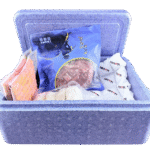
Usable capacity is the space available after all required components are installed. Measure the chamber with coolant, separadores, revestimiento, and monitoring equipment in place. Include the actual dimensions and shape of the primary containers, along with ports, tubería, embalaje protector, and removal access where relevant.
A physical loading review is essential to understanding fit. The arrangement should not require pressure on a vulnerable feature or force the lid closed over a misplaced component. Confirm handling restrictions with the primary-container supplier and responsible product team. Do not assume that every bag or bottle behaves identically at the intended conditions.
Restraints should control movement without introducing concentrated loads. Separators can manage contact with coolant where needed, but they also change thermal behavior. Include their material and placement in the evaluated configuration. An insert added after testing is not automatically a harmless accessory.
Protect the VIP barrier as a functional part of the system. Punción, corte, or unsuitable mounting can undermine the vacuum. Sensors and identification features need supported attachment arrangements, and operators should not modify panels to accommodate the load. The shell should help preserve this protection through the intended handling process.
Define the smallest and largest supported payloads. Removing units from a full-load configuration changes mass, espacio, and potentially contact with coolant. Provide an approved partial-load arrangement or another suitable system. Do not leave urgent or replacement shipments to improvised filler and coolant placement.
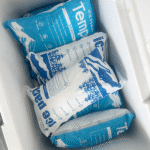
Coolant selection follows the approved product requirement. Paquetes a base de agua, other PCMs, y hielo seco should not be treated as interchangeable. Identidad, preparación, cantidad, and placement belong in the packout specification. A colder refrigerant is not automatically more appropriate for every plasma state or primary-container design.
Where dry ice is proposed, conduct a separate compatibility and transport review. The cargo package needs a suitable gas-release arrangement under applicable requirements, while the primary product remains appropriately contained. The vacuum within a VIP panel is a different enclosure. Do not create ventilation by altering panels or closures after evaluation.
Review the evidence against the proposed use, not the catalog headline
A useful supplier submission describes exactly what was evaluated. Identify the container version, lista de componentes, refrigerante, preparación, disposición de carga útil, desafío ambiental, mapa de sensores, y criterios de aceptación. Ask the supplier to distinguish existing evidence from additional work needed for the proposed application.
Herramientas útiles para tomar decisiones
Comprueba los detalles antes de elegir el embalaje.
Estas herramientas rápidas pueden ayudarle a comparar el riesgo de la ruta, necesidades de dimensionamiento, opciones de refrigerante, y detalles del embalaje antes de solicitar una cotización.
Generador de listas de verificación de cumplimiento
Cree una lista de verificación práctica para la revisión del embalaje, envío, y documentación.
Crear lista de verificaciónComprobador de riesgos de ruta
Revise las condiciones del carril antes de seleccionar el embalaje para requisitos operativos reales..
Comprobar riesgo de rutarefrigerante & Referencia PCM
Compare las opciones de refrigerante y PCM cuando una ruta necesite soporte de temperatura adicional.
Comparar opciones| Decision before approval | Evidence that supports the decision | Gap that requires review |
|---|---|---|
| Correct plasma requirement | Approved product and transport specification | A generic frozen or refrigerated description |
| Representative payload | Actual containers or justified substitutes and load range | Equivalence based only on total mass |
| Rendimiento térmico | Full results with exposure, preparación, y ubicaciones de sensores | A duration claim without test conditions |
| Protección física | Relevant loaded-system assessment and inspection | An empty-shell result applied to plasma units |
| Routine reproducibility | Controlled packing instructions and production identity | Undocumented substitutions or special intervention |
This table is a review framework, not a universal qualification protocol. The responsible technical team should determine the necessary scope for the product and route. Its purpose is to make unsupported assumptions visible before they become part of a purchase order or shipping instruction.
Thermal mapping should address relevant product locations. A central air reading may differ from conditions at peripheral units or locations influenced by coolant and the lid. Review what each sensor measures and why it supports the acceptance criterion. Monitoring equipment should have suitable range, calibración, and documented performance for the intended use.
Substitute payloads require a reasoned basis. A dummy load with matching weight may not reproduce the actual arrangement, comportamiento de fase, contacto, or primary-container vulnerabilities. It can be useful for development while still leaving questions that require another evaluation. The report should state those limitations clearly.
Thermal and handling tests should be coordinated without being confused. ISTA thermal profiles and qualification processes can provide relevant references, while distribution methods address other hazards. The selected approach should match the service and consider whether handling could displace components or affect insulation. A standard name is not a blanket approval for plasma shipping.
Review the operating range and deviations. A favorable result with one load and carefully prepared coolant does not establish every possible order or preparation method. Document special interventions and identify the limits of the conclusion. The approved system should be the one actually supported by the evidence, not a combination of assumptions from different trials.
Control departure, recepción, and the exception path
Antes del despliegue, confirm that the dispatch site can reproduce coolant preparation and product staging. Equipment capacity, component identification, and staffing need to support the routine workload. A method that succeeds only under close attention from a project team may need simplification or additional controls.
Packing instructions should make the correct arrangement clear and show when work must stop for review. Similar-looking coolant or inserts should not be substituted because the intended component is unavailable. The configuration should remain tied to the product category and supported order range, not selected by habit.
Receiving needs its own owner and sequence. The destination should be ready to transfer the product to the required environment, preservar registros, and inspect under its procedure. Delivery confirmation is not the same as completion of the controlled transfer. Include the receiving interval in the service assessment.
Monitoring supports this process by providing evidence at defined locations and times. It does not supply cooling or independently authorize release. Confirm how data is retrieved, associated with the shipment, and reviewed. A connected logger is useful only within a workable information and response process.
When the package is damaged, data is missing, or exposure is uncertain, follow the established hold and investigation procedure. Preserve identification and available evidence, and maintain the condition directed by the responsible procedure while the authorized team reviews the event. Do not improvise refreezing, reetiquetado, or product-use decisions from an arrival reading.
Transport classification should remain separate from thermal qualification. Trained personnel need to assess the actual biological material, refrigerante, ruta, y reglas aplicables. A box described as medical does not resolve those questions, and a plasma product should not automatically be classified like a diagnostic specimen.
Preserve the approved configuration through purchasing and reuse
Después de la calificación, create a controlled supply specification. Identify the panel arrangement, chamber, tapa, inserciones, refrigerante, and instructions that matter to performance. Ask how production units will be checked against the evaluated version and how deviations will be communicated.
Customization should address an identified constraint, such as primary-container fit, separación de refrigerante, or loading access. A new chamber size or lid design may require review of existing evidence. Lo mismo material aislante does not make two different assemblies thermally or mechanically equivalent.
Change control should include the payload and network as well as the box. A new primary-container format, different shipment quantity, revised preparation process, or another receiving site can alter the approval basis. Assign review responsibility before these changes become routine operation.
Where reuse is planned, manage empty assets through collection, limpieza, el secado, inspección, correct reassembly, and release to ready inventory. Keep this process distinct from product returns. A contenedor retornable program must not imply that returned plasma is automatically suitable for use.
Compare costs and environmental effects using equivalent accepted services. incluir acondicionamiento, embalaje, freight effects, escucha, receiving work, regresa, limpieza, reparar, y perdida. Avoid unsupported reuse-cycle or emissions claims. A reusable system should preserve the qualified configuration and remain practical for the organizations operating the loop.
The final purchase should therefore be a supported transfer system with known boundaries. A VIP cold shipping box for blood plasma shipping is credible when the product requirement, primary-container protection, evidencia, proceso operativo, and quality ownership remain connected.
Questions to settle before routine shipping
Can one outer box support different plasma categories?
A common platform may be possible, but each category needs an appropriate packout and acceptance basis. Differences in product state, requisito de temperatura, contenedor primario, refrigerante, or receiving process can matter. Keep approved variants clearly identified and do not assume that sharing the same shell makes their instructions or qualification interchangeable.
Can remaining dry ice establish product acceptability?
No por sí solo. Remaining refrigerant is an observation about the package, not a complete record of every unit's exposure or a release decision. The responsible procedure should define the required temperature evidence, inspecciones, y revisar. Preserve relevant observations, but do not substitute them for the authorized product-disposition process.
What should happen when a new route is added?
Review the full exposure and handover process, including preparation, tránsito, receiving availability, y transferencia de almacenamiento. Determine whether the existing packout and evidence cover those conditions. Where they do not, define additional qualification, controles, or another approved service before routine use. A shorter distance does not automatically mean a lower-risk route.
Acerca de Tempk
Y tempk, we offer VIP packaging with configurable payload and coolant arrangements. For plasma projects, these options are most useful when shaped around the actual primary containers and an approved transport specification. Bring those requirements into the design discussion so that fit, separación, and packing practicality can be reviewed together. Confirm the proposed configuration and supporting evidence with your responsible technical team before treating customization as an approved plasma shipping solution.
Discuss your plasma category, primary-container format, and route with Tempk before selecting a box for qualification and production supply.