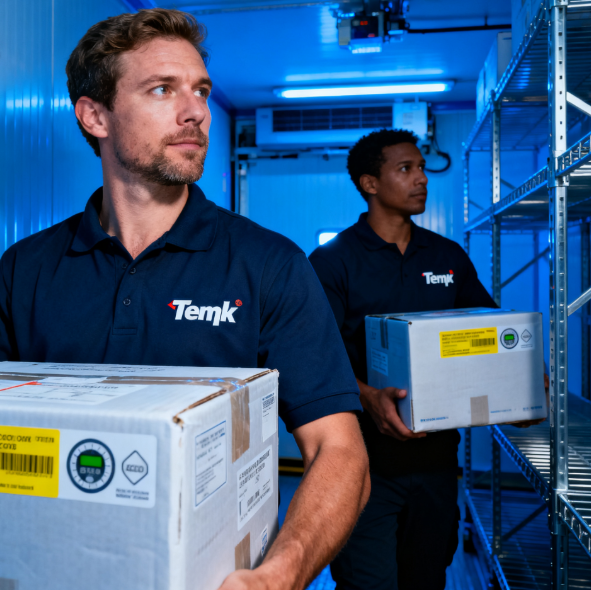
Nevera médica VIP: Guía práctica de selección de cadena de frío
A Nevera médica VIP debe elegirse como parte de un sistema de cadena de frío, no como independiente contenedor aislado. La decisión práctica comienza con el requisito de temperatura del producto., luego pasa al tamaño de carga útil, exposición de ruta, configuración del refrigerante, manejo de la disciplina, recibiendo cheques, y evidencia del proveedor. Este artículo optimizado reúne esas piezas para compradores B2B que necesitan una forma clara de comparar opciones sin depender de afirmaciones amplias de folletos.. También explica cuándo la caja encaja bien., cuando se necesita calificación adicional, y qué Tempk puede ayudarte a aclarar antes de realizar el pedido.
Respuesta practica: Trate una nevera médica VIP como un componente de una configuración de embalaje calificada o controlada.. Confirme el rango de temperatura requerido, tiempo de exposición esperado, perfil de ruta, plan de refrigerante, volumen utilizable, y necesidades de documentación antes de comparar precios o apariencia.
Comience con el papel de la nevera médica VIP.
Antes de comparar materiales, definir lo que se espera que haga la nevera médica VIP. ¿Está protegiendo la calidad de los alimentos refrigerados durante algunas paradas de entrega?, mover medicamentos entre instalaciones, mantener las vacunas durante la extensión, o respaldar una línea farmacéutica documentada? Cada caso cambia el estándar de evidencia.. para entrega de comida, limpieza, durabilidad, conveniencia de carga, y el traspaso de clientes puede dominar. Para logística médica, requisitos de la etiqueta del producto, evidencia de temperatura, y la revisión de calidad se vuelven más importantes.
Esta distinción evita un error de compra común.: Tratar cada contenedor aislado como un sistema de envío con temperatura controlada. Una caja puede estar aislada y aún así no estar habilitada para su carril. Puede haber un material de alto rendimiento presente y aun así fallar si el refrigerante es incorrecto. A caja reutilizable Puede reducir el desperdicio de embalaje y aún crear riesgos si regresa dañado o sucio.. El objetivo práctico es hacer coincidir la función de la caja con el riesgo del producto., exposición de ruta, y carga de documentación.
Del mapa de ruta a la decisión de retirar el equipaje
El mapeo de rutas es el puente entre los requisitos de un producto y la elección de empaque. Anote dónde se encuentra la caja empaquetada antes del envío., como viaja, si cambia de vehículo, ¿Cuánto tiempo espera en cada entrega?, si se puede abrir la tapa, y lo que hace el receptor al llegar. Este mapa muestra si la nevera médica VIP solo necesita un aislamiento práctico para un recorrido corto y controlado o si necesita un plan de embalaje y cualificación documentado..
Para envíos médicos y relacionados con vacunas, Muchos compradores también necesitan un plan de control de temperatura.. Un registrador no protege el producto, pero crea evidencia para revisión. La ubicación del registrador., estado de calibración, límites de alarma, y el proceso de recuperación de datos debe definirse antes de que comience la ruta. Para entrega de alimentos y farmacia., el seguimiento puede ser menos formal, pero los controles de envío y recepción aún ayudan a los equipos a detectar puntos débiles antes de que aparezcan quejas o retenciones de productos..
Compensaciones materiales que afectan las operaciones diarias
Los materiales influyen más que el rendimiento térmico. Afectan el manejo de los trabajadores, limpieza, eficiencia de retorno, espacio de almacenamiento, etiquetado, inspección de daños, y la cantidad de capacitación necesaria para un embalaje repetible. Paneles de aislamiento al vacío que reducen la transferencia de calor en un perfil de pared más delgado que muchas espumas convencionales.. Para compradores, esa descripción sólo es útil cuando se traduce en operaciones: qué tan pesada se siente la unidad empaquetada, con qué facilidad el personal puede limpiarlo, ¿Qué tan visible es el daño?, si la tapa se cierra de la misma manera cada vez, y cuánto espacio de carga útil queda después del refrigerante.
Los equipos de compras más fuertes comparan materiales según las condiciones de uso.. Preguntan si la caja se abrirá durante la entrega., si será apilado, si se devolverá vacío, si puede estar expuesto a la lluvia o al sol directo, y si un equipo de calidad revisará los registros de temperatura. Estos detalles mantienen la selección de materiales ligada al riesgo en lugar de convertirla en un ejercicio de catálogo..
Matriz de compradores antes de preseleccionar proveedores
Utilice esta matriz de comprador antes de preguntar precio. Mantiene la discusión centrada en el riesgo de la cadena de frío en lugar de en las descripciones del catálogo..
| Control | Que verificar | Por que importa |
|---|---|---|
| Rango de temperatura | Confirme los requisitos del producto antes de elegir el refrigerante o el material de la caja. | Una caja no puede ser juzgada sin criterios de aceptación. |
| Exposición de ruta | Envío de mapas, espera, transporte, Entregar, y recibo | Los minutos de mayor riesgo suelen ocurrir fuera de los vehículos. |
| Carga útil utilizable | Mida el espacio interno después del refrigerante, divisores, y papeleo están incluidos | El volumen bruto puede exagerar lo que realmente se puede enviar |
| Plan de reutilización | Definir limpieza, devolver, inspección de daños, y reglas de jubilación | La reutilización sin control puede convertirse en un riesgo oculto |
| Evidencia del proveedor | Preguntar por las condiciones de prueba, consistencia de la muestra, y proceso de control de cambios | La adquisición necesita pruebas de que la producción coincide con la muestra aprobada |
La tabla no sustituye a una revisión de calidad., pero ayuda a alinear las adquisiciones, operaciones, y equipos técnicos antes de ordenar las muestras. También hace que las conversaciones con los proveedores sean más precisas.. En lugar de pedir el tiempo de espera más largo o el precio más bajo, Puedes preguntar si la evidencia detrás de la caja coincide con tu producto., ruta, carga útil, y condiciones de manejo.
Qué confirmar antes de pasar de una muestra a un pedido al por mayor
El escalamiento es donde muchas decisiones de empaque se vuelven operativas. Una muestra de mano puede parecer correcta, pero el uso a granel revela si la tapa se cierra repetidamente, si el personal puede empacar rápidamente, si las etiquetas permanecen legibles, si las cajas se apilan de forma segura, y si los accesorios son fáciles de manejar. Antes de realizar un pedido mayor, definir exactamente lo que se ha aprobado.
Confirma los siguientes puntos:
– Dimensiones aprobadas, diseño de cierre, material aislante, inserciones, y accesorios.
- Espacio de carga útil útil después del refrigerante, particiones, etiquetas, y la documentación están incluidas.
- Perfil de prueba o evidencia de desempeño y las condiciones bajo las cuales se generó..
- Limpieza, inspección, y reglas de retiro para cajas reutilizables.
- Consistencia de producción, comunicación de control de cambios, y embalaje de unidades terminadas antes de la entrega.
- ¿Quién es el propietario de las instrucciones de embalaje?, capacitación del personal, y recibir cheques después de que lleguen las cajas.
Esta revisión protege tanto al comprador como al proveedor.. Le brinda al proveedor un objetivo más claro y le brinda al comprador un registro para comparar las unidades entregadas con la configuración aprobada..
Herramientas útiles para tomar decisiones
Comprueba los detalles antes de elegir el embalaje.
Estas herramientas rápidas pueden ayudarle a comparar el riesgo de la ruta, necesidades de dimensionamiento, opciones de refrigerante, y detalles del embalaje antes de solicitar una cotización.
refrigerante & Referencia PCM
Compare las opciones de refrigerante y PCM cuando una ruta necesite soporte de temperatura adicional.
Comparar opcionesReferencia del material aislante
Compare opciones de materiales aislantes para diferentes necesidades de embalaje de la cadena de frío.
Comparar materialesSelector de embalaje
Compare las opciones de embalaje aislado por producto, ruta, y necesidad de temperatura.
encontrar embalajeSeñales de advertencia durante la evaluación
- Un número sin condiciones: Un reclamo de tiempo de espera está incompleto a menos que conozca el perfil ambiental, carga útil, refrigerante, y rango de aceptación.
- Material como única evidencia.: PPE, personaje, PU, o EPS describe aislamiento, no calificación de ruta por sí sola.
- Discrepancia de muestra: Las unidades de producción deben coincidir con la muestra aprobada en material., cierre, inserciones, y accesorios.
- Sin proceso de recepción: Si nadie revisa el paquete a su llegada, Se pueden descubrir problemas después de que se retrasa la eliminación del producto..
- No hay plan de reutilización: Limpieza, el secado, seguimiento, y la inspección de daños son parte del sistema de caja.
Estos errores se pueden prevenir porque en su mayoría son problemas de proceso y no misterios de la ciencia del aislamiento.. Una nevera médica VIP se vuelve más confiable cuando las operaciones definen cómo se prepara la caja, quien lo revisa, y cuando se debe retirar de uso. Cuanto más sensible sea el producto, cuanto más formal debería ser ese proceso.
Ajustar límites para acordar antes de la aprobación
Una nevera médica VIP es ideal para medicamentos de alto valor, vacunas, biológicos, muestras de laboratorio, y rutas donde el volumen interno y la resistencia térmica son importantes. Se vuelve más cuestionable para los carriles difíciles donde los paneles VIP pueden ser perforados., Envíos sin disciplina de embalaje., o cualquier ruta que no reciba inspección. Este límite es importante porque embalaje de cadena de frío Las decisiones a menudo fallan en los casos extremos.. Un recuadro fácil de justificar de forma breve., La ruta controlada puede ser la elección equivocada en una ruta larga con etapas expuestas., traspasos repetidos, o un receptor que no puede revisar la evidencia de temperatura rápidamente.
Si el caso de uso es de bajo riesgo, el comprador puede centrarse en la durabilidad, facilidad de limpieza, formación de usuarios, y si la caja se puede empaquetar de la misma manera todos los días. Si el caso de uso es de mayor riesgo, El comprador debe elevar el nivel de evidencia.. Eso puede incluir información de prueba del proveedor., un paquete escrito, monitoreo de temperatura, revisión de ruta, y aprobación de calidad. La decisión no es complicar cada envío. Se trata de aumentar el control cuando el valor del producto, expectativa regulatoria, o la exposición a la ruta hace que las suposiciones sean costosas.
Una situación del comprador que aclara la decisión.
Considere un comprador que selecciona una nevera portátil VIP para entregas clínicas recurrentes.. El envío no es un paquete único.; se repite semanalmente, con el mismo sitio de despacho, varios traspasos, y un receptor que debe tomar decisiones rápidas sobre el producto.. El comprador compara dos cajas.. Uno tiene un precio más bajo y una especificación simple.. El otro tiene instrucciones de embalaje más claras., mejor consistencia del cierre, y un proveedor dispuesto a discutir las condiciones de prueba y los controles de la muestra a la producción..
La mejor opción puede no ser la caja con el reclamo más impresionante.. Es la opción que el comprador puede operar consistentemente. Si la ruta cambia más tarde, el comprador debe revisar el paquete nuevamente en lugar de asumir que la aprobación original aún se aplica.
La recepción de cheques completa la decisión de embalaje.
El envío no ha finalizado cuando la nevera médica VIP sale de la mesa de expedición.. El receptor tiene que saber qué hacer cuando llega la caja.. Para mercancías sensibles, eso puede significar verificar el estado físico de la caja, etiquetas de confirmación, revisando un registro de temperatura, anotando el momento de recepción, y mover la carga útil nuevamente al almacenamiento controlado sin demora. Para operaciones reutilizables, el cuadro vacío luego ingresa a otro proceso: devolver, limpieza, el secado, control de accesorios, e inspección antes de volver a utilizarlo..
Este paso de recepción a menudo revela si la caja fue elegida bien.. Si la tapa es difícil de cerrar, si el diseño interno confunde al receptor, si el registrador es difícil de encontrar, o si la caja devuelta es difícil de inspeccionar, El embalaje añade riesgo operativo.. Por tanto, un comprador práctico debería preguntarse cómo se comporta la caja al final del recorrido., no sólo cómo se ve antes del envío. Un buen embalaje protege el producto y facilita la siguiente decisión a las personas que lo manipulan..
Preguntas frecuentes
¿Cómo sé si una nevera médica VIP es adecuada para mi envío??
Comience con el rango de temperatura requerido, duración de la ruta, puntos de entrega, tamaño de carga útil, y necesidades de documentación. Luego compare el material de la caja., plan de refrigerante, instrucciones de embalaje, y evidencia del proveedor. La idoneidad no es una única especificación; es una coincidencia entre el sistema de cajas y tu carril.
¿Qué debo preguntar antes de pedir muestras??
Preguntar por dimensiones internas y externas, volumen utilizable después del refrigerante, Detalles del material y cierre., paquete recomendado, condiciones de prueba, requisitos de limpieza, y cualquier proceso de control de cambios. Para rutas médicas, Involucrar a revisores de calidad antes de aprobar la muestra..
¿Es siempre mejor una caja reutilizable que un envío de un solo uso??
No. La reutilización funciona mejor cuando puedes recuperarla, limpio, inspeccionar, y redistribuir cajas consistentemente. Una ruta de exportación unidireccional o una entrega incontrolada de última milla pueden justificar un modelo de embalaje diferente.
¿Puedo confiar en el reclamo de tiempo de espera de un proveedor??
Trátelo como un punto de partida. Pregunta qué perfil ambiental, carga útil, refrigerante, y rango de aceptación fueron utilizados. Si tu ruta es diferente, Es posible que se necesiten pruebas adicionales o un paquete revisado..
Conclusión
La nevera portátil VIP adecuada es aquella que se adapta a los requisitos del producto., exposición de ruta, carga útil, plan de refrigerante, patrón de manejo, y nivel de evidencia. Comience por definir el rango de temperatura y el proceso de envío., luego compare materiales y proveedores con esa realidad. Utilice muestras para probar el ajuste y el flujo de trabajo, no solo apariencia. Para rutas médicas o relacionadas con vacunas, Mantenga el lenguaje de calificación cauteloso e involucre a revisores de calidad antes de ampliarlo.. Para operaciones reutilizables, tratar la limpieza, devolver, e inspección de daños como parte del sistema de embalaje.
Acerca de Tempk
Tempk proporciona embalaje aislado Opciones y debates sobre embalajes personalizados de cadena de frío para alimentos., farmacia, medicamento, vacuna, y escenarios de envío sensibles a la temperatura. Cuando los compradores evalúan una nevera portátil VIP, Tempk puede ayudar a comparar EPP, personaje, Vpu, y otros formatos aislados contra ruta, carga útil, refrigerante, y necesidades de reutilización. Mantenemos la conversación práctica.: lo que debe proteger la caja, cómo se empacará, cómo se manejará, y qué pruebas debe verificar el comprador antes de escalar.
Discute tu ruta, carga útil, rango de temperatura objetivo, y plan de reutilización con Tempk antes de pedir muestras, por lo que la primera recomendación de embalaje se acerca más al envío que realmente necesita realizar.