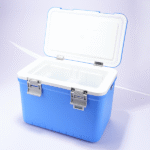
Almacenamiento de productos sensibles a la temperatura, como vacunas., Los productos biológicos y los alimentos de alto valor ya no son opcionales: son un requisito reglamentario.. A Caja refrigerada VIP para embalaje conforme a la FDA utiliza paneles de aislamiento al vacío avanzados y materiales de cambio de fase para proteger los productos durante días mientras cumple con estrictas normas de documentación y trazabilidad.. esta guía, actualizado para 8 Diciembre 2025, explora lo que hace palcos vip único, cómo usarlos, y cómo se alinean con las últimas novedades de la Administración de Alimentos y Medicamentos (FDA) Regulaciones y tendencias de sostenibilidad.. Ya sea que administre una cadena de suministro farmacéutica o envíe queso artesanal, aprenderá consejos prácticos para garantizar que sus envíos permanezcan seguros, sostenible y compatible.
Este artículo te ayudará:
Entiende qué es un cajón frigorífico VIP: Descubra cómo los paneles aislados al vacío (VIP) reducir la conductividad térmica a un nivel tan bajo como 0.004 W/m·K y cómo las paredes delgadas liberan más espacio de carga útil.
Comply with FDA cadena de frío regulations: Conozca más sobre la Ley de Modernización de la Seguridad Alimentaria (FSMA) y Ley de Seguridad de la Cadena de Suministro de Medicamentos (DSCSA) requisitos, incluyendo documentación y obligaciones de rango de temperatura.
Explorar 2025 tendencias del mercado: ver por qué embalaje reutilizable esta surgiendo, Cómo la monitorización digital y la IA mejoran el rendimiento, and how the cadena de frío packaging market could reach Dólar estadounidense 89.84 mil millones por 2034.
Obtenga mejores prácticas prácticas: Siga las instrucciones paso a paso sobre el acondicionamiento previo, cargando, Monitorización y reutilización de palcos VIP..
Aprende de casos reales: Vea ejemplos de transportistas que redujeron el peso del refrigerante en encima 60 % y tiempo de espera ampliado de dos días a casi diez días.
¿Qué es una caja refrigerada VIP y por qué es importante??
A Caja refrigerada VIP Combina paneles de aislamiento al vacío con carcasas duraderas y materiales de cambio de fase (PCM) para ofrecer un control de temperatura duradero. VIP Son paneles delgados compuestos por un núcleo microporoso. (a menudo sílice pirógena o fibras de vidrio finas) Sellado en una película de barrera hermética.; el aire del interior se evacua para crear un vacío profundo. La extracción de aire prácticamente elimina la conducción y la convección., dejando la radiación como la principal ruta de transferencia de calor. Como resultado, Los VIP alcanzan conductividades térmicas tan bajas como 0.004 W/m·K—diez veces mejor que el aislamiento de espuma convencional. Esto permite que las paredes de la caja sean 10–15mm de espesor en lugar de 25-40 mm, liberar volumen de carga útil.
Los palcos VIP no sólo son técnicamente impresionantes; Proporcionan beneficios de cumplimiento cruciales.. La mayoría de las vacunas, Los productos biológicos y algunos alimentos deben mantenerse entre 2 °C y 8 °C, mientras que ciertas terapias genéticas requieren –70°C o debajo. Regulaciones de la FDA (FSMA, DSCSA y Buenas Prácticas de Distribución) exigir que las empresas utilicen equipos validados, monitorear la temperatura continuamente, mantener una trazabilidad completa y mantener registros detallados. Porque los palcos VIP entregan 7–10 días de control de temperatura con mínimo refrigerante, Le ayudan a mantener estos rangos durante los retrasos., retenciones aduaneras o entrega de última milla.
Cómo funcionan los paneles VIP: la ciencia en términos simples
Imagine un termo construido como un termo pero aplanado en paneles delgados.. A panel vip contiene un rígido, Núcleo poroso hecho de sílice pirógena., fibra de vidrio o aerogel. Los diminutos poros del núcleo impiden que las moléculas de aire transfieran calor. Este núcleo se sella dentro de una película de barrera multicapa y se evacua para crear un vacío profundo.. Con el aire eliminado, El calor no puede viajar por convección o conducción., dejando solo una radiación lenta. Algunos paneles VIP incluyen lámina reflectante para desviar el calor radiante., aumentando aún más el rendimiento.
Significado práctico: porque las paredes VIP son delgadas, Puedes empacar más productos en el interior y usar menos refrigerante.. Un envío típico de 5 litros en una caja refrigerada VIP requiere solo 1.5 kg de PCM comparado con 4 kilos en poliestireno expandido (EPS) espuma. Esto ahorra peso, reduce las emisiones de carbono y reduce los costos de envío.
| Material de aislamiento | Conductividad térmica (mW/m·K) | Tiempo de retención típico | Lo que significa para ti |
| Poliestireno expandido (EPS) | 30–35 | 1–2 días | Paredes gruesas, Peso pesado y gran volumen de refrigerante.; A menudo se utiliza en cajas de un solo uso. |
| Espuma de poliuretano (Puro) | 24–30 | 3–4 días | Mejor rendimiento pero aún voluminoso; requerimiento moderado de refrigerante |
| Paneles de aislamiento de vacío (personaje) | 4–6 | 7–10 días | Delgado (10–15mm) paredes, PCM mínimo requerido, Envíos más ligeros y más espacio de carga útil. |
Beneficios de las cajas refrigeradas VIP más allá del aislamiento
Tiempos de espera más largos: Con PCM apropiados, Los palcos VIP mantienen temperaturas críticas para 7–10 días. Esto es esencial para envíos de larga distancia., Retrasos o emergencias aduaneras..
Mayor eficiencia de carga útil: Las paredes delgadas liberan hasta 20 % Más espacio interno en comparación con el embalaje de espuma., permitiendo más productos por envío.
Emisiones reducidas: Menos refrigerante significa menor peso de transporte y menos emisiones. El reciclaje de núcleos VIP puede reducir su potencial de calentamiento global al 95 %.
Alineación regulatoria: Soporte de palcos VIP reutilizable Mandatos de embalaje como California SB 54 y las regulaciones de embalaje de la UE que exigen materiales reciclables o compostables por 2032.
Integración digital: Muchos palcos VIP ahora incluyen sensores de iot y registradores de datos para temperatura en tiempo real, monitoreo de humedad y ubicación, asegurando el cumplimiento de 21 Parte CFR 11 y requisitos de trazabilidad de DSCSA.
Consejos prácticos para elegir y utilizar cajas refrigeradas VIP
Preacondiciona tu equipo: Preenfríe tanto la caja VIP como el PCM a la temperatura objetivo antes de cargar. Esto reduce los picos de temperatura y extiende el tiempo de espera..
Seleccione el PCM correcto: Para un rango de 2 a 8 °C, elegir paquetes de gel con un punto de fusión alrededor 5 °C; para productos congelados, usar hielo seco o PCM con puntos de congelación más bajos.
Organizar los productos con cuidado.: Coloque PCM en todos los lados, con paquetes más pesados en la parte superior, y mantener un espacio de aire entre la carga útil y las paredes VIP.
Sellar rápidamente: Minimice el tiempo abierto durante la carga y selle con etiquetas a prueba de manipulaciones y registradores de datos.
Monitorear continuamente: Utilice sensores de IoT que transmitan datos cada 1 a 5 minutos para detectar desviaciones y alertarlo en tiempo real.
Plan de reutilización: Establecer un circuito de logística inversa; Etiquete las cajas con instrucciones de devolución y capacite al personal para manejar a los VIP con cuidado y evitar pinchazos..
Caso del mundo real: Un distribuidor farmacéutico reemplazó EPS por palcos VIP durante un 5Envío de vacuna L. Al reducir bolsas de hielo de 4 kilogramos a 1.5 kilos y capacitar al personal sobre el acondicionamiento previo, ampliaron el tiempo de espera de dos días a casi diez dias y reducción de los reenvíos de emergencia en 80 %.
Regulaciones y cumplimiento de la FDA para empaques ColdChain en 2025
El Administración de Alimentos y Medicamentos impone múltiples regulaciones para salvaguardar los productos sensibles a la temperatura. Cumplir con la FDA, su Caja refrigerada VIP debe hacer más que mantener la temperatura: debe respaldar la trazabilidad, documentación y equipos validados.
Regulaciones clave: FSMA, DSCSA y Buenas Prácticas de Distribución
Ley de modernización de la seguridad alimentaria (FSMA): Esta ley cambia el enfoque de reaccionar ante la contaminación a prevenirla. El Regla final de trazabilidad de alimentos exige que las empresas que manipulan alimentos incluidos en la lista conserven los elementos de datos clave (KDE) para cada evento de seguimiento crítico (CTE) y proporcionar información a la FDA dentro de 24 horas. La FDA ha propuesto extender la fecha de cumplimiento a Julio 20 2028.
Ley de seguridad de la cadena de suministro de medicamentos (DSCSA): DSCSA exige el seguimiento electrónico interoperable de medicamentos recetados para evitar productos falsificados. Las exenciones permiten a ciertos socios retrasar los requisitos mejorados hasta que Puede 27 2025 para fabricantes y Agosto 27 2025 para distribuidores.
Buena práctica de distribución (PIB) y 21 Piezas CFR 203/211: El PIB requiere envases validados, control preciso de la temperatura, almacenamiento seguro, mantenimiento de registros y planes de contingencia.
Rangos de temperatura y requisitos de monitoreo
La mayoría de las vacunas y productos biológicos deben permanecer entre 2 °C y 8 °C, mientras que ciertos vectores virales requieren –20 ºC y las terapias celulares avanzadas necesitan –70 °C a –150 °C. Mantener estos rangos requiere monitoreo continuo y sensores validados.. Los dispositivos IoT con GPS pueden notificarle instantáneamente cuando las temperaturas se desvían. Bajo las pautas de la FDA, Todos los sensores y registradores de datos deben estar calibrados y validados.; Los registros de calibración deben archivarse..
| Rango de temperatura | Productos de ejemplo | Equipo y embalaje | Significado |
| 2 °C – 8 °C (frio controlado) | La mayoría de las vacunas, insulina, anticuerpos monoclonales | Box frigorífico VIP con packs de gel y sensores IoT | Garantiza la potencia y el cumplimiento normativo. |
| –20 ºC (congelado) | Vectores virales, intermediarios biológicos a granel | Paquetes de hielo seco, camiones frigoríficos activos, registradores de datos continuos | Mantiene la estabilidad de los productos congelados. |
| –70 °C a –150 °C (ultra frio) | Vacunas de ARNm, terapias celulares y genéticas | Congeladores criogénicos portátiles, contenedores VIP avanzados | Esencial para las terapias de próxima generación |
Pasos para mantener el cumplimiento de la FDA con las cajas refrigeradas VIP
Validar equipo: Calibrar sensores, registradores y unidades de refrigeración en condiciones reales; conservar los certificados de calibración. Trabajar con proveedores cuyos paneles VIP estén certificados para uso médico..
Implementar un monitoreo continuo: Dispositivos IoT que transmiten datos en tiempo real y cumplen con 21 Parte CFR 11 (pistas de auditoría seguras y autenticación de usuarios) son esenciales. Los dispositivos deben permitir acciones correctivas cuando se produzcan desviaciones..
Mantener documentación completa: Registros de temperatura de documentos, Sops, registros de entrenamiento, Informes de desviaciones y acciones correctivas.. Los sistemas electrónicos deben tener autenticación de usuario segura y pistas de auditoría..
Capacitar al personal: Educar al personal sobre los rangos de temperatura., PCM, embalaje y protocolos de emergencia.
Realizar evaluaciones de riesgos: Identifique puntos en su cadena de suministro propensos a desviaciones y cree planes de contingencia, como energía de respaldo o rutas de transporte alternativas..
Validar embalaje: Elija un embalaje validado para el rango de temperatura de su producto. The pharmaceutical cadena de frío packaging market forecasts that passive systems (VIP más PCM) aguantará 72.5 % participar en 2025. Las cajas pequeñas dominarán por su versatilidad.
Aprovechar la tecnología de trazabilidad: Utilice plataformas basadas en la nube y blockchain para crear registros a prueba de manipulaciones. Blockchain proporciona un libro de contabilidad inmutable de lecturas de temperatura y transferencias de custodia, reducir el fraude y acelerar las auditorías.
Ejemplo de caso: Una clínica rural que enviaba productos biológicos utilizó sensores IoT integrados en refrigeradores VIP. Cuando un retraso en el tráfico provocó un descenso de las temperaturas, El sensor alertó al conductor y al equipo de despacho.. Fueron desviados a un almacén frigorífico, guardar el envío y demostrar el valor del monitoreo en tiempo real.
Seleccionar los materiales correctos para el cambio de fase (PCM) para palcos vip
Los PCM son sustancias que absorben o liberan energía cuando cambian de fase: de sólido a líquido o viceversa.. Mantienen una temperatura estable dentro de una caja refrigerada VIP protegiendo las fluctuaciones externas.. Elegir el PCM adecuado es fundamental para el cumplimiento y la seguridad del producto.
Opciones de PCM y sus características
| tipo PCM | Rango de temperatura | Ventajas | Contras | Uso práctico |
| paquetes de gel | 2–8 ° C | Reutilizable, no tóxico y estable | Debe estar preacondicionado; rango estrecho | Ideal para vacunas y productos biológicos. |
| bolsas de hielo | 0–4 ºC | Barato y fácil de manejar | Riesgo de congelación de mercancías sensibles; peso más pesado | Apto para alimentos refrigerados |
| hielo seco | –78 ° C | Extremadamente frío y duradero. | Peligroso; requiere una ventilación adecuada | Se utiliza para productos congelados como productos biológicos y mariscos. |
| Lodos de cambio de fase | Costumbre (0–25°C) | Composición ajustable, puede almacenar más calor | Requiere un manejo especial; tecnología emergente | Adecuado para viajes más largos y climas extremos. |
Cómo hacer coincidir los PCM con su envío
Determina tu rango de temperatura: Consultar datos de estabilidad del producto y requisitos reglamentarios.. Por ejemplo, la insulina requiere 2-8 °C, mientras que las vacunas de ARNm requieren –70 °C.
Estimar la duración del viaje: Utilice el análisis de ruta y los peores escenarios para calcular cuánto tiempo debe mantener la temperatura la caja..
Calcular el peso del PCM: La sobrecarga de los PCM desperdicia espacio y energía, mientras que muy poco compromete el cumplimiento. Utilice la orientación del fabricante o pruebe los envíos con registradores de datos para perfeccionar su estrategia..
Herramientas útiles para tomar decisiones
Comprueba los detalles antes de elegir el embalaje.
Estas herramientas rápidas pueden ayudarle a comparar el riesgo de la ruta, necesidades de dimensionamiento, opciones de refrigerante, y detalles del embalaje antes de solicitar una cotización.
Revestimiento de caja & Dimensionamiento de la cubierta de paleta
Lógica de tamaño de revestimiento de cajas y cubiertas de paletas para proyectos de embalaje aislado.
Estimar el tamañoSelector de embalaje
Compare las opciones de embalaje aislado por producto, ruta, y necesidad de temperatura.
encontrar embalajeCalculadora de bolsa de hielo
Estimación de la cantidad de bolsas de hielo en gel para envíos refrigerados y planificación práctica de rutas.
Estimar las bolsas de hieloReutilizabilidad de la balanza: Elija PCM reutilizables (paquetes de gel o lodos avanzados) cuando la sostenibilidad es importante; coordinar la logística inversa para que los PCM puedan reclamarse junto con el palco VIP.
Consejos para manejar PCM
Evite la condensación: Coloque almohadillas absorbentes dentro de la caja para atrapar la humedad cuando los paquetes de gel se descongelen..
Plan de devolución y remodelación.: Muchos proveedores ofrecen servicios de reciclaje o recarga de PCM.. Etiquete PCM y coordine recolecciones.
Capacitar al personal: Manejo inadecuado, como exponer los PCM a bordes afilados o dejarlos a temperatura ambiente, puede degradar el rendimiento.
Escenario práctico: Un exportador de alimentos especializados que envía queso a Europa cambió a palcos VIP con paquetes de gel. Después de capacitar al personal sobre el preacondicionamiento y la disposición del PCM., ellos mantuvieron 2–6 ºC durante ocho días y reducción del deterioro por 12 % a 2 %.
Tendencias del mercado e impulsores del embalaje refrigerado VIP en 2025
Impulso explosivo del crecimiento del mercado y la sostenibilidad
The cadena de frío industry is expanding rapidly. Los analistas estiman que el global cadena de frío packaging market era Dólar estadounidense 34.28 mil millones en 2024 y podría alcanzar Dólar estadounidense 89.84 mil millones por 2034. Los envases reutilizables son un factor clave, pronóstico de aumento de Dólar estadounidense 4.97 mil millones en 2025 a Dólar estadounidense 9.13 mil millones por 2034. En el sector sanitario, the cadena de frío logistics market is valued at Dólar estadounidense 65.14 mil millones en 2025 y podría alcanzar Dólar estadounidense 137.13 mil millones por 2034.
Varias fuerzas dan forma a este crecimiento.:
Aumento de los productos biológicos y las terapias genéticas: Estos productos requieren un estricto control de temperatura e impulsan la necesidad de envases de alto rendimiento..
Auge del comercio electrónico de comestibles: Las entregas de alimentos a través del país exigen envases confiables con tiempos de tránsito más largos.
Presión regulatoria: Leyes como el Reglamento de la UE sobre envases y residuos de envases (Páginas) y California SB 54 exigir que todos los envases sean reciclables o compostables por 2032. La espuma EPS de un solo uso se está eliminando gradualmente en muchos estados y países..
Conciencia del consumidor: Las empresas están adoptando embalaje sostenible mejorar la imagen de marca y satisfacer las expectativas del cliente.
Emerging Technologies Redefining the cadena de frío
IoT y monitoreo en tiempo real: Sensores integrados en palcos VIP miden la temperatura, humedad, luz y shock, transmitir datos instantáneamente a través de redes celulares o satelitales. This shifts the cadena de frío from reactive to proactive management.
Trazabilidad de la cadena de bloques: Libros de contabilidad inmutables registran cada lectura de temperatura y transferencia de custodia, generar confianza y simplificar las auditorías.
Inteligencia artificial y análisis predictivo: Los modelos de IA analizan envíos históricos, Patrones climáticos y condiciones de ruta para predecir variaciones de temperatura y optimizar rutas.. Esto reduce el consumo de combustible y evita retrasos..
gemelos digitales: Los modelos virtuales de redes logísticas permiten a las empresas probar escenarios de embalaje y cambios de ruta antes de su implementación..
Refrigeración híbrida y con energía solar: Las unidades solares proporcionan refrigeración fuera de la red para áreas remotas, con costos de energía tan bajos como 3.2 centavos por kWh comparado con 13.10 centavos por kWh para electricidad comercial promedio.
Materiales biodegradables: La investigación explora bioaerogeles y núcleos de celulosa para reemplazar la sílice en paneles VIP. Los programas de reciclaje tienen como objetivo reducir el potencial de calentamiento global al 95 %.
Oportunidades y desafíos para el embalaje VIP
Oportunidades:
Mayor eficiencia de carga útil y diferenciación de marca.: Más espacio dentro de la caja significa más producto por envío y menos desperdicio. Las empresas que utilizan palcos VIP pueden comercializar sus compromisos de sostenibilidad y cumplimiento normativo.
Cumplimiento regulatorio: Los palcos VIP cumplen los nuevos mandatos de reciclaje y ayudan a las empresas a evitar sanciones.
Reducción de costes a través de la innovación: A medida que surgen escalas de producción y nuevos materiales, los costos están disminuyendo. Los sistemas híbridos que combinan VIP con espuma de poliuretano equilibran el rendimiento y la asequibilidad.
Desafíos:
Costo inicial: Los palcos VIP cuestan más por unidad que cajas de espuma. Sin embargo, la vida útil más larga y menos reenvíos a menudo compensan el costo.
Fragilidad: Perforar la película barrera puede destruir el vacío y reducir el rendimiento.; el manejo adecuado es esencial.
Gestión del final de su vida: El reciclaje de núcleos VIP requiere instalaciones especializadas; Se necesita colaboración con programas de reciclaje..
2025 Innovaciones y perspectivas de futuro para los boxes frigoríficos VIP
el futuro de Cajas refrigeradas VIP para embalaje conforme a la FDA es brillante. Innovaciones en materiales., películas de barrera, La integración digital y la reducción de costos darán forma a la próxima década..
Iniciativas de reciclaje y materiales emergentes
Los investigadores están desarrollando núcleos biodegradables hecho de bioaerogeles y celulosa para reemplazar la sílice pirógena. Los programas de reciclaje se están ampliando: Una iniciativa europea planea reciclar 140 palets de paneles VIP anualmente, reducir las emisiones de CO₂ en 306 montones. Recuperando sílice, El potencial de calentamiento global de los paneles VIP podría disminuir 95 %.
Avances en películas de barrera y tecnología de vacío
Las películas de barrera de nanocompuestos combinan capas metálicas con laminados de polímeros para mejorar la impermeabilidad al gas y prolongar la vida útil del panel.. Las bombas de vacío mejoradas reducen la energía de fabricación, y algunos VIP experimentales alcanzan conductividades térmicas inferiores 1.15 mW/m·K. Los sistemas híbridos utilizan VIP con poliuretano o aerogel para equilibrar costo y rendimiento.
Monitoreo digital y análisis predictivo
sensores de iot, Los algoritmos de inteligencia artificial y los gemelos digitales están transformando los palcos VIP en activos inteligentes. Los sensores registran la temperatura, humedad, choque y ubicación GPS; La IA analiza patrones para predecir cuándo la caja puede superar los límites de temperatura. Los gemelos digitales permiten a las empresas probar virtualmente nuevas rutas o diseños de envases, reducir el riesgo y mejorar la eficiencia.
Reducción de costos y escalabilidad
La demanda de palcos VIP está aumentando, lo que lleva a economías de escala y menores costos de fabricación.. A medida que los costos disminuyen, Los palcos VIP serán competitivos con los embalajes de espuma de alta gama, haciéndolos accesibles a aplicaciones de rango medio. Los sistemas híbridos que mezclan VIP con espuma o aerogel pueden reducir aún más los costos y al mismo tiempo mantener el cumplimiento.
Preguntas frecuentes
Q1: ¿Cuánto tiempo puede mantener su temperatura un box frigorífico VIP??
Las cajas VIP de alta calidad pueden mantener los productos a 2–8 ° C para 7–10 días cuando se combina con los materiales de cambio de fase adecuados. La duración depende del espesor del aislamiento., peso del PCM, Temperatura ambiente y frecuencia de apertura de la caja..
Q2: ¿Es mejor un palco VIP que la espuma EPS o PUR??
Sí. Los paneles VIP proporcionan 10× mejor aislamiento, requieren paredes más delgadas y reducen el peso del refrigerante. Un envío de 5 litros sólo necesita 1.5 kilos de PCM en un palco VIP en comparación con 4 kilos en EPS, liberando más espacio de carga útil.
Q3: ¿Los palcos VIP son reciclables??
Sí, pero el reciclaje requiere instalaciones especializadas. Los programas de reciclaje pueden reducir la huella de carbono de los núcleos VIP al 95 %. Elija proveedores con programas de recuperación o reciclaje.
Q4: ¿Puedo personalizar el tamaño de mi palco VIP??
Los paneles VIP se pueden cortar a dimensiones específicas, pero las formas complejas aumentan el costo y pueden comprometer la integridad del vacío.. Trabaje con fabricantes para diseñar sistemas modulares que se adapten a sus productos..
Q5: ¿Los palcos VIP ayudan a cumplir la normativa de sostenibilidad??
Sí. Los palcos VIP son reutilizables y reciclables. Sus delgadas paredes y su aislamiento superior reducen las emisiones de CO₂ del transporte., ayudándole a cumplir con regulaciones como EU PPWR y California SB 54.
Q6: ¿Qué documentación debo conservar para cumplir con la FDA??
Debes mantener registros de temperatura., certificados de calibración, Sops, registros de entrenamiento, Informes de desviaciones y acciones correctivas.. Los registros electrónicos deben cumplir 21 Parte CFR 11 Requisitos para pistas de auditoría y autenticación..
P7: ¿Cómo puedo reducir el coste de los palcos VIP??
Considere sistemas de aislamiento híbridos que combinen VIP con poliuretano o aerogel para equilibrar rendimiento y precio.. A medida que crece la demanda, Los costos de producción están disminuyendo.. También tenga en cuenta los ahorros derivados de la reducción de daños y reenvíos..
P8: What is the impact of new FSMA rules on cadena de frío packaging?
El Regla final de trazabilidad de alimentos requiere mantenimiento de registros adicional para los alimentos en la Lista de Trazabilidad de Alimentos de la FDA y puede extender la fecha de cumplimiento a Julio 20 2028. palcos vip, con funciones integradas de IoT y trazabilidad, respaldar la documentación necesaria para cumplir.
Resumen y recomendaciones
Control de llave: A Caja refrigerada VIP es una solución de embalaje de alto rendimiento que cumple con los requisitos de cumplimiento de la FDA y respalda los objetivos de sostenibilidad.. Mediante el uso de paneles de aislamiento al vacío., Estas cajas alcanzan conductividades térmicas tan bajas como 0.004 W/m·K y mantener la temperatura durante 7–10 días con PCM mínimo. Proporcionan más espacio interno., Reducir el peso del refrigerante y reducir las emisiones de carbono.. Los palcos VIP se alinean con las regulaciones FSMA y DSCSA al permitir el monitoreo y la documentación continuos.. Las tendencias del mercado indican un crecimiento explosivo, impulsado por productos biológicos, Comercio electrónico de comestibles y regulaciones medioambientales más estrictas.. Innovaciones en materiales., El monitoreo y el reciclaje digitales mejorarán aún más el rendimiento y la asequibilidad..
Orientación práctica: Adoptar con éxito cajas refrigeradas VIP, Comience evaluando el rango de temperatura de su producto y la duración del viaje.. Seleccione los PCM que coincidan con el rango requerido y acondicionelos previamente junto con la caja. Utilice sensores de IoT y plataformas en la nube para seguimiento y trazabilidad en tiempo real. Capacite a su personal para manejar los paneles VIP con cuidado y documentar todos los procesos para cumplir con los requisitos de auditoría de la FDA.. Relacionarse con proveedores que ofrecen programas de reciclaje y diseños de cajas modulares para reducir el impacto y los costos ambientales.. Finalmente, integrar herramientas digitales como IA y blockchain para optimizar rutas y garantizar el cumplimiento.
Acerca de Tempk
Tempk is a leader in cadena de frío soluciones de embalaje, especializada en Cajas refrigeradas VIP y otros productos ecológicos. Diseñamos y fabricamos contenedores de altas prestaciones que combinan paneles aislantes al vacío., Exteriores reutilizables y monitorización inteligente.. Nuestros productos mantienen temperaturas críticas para los productos farmacéuticos., biológicos, alimentos y materiales industriales. Con décadas de experiencia en la industria y un compromiso con la sostenibilidad., invertimos en investigación para desarrollar núcleos biodegradables, Mejorar las películas de barrera y reducir las emisiones del ciclo de vida.. Te ayudamos a cumplir con las regulaciones globales, reducir la huella de carbono y realizar entregas de forma segura y eficiente.
Llamado a la acción: Listo para mejorar su cadena de frío? Contacta con nuestros especialistas para una valoración personalizada, Solicite una demostración del producto o explore nuestro programa de reciclaje.. Estamos aquí para ayudarle a realizar más envíos con menos energía y mayor tranquilidad.