Selecting a VIP Thermal Box for Diagnostic Kit Shipping That Your Team Can Actually Use
Un VIP caja térmica for diagnostic kit shipping is worth selecting when its insulation, disposición del refrigerante, and usable space address a defined route risk. The purchase should start with the kit's approved conditions and finish with an accepted packing configuration, not a generic cooling-duration claim. Reliable selection combines product-specific limits, representative thermal and handling evidence, repeatable warehouse preparation, and a receiving process that can assess the shipment. Reuse and customization can add value, but only when the supporting workflow exists. The best proposal is the one that makes these decisions explicit and demonstrates where the package's operating boundaries lie.
Build one product brief that everyone can approve
Before asking suppliers for prices, bring the product owner, equipo de logística, depósito, and quality representative into the same specification. Each sees a different failure mode. The product owner understands reagent restrictions; logistics sees the route; the warehouse knows preparation constraints; quality determines how evidence will be evaluated. A box selected by one function alone can leave the others with an unworkable process.
The brief should identify the exact kit and the documents controlling its handling. Include the commercial carton dimensions, component arrangement, permitted conditions, and any restrictions on moisture, luz, o congelamiento. State whether the kit must remain complete or whether components can be shipped separately. Where transport allowances differ from storage instructions, obtain the product owner's documented basis.
Do not use the term diagnostic material as a substitute for a contents assessment. An unopened reagent kit, a specimen collection pack, and a patient sample are different shipments. Biological material, hazardous chemicals, y hielo seco can introduce separate transport requirements. Assign classification to an appropriately trained specialist rather than expecting the insulation supplier to infer it from the product name.
The brief also needs an operational boundary. Define where package protection begins, where it ends, and which handovers occur between those points. A carrier's delivery estimate is an input, not the complete specification. The destination's receiving hours and access to suitable storage can be just as important as the transport connection.
Record unresolved questions rather than filling them with conventional values. A supplier can propose options around a provisional input, but the purchase should not proceed as though the input were approved. This simple distinction prevents a quote, a prototype, and a thermal test from gradually turning an assumption into an apparent product requirement.
Ask whether VIP solves the constraint you actually have
Vacuum insulation panels reduce heat transfer through their evacuated structure. Their role in a remitente pasivo is to slow thermal exchange, while the coolant supplies the intended thermal buffering. The panels do not actively control the payload and cannot compensate for an incorrect starting temperature, refrigerante faltante, or inappropriate local contact.
The technology deserves comparison when the required protection is difficult to achieve within the available package size or when the route has challenging uncontrolled stages. It is less persuasive when the proposed benefit is simply that the material is premium. Another insulated package or a different transport service may meet the requirement more simply.
Compare complete configurations on the same basis. Use the same product brief, rango de carga útil, supuestos de ruta, y recibir expectativas. A smaller VIP assembly may offer a useful space advantage, but the final benefit depends on the shell, refrigerante, divisores, and packed dimensions. Do not calculate freight savings from the insulation thickness alone.
A meaningful comparison also considers what can go wrong in routine handling. VIP barriers need protection from puncture and inappropriate modification. Ask how the design prevents damage during packing and unpacking, and how suspect units are identified. A system that requires unusually careful handling may be a poor match for a route with uncontrolled returns.
If the route can exceed the supported protection window without an available intervention, reconsider the logistics model. Increasing passive insulation is not an unlimited substitute for controlled storage or an active service. The package should be one part of a feasible route plan rather than the sole answer to every possible delay.
Turn the supplier proposal into a physical configuration
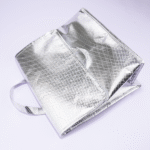
The most useful supplier response is a proposed assembly that can be reconstructed: identifiable components, a loading drawing, a preparation method, and a description of supported payloads. It should be clear whether the quotation includes only the box or also coolant, divisores, embalaje exterior, escucha, and the relevant instructions.
Start the sample review with the actual kit carton. Check the chamber after coolant and protective components are installed. Verify that the lid closes normally and that the product does not need to be compressed or rotated into an unapproved position. Confirm that any labels needed at receiving remain accessible without dismantling the insulation.
| Agreement to establish | What should be recorded | lo que previene |
|---|---|---|
| Ajuste del producto | Kit version, orientación del cartón, usable chamber | Purchasing by nominal volume alone |
| Thermal assembly | Identidad del refrigerante, colocación, separación, preparación | Operator-created packout variations |
| Loading range | Supported smallest and largest orders | Assuming all partial loads are covered |
| Evidence scope | Informe, perfil, condiciones iniciales, measurement locations | Extending a test beyond its conditions |
| Operating ownership | Controles de envío, recibiendo revisión, escalada | Confusing delivery with acceptance |
Use these agreements as acceptance criteria for the sample, not as questions deferred until the production order. Each should have an owner and a document that can be revised under control. When a supplier cannot yet provide an answer, identify the development or verification needed before treating the proposal as ready for use.
A hypothetical replacement-kit order illustrates why the loading range matters. The regular shipment fills the chamber, but the replacement order leaves a substantial gap. Adding more coolant or moving the small carton against a pack changes the configuration. A documented partial-load arrangement is more reliable than telling staff to pack the remaining space as they think best.
Customization should address these physical decisions first. A tailored chamber, coolant compartment, or protective insert can be more valuable than a custom exterior color. Cosmetic changes are reasonable, but they should not consume the design review while lid fit, acceso a sensores, and payload separation remain unresolved.
Require evidence that matches the proposed use
Read a thermal report by asking what it establishes. Identify the ambient exposure, duración de la prueba, carga útil, condición del refrigerante, preparation sequence, and temperature measurement locations. Review the acceptance criteria and individual traces. An acceptable average does not establish that every relevant product location remained acceptable.
Use recognized standards accurately. ISTA 7E offers parcel-shipping thermal profiles, y estándar ISTA 20 proporciona un proceso de diseño y calificación para contenedores de transporte aislados. These references can organize evidence, but they do not replace the assessment of your kit and route. Ask whether a report supports the exact proposal and what additional work is needed for differences.
The smallest and largest intended loads should be addressed through testing or an appropriate technical justification. Their behavior may differ because of mass, espacio vacío, and contact with coolant. A representative surrogate also needs justification. Su masa, embalaje, and geometry should make it relevant to the real kit rather than merely convenient for the laboratory.
Herramientas útiles para tomar decisiones
Comprueba los detalles antes de elegir el embalaje.
Estas herramientas rápidas pueden ayudarle a comparar el riesgo de la ruta, necesidades de dimensionamiento, opciones de refrigerante, y detalles del embalaje antes de solicitar una cotización.
Calculadora de hielo seco
Calcule las necesidades de hielo seco para envíos congelados o ultrafríos antes de empacar.
Estimar hielo secoResistencia a la caída del material aislante
Revise la resistencia a caídas y los factores de manipulación antes de elegir materiales aislantes..
Comprobar resistenciaComprobador de riesgos de ruta
Revise las condiciones del carril antes de seleccionar el embalaje para requisitos operativos reales..
Comprobar riesgo de rutaDo not stop at thermal behavior in a pristine box. Review the handling environment and the evidence for retaining function through the expected distribution process. A closure that shifts or an insulation barrier that is damaged can change performance. Mechanical integrity and thermal protection should be considered together, even where different test methods evaluate them.
Separate package performance from reagent stability. Packaging evidence can show the conditions achieved by a configuration. It cannot independently authorize the use of a reagent after an exposure outside approved conditions. That decision belongs to the responsible product and quality functions, using the relevant stability information and procedures.
Treat every stated duration as conditional. A supplier should explain the tested circumstances and the operational start point. If protection is needed during packing-station waiting or destination staging, those periods cannot simply be ignored. A buffer should be based on the route assessment and justified evidence, not added as an unsupported percentage.
Make preparation and receiving difficult to misunderstand
A technically sound configuration can fail when instructions are ambiguous. The packing procedure should identify each component, el orden de carga, coolant readiness, required separation, and logger activation. Use the production-equivalent sample to test whether warehouse staff can follow the instruction without assistance from the designer.
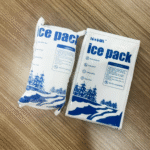
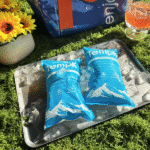
Coolant readiness deserves its own control. Specify the conditioning process associated with the evidence and how prepared stock is distinguished from stock still undergoing preparation. Confirm that the warehouse has suitable equipment and capacity. A package that requires a preparation process the site cannot maintain is not ready for routine use.
The same discipline applies to the product's initial condition. Loading a warm kit and expecting the box to restore it to its required range changes the task from protection to pull-down cooling. Unless that task has been specifically evaluated and authorized, start with product already in its approved condition.
Al recibir, distinguish taking custody from accepting the product. Define who checks the box, confirms kit identity, retrieves temperature information, and transfers the contents to suitable storage. Establish a clear pathway for damaged packaging, questionable conditions, o registros faltantes. A delivery signature and an intact carton are not enough to answer every quality question.
A missing record should trigger the agreed assessment, not an improvised rule. Preserve shipment and handling information while the responsible team reviews available evidence. Asimismo, do not allow a well-meaning receiver to refreeze or otherwise recondition a kit in order to make its current temperature look acceptable. The history and product requirements remain relevant.
For delays, identify who can act and which actions are permitted. Repacking or replenishing coolant may be possible only through an approved process. An uncontrolled intervention can obscure the original configuration and make the final record harder to interpret. The response plan should be operationally realistic before the route is launched.
Scale the accepted design, not an informal prototype
Once the sample has been accepted, connect the purchase specification to controlled drawings, identidades de componentes, e instrucciones. Check that production units reproduce the evaluated assembly. A similar-looking panel, different coolant fill, or altered divider can affect the established configuration even when the outer box appears unchanged.
Agree on supplier change notification. Ask which changes require review and how replacement parts are identified. Include changes to the kit itself in the process: a new carton, component position, or order pattern can be just as relevant as a packaging change. The evidence should remain traceable to what is actually shipped.
Para sistemas reutilizables, confirm the return route, criterios de inspección, procedimiento de limpieza, and retirement decision. Count containers available for dispatch separately from those awaiting return or inspection. Reuse value depends on successful circulation, not simply on purchasing a durable shell. Assess costs using completed, acceptable deliveries and observed return performance.
The final decision should have a concise rationale: the product requirements are confirmed, the configuration fits, the evidence is applicable, and the process can be operated at both ends. This is more defensible than selecting the lowest quote or the longest advertised duration. It also creates a practical basis for reviewing future changes without starting from scratch.
Questions to settle before the first commercial shipment
What should be included in a request for quotation?
Provide the kit identity, approved shipping conditions, actual carton dimensions, order-size range, descripción de la ruta, receiving arrangements, y reutilizar las expectativas. Ask the supplier to define the quoted scope and identify the evidence supporting the proposed configuration. Leave uncertain performance inputs as questions rather than inventing a required hold time or coolant quantity without a route assessment.
Can the same configuration work in hot and cold weather?
Probablemente, but that needs supporting evidence for the intended exposures and payload range. A configuration that limits warming may still create excessive local cooling. Confirm whether the proposed packout is supported across seasons or whether separate instructions are needed. Staff must be able to identify the correct version without making their own technical judgment.
Does customization invalidate existing test evidence?
Not every change has the same effect, but it should be assessed. Altering chamber dimensions, disposición del panel, colocación de refrigerante, or the closure may affect the original result. Ask the supplier to identify which changes are covered by existing evidence and which require additional evaluation. The decision should be documented before the customized version enters routine use.
How should procurement compare a reusable system with a single-trip option?
Compare the cost and resources required for an accepted delivery under equivalent protection requirements. Incluye flete de devolución, preparación, inspección, limpieza, reparar, pérdida, and replacement where applicable. Use actual operating data as the program develops. A theoretical reuse count does not establish a financial saving or an environmental advantage on your route.
Acerca de Tempk
Y tempk, we offer VIP-based embalaje aislado and coolant options that can be configured around the payload rather than selected independently. Custom chamber and panel arrangements are relevant advantages when diagnostic kit cartons, loading quantities, or coolant separation need careful coordination. We can discuss these design choices using your product brief and sample requirements. The objective is a configuration that can be evaluated, documentado, y reproducido, with its suitability confirmed for the intended application rather than assumed from the material name.
Send Tempk your kit requirements and route brief to discuss a VIP thermal box for diagnostic kit shipping and the sample evidence needed before a production decision.