A Route-to-Receiving Framework for Wholesale Dry Ice Pack for Dairy Delivery
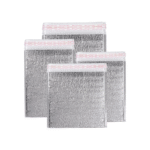
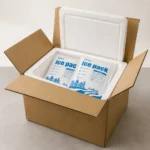
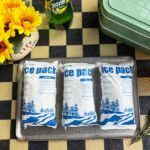
The decision to buy a wholesale bolsa de hielo seco for dairy delivery should follow the order from cold room to receiver. The specified product is a water-activated coolant sheet that is hydrated and frozen before packing, not solid carbon dioxide dry ice. Its role is to absorb heat inside an insulated packout. Its limits are equally important: it cannot define the correct condition for every dairy item, correct unsafe upstream handling, prevenir la contaminación, or guarantee a delivery duration. A reliable program therefore links product segmentation, local cold-contact control, preparation capacity, traspasos de ruta, recepción, consistencia del proveedor, y control de cambios.
Paso 1: Segment the Dairy Portfolio
List products by relevant behavior, not only merchandising category.
Considerar:
- Chilled fluid or semi-fluid products.
- Cultured cups and pouches.
- Fresh or soft cheese.
- Hard or aged cheese.
- Butter and fat-rich products.
- Cream-based desserts.
- lácteos congelados.
- Shelf-stable dairy.
para cada, document required storage and transport conditions, estado inicial, sensibilidad al congelamiento, package type, riesgo de fuga, y requisitos aplicables. Use product and regulatory specialists to define limits.
Mixed orders should be approved combinations. A shelf-stable carton may need a dry compartment; a frozen item may not share a zone with a freeze-sensitive cultured cup. Packaging convenience should not overrule product compatibility.
Paso 2: Define the Delivery Promise as a Thermal Route
A service promise such as same-day or next-day does not describe exposure. Mapa:
1. Picking from storage.
2. Consolidation and waiting.
3. Coolant preparation and retrieval.
4. Pack assembly.
5. Puesta en escena previa al envío.
6. Vehicle or carrier handover.
7. Paradas, centros, or transfer.
8. Delivery location and unattended dwell.
9. Recibir inspección.
10. Transfer to storage.
Para cada paso, assign time, expected condition, parte responsable, and exception. Include seasonal conditions and the most likely delay.
This route definition decides whether passive hydration sheets are appropriate. A route with routine uncontrolled dwell may need a different service or transporte a temperatura controlada. Adding frozen mass is not the only design lever.
Paso 3: Write the Packout Configuration
The packout should be a controlled recipe.
| Elemento | Pregunta de especificación | Failure if uncontrolled |
|---|---|---|
| Dairy payload | Which products and quantities are approved together? | Incompatible conditions |
| Embalaje principal | Can cups, bolsas, tinas, and seals tolerate pressure and moisture? | Leaks or presentation damage |
| Contenedor aislado | Which exact item and condition are approved? | Unexpected heat gain |
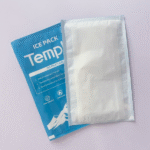
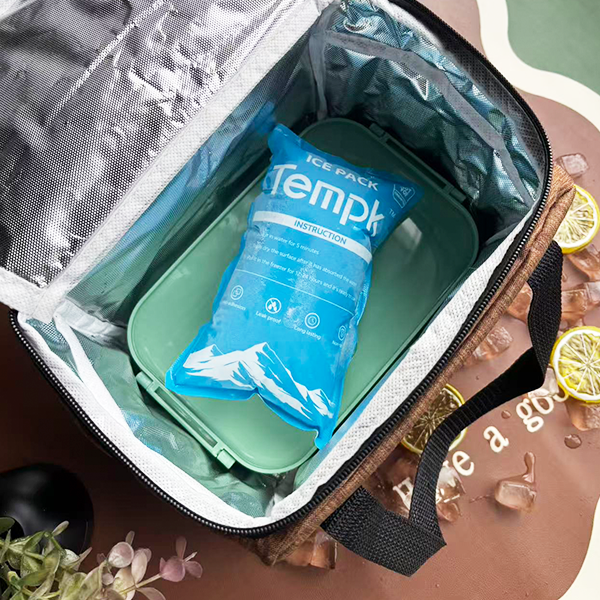
| Hydration sheet | Which item, prepared state, contar, y orientación? | Too little cooling or cold contact |
| Buffer or insert | Does it hold spacing under vibration and moisture? | Sheet movement or freezing |
| capa de humedad | Where does condensation or leakage go? | Weak carton or cross-contamination |
| Gestión de vacíos | Does every order tier remain stable? | Shifting payload and uneven temperature |
| Cierre | Can staff reproduce it at speed? | Heat leakage or tampering concern |
| Monitor | What risk does its location measure? | Evidencia engañosa |
Name every element in the bill of materials. Show layer sequence and orientation in a visual work instruction. Build separate versions for order tiers that behave differently.
Control cold interfaces
Frozen sheets create local cold surfaces. A center logger can miss freezing at a foil lid or pouch wall. Use sensor placement and product evaluation to test the nearest packages. If a buffer is added, verify that it remains positioned after vibration, resiste la humedad, and still allows adequate heat transfer.
Account for hydrated expansion
Measure fit after hydration and freezing. Expanded cells may reduce usable volume, compress cups, or close an air gap. Supplier drawings should include hydrated-state information, and production checks should confirm that performance-critical geometry remains consistent.
Paso 4: Prove the Preparation Process
Hydration and freezing occur at the dairy operator or fulfillment site, making them internal process steps.
Recepción: Verify item, lote, diseño de celda, dimensiones secas, contar, embalaje, and visible integrity.
Hidratación: Use item-specific instructions, equipo limpio, a controlled water source, and a defined hydrated-state acceptance check.
Drenaje: Remove free surface water consistently and inspect seams.
Congelación: Establish rack, lote, flujo de aire, tiempo, recuperación del congelador, estado, and release through site-specific evidence.
Puesta en escena: Limit exposure between freezer and closure. Keep ready, parcial, en cuarentena, and returned stock separate.
Asamblea: Verify item and configuration at normal line speed.
Peak volume is the proper challenge. A process that works with a half-empty freezer and one trained technician may fail during seasonal demand.
Paso 5: Build Evidence That Matches the Decision
Different questions need different evidence.
Component fit trials answer whether the sheet hydrates, se congela, pliegues, and fits. Material documents support review of the supplied construction for a defined contact use. Thermal development compares placement, buffers, contenedores, and configurations. Route-relevant qualification assesses the final packout under justified conditions. Operational verification shows that normal people and equipment can reproduce it. Routine monitoring detects drift.
Do not turn a component test into a route claim. If a supplier states a duration, preguntar:
- Which insulated box?
- Which payload and amount?
- ¿Qué condiciones iniciales?
- How was the sheet prepared?
- How many sheets and where?
- ¿Qué perfil ambiental?
- Which sensor locations?
- What pass criterion?
Differences make the result nontransferable without further assessment.
A mixed-dairy development example
Imagine a delivery box containing fresh cheese tubs, cultured cups, y mantequilla. Initial tests meet center-temperature criteria, but the top cultured cups show surface freezing during the first route segment. A top frozen sheet sits directly on flexible lids.
Herramientas útiles para tomar decisiones
Comprueba los detalles antes de elegir el embalaje.
Estas herramientas rápidas pueden ayudarle a comparar el riesgo de la ruta, necesidades de dimensionamiento, opciones de refrigerante, y detalles del embalaje antes de solicitar una cotización.
Calculadora de hielo seco
Calcule las necesidades de hielo seco para envíos congelados o ultrafríos antes de empacar.
Estimar hielo secoRevestimiento de caja & Dimensionamiento de la cubierta de paleta
Lógica de tamaño de revestimiento de cajas y cubiertas de paletas para proyectos de embalaje aislado.
Estimar el tamañoSelector de embalaje
Compare las opciones de embalaje aislado por producto, ruta, y necesidad de temperatura.
encontrar embalajeThe development team tests a rigid moisture-tolerant spacer and redistributes coolant to side locations while preserving total thermal capacity. It measures the cold interface, centro, and warm corner and reviews product quality after a representative recovery period. The approved design is the one that balances both extremes, not the one with the coldest center.
Paso 6: Connect Food Safety and Sanitation
A hydration station is a wet process near food packaging. Include water vessels, bastidores, carros, guantes, desagües, congeladores, and damaged-sheet response in sanitation programs. Separate dirty return flow from new and released stock.
Dairy manufacturing, almacenamiento, and transport requirements vary by product and jurisdiction. En los Estados Unidos, the Pasteurized Milk Ordinance framework is relevant to Grade "A" milk and milk products through the applicable regulatory program, while sanitary transportation requirements may affect covered operations. Program arrangements, waivers, and local adoption require qualified review.
The coolant sheet does not establish compliance. Safe processing, product cooling, saneamiento, vehicle suitability, prevención de contaminación, comunicación, recepción, capacitación, and records remain part of the broader system.
For material evidence, document the real contact. A sheet touching a sealed yogurt cup has a different use description from a sheet touching unwrapped cheese. Verify the exact construction, impresión, temperatura, duración, y mercado.
Paso 7: Design the Last-Mile Playbook
Assign actions for foreseeable exceptions.
Warm product at packing: Hold and escalate. Do not compensate with extra coolant.
Incomplete frozen sheets: Quarantine them or follow a validated recovery process.
Late dispatch: Use the approved staging condition and cutoff.
Avería del vehículo: Maintain closure, document time, and follow a preplanned transfer procedure.
Missed home delivery: Follow service rules; do not leave where the design prohibits it.
Wet or damaged package: Segregate and inspect for contamination or package failure.
Temperature alert: Preserve data and send disposition to the authorized role.
Drivers and customer-service agents should understand boundaries. They should not decide food safety from touch, hielo restante, or a generic hours claim.
Paso 8: Qualify Wholesale Supply
A bulk supplier must reproduce the approved item.
Agree on:
- Functional identity and item revision.
- Información de construcción y materiales..
- Diseño de celdas y costuras..
- Dimensiones secas e hidratadas..
- Preparation and storage instructions.
- Lot and carton identification.
- Criterios de defecto.
- Configuración de embalaje y palet..
- Cambiar notificación.
- Complaint and nonconformance handling.
Compare production receipts with the approved sample through risk-based incoming and functional checks. Fuga de tendencia, uneven cells, lost marking, or fit issues by lot.
Commercial continuity also matters. Confirmar pedido mínimo, plazo de entrega, forecast window, peak capacity, stock de seguridad, and backup-item strategy. Never authorize an unassessed alternate because it looks similar.
Paso 9: Make Reuse and Sustainability Measurable
If the sheet and program permit reuse, define return, segregación, inspección, compatibilidad de limpieza, redacción, liberar, y eliminación. Closed delivery loops generally offer more control than consumer returns.
Calculate actual return and acceptance rates. Count transport, clasificación, mano de obra, saneamiento, uso del congelador, pérdidas, y reemplazo. A nominally reusable sheet that rarely returns should not support an ambitious reuse claim.
Compare environmental options across a delivered-order boundary: materiales de embalaje, carga entrante, agua de hidratación, energía del congelador, vehicle route, transporte inverso, limpieza, and dairy loss. Protecting product remains central. Reducing packaging while increasing rejected dairy shifts, rather than solves, the burden.
Paso 10: Review Data and Control Change
Link complaints and monitoring to packout revision, ruta, estación, mezcla de productos, operador, lote de hojas, and delivery stop. Investigate patterns.
Changes that deserve review include:
- Dairy formulation or primary package.
- Order quantity or product combination.
- Sheet construction, dimensiones, o instrucciones.
- Contenedor o revestimiento aislado.
- Estación de hidratación o congelador..
- Ruta, transportador, vehículo, or delivery policy.
- Proceso de devolución y limpieza..
Use a documented risk assessment to decide whether review, prueba de ajuste, focused thermal comparison, o se necesita recalificación. Remove obsolete work instructions and train users before the new configuration begins.
Assemble a Procurement-to-Operations Handoff File
The wholesale purchase should end with a usable control package, not a folder of disconnected quotations. Build one handoff file that contains the approved sheet specification and revision, supplier and manufacturing identity, instrucciones actuales, documentos materiales relevantes, referencia de muestra aprobada, cheques entrantes, y acuerdo de notificación de cambios.
Connect that supplier file to the operational packout: the dairy assortment tier, box and liner item codes, hydration and freezer procedure, visual assembly instruction, perfil de ruta, informe de prueba, mapa de sensores, criterios de aceptación, registro de entrenamiento, procedimiento de recepción, and exception contacts. State which documents are controlled and who approves revisions.
This handoff prevents information loss when procurement, calidad, depósito, and delivery teams use different systems. It also improves complaint investigation. If a receiver reports frozen yogurt or a wet carton, the team can identify the exact sheet lot, lote de preparación, versión empaquetada, operador, ruta, and monitoring record rather than relying on memory.
Review the file at a defined cadence and after meaningful change. Confirm that supplier instructions still match floor practice, production items still match the approved state, and route assumptions remain realistic. A well-maintained handoff file makes wholesale scaling auditable without turning paperwork into a substitute for observation.
Assign a document owner and a backup. Archive superseded revisions without leaving them at workstations. During routine floor walks, compare the written sequence with actual hydration, puesta en escena, asamblea, y manejo de devolución. Close any gap through investigation, corrección, and retraining rather than quietly editing the record after the fact.
Preguntas frecuentes
What is the biggest difference between dairy delivery and fluid-milk transport?
Dairy delivery may combine cheeses, productos cultivados, manteca, postres de crema, artículos congelados, and shelf-stable products in varied packages and last-mile channels. Fluid-milk transport focuses more narrowly on liquid packages, time-temperature control, fuga, contención secundaria, and milk-specific receiving. Both require product-specific controls.
Can a hydration sheet be folded around dairy products?
It may be folded along designed seams if the product instructions allow it. Do not cut through cells or create sharp folds that stress the enclosure. Test the actual orientation because folded cells can concentrate pressure and cooling against packages.
Should a packout be tested with real dairy?
Representative surrogates can support development if technically justified, but actual packages and product behavior may matter for freezing, condensación, textura, y en forma. The responsible team should decide when representative product is needed for final confirmation.
How should a new delivery area be added?
Mapear la ruta, estación, servicio, traspasos, y condiciones de recepción. Compare them with the approved profile. Use a documented assessment and test when differences could affect performance. A matching distance alone does not establish equivalence.
What evidence is most useful from a wholesale supplier?
A controlled specification, instrucciones de preparación, dry and hydrated geometry, identificación de artículo y lote, documentos materiales relevantes, criterios de defecto, controles de calidad, and change notification are more useful than a context-free cooling-hours statement.
Conclusión
A route-to-receiving framework makes a wholesale dry ice pack for dairy delivery a controlled component instead of a generic cold promise. Segment the dairy portfolio, map the last mile, manage cold interfaces and moisture, prove activation capacity, develop route evidence, qualify production supply, and assign exception and receiving decisions. Keep the product identity clear: a hydration sheet is not solid carbon dioxide, and no coolant replaces safe dairy processing or distribution controls.
Acerca de Tempk
Hydration coolant sheets and embalaje aislado sit within the Tempk range from Shanghai Tempk Industrial Co., Limitado. Dairy delivery teams can bring Tempk an assortment matrix, dibujo de paquete, perfil de ruta, daily volume, and preparation process to discuss samples. The buyer's qualified teams should define product requirements, approve food-contact use, design and interpret testing, manage sanitation, and decide shipment acceptance.
CTA: Give Tempk one approved dairy order tier and its route conditions to start a focused sample-to-production evaluation.