


Detalle del blog
La tecnología predictiva de envasado en cadena de frío mejora el rendimiento térmico y la rentabilidad
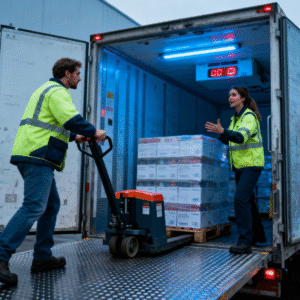
Un análisis reciente de la industria destaca un cambio creciente hacia la tecnología de envasado predictivo de la cadena de frío, where thermal protection strategies are tailored to specific shipment conditions rather than using standardized packaging approaches.
This model focuses on optimizing key variables such as insulation configuration, cantidad de hielo seco, and transit duration based on real-world factors like weather conditions, rutas de envío, and delivery timelines. Instead of relying on fixed packaging setups, companies are beginning to use data-driven methods to improve both performance and cost efficiency.
One of the main benefits of this approach is the ability to reduce overpacking while maintaining product safety. Excess insulation and coolant materials increase shipping costs, while insufficient protection creates a risk of temperature excursions. Predictive packaging helps balance these factors by aligning packaging design with actual shipment requirements.
From a commercial perspective, this trend is particularly relevant for food delivery, bienes congelados, y logística farmacéutica, where cost control and product integrity are both critical. As cold chain networks become more complex, packaging is increasingly seen as an active component of logistics optimization rather than just a passive protective layer.
For suppliers, this signals rising demand for higher-performance insulation materials, smarter packaging systems, and solutions that can integrate with data and logistics platforms. Companies that can support customized, route-specific packaging strategies will likely gain a competitive advantage in the evolving cold chain market.



















