


Intención de temperaturaPlanifique alrededor 0-4 C o el requisito de etiqueta del producto, con ensaladas preenfriadas y envasadas secas.
Solución de cadena de frío para ensaladas listas para comer
Las ensaladas listas para comer son sensibles a los hematomas en las hojas, condensación, apósito goteando, y contacto directo de congelación. El paquete debe mantener una ruta fría y al mismo tiempo mantener las hojas crujientes., conchas intactas, y aderezos separados de la fuente de frío.
Lo que el paquete necesita controlar
regla del refrigeranteUtilice paquetes de gel acondicionados o 5 C PCM en los lados o encima de un espaciador. Evite el contacto directo congelado con las hojas o las tapas de las almejas..
Enfoque en embalajeBaja presión, equilibrio de humedad, separación de apósitos, y una presentación limpia y plegable impulsan la aceptación.
Elija el paquete por condición de ruta
| Condición de la ruta | Configuración de embalaje | Rango de refrigerante preliminar | Cheque de colocación y recepción. |
|---|---|---|---|
| Ruta local, 4-8 h | cartón aislado, soporte tipo concha, refrigerante lateral, revestimiento seco. | 0.4-0.8 paquetes de gel acondicionado de kg o PCM para un 1-2 kg de carga útil. | Comprobar la textura de la hoja, sello de copa de aderezo, y condensación en la concha. |
| Ruta el mismo día, 8-18 h | EPP o cartón aislado, divisor de pila de baja presión, refrigerante lateral/superior con espaciador. | 0.8-1.6 kg de paquetes de gel acondicionado o 5 C PCM para un 1-3 kg de carga útil. | Evite la presión directa del paquete de gel sobre los greens; inspeccionar los bordes de las hojas congeladas. |
| Ruta por la ciudad cálida, 18-24 h | Aislamiento más grueso, forro de control de humedad, Refrigerante equilibrado alrededor de la cavidad de carga útil.. | 1.6-2.6 kg de PCM o paquetes de gel acondicionados, ajustado mediante pruebas de ruta. | Si las hojas se marchitan o se congelan, Ajuste la temperatura del refrigerante y el espaciado antes de aumentar la masa.. |
Utilice estos rangos como punto de partida para la revisión del embalaje. Confirme la masa de refrigerante final con la etiqueta del producto., estado previo al enfriamiento, tamaño del listón, duración de la ruta, perfil ambiental, y una prueba de registrador de temperatura.
Cómo Tempk construiría el envío
Empacar ensaladas frías y secas.
Las hojas húmedas y las almejas calientes crean condensación rápidamente. Enfriar previamente el producto y evitar cargar el embalaje exterior mojado..
Proteja la pila de almejas
Utilice divisores o una bandeja interior para que el refrigerante pesado no aplaste las tapas ni magulle las hojas..
Elija un diseño de refrigerante más suave
A 5 C PCM o paquete de gel acondicionado puede ser mejor que un paquete congelado más frío cuando el riesgo clave es la congelación de las hojas.
Inspeccionar la textura al recibir
Registrar la temperatura del producto, hematomas en las hojas, bordes congelados, fuga del apósito, grietas de almeja, y sequedad de la etiqueta.
Puntos de falla comunes que se deben prevenir
Para alimentos preparados, una llegada fría es sólo una parte de la decisión. El envío también debe verse limpio., mantente seco, proteger la textura, y pasar el control de calidad del receptor.
- Bordes de hojas congelados por contacto directo con el paquete de gel.
- Verduras marchitas después de un traspaso cálido o aislamiento insuficiente.
- Fuga del vaso del apósito durante la manipulación lateral.
- aplastamiento de concha, etiquetas mojadas, o condensación de cara al cliente.
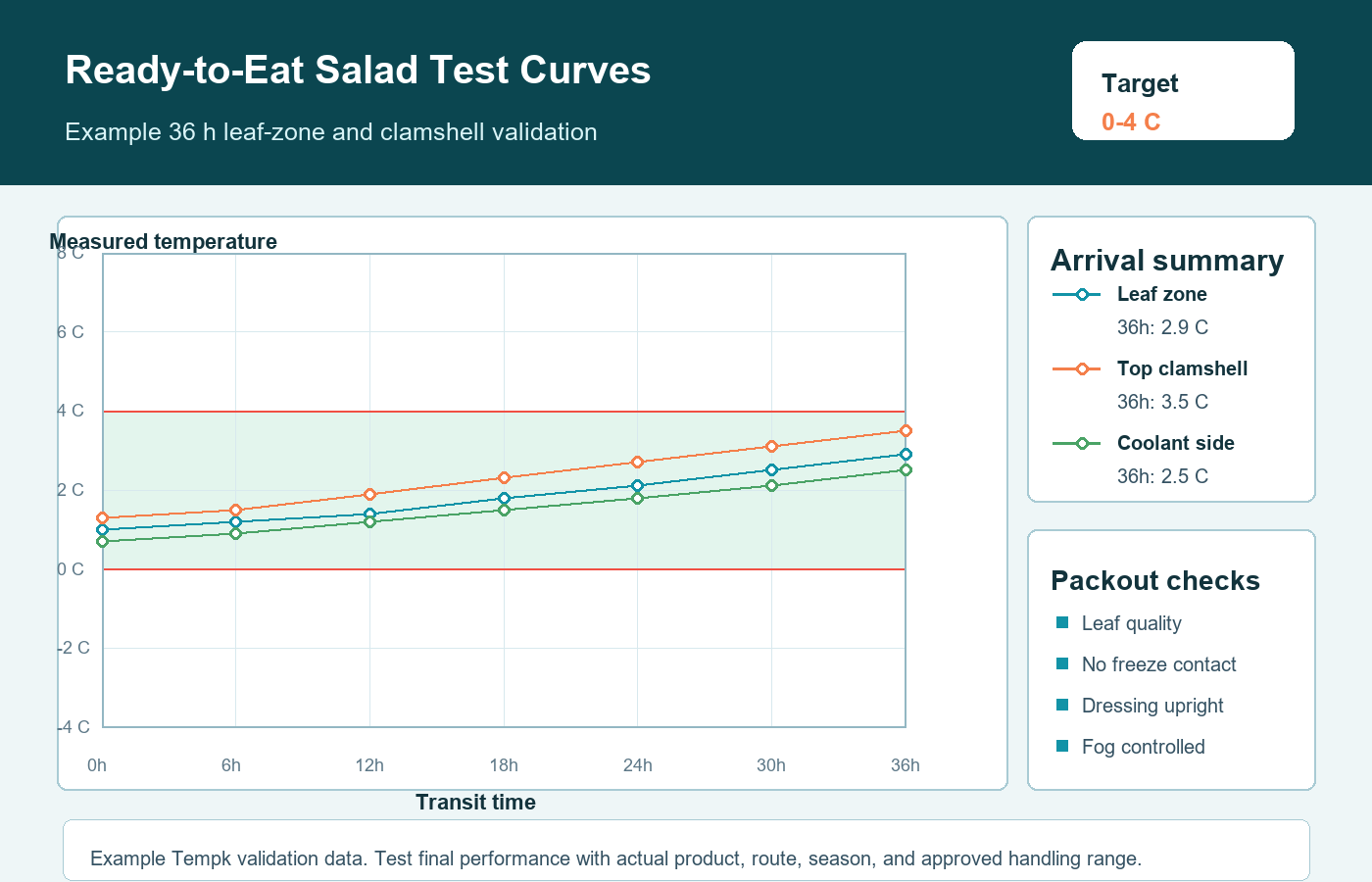
Curva de validación y recepción de evidencia.
Revisar la curva con el producto real., masa refrigerante, tamaño del listón, duración del carril, y temporada. Agregue fotografías de llegada y notas de recepción para que el embalaje se evalúe en función de la temperatura y el estado del producto en conjunto..
Páginas relacionadas para la planificación del embalaje
categoría de alimentos preparadosPlatos preparados refrigeradosSándwiches & envolturasGuía de sopas fríasBolsas aislantes para entrega de ensaladas listas para comerPaquetes de hielo en gel para entrega de ensaladas listas para comerRevestimientos aislados para cajas para entrega de ensaladas listas para comerHerramientas para la cadena de fríoContactar a Tempk
Notas prácticas de ruta
Mantenga las ensaladas crujientes sin congelar los bordes de las hojas.
Las ensaladas listas para comer necesitan enfriarse, ventilación, y protección contra puntos fríos directos. Demasiado contacto frío puede dañar los bordes de las hojas incluso cuando el paquete general parece aceptable.
Donde este producto suele fallar
Marchitez de las hojas, congelación de bordes, apósito goteando, etiquetas mojadas, y los tazones triturados son los principales fallos de calidad.
Configuración del embalaje para probar primero
Utilice ensaladeras rígidas o bivalvas con control de huecos.. Coloque los paquetes de gel alrededor de un divisor y mantenga los vasos de aderezo en posición vertical y separados de las verduras de hojas verdes..
Elección de refrigerante
Los paquetes de gel refrigerados suelen ser más seguros que los paquetes congelados en contacto directo. Utilice PCM cuando la ruta tenga una alta exposición en verano o una permanencia de entrega incierta.
Verificación de validación de ruta
Inspeccionar la textura de la hoja., sellos para vasos, tapas de almeja, y agua gratis en el paquete. El paquete de ensalada debe incluir un control visual de frescura..
Detalle del paquete
Las cajas de ensalada necesitan protección contra el frío sin congelar las hojas
Caso de uso
Las ensaladas listas para comer pueden dañarse por el contacto directo con el paquete congelado. Los bordes de las hojas pueden congelarse mientras el centro del tazón permanece dentro del alcance., Por lo tanto, el refrigerante debe separarse mediante un divisor o colocarse en canales laterales..
Elección de embalaje
Mantenga los vasos de aderezo en posición vertical y alejados de las hojas.. Si la ruta incluye entrega cálida de última milla, aumente el aislamiento o use PCM en lugar de presionar paquetes de gel más fríos contra las ensaladeras.
Lo que Tempk debería validar
Para pruebas Tempk, proporcionar el tamaño del tazón, mezcla de verdes, posición de la copa de vestir, recuento de paquetes, y duración de la ruta. Comprobar que las hojas estén crujientes, congelación de bordes, agua gratis, seguridad de la tapa, sequedad de la etiqueta, y temperatura de llegada. Para entrega de comidas o catering en la oficina, agregue una breve retención posterior a la entrega en la validación porque las ensaladas a menudo esperan antes de abrirse.
Soporte de paquete personalizado
Necesita que este carril se construya alrededor de su producto y ruta?
Para tamaños de cartón fijos, límites de carga útil, requisitos de marca, carriles estacionales, o objetivos de validación, Tempk puede adaptar esta solución a un paquete de cadena de frío personalizado.
Necesita que se revise esta ruta de alimentos preparados antes del envío?
Enviar el formato del producto, temperatura objetivo, tamaño de carga útil, dimensiones del paquete, duración de la ruta, condición ambiental, y recibir estándar. Tempk puede ayudar a comparar el aislamiento, paquete de gel o diseño PCM, revestimiento, divisores, y pasos de validación.
Solicite una revisión del paquete